
You've found an old photograph tucked behind a family portrait. A dog sits beside a chair, looking solemn except for one slightly crooked ear. You don't know its name, but you recognize the expression. Before choosing a frame or trying to brighten the faded image, you want to understand what you've found and how to look after it.
The Timeless Appeal of Vintage Dog Portraits
The charm begins with recognition. The furniture might look unfamiliar, and the photograph might have softened around the edges, but the dog's watchful face feels entirely familiar. Anyone who's waited for a pet to settle before taking a picture can appreciate the patience behind that portrait.
Vintage dog portraits connect an individual animal to a household. A name written on the reverse, a worn collar, or a familiar garden can make an otherwise anonymous image feel personal. You aren't looking at a dog of a particular breed. You're looking at someone's companion.
Understand What You're Looking For
Before collecting or commissioning, separate the different meanings people give the word vintage. For practical purposes, it helps to distinguish the object's age from its appearance.
- Historical original: An older photograph or painting whose materials, condition, and ownership history need investigation.
- Reproduction: A newly made copy of an earlier image, intended for display rather than presented as the original object.
- Vintage-style commission: A contemporary portrait that borrows historical poses, colors, or composition while depicting your own dog.
These distinctions prevent disappointment. An attractive sepia print might be exactly right for your hallway, but it shouldn't be described or valued as an early photographic object without supporting evidence.
Collector's starting point: Decide whether you want historical evidence, a decorative image, or a personal tribute. You can appreciate all of them without treating them as interchangeable.
Perhaps you want to preserve an inherited photograph without changing its character. Perhaps you'd rather commission a painting of your current dog with the quiet dignity of an old family portrait. Neither choice requires you to become an expert in every photographic process.
The useful questions are straightforward: What is the object? What do you know about it? What would you like to do with it? Those answers help you choose between collecting, reproducing, commissioning, and conserving, without allowing nostalgia to turn into an expensive mistake.
A Brief History of Dogs in Early Photography
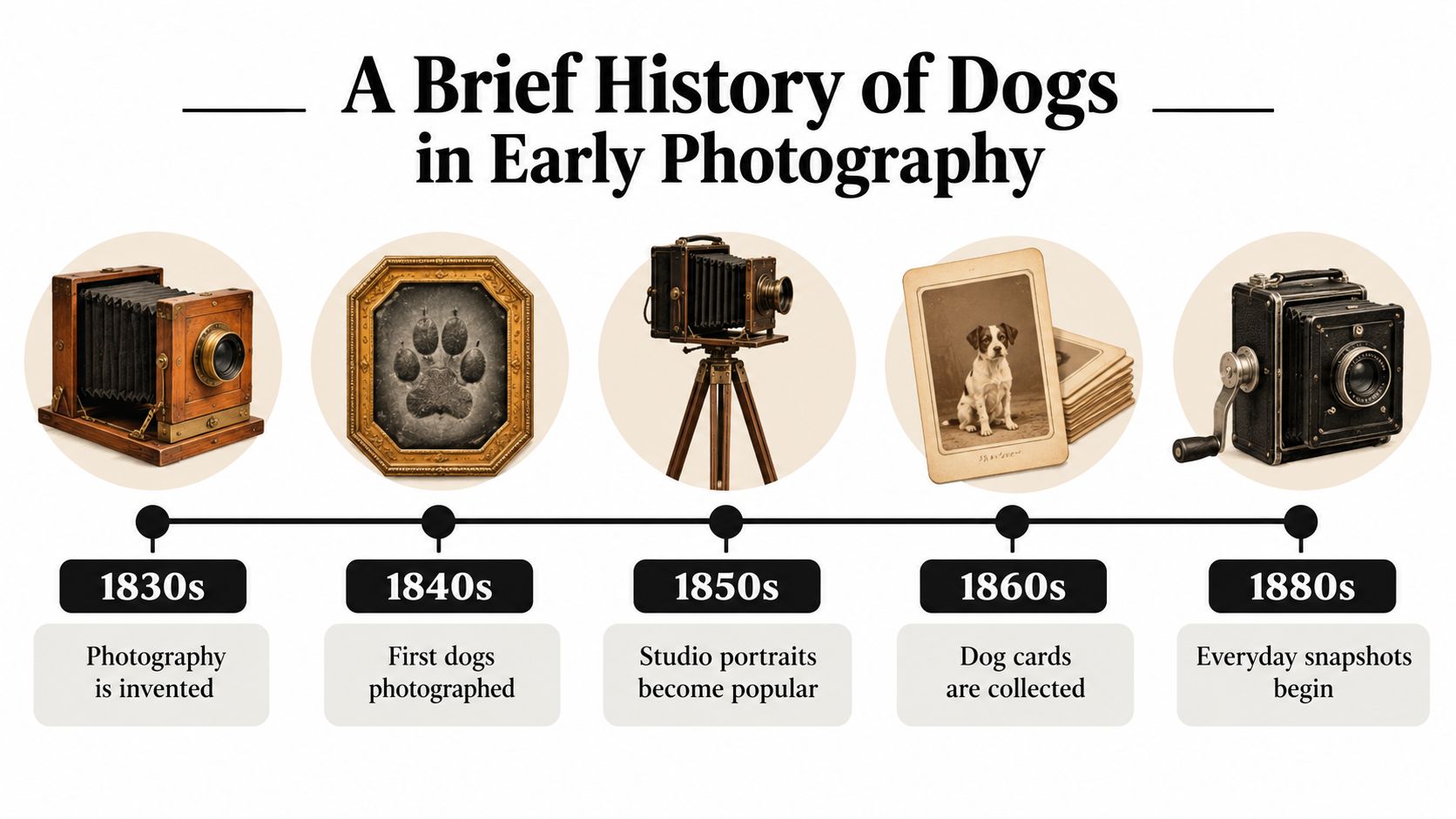
Dog photography began close to photography's public beginnings. Photography was publicly introduced through Louis Daguerre's process in 1839; photographers were experimenting with dogs by the 1840s, and Mary Mitford's documented 1847 visit to Nicolaas Henneman's studio included a dog that reportedly remained still for approximately four minutes, according to Penn State's account of early canine photography.
That detail makes the early studio experience wonderfully tangible. The owner wanted the dog included, while the photographer needed a usable likeness. Affection and technical difficulty occupied the same room.
The timeline offers a broad visual introduction to that progression.
From Studio Achievement to Family Keepsake
Early dog portraits required deliberate cooperation. Photographing a moving animal wasn't a matter of pressing a button at the right moment. Owners had to bring their companions into a photographic setting and help make the image possible.
Small, album-sized photographs changed the social experience of portraiture. Families could keep likenesses of pets beside those of relatives, giving the animal a visible place within the household's collection of remembered faces. The important change wasn't only photographic convenience. It was the decision that a dog belonged in the album at all.
Royal enthusiasm formed part of this broader culture. Queen Victoria's interest in dogs and photography helped make canine images respectable domestic and commemorative objects, as described in this history of pet photography. For a closer look at the domestic aesthetic, the publisher's guide to the Victorian pet portrait provides a useful companion topic.
The accompanying video offers another way to spend time with the subject.
An old dog portrait records a choice: someone decided this animal deserved to be remembered.
That choice helps explain why these photographs feel more intimate than a general image of a breed. A studio portrait identifies a particular dog as worthy of attention, even when its name has been lost.
For collectors, the historical lesson is to look beyond the appealing subject. Ask how the photograph was made, who kept it, and whether its original album or mount survives. Those surrounding materials may help explain the portrait's place in a family's life.
What Makes a Dog Portrait Look Vintage
A brown tint alone doesn't make a convincing vintage dog portrait. Look instead at the relationship between the animal, the setting, and the photographic surface. A restrained composition can feel historically sympathetic without looking artificially battered.
Pose and photographic process belong together. Slow exposures help explain seated or reclining dogs, stabilizing furniture, controlled lighting, and handlers kept outside the image. When investigating a portrait, examine these features alongside mount-board style, tonal response, retouching, collar design, and grooming; apparent color also needs scrutiny because some monochrome photographs were hand-tinted, as discussed in historical dog-photography exhibition documentation.
Read the Composition Before the Color
Start with the dog's silhouette. Is the body arranged compactly? Can you distinguish the head from the background? Does the furniture support the pose, or does it overwhelm the animal?
- Expression: A composed gaze can provide formality without making the dog look lifeless.
- Props: A chair, table, or cloth should establish a setting rather than compete with the face.
- Lighting: Look for readable eyes and muzzle shapes instead of relying on an overall dark treatment.
- Surface: Distinguish original photographic texture from scratches or fading added for decorative effect.
For a new composition that uses a historical-looking background, Photo Speak's resource on matching vintage plates to subjects offers a relevant starting point. Judge any combination by whether the dog and background share believable lighting, scale, and perspective.
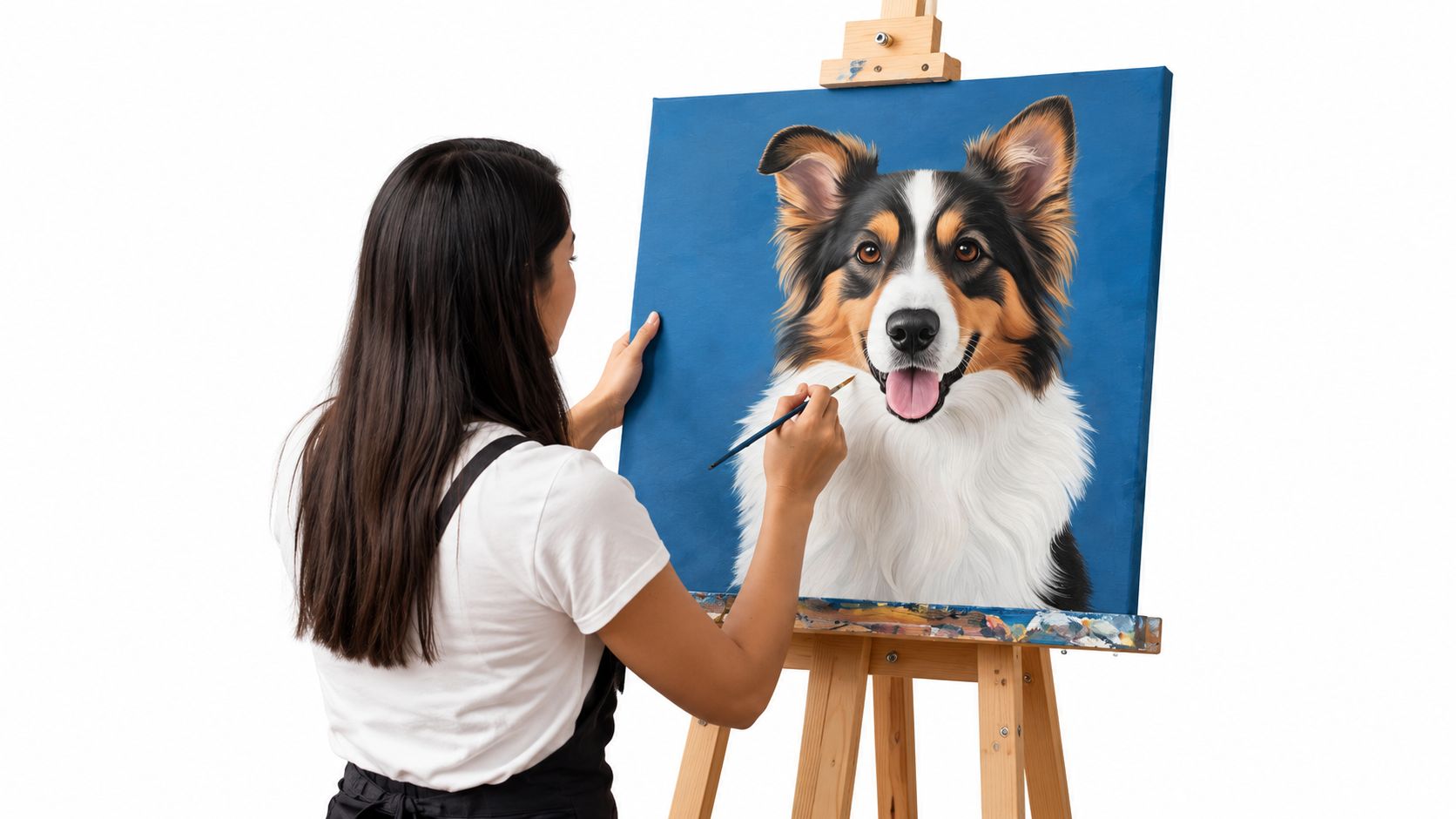
A contemporary commission reference can help you think about the dog as the main subject rather than treating the background as the entire style.
Separate Style Clues From Proof
A collar, mount, or pose can guide further investigation, but don't let an appealing clue become a confident date. Record what you can observe before deciding what it means.
For example, write “dog reclining on upholstered chair” rather than assigning an era from the chair alone. Keep the seller's description separate from your own observations and any supporting documentation.
For a commissioned portrait, the same careful looking has a different purpose. Choose the qualities you love, perhaps a quiet background and dignified posture, without asking the artist to reproduce every stain or damaged edge.
How to Commission a Vintage-Style Portrait
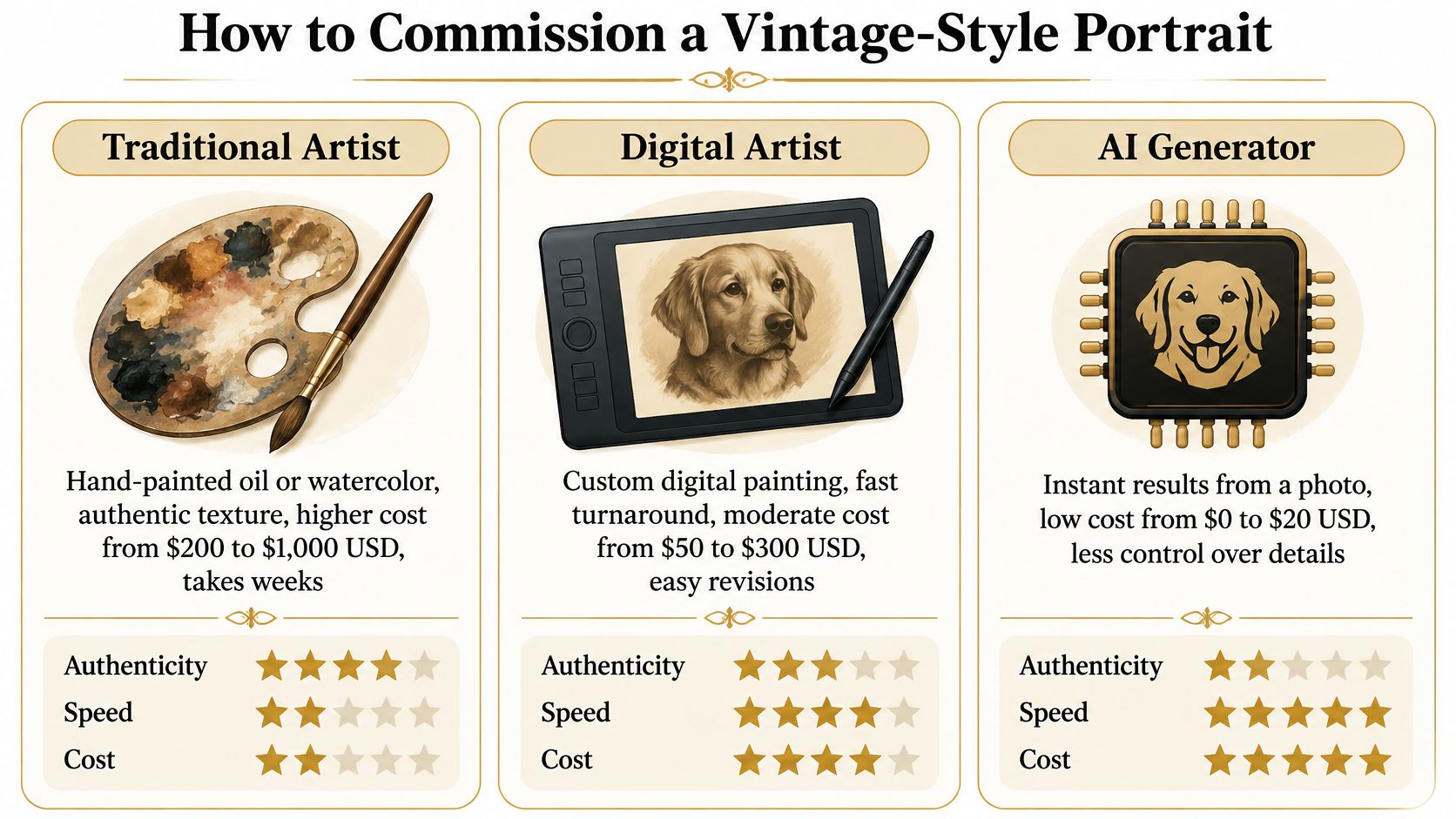
Choose your route by deciding what you want to own at the end. A painting, a custom digital file, and a home-edited photograph can all depict the same dog, but they offer different kinds of involvement and different physical results.
A traditional artist is worth considering when the painted object matters to you. Examine complete portraits and close-up details, then discuss how much historical influence you want. Ask for a written quote, the proposed medium and support, the revision process, and an agreed delivery schedule rather than assuming a standard price or turnaround.
Compare the Work, Not Just the Label
| Route | What to evaluate | What to clarify |
|---|---|---|
| Traditional artist | Likeness, brushwork, composition, and handling of fur | Materials, approvals, framing, and delivery |
| Digital artist or editing service | Individual attention to your dog rather than a uniform filter | File dimensions, printing rights, revisions, and physical output |
| DIY editing or generation | Your control over the result and willingness to inspect details | Whether features have been altered or invented |
The comparison graphic illustrates these routes, but its price and timing labels shouldn't replace a current quotation or a discussion of the actual work.
Give the Artist a Useful Brief
Supply a clear photograph for the main pose and supporting views for markings or features that aren't visible. Explain what makes the expression feel right: an uneven ear, a thoughtful stare, or a slightly tilted head. Don't rely on breed descriptions alone.
A practical brief should address:
- Historical mood: Choose formal studio restraint, a domestic setting, or a painterly interpretation.
- Likeness priorities: Identify markings and proportions you don't want changed.
- Creative freedom: State whether the artist may adjust the background, pose, or accessories.
- Final display: Explain where the portrait will hang and whether you need framing advice.
Use the guide to choosing a custom pet portrait artist to organize your questions. One original-art option is the William Tucker Art Personalized Pet Artwork Deposit, which starts a handcrafted commission and includes a consultation about style, size, and medium.
For digital work, settle the printing plan before approving the file. You can find heavyweight print options through The Print Warehouse Ltd, then ask about paper finish, image sizing, and proofing. Paper weight alone shouldn't be your basis for judging suitability.
The most useful approval question is simple: does this still look like your dog, or merely an attractive dog in an old-fashioned setting?
Framing and Displaying Your Portrait
Choose the framing approach according to the object, not just the room. An original photograph, a modern print, and a painting shouldn't automatically receive identical treatment. Tell the framer exactly what you have, including anything uncertain about its age or materials.
Protection comes before decorative matching. Ask the framer to explain the proposed enclosure, mounting method, glazing, and separation between the image and glazing. For an older object, request an approach that avoids unnecessary alteration and can be reviewed by a conservator if needed.
Plan the Presentation
Begin by placing frame and mat samples beside the portrait. A warm cream mat might suit a softly toned image, while a plain dark frame may help a pale dog stand apart from the wall. Treat these as design choices, not historical rules.
- Keep the face prominent: Avoid a frame so elaborate that you notice it before the animal.
- Respect the whole object: Don't crop an original mount or inscription merely to fit a ready-made frame.
- Ask about materials: Discuss archival-quality matting and ultraviolet-filtering glazing rather than assuming every frame package provides them.
- Plan secure installation: Ask which fittings suit the completed frame and your wall construction.
The guide to framed dog pictures can help you compare presentation ideas. For a more playful tabletop arrangement, browse VW display ideas for ceramic frames from Volkswagen Memorabilia as a decorative reference, not as a conservation specification.
Display priority: If a fragile original can't safely tolerate the location you love, display a reproduction there and store the original appropriately.
Choose the Location Before Hanging
Walk through the room at different times of day before committing to a position. Notice direct sun, nearby heat, cooking activity, and any signs of dampness. Ask a photograph conservator or experienced framer whether the proposed location suits an original's condition.
A gallery wall doesn't need to imitate an antique shop. You might pair the portrait with a family photograph, a drawing, or a contemporary nature image, using spacing and frame finishes to make the arrangement coherent.
Once it's installed, keep cleaning products away from the artwork. Ask the framer how to clean the exterior safely, and don't dismantle an older frame merely to remove a speck you've noticed beneath the glazing. A beautiful display shouldn't depend on repeatedly handling a vulnerable object.
Preserving and Restoring Old Dog Photos
Identify the photographic material before attempting treatment. A photograph isn't paper with a picture on it. Its image layer, support, mount, and enclosure all affect what a conservator can safely do.
For silver-gelatin prints, metallic silver sits within a gelatin image layer that can swell under high heat and humidity, increasing the risk of mold, distortion, and surface damage; the National Park Service recommends approximately 30–40% relative humidity, daily variation of about 5%, and display illumination of 50 lux or less, with minimal ultraviolet radiation, in its silver-gelatin photograph conservation guidance.
Document First and Intervene Carefully
Make a condition record before changing the enclosure or arranging restoration. Photograph the front and reverse under consistent lighting, record dimensions and inscriptions, and note fading, yellowing, tears, surface changes, and anything that resembles mold.
- Preserve context: Keep associated envelopes, album information, and written identifications.
- Improve storage: Use appropriate archival enclosures in a stable, cool, dry location, avoiding attics, basements, kitchens, and fluctuating exterior-wall conditions.
- Stop when uncertain: Consult a photograph conservator about stuck surfaces, lifting image layers, suspected mold, or fragile mounts.
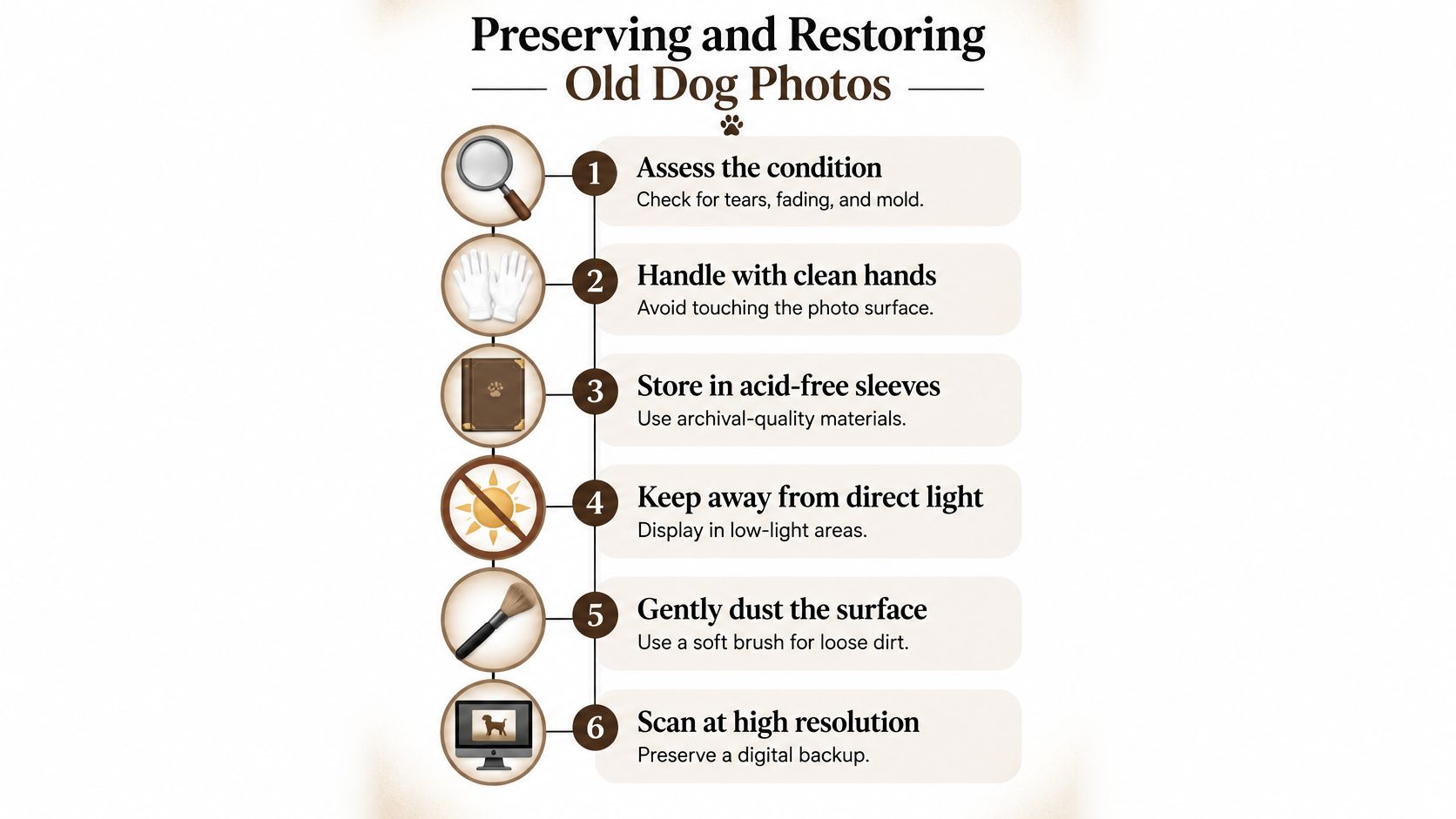
The checklist provides an overview, but its surface-dusting suggestion isn't suitable as a blanket instruction. Don't brush, wipe, or clean an unidentified original's image surface without a photograph conservator's advice.
Keep Digital Restoration Honest
Digital editing lets you create a display copy without physically retouching the original. Where the object can be safely digitized, retain an untouched master file and work on a separate copy. For fragile or unfamiliar formats, ask a specialist how to capture the image without damaging it.
High-resolution capture, restrained correction, and documented edits are central recommendations in this guidance on restoring pet photographs without invented artifacts. Pay particular attention to the eyes, whiskers, nose, and fur boundaries when comparing an enhanced image with its original.
A clearer detail isn't necessarily a recovered detail. It may be a convincing guess.
Use conservative adjustments for an archival reference copy. If you choose stronger reconstruction for a memorial display, label it as an interpretation and retain the comparison files.
Paintings need a separate assessment. If your dog portrait has lifting paint, a distorted support, or an altered surface, consult a painting conservator rather than applying photographic advice. The aim is to choose consciously between preserving original material, improving readability, and creating new artwork.
Why Vintage Dog Portraits Still Matter Today
Vintage dog portraits matter because they encourage us to notice an individual life. A breed name can describe a category, but a portrait asks us to spend time with a particular face. The small irregularities are often what make that face memorable.
For a family, the value may lie in recognition rather than rarity. A remembered name, a connection to a relative, or a familiar place can matter more than whether the image is finely composed. You don't need a prestigious attribution to have something worth caring for.
Become a Thoughtful Custodian
Owning a portrait gives you a chance to make the next person's understanding easier. Keep what you know with the object, and be clear about what remains uncertain.
- For an inherited portrait: Write down names, relationships, and memories without turning guesses into facts.
- For a purchased original: Retain the description, purchase record, and condition documentation.
- For a new commission: Keep the artist's details, reference photographs, medium information, and care instructions.
A contemporary vintage-style portrait can be equally meaningful without pretending to be old. It can give your dog the composed presence of a formal portrait while keeping the expression you recognize from daily life. Historical inspiration and personal honesty work well together.
There's also pleasure in choosing something to live with slowly. Instead of judging the image on a phone screen and moving on, you can consider its scale, surface, frame, and place in your home. Those decisions make the portrait part of everyday surroundings.
Whether you preserve an original or commission something new, aim for an object you understand and can care for. The most satisfying portrait isn't necessarily the oldest or most elaborate. It's the one in which you can still recognize the dog.
William Tucker Art offers handcrafted pet portrait commissions in acrylic, oil, and mixed media, with a consultation to discuss style, size, and medium. Visit William Tucker Art with a favorite photograph and a few historical references to discuss a vintage-inspired portrait that keeps your dog's individual character at its center.