
You're standing in the hallway with a photo of your dog open on your phone, trying to imagine it on the wall. The expression is perfect. But should you print it, commission a painting, or choose something more stylized? And will the frame you like protect it in that bright spot beside the door?
The frame and the environment are half the artwork. With framed dog pictures, choosing a handsome border is only part of the job. Start with the memory you want to keep, then build a display that suits your home and protects the piece.
Why Framed Dog Pictures Mean More Than Wall Decor
A new dog owner might begin with an empty hallway and a camera roll full of sleeping poses, muddy paws, and blurred games of fetch. The photograph they eventually choose probably won't be the tidiest. It'll be the one with the familiar head tilt.
That's the right starting point. Before considering finishes or mat colors, decide what you want to recognize when you pass the picture. For a working dog, it might be alertness. For an older companion, it might be the soft expression you see beside your chair each evening.
Start with recognition, not decoration
Dogs belong in the story of a home because they're part of its daily life. The American Veterinary Medical Association's pet ownership survey found that 45.5% of U.S. households owned a dog in 2024, approximately 59.8 million households. That provides context for why canine subjects can feel personal rather than merely decorative.
A portrait can mark a beginning, celebrate a familiar presence, or commemorate a companion. You don't need to justify it by making it match the sofa. The discussion of the emotional significance of pet portraits offers another way to think about that connection without reducing the decision to interior styling.
Choose the expression you'd miss, not the pose you think a portrait ought to have.
Once you know what matters, the practical decisions become clearer. An intimate memory might belong beside a favorite chair rather than over the fireplace. A lively, outward-looking portrait might suit the hallway where walks begin.
Choosing the Right Type of Dog Picture
Choose the medium for the character you want to show. Don't assume a painting is automatically more meaningful than a photograph, or that a photograph must be the most truthful interpretation.
A candid image can preserve a working dog in its element, with posture and surroundings doing much of the storytelling. An illustration can simplify distracting details. An original painting gives you room to interpret color, background, and mood rather than reproduce everything the camera recorded.
This acrylic portrait offers a visual reference for considering a painted approach.
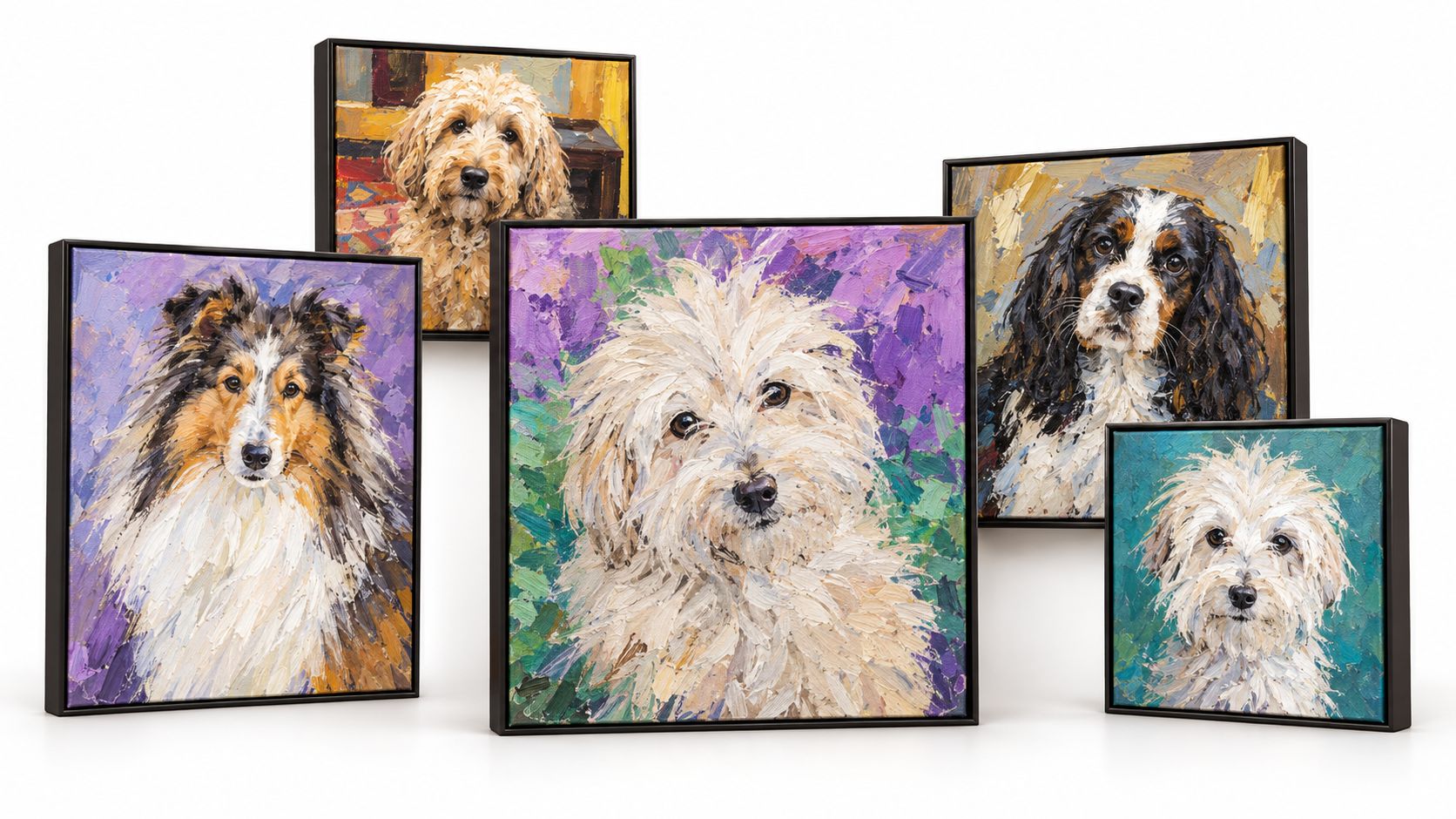
Match the format to your priorities
- Candid photography: My recommendation when a particular moment matters most. Keep the meaningful surroundings, but crop distractions that compete with the dog.
- Fine art prints: Consider these when you want an artist's interpretation without commissioning an original. Check the printing medium and framing requirements before ordering.
- Stylized illustration: A strong choice when shape, expression, or humor matters more than photographic detail. Ask to see how the artist handles dogs with similar features.
- Original painting or mixed media: Choose this when you want to discuss the composition with an artist and own the resulting original. Agree on the background, crop, and approval process before work begins.
For an acrylic commission, the William Tucker Art Acrylic Pet Painting Final Payment listing describes a photo-based portrait on gallery-wrapped canvas, with final payment made after preview images meet the client's expectations. It's a commission-completion listing, not a ready-made framed print.
My preference is to preserve personality without insisting on literal surroundings. A recognizable face against an interpreted background can feel more at home among collected artwork than a faithful rendering of the kitchen floor.
Getting a Reference Photo Worth Framing
Sharp eyes matter more than a beautifully blurred background. Before asking an artist or printer to work from a photograph, inspect the face closely. A small phone preview can conceal softness that becomes distracting when enlarged.
Start beside a window or in open shade. Get down to the dog's eye level and keep the session relaxed. You're looking for a familiar expression, not a prolonged obedience test.
Use this visual checklist to organize the session.
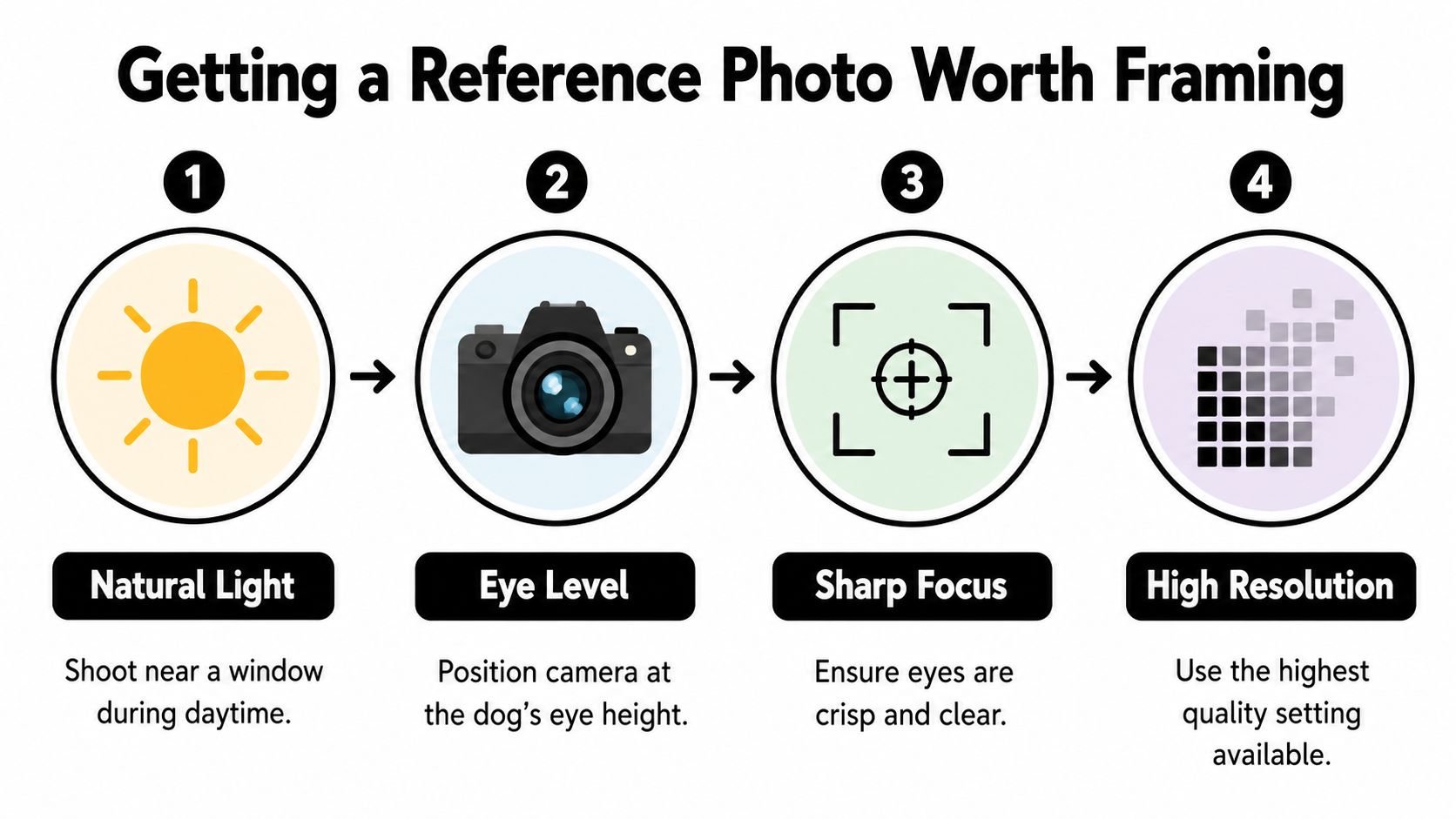
Prioritize focus before background blur
For a camera with manual controls, Aperture Authority's pet photography workflow recommends continuous autofocus with animal-eye detection, at least 1/500 second for ordinary movement, and approximately 1/1000–1/2000 second for running or jumping; its starting exposure is around f/4, 1/500 second, and ISO 400, with f/5.6 a safer aperture when the face needs greater depth of field.
Use those settings as a starting point, not a substitute for checking the result. Increase sensitivity rather than sacrificing the shutter speed needed to keep the eyes crisp.
- Capture a burst: Give yourself a choice of expressions instead of relying on a single exposure.
- Inspect the original: Enlarge the eyes on screen and reject frames with motion softness, even if the pose is charming.
- Keep useful alternatives: Send the artist a clear main reference plus supporting views that explain markings or personality.
- Avoid heavy editing: Let the artist see the coat and facial structure without aggressive filters or artificial blur.
Practical rule: A reference photo should explain the dog clearly before it tries to impress anyone photographically.
For more help preparing the session, use these tips for photographing pets. Ask your artist or print provider to approve the original file before committing to the finished size.
Picking Frame Materials, Glazing, and Mats
Buy the protective framing package before spending extra on decorative molding. An elaborate frame won't compensate for unsuitable backing or artwork pressed against the glazing.
For photographs and works on paper, Western Australian Museum conservation guidance recommends archival backing, UV-filtering glazing, and separation between the artwork and glazing. Treat those as specifications to discuss with the framer, not extras to consider after choosing a finish.
Choose the whole package
I'd compare solid wood, metal, and MDF samples in person rather than choose from a catalog photograph. Use wood when its visible character supports the picture, metal when you want a restrained outline, and MDF only after checking the construction and suitability for the intended room. Don't assume any material name guarantees good framing.
Ask the framer what they recommend for your particular artwork and environment. A glazed photograph and a gallery-wrapped acrylic painting shouldn't automatically receive identical treatment.
Frame and Glazing Options at a Glance
| Option | Best For | Watch Out For |
|---|---|---|
| Solid wood molding | A visible, furniture-like border | Paying for ornament before protective components |
| Metal molding | A clean, restrained outline | Choosing a profile without checking the complete assembly |
| MDF molding | A decorative option to evaluate against your budget | Assuming the finish tells you about construction or room suitability |
| Standard glass | A baseline option to discuss | Assuming unspecified glass provides UV protection |
| UV-filtering glass | A conservation package for light-sensitive work | Treating filtration as permission for direct sunlight |
| UV-filtering acrylic | An alternative glazing specification to discuss with the framer | Assuming every acrylic sheet has the same protective properties |
| Archival mat or spacer | Keeping appropriate separation around paper artwork | Letting the image touch the glazing |
| Archival backing and reversible mounting | Supporting the artwork within the frame | Accepting permanent mounting without discussing consequences |
Ask about UV filtering and glare control separately. Tell the framer where the windows are, then request glazing samples so you can compare the view rather than rely on product names.
For matting, I favor a quiet color that gives the image breathing room. Ask for archival materials and a separation appropriate to the medium. There's no universal gap measurement to apply blindly to every dog portrait.
Sizing the Artwork for the Wall and the Room
Measure the finished frame, not just the picture inside it. A generous mat and substantial molding can change how much wall the piece occupies.
This room example is useful for judging the relationship between a portrait, the sofa, and the surrounding blank wall.
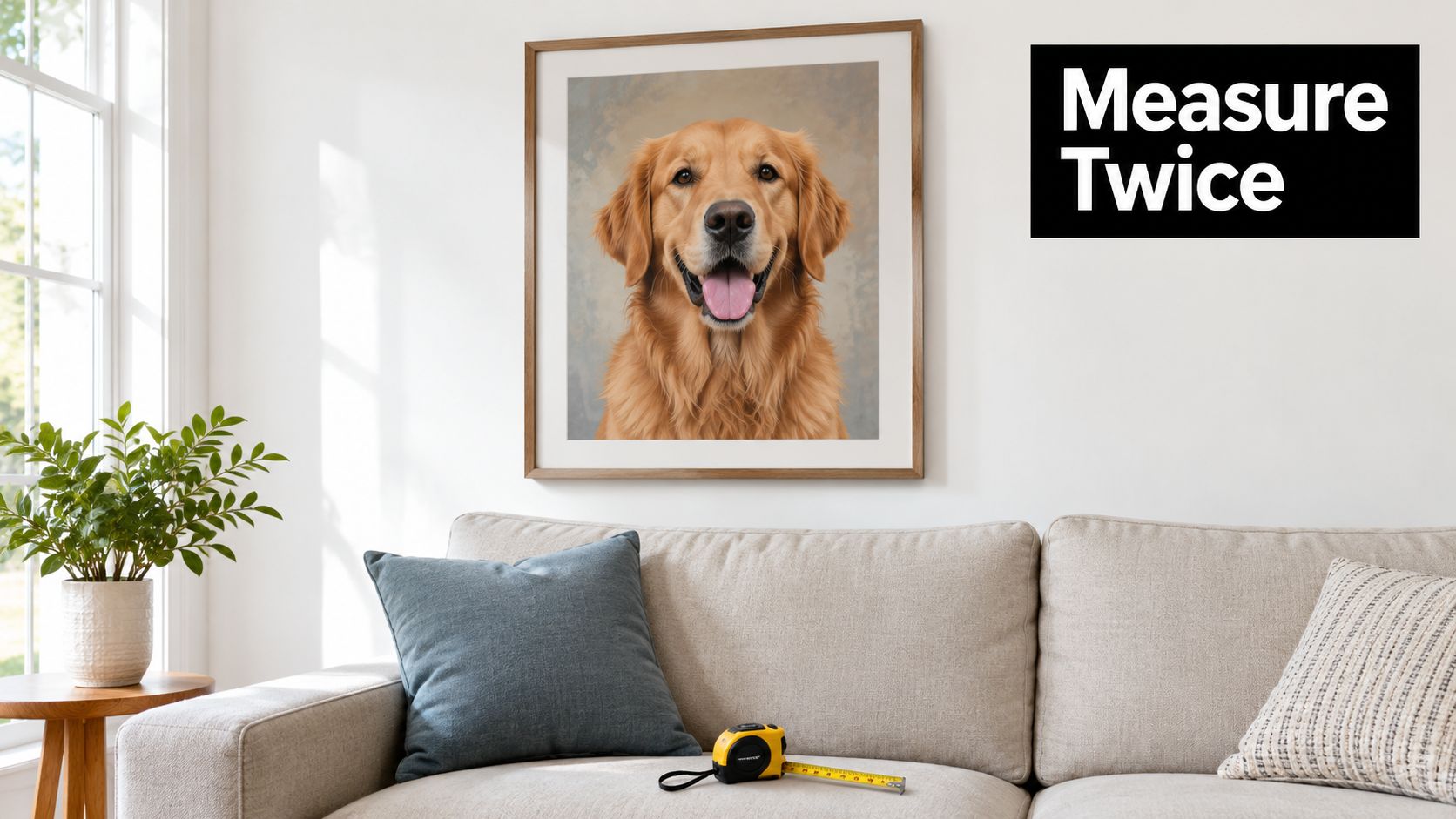
Test the outline before ordering
Cut paper to the proposed outer dimensions and attach it temporarily to the wall with a surface-appropriate method. Then look from the doorway, the sofa, and the route you walk through the room.
- Judge it with the furniture: Above a console or sofa, consider the whole grouping rather than centering automatically on the wall.
- Use the normal viewing distance: A detailed portrait intended for close inspection needs a place where you'll naturally approach it.
- Check the expression: Squint from across the room. If the dog's face becomes an unreadable patch, reconsider the scale or crop.
- Test the height: Position the center comfortably for the way you use the space. A seated reading corner calls for a different judgment than a standing hallway.
I wouldn't size a portrait according to the dog's physical size. A small terrier can carry a substantial painting, while a large dog can make a compelling intimate study. Composition and viewing distance matter more.
If you'd like a moving reference while considering the arrangement, use the video below alongside your wall mock-up.
Before making holes, leave the paper outline in place while you use the room. Notice whether you keep wanting to raise it, reduce it, or move it away from nearby objects. Make those changes while they're still easy.
Making the Portrait Work with the Rest of the Room
A home can acknowledge its dog without turning every wall into a pet-themed display. Give the portrait a relationship with the other art, not a collection of matching novelty accessories.
Consider a detailed canine face against an abstract coastal background. Beside wildlife artwork or a nature scene, that portrait can belong to a broader interest in nature. The connection might be color, atmosphere, or subject matter rather than identical frames.
Coordinate without matching everything
I'd borrow a background color from an existing painting before trying to match the dog's coat to the furniture. Keep the animal recognizable, but let the artist interpret the surrounding space.
These prompts can help you assess the portrait as part of the room.
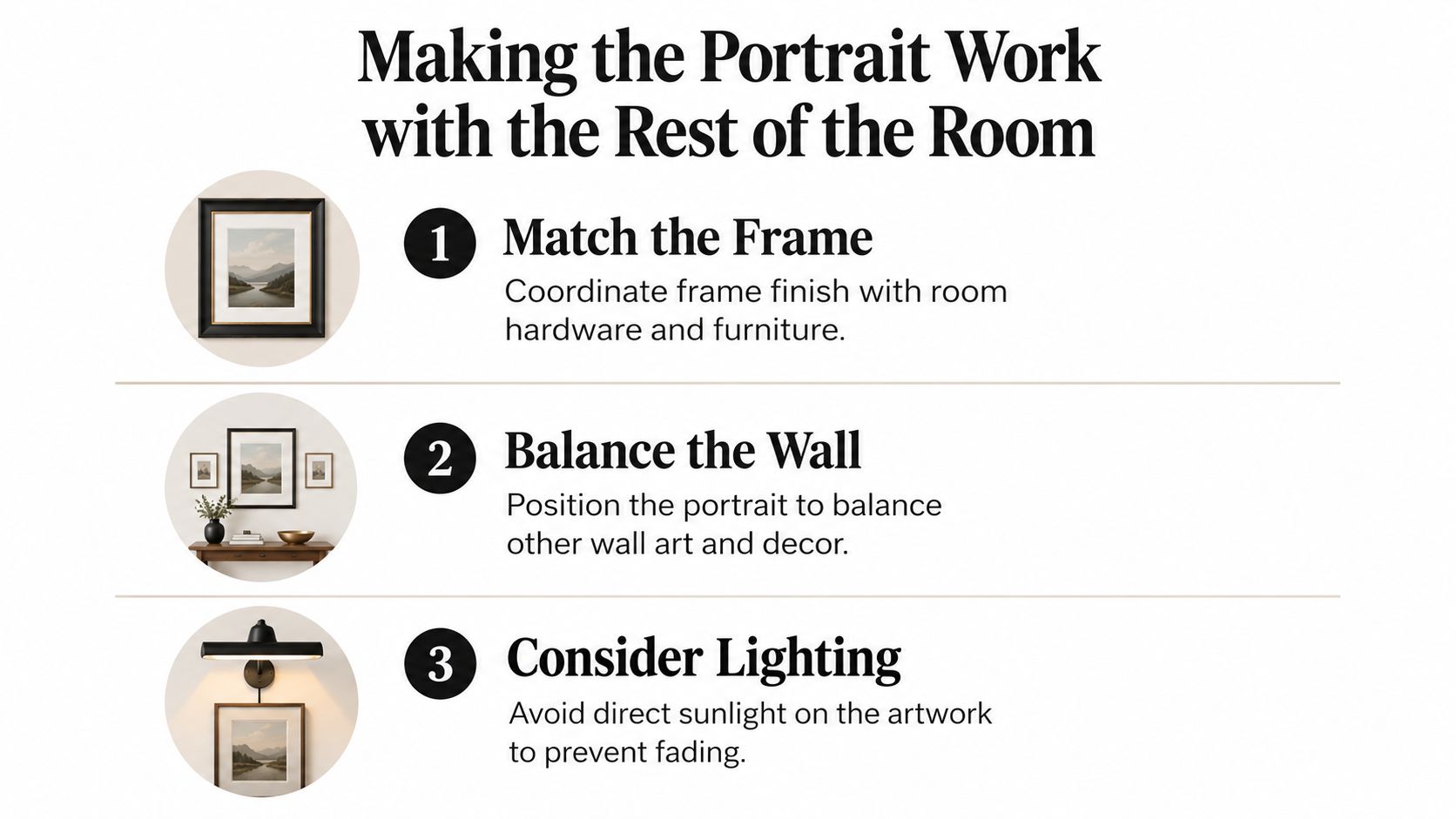
- Repeat selectively: Echo a frame finish, background tone, or visual weight already present nearby. You don't need to repeat all of them.
- Allow breathing room: Keep leads, storage baskets, and small ornaments from crowding the portrait just because they share a canine theme.
- Consider daily traffic: In a busy passage, ask the framer about an appropriate assembly and secure installation.
- Check actual reflections: Look at the proposed location during normal use. Choose glare-control options based on what obscures the image from your usual viewpoint.
The pet-centered home design discussion from Living Spaces provides context for considering pets in household design. My recommendation is to apply that thinking with a light touch: let the portrait acknowledge a real companion while still belonging to your wider collection.
For help balancing subject, palette, and surroundings, consult this guide to choosing wall art. Aim for a room where the dog portrait feels inevitable, not isolated.
Caring for Framed Dog Pictures Over Time
Choose the display location with preservation in mind, then make inspection part of your household routine. A meaningful portrait deserves more attention than an occasional wipe across the glass.
Chubb's artwork protection guidance advises keeping framed art away from direct sunlight, radiators, vents, bathrooms, and damp exterior walls, and gives practical collection conditions of 40–60% relative humidity and 20–22°C. Use those ranges as a planning reference, not a promise that every medium has identical needs.
Make a manageable care routine
Walk past the picture at different times of day before settling on its permanent location. Don't choose a sunroom or steamy kitchen merely because the colors look good there. If you're unsure about a coastal home, seasonal humidity, or an exterior wall, describe those conditions to the framer.
My annual inspection checklist is straightforward:
- Look at the surface: Check for condensation, waviness, new marks, or changes that weren't visible before.
- Inspect the assembly: Look for loose corners, movement inside the frame, or backing that no longer sits as intended.
- Check the hanging hardware: Confirm that the fittings remain secure and appropriate for the finished piece and wall.
- Review the surroundings: Notice whether furniture, heating equipment, curtains, or room use have changed since installation.
- Ask before intervening: Take concerns about the artwork itself to a framer or conservator rather than trying household remedies.
For installation planning, Stahl Home Center's picture hanging step by step is a useful companion to the wall mock-up. Have the framer confirm the hardware requirements for your finished piece.
Clean the exterior, not the artwork
Ask for cleaning instructions for the specific glazing installed. Use a suitable soft cloth, apply any approved cleaner to the cloth rather than spraying the frame, and keep moisture away from the edges. Don't open the package to clean a mat or straighten the image yourself.
If you see moisture inside, shifting artwork, or damaged glazing, arrange a professional inspection. Ask whether the mounting or glazing needs replacement rather than requesting a new decorative frame.
The best framed dog picture protects a memory while still feeling like art in your home.
This week, choose the expression and medium, photograph the intended wall, and take both to an artist or framer. That gives you a concrete starting point for discussing size, protection, and placement together.
William Tucker Art offers custom acrylic pet portraits alongside wildlife and coastal artwork, including detailed animal subjects with abstract backgrounds. Visit William Tucker Art to explore that approach and discuss a portrait of your dog, with your reference photograph and intended display space in mind.