
You've found a portrait sample with a lovely face and a background that would suit your living room. But before you order, you look back at your own dog: the uneven ears, the pale patch beside the nose, that slightly skeptical expression. Will the finished portrait capture those details, or just look like a nice dog of the same breed?
The best personalized dog portraits start with practical decisions, not decorative ones. Choose what you want to keep, give the artist references they can trust, and settle the likeness before anyone gets distracted by frame colors or beautifully painted fur.
Pick the Portrait Format Before You Spend
Say you order from a cute sample and receive a cheerful spaniel face. The painting is attractive, but your spaniel has a longer muzzle, a crooked blaze, and a much quieter expression. The disappointment isn't really about style. You expected an individual portrait and received something closer to a breed illustration.
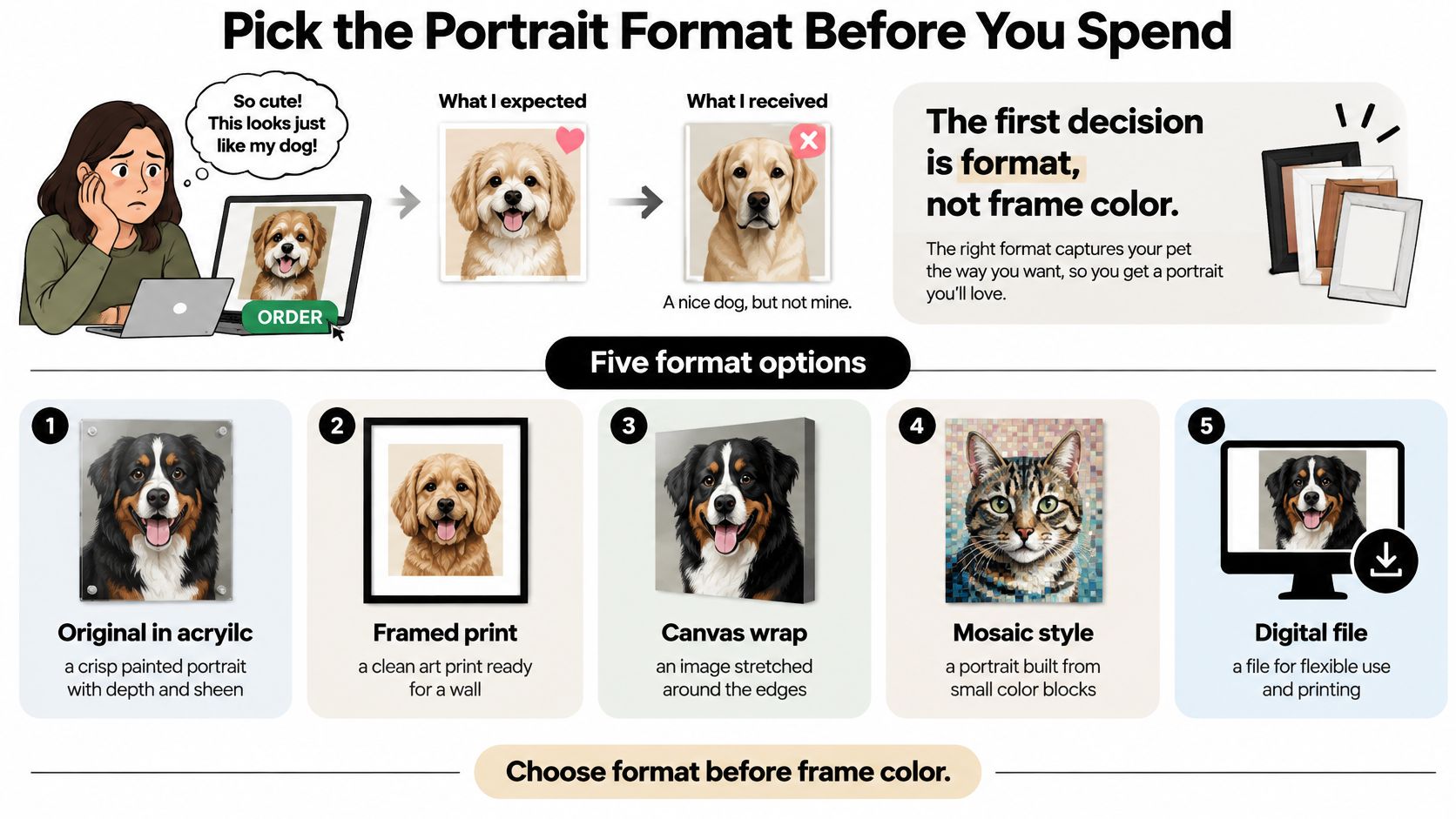
Your first decision is format, not frame color. A physical original, a commissioned digital drawing, and a generated image involve different kinds of work and leave you with different things.
Which personalized dog portrait format fits the job
| Format | Best for | Likeness control | What you keep | Typical pace |
|---|---|---|---|---|
| Original painting | Memorials and collectors | Artist interprets your photos | Unique canvas or panel | Painting and drying determine readiness |
| Digital illustration | Prints and gifts | Artist-controlled | High-resolution file | No paint-drying stage |
| AI portrait | Casual social images | Requires close checking for altered features | Generated file | Generation followed by selection |
| Photo print | One real moment | Exact photographed appearance | Print only, unless a file is included | Printing and dispatch determine readiness |
| Embroidery | Textile collectors | Features translated into stitches | Textile artwork | Hand stitching sets the pace |
An original in acrylic, oil, or mixed media gives you a physical object shaped by an artist's decisions. It's a strong choice when brushwork, surface texture, and the experience of keeping the original matter, particularly for collectors and memorial buyers.
A commissioned digital illustration suits gifts and repeat printing. Agree on file dimensions, intended print size, and printing permission in writing. A file that looks crisp on a phone isn't automatically suitable for a large wall print.
Match the purchase to its purpose
An AI portrait can be reasonable for a casual social image, but don't rely on it without checking markings, eye color, and age. A photo print preserves an actual photographed moment, though enlarging it won't recover detail missing from a blurry snapshot. Embroidery makes sense when you want the tactile character of thread, rather than the quickest route to a painted likeness.
This visual comparison also shows how presentation choices, such as a framed print or canvas wrap, differ from the method used to create the image.
Budget deserves the same attention as sentiment: 22% of pet owners reported spending less on pets than the previous year in the industry reporting summarized by Petfood Industry. Personalized doesn't automatically mean better value.
Practical rule: Screen-only use can stay digital. For a living-room focal point or memorial, start by considering an original, then weigh it against what you actually want to keep.
Circle the table row that fits your purpose before contacting an artist.
Sizes Mediums and Frames for Real Walls
Dog portrait sizes and how to hang them
Treat these as example layouts to test with paper templates, not universal room-size rules. Dimensions are in inches.
| Size | Where it belongs | Medium that suits it | Framing |
|---|---|---|---|
| 8x10 | Shelf, desk, or small gift | Acrylic or oil on panel | Optional small frame |
| 11x14 | Bedroom or hallway | Acrylic or oil | Mat and frame if on paper |
| 16x20 | Beside a sofa | Acrylic, oil, or mixed media on canvas | Gallery wrap or simple frame |
| 18x24 | Focal wall | Oil or mixed media on canvas | Gallery wrap can stand without an outer frame |
| 24x30 and larger | Wide wall with open space | Oil on canvas | Hanging hardware matched to the finished weight |
Take a tape measure to the actual wall. Cut a paper template, attach it with wall-safe tape, and look at it from the doorway and your usual seat. Include the frame's outer dimensions rather than measuring only the painted surface.
The size of the dog within the composition matters too. A close head study can feel substantial on a modest panel. A full-body dog surrounded by scenery needs more room if you want to read the expression from across the room.
Choose the surface before the frame
Acrylic suits crisp edges and layered color, and its surface generally becomes handleable sooner than oil. Oil allows gradual blending through soft fur transitions, but a dry-looking surface doesn't mean the painting has finished curing. Don't enclose a curing oil painting beneath tight glazing.
Mixed media can add texture and contrast on canvas or a cradled panel. Ask what materials the artist intends to combine and whether the surface will be smooth, visibly brushed, or raised enough to cast small shadows.
For framing, distinguish stretched canvas, rigid panel, and paper:
- Canvas: A gallery wrap can hang without an outer frame when its edges are intentionally finished.
- Panel: A suitable frame can protect exposed edges and give a small portrait more presence.
- Paper: Use a conservation-quality mat and UV-protective glazing, keeping the artwork away from direct contact with the glazing.
The guide to framed dog pictures can help you think through the relationship between portrait and frame.
Choose hanging height by sightline and furniture clearance rather than forcing every room into the same measurement. Over a sofa, leave enough clearance that the painting won't be struck by someone leaning back.
Exclude direct sunlight, steamy cooking areas, and narrow passages where bags or shoulders might catch the frame. Then write the size, medium, support, and background into the commission description so the quote matches the wall you've chosen.
Photos That Keep Your Dog Recognizable
A portrait can have a lovely palette and still miss the dog if the muzzle is too short or the ears sit at the wrong angle. Start with references, since palette cannot fix a muzzle drawn too short.
A close crop of the eyes and nose may capture a favorite expression, but it leaves out the outer head contour, including the ears and cheek shape. Give the artist a view that shows the whole head, so the face has the proportions that make your dog recognizable.
Research on canine face discrimination discussed in Animal Cognition highlights visual identity cues and differences between familiar and unfamiliar faces. It does not measure how people judge portrait likeness, but it supports a practical point: breed features alone may not capture an individual dog.
Build a reference set with a clear lead image
Choose several sharp, evenly lit photographs taken from a similar viewpoint, then name one as the main reference. Supporting photos can clarify details, but one clear lead image helps prevent the artist from having to reconcile conflicting head angles.
- Choose the clearest view. Look for sharp eyes, an undistorted muzzle, and visible ear edges. Photograph at your dog's eye level rather than leaning over their head.
- Use other images to show coat color, chest patches, scars, or details hidden in the main photograph. Label what each picture is meant to clarify.
- Keep the expression coherent. Combine a relaxed mouth with tense eyes and defensive ears only if that mix genuinely reflects your dog.
- Send original files through the artist's requested channel. Social-media downloads can lose detail, even when they look clear on a phone.
A daytime phone photo can work well if the eyes and markings are distinct. For black fur, soft window light can show the shapes of the face instead of leaving the head as a dark silhouette.
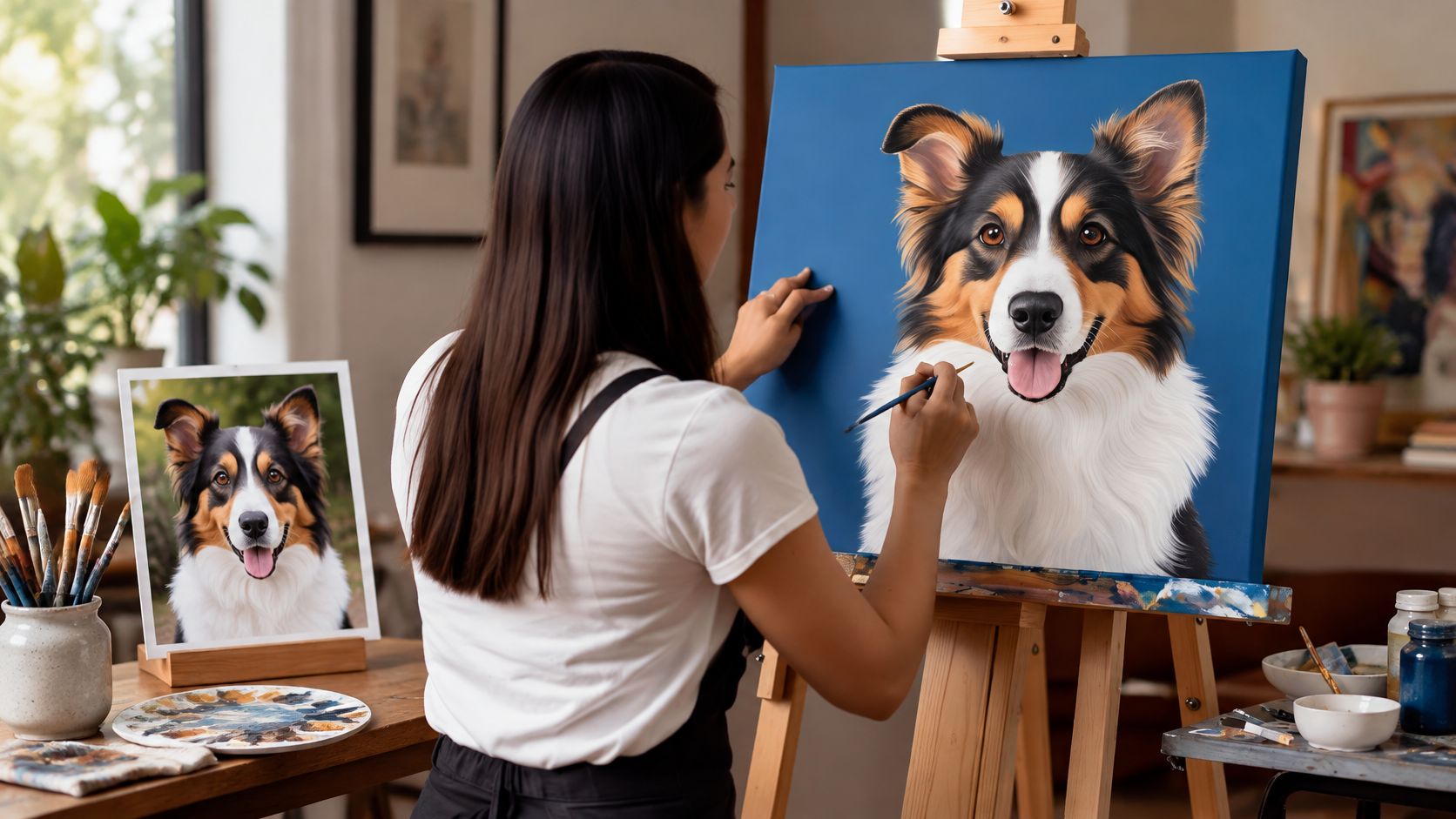
The deposit image below identifies William Tucker Art's pet portrait commission offering. It is not a reference photo of a dog, so use your own photographs to show the artist your subject.
Mark the details that must survive interpretation
Point out eye spacing, muzzle shape, ear carriage, coat pattern, and head outline. Use concrete notes: the left ear folds forward, the white blaze narrows above the nose, or the lower lip shows when the mouth is closed. These details help distinguish your dog while leaving room for the artist's interpretation.
For an old print, photograph it square-on in indirect daylight. Keep it flat, avoid reflections, and mention which colors have faded. Excessive sharpening can create false edges that look like real markings.
The dog portrait photo guide offers more guidance on choosing useful images. For a William Tucker Art pet portrait, you can send reference photos as email attachments or by text to 910-273-2420.
Before sending, check:
- Whole head: Include the ear tips and outer silhouette.
- Clear eyes: Keep both eyes in focus for a front or three-quarter view.
- Distinctive markings: Add a supporting view of important chest or ear patches.
- Useful notes: Separate what the photograph shows from what you remember.
How to Commission the Portrait
A portrait commission works best when you and the artist agree on what must remain recognizable and what can be interpreted. A clear commission agreement defines which decisions are open to interpretation, from the background to the brushwork, and which details should stay faithful to your dog.
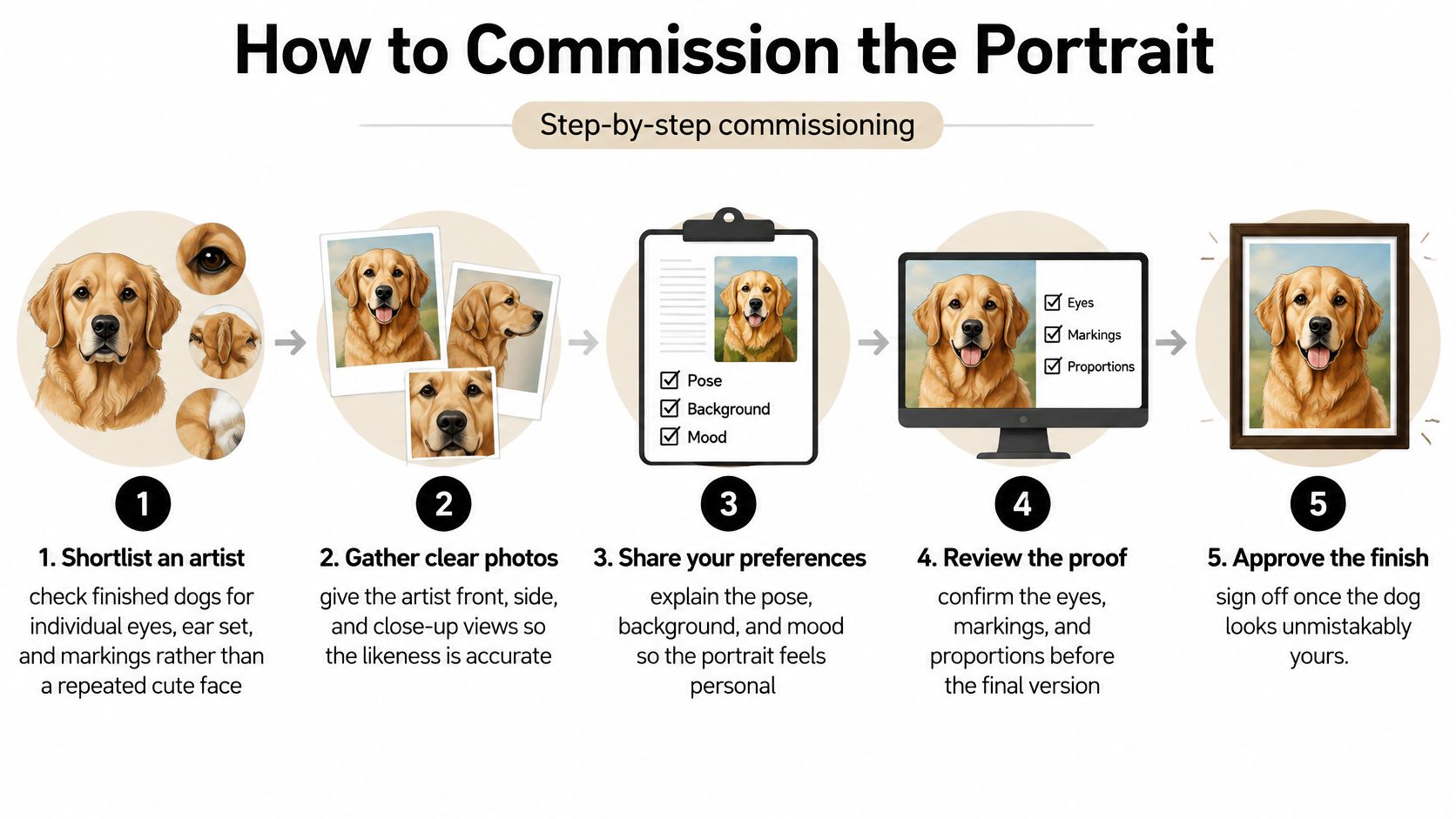
This visual outlines the broad path from choosing an artist to approving the result.
Put the important decisions in writing
- Shortlist by individuality. Look at how different artists handle eye shape, ear position, and muzzle proportions. If every dog has the same expression, the style may be taking priority over likeness. Check whether you are commissioning an original, an illustration, or a print, since those are different kinds of finished work.
- Explain the occasion and personality. Tell the artist whether the portrait is a gift, birthday celebration, or memorial. Describe your dog in everyday terms, such as watchful, goofy, or reserved. For a memorial, share what feels true to your family rather than defaulting to a stock heaven scene. This context helps guide the interpretation without prescribing every brushstroke.
- Set out the scope. Agree on the number of dogs, dimensions, medium, support, pose, and background. Include whether the collar stays and whether you want a head-only or full-body composition. A simple background and a detailed setting ask for different decisions, even when the dog remains the focus. For William Tucker Art, the client supplies the photographs and other reference materials. See the Photos section for guidance on choosing them.
- Agree on the review stage. Ask whether the artist's process includes a grayscale drawing or broad color block-in. Reviewing proportions and expression before detailed fur is added can make feedback easier to apply. Confirm which revisions are included; approval should not be mistaken for permission to redraw without limits.
Give feedback the artist can use
Point to the reference and name the detail that feels off. “The muzzle looks shorter than in the main photo” gives the artist a specific feature to compare. “Make it more like him” leaves the intended change unclear.
Approve the dog before you approve the decoration.
A useful review also separates likeness from style. You might accept an abstract background while asking for the ear angle or eye spacing to match the reference more closely. That distinction helps the artist preserve the character of the dog while interpreting the rest of the composition.
For a moving-image companion to the commissioning process, you can watch this video.
Before your first message, note your wall measurement and spending ceiling. These give the conversation a practical starting point, while the written scope clarifies what the commission will include.
What Drives Price and Turnaround
Compare the scope of each quote, since artwork size alone says little about effort. A simple head study and a detailed scene can require very different decisions, even on the same canvas. The table helps identify what to clarify before choosing a commission.
| Driver | What you're paying for | What can affect completion |
|---|---|---|
| Medium | Materials and the artist's working method | Layering, drying, and finishing |
| Size | A larger support and more surface to resolve | Handling and painting requirements |
| Number of dogs | Separate likenesses within a shared composition | Additional references and approvals |
| Background | Plain color, abstract treatment, or a specific setting | Composition and detail |
| Revisions | Changes within the agreed review scope | Late changes can reopen finished work |
| Delivery and display | Packing, shipping, framing, and hardware | Destination and installation needs |
A quote is easier to assess when it describes what the finished commission includes. Ask which materials and support the artist will use, what kind of background is included, and how revisions are handled. Those details show where two similarly sized portraits may differ in effort and finish.
Decide which differences matter to you
For an original painting, the materials, drawing, painterly interpretation, and physical surface all contribute to the finished work. Ask what the support is and how the painting will be protected. A label such as “premium” is less useful than a clear description of the materials and finish.
For a digital image, check whether the file can be printed at your intended size, whether corrections are included, and whether the permission covers your planned use. The pet portrait commission pricing guide offers further guidance on cost considerations. Include framing, applicable international shipping, and suitable hanging hardware in your overall budget, rather than setting aside the entire amount for the artwork.
Treat timing as conditional
For William Tucker Art commissions, most portraits should be completed and delivered within 7–10 business days after all client-supplied reference materials arrive, provided there are no delays on the client's end. This is an estimate, not a promised delivery date.
The timeline varies with the portrait's size and number of subjects, whether a custom background is needed, and how long payments and reference materials take to arrive. The artist cannot be held to a specific timeline. To help keep the process on track, confirm the composition before work begins and send the required materials promptly.
- For a gift: Share the occasion date before work begins and ask whether the timing is workable.
- For a complex portrait: Settle the composition before discussing a delivery estimate.
- For a tight budget: Simplify the requested scope so the quote reflects the work you want.
Memorials Multiple Dogs and Difficult Photos
A family wants to remember an older dog, but their favorite photograph shows him before his muzzle turned gray. One person may treasure his energetic younger face, while another remembers the silver eyebrows he had in his later years. Both choices are valid, and the decision comes first: which period of the dog's life should the portrait hold?
There's no required time to commission a memorial. Some families begin during anticipatory grief; others wait until opening the photo folder feels manageable. A review of pet-loss grief and memorialization discusses the emotional significance of pet loss and symbolic remembrance, without prescribing a particular memorial format.
Let the family's memories set the scene
Use photographs from the chosen life stage as the main references. Earlier or later images can help clarify a lasting marking, but should not shift the dog's age in the portrait. Format and likeness shape the result: choose the life stage and expression first, then decide how the setting and details can support them.
For multiple dogs, give the artist their relative sizes, especially if they never sat together. Poses need to share a plausible viewpoint, and the family should decide whether a dog who has died appears beside a living companion.
- Meaningful objects: A worn ball, collar, or familiar blanket can add personal context without distracting from the dogs.
- Imagined settings: Wings, clouds, or a heavenly scene belong only if they reflect what the family wants. Memorials need not follow a stock image of heaven.
- Inscriptions: Keep lettering away from the face. A title on the back or a separate plaque can carry the words without competing with the expression.
Work gently with uncertain references
With damaged or unclear photographs, separate known details from uncertain ones. An ear shape may be visible while eye color is not. Tell the artist which features can be softened and which should not be reconstructed from assumption.
A family does not need to review every photograph at once. One person can gather a small selection and label the trusted images; others can add notes when they feel ready. Agree on the expression before settling minor choices such as background color. A relaxed, familiar face often carries more of the dog's personality than a perfectly agreed-on setting.
No single memorial is the normal way to grieve a dog.
When explaining the request, say why the selected images matter and what the artist should avoid guessing. For example, a family might explain that it wants to review photographs gradually, ask the artist to use labeled images from the chosen life stage, and request approval before unclear markings, accessories, or a memorial setting are added. Each detail helps distinguish reliable references from family preferences, while leaving room to make decisions at a comfortable pace.
Book the Portrait and Care for It
A portrait is ready to book when the format, reference set, size, and medium are settled. If the available photos are too dark to judge the eyes, wait until you can locate an original photograph or discuss a simplified treatment with the artist. A clear reference gives the artist a better basis for interpreting the dog.
Read the agreement before paying
Commissioning a portrait from William Tucker Art means agreeing to the Pet Portrait Order Agreement. Read its payment terms, copyright provisions, and image-use conditions before committing.
William Tucker Art holds the full copyright and reproduction rights to pet portrait paintings. Clients may use an image of a commissioned painting for individual use; other uses require written permission. Physical ownership and reproduction rights are separate, so read the terms on each.
Keep the agreed description and approval messages with your order records. If the portrait is a gift, a note naming the dog and explaining why you chose that image can help the recipient understand its significance.
Keep care simple
A painted portrait needs gentle handling and a display location suited to its materials. Use the artist's care notes for the specific support and finish.
- Dust lightly: Use a clean, soft brush on a stable painted surface, not a wet cloth. Leave loose, flaking, or sticky areas alone and seek conservation advice.
- Check the fittings: During routine household maintenance, check the wire, D-rings, wall fixing, and frame for looseness.
- Keep the paperwork: Store the artist's material and care notes with the commission records.
- Handle by the support: Lift by the frame or stretcher structure. Avoid pressing on the painted face or carrying the portrait by its hanging wire.
Choose placement and glazing to suit the support rather than treating every portrait like a framed photograph. Open the package carefully and keep its packaging until you have checked the painting.
A pet portrait requires a $50 non-refundable deposit to start. Make the payment once you are comfortable with the reference materials, intended artwork, and order agreement. Payments can be made online at William Tucker Art. Final payment is due upon delivery.
William Tucker Art offers commissioned pet portraits interpreted from the photographs and information the client provides. Bring your chosen photo set, wall dimensions, and preferred medium when arranging the commission.