
The most popular advice about life like animals is also the narrowest: make the subject look photographic. That approach values fur, feathers, eyes, and skin, but it can miss the qualities that make an animal feel present. A convincing animal image may depend just as much on gesture, habitat, material, movement, touch, or the viewer's emotional response.
Artists, museums, educators, and designers create lifelike animal experiences in very different ways. Some use paint or bronze. Others use preserved specimens, silicone replicas, mechanical systems, wax, fabric, or responsive software. Each method makes a different trade-off between detail, durability, interaction, ethics, maintenance, and emotional connection.
William Tucker Art offers a useful benchmark because its detailed wildlife and pet subjects often sit against abstract Louisiana-inspired backgrounds. The contrast gives the animal a clear visual presence while leaving room for atmosphere and interpretation. That combination suggests a practical evaluation lens: subject detail, technical method, viewer connection, practical fit, and conservation potential.
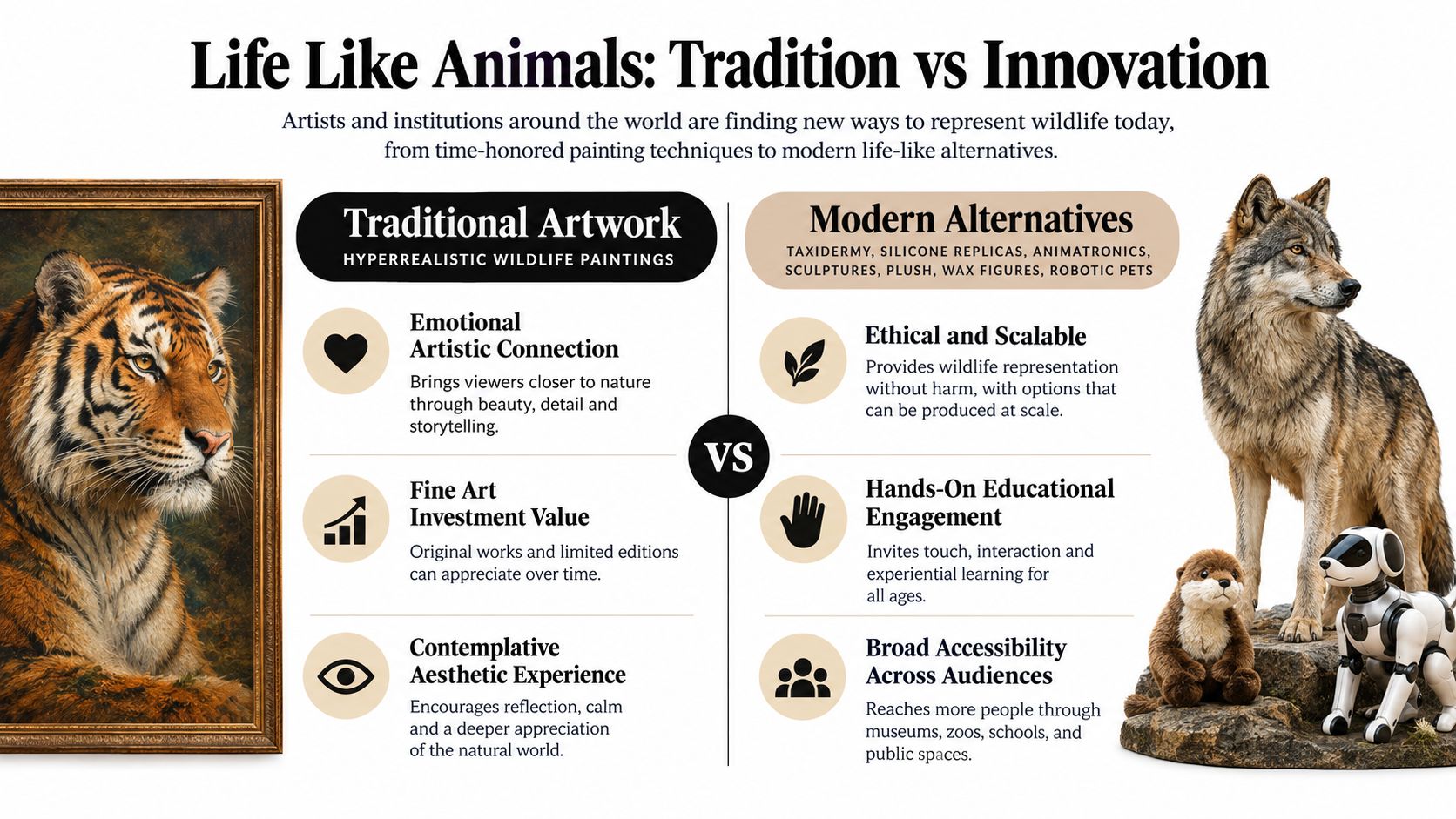
1. Hyperrealistic Wildlife Paintings
A hyperrealistic wildlife painting asks the viewer to look closely. The artist studies anatomy, light, texture, and behavior, then translates those observations into oil or acrylic. The result can resemble a photograph, but paint adds choices that a camera doesn't make automatically. A brushstroke can emphasize an alert eye, a tense shoulder, or the stillness before an animal moves.
William Tucker's wildlife and pet portraits use this tension between precision and abstraction. Detailed subjects can appear against expressive backgrounds connected to Louisiana's wetlands, coast, and changing environments. The background doesn't compete with the animal. Instead, it can suggest habitat, memory, weather, or the pressure people place on natural spaces.
Animal imagery has a remarkably long history. Cave paintings from Chauvet and other prehistoric traditions show that lifelike animals have been central to human art for at least 30,000 years. This art-history overview also traces animal representation through ancient cultures and identifies Paulus Potter's The Bull from 1647 as an important milestone in realistic animal painting. In the 19th century, scientific observation and expressive portraiture became especially influential, as described in this history of 19th-century animal painting.
Practical rule: Ask whether the painting captures a recognizable presence, not only a convincing surface.
Where the format works best
Collectors can commission a species with conservation significance, request an abstract background that reflects a local ecosystem, or build a series showing seasonal changes and different life stages. A painting of an endangered animal can also carry an educational purpose when paired with a thoughtful artist statement.
For long-term display, keep the work away from direct sunlight and use high-quality archival framing. A climate-controlled interior is preferable, especially for valuable original work. Before commissioning, review the artist's approach in this guide to painting techniques for beginners, then discuss reference images, scale, background, and the emotional quality you want the finished piece to carry.
Photographers planning a wildlife trip can also use a practical safari gear list for photographers to prepare for stronger reference material.
2. Professional Taxidermy Mounts
Taxidermy creates a three-dimensional animal presence from preserved skin, an internal form, carefully shaped features, and a designed pose. The strongest museum-quality mounts don't merely display a hide. They reconstruct posture, weight, expression, and habitat so viewers understand how the animal might have occupied space.
This approach has a different authority from painting. A mount shows volume and physical structure from every angle, which makes it useful in natural-history museums, educational institutions, and specialist collections. It can help viewers study antler placement, limb position, beak shape, or the relationship between an animal and its habitat.
Ethics should come before appearance. A responsible commission uses specimens with legal, documented origins, including animals that died naturally where appropriate. Buyers should work with taxidermists who can explain provenance, conservation methods, materials, and future care rather than treating realism as the only measure of quality.
Designing an educational display
A mount becomes more meaningful when it sits inside a clear story. Pair it with species information, habitat interpretation, conservation messaging, maps, or digital content. Protective barriers prevent direct handling, while a carefully designed viewing position lets visitors see the animal's posture without touching vulnerable surfaces.
Display conditions matter because skin, paint, adhesives, and sculpted components can all deteriorate in unstable environments. Museums and collectors should ask for written guidance on light, humidity, temperature, pests, cleaning, and inspection. Regular professional assessments can identify changes before they become difficult to repair.
A mount also has a strong relationship to sculpture. The taxidermist must understand the underlying body, not merely reproduce the visible coat. This overview of zoo animal artwork offers a useful reminder that accurate animal representation depends on both observation and interpretation.
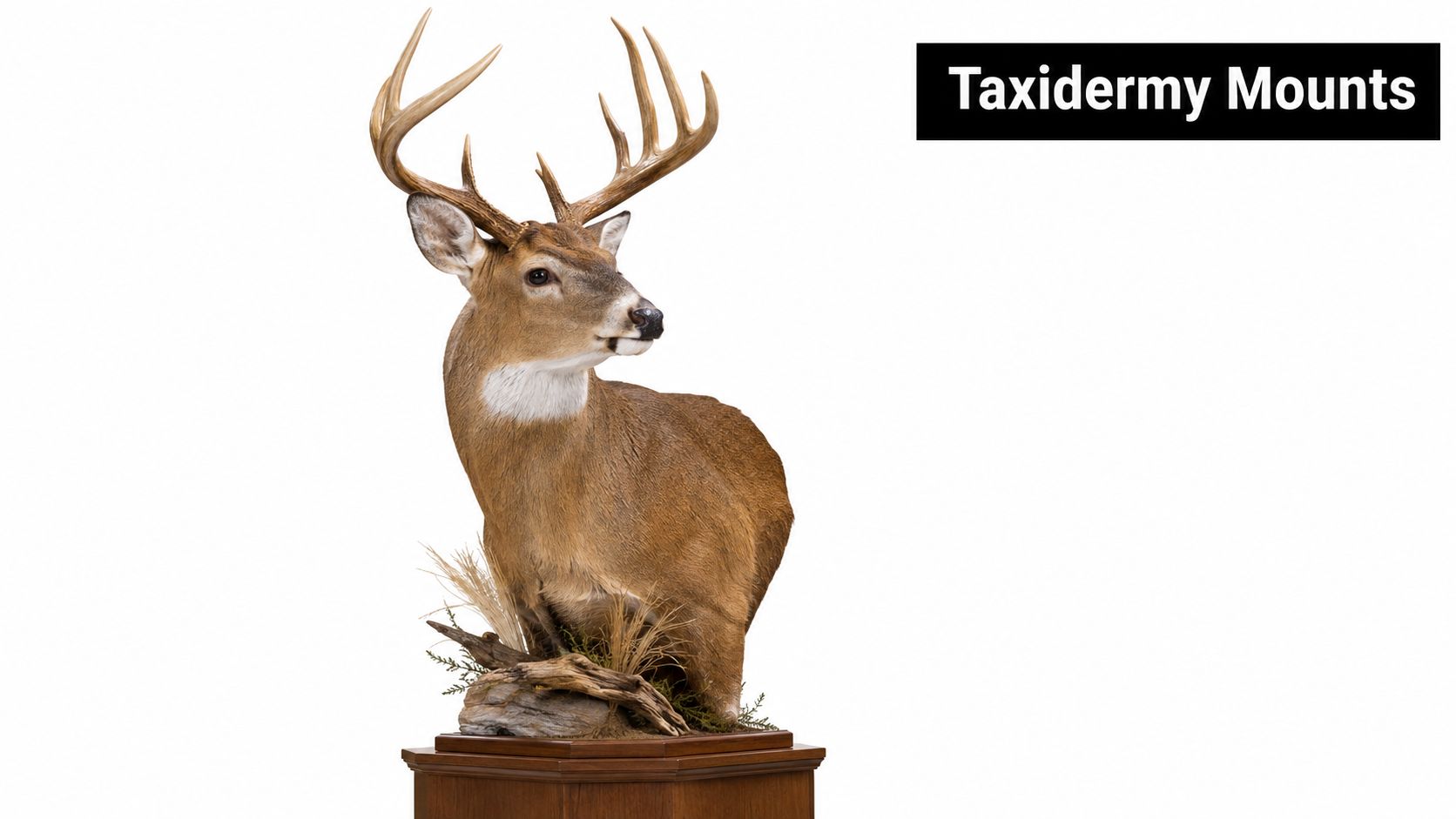
For a private collection, taxidermy is best suited to buyers who accept the ethical responsibilities, care requirements, and historical associations of preserved specimens.
3. Silicone and Rubber Animal Replicas
Silicone and rubber replicas offer a tactile alternative to preserved animals. Fabricators build or cast a model from anatomical references, then add color, texture, eyes, claws, scales, or feathers. The finished object can communicate the animal's form without requiring visitors to handle an irreplaceable specimen.
That makes replicas valuable in classrooms, museum galleries, zoo education programs, and wildlife rehabilitation centers. A child can feel the surface of a bird's wing or compare the texture of skin and scales. An educator can direct attention to adaptations that may be difficult to explain through a flat image.
The material also changes the visitor's role. A painting asks for visual attention, while a replica supports observation through touch. That interaction should be designed carefully, with durable surfaces, rounded vulnerable details where possible, and clear instructions for handling.
Building a useful learning station
A strong display connects the model to a question. Visitors might compare the feet of local birds, examine how a reptile's body moves, or identify features that help an animal live in wetlands. Add labels, diagrams, video footage, or QR codes leading to reliable conservation information.
Local relevance can make the experience more memorable. A Louisiana-focused station could feature an alligator, blue jay, egret, or sea turtle, then connect each subject to habitat, food, migration, or human impact. The replica shouldn't replace living animals or field observation. It should give visitors a safe way to notice details they might otherwise miss.
Touch changes attention. Visitors often remember an adaptation more clearly when they can examine its shape and texture directly.
Commissioners should ask about cleaning, repair, color stability, storage, and the expected handling level. For artists, this resource on animal anatomy reinforces the essential sequence: understand the skeleton and muscles first, then refine gesture and surface detail.
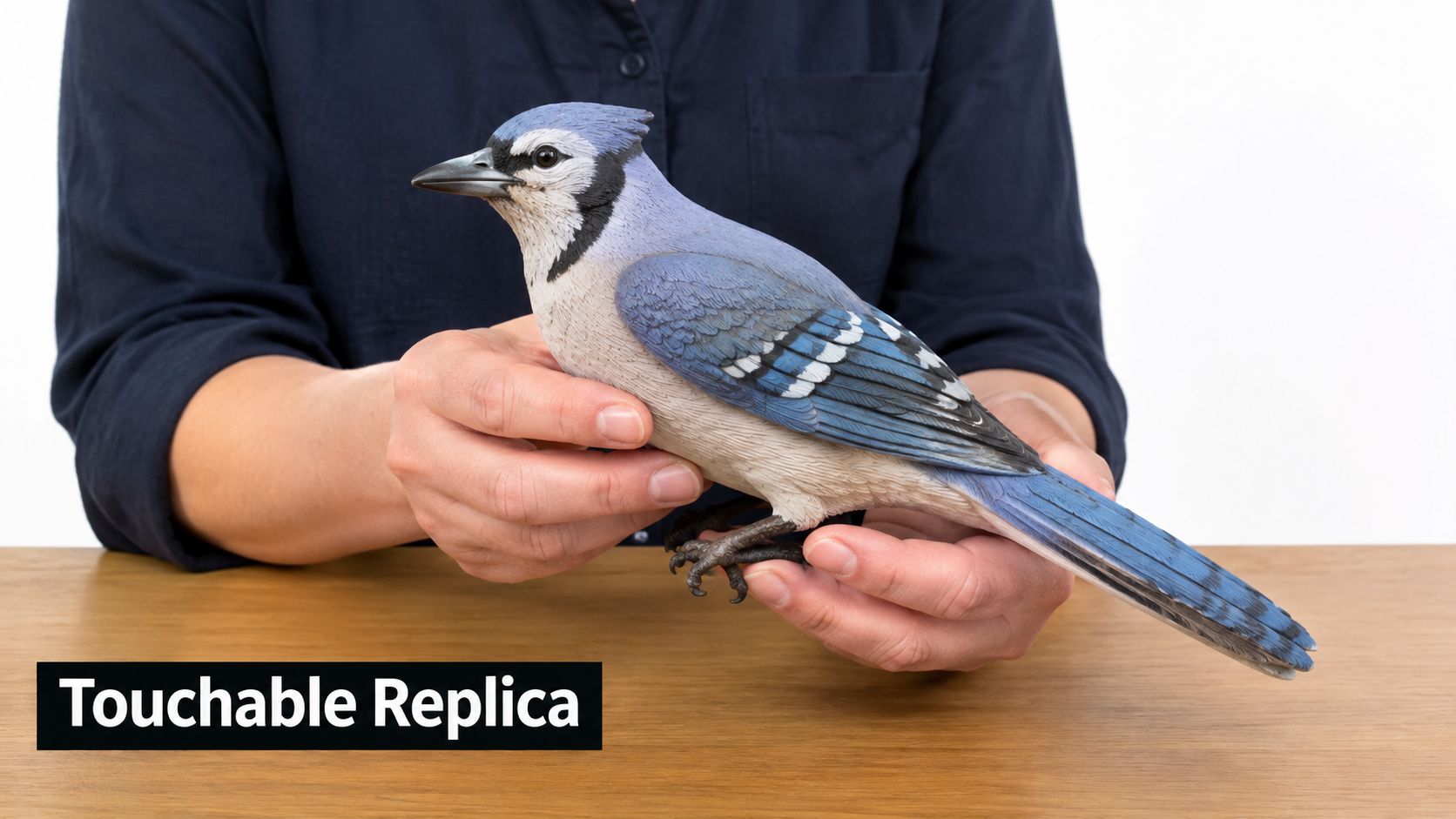
For collectors, a tactile replica may have less prestige than bronze or an original painting, but it can offer stronger educational value and greater freedom to handle the object.
4. Advanced Animatronic Animals
Animatronics create lifelike animals through movement. Pneumatics, hydraulics, sensors, motors, sound, and programmed sequences can produce breathing, turning, blinking, feeding, calling, or defensive behavior. The viewer doesn't only inspect an animal. The viewer waits for it to act.
That difference is powerful in public education. A static crocodile can show teeth and body shape. An animatronic crocodile can demonstrate how it raises its head, opens its jaws, or responds to movement. A bird can turn toward a sound. A mammal can repeat a feeding gesture that helps explain anatomy and behavior.
The best installations define the behavior before building the mechanism. If the educational purpose is communication, the movement should support calls, posture, or social spacing. If the purpose is defense, the sequence should make threat displays understandable rather than adding motion for spectacle alone.
Context makes movement meaningful
Place the machine in a habitat-inspired setting, then combine the performance with concise interpretation. Motion-activated systems can invite visitors to approach, but the display should also work for people who can't stand in one position or respond quickly. Captions, audio description, controls, and predictable cycles make the experience more inclusive.
Animatronics need a maintenance plan from the start. Staff should know how to inspect moving parts, protect sensors, manage sound levels, and pause the exhibit when a fault appears. Programming can also be updated to show different behaviors or seasonal contexts, but every change should preserve the educational purpose.
A short demonstration can show how mechanical timing changes the viewer's relationship with an animal.
For designers planning a large visitor attraction, an interactive ride experience portfolio illustrates how animal movement can become part of a wider narrative environment.
5. Hyperrealistic Sculptural Installations
A sculptural installation gives an animal a physical place in the world. Artists may carve stone, cast bronze, shape resin, mold fiberglass, or assemble mixed materials. Unlike a small collectible, a public sculpture must communicate from a distance, survive weather, and remain legible as people move around it.
That practical demand affects the design. Realistic sculpture isn't only a matter of adding more texture. Artists must establish the correct skeleton, weight distribution, gesture, and silhouette before refining feathers, scales, wrinkles, or fur. Industry guidance for custom animal sculptures identifies scale, viewing distance, dimensions, quantity, and indoor or outdoor placement as important design parameters. One listed bull example uses 1:1 scale and measures approximately 1.6 metres high by 2.3 metres long, showing how physical proportion becomes part of the commission.
Public meaning begins with the site
A sculpture of an alligator near a wetland, an egret along a walking route, or a pelican near a coastal setting can make local ecology visible. The site gives the animal context, while a plaque can provide species information and a conservation message. A well-placed work may also anchor a public art trail, school visit, or neighborhood walking tour.
Community participation improves that relationship. Residents, educators, conservation groups, and local artists can help select the species, location, and interpretation. Their input can prevent a generic decorative object from replacing a meaningful sense of place.
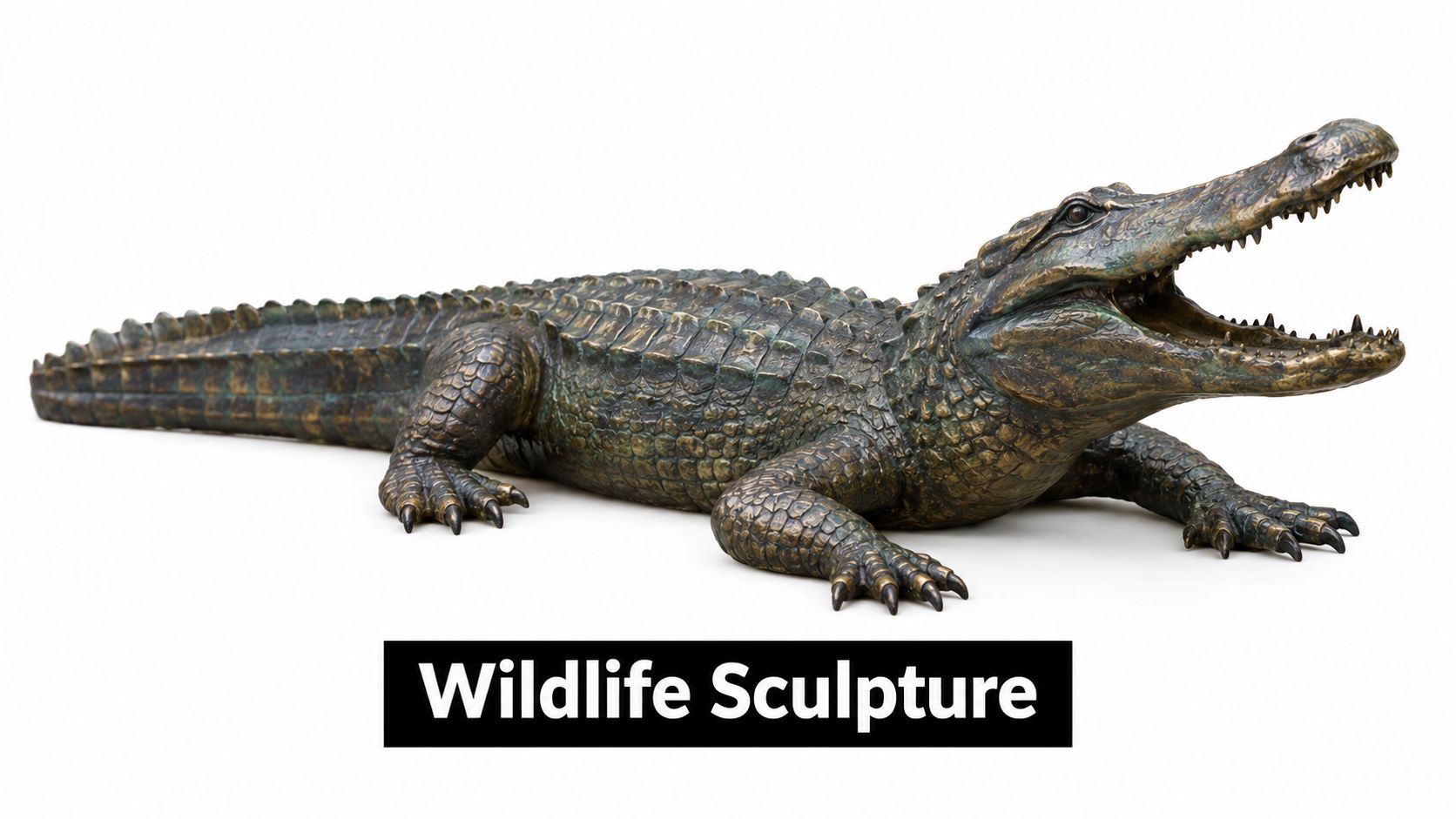
Maintenance should cover cleaning, coatings, drainage, anchoring, repairs, and seasonal inspection. For indoor installations, lighting and visitor flow matter just as much. A sculpture can be emotionally realistic without being anatomically aggressive, especially when the artist uses posture and eye line to create curiosity rather than spectacle.
6. Ultra-Realistic Plush Toys and Collectibles
Plush animals create lifelike impressions through softness, proportion, fabric, stitching, embroidery, and small choices in expression. They don't imitate every biological detail. Instead, they translate a species into an object that can be held, displayed, taught with, or given as a meaningful gift.
Premium makers such as Steiff and Folkmanis Puppets show how fabric construction can support collectible value and expressive character. A plush bird may use layered materials to suggest feather direction. An alligator may rely on carefully shaped ridges and a firm internal form. An embroidered eye can communicate alertness more effectively than excessive surface detail.
The format works especially well for children and informal learning. Teachers can use plush animals in species-identification games, storytelling, habitat lessons, or role-play. A gift shop can connect a regional species to a conservation campaign, while a collector can display a limited-edition piece in a shadow box or dedicated cabinet.
Choosing a meaningful subject
Local species give the object a stronger identity. Louisiana-themed collections might feature alligators, egrets, or sea turtles, with labels explaining habitat and conservation concerns. A custom maker could add an embroidered name, date, or short conservation message, although the design should remain readable and durable.
Buyers should inspect stitching, filling, washable components, dyes, loose parts, and manufacturer guidance. A plush intended for frequent handling needs different construction from one intended for display. Collectors should also retain provenance, edition information, packaging, and care instructions.
Plush doesn't compete with a detailed painting on photographic accuracy. Its realism comes through familiarity, touch, and emotional accessibility. A child may understand an animal's proportions through a plush model before recognizing those same features in a photograph, museum mount, or field encounter.
For that reason, plush collectibles can serve as a gentle entry point into wildlife appreciation. They make the animal present without pretending to replace the animal itself.
7. Museum-Quality Wax Figures
Wax figures occupy an unusual position between sculpture, display design, and theatrical illusion. Artists shape wax over an internal structure, then combine it with materials such as silicone, resin, glass eyes, hair, paint, and textiles. At close range, the surface can carry pores, wrinkles, feather patterns, or subtle color changes. At a distance, pose and lighting do much of the work.
Animal wax figures suit exhibitions that want a strong visual encounter without the ethical and care issues associated with preserved specimens. A museum might commission a regional species, create a reconstructed historical scene, or place an animal figure beside human artifacts to explain shared environments.
The method is most effective when the display gives visitors information beyond “this looks real.” Add habitat details, anatomical diagrams, sound, maps, conservation context, or a record of how the figure was made. That surrounding interpretation turns an illusion into an educational object.
Managing illusion and authenticity
A wax animal can communicate character through a lowered head, raised ears, a turned gaze, or a carefully balanced stance. Those cues often matter more than microscopic detail. If the pose feels biologically impossible, viewers notice the error even when the surface looks polished.
Dedicated exhibition conditions protect wax and associated materials from heat, dust, unstable humidity, and excessive light. Conservators should document the figure's materials and establish an inspection schedule before installation. Repairs may involve more than replacing a surface detail, because the internal structure, paint, hair, and lighting all contribute to the final effect.
Institutional buyers should also consider accessibility. A figure placed behind glass may be visually impressive but difficult for visitors with low vision to understand. Tactile diagrams, audio description, verbal interpretation, and digital models can extend the experience without exposing the original figure to unnecessary contact.
Museum-quality wax work is therefore less about fooling the eye than directing attention. The figure provides an immediate encounter, while the exhibition explains what the animal is, how it lives, and why it matters.
8. Advanced Robotic Pet Companions
Robotic pets represent animals through behavior rather than anatomy alone. Devices such as Sony Aibo, Jibo, Lovot, and Boston Dynamics Spot use sensors, programmed responses, movement, sound, and interaction to create a companion-like presence. Their bodies may not be anatomically accurate, yet people can still respond to their apparent attention, curiosity, or need for engagement.
This form raises a useful distinction. A robotic companion doesn't reproduce an animal's biology. It simulates selected behaviors that people associate with animals. That makes it suitable for discussions about communication, learning, attachment, accessibility, and the differences between living beings and machines.
Museums can use robotic pets in exhibits about animal behavior or human perception. Visitors might observe how a device reacts to touch, movement, voice, or repeated interaction, then compare those responses with footage of a living animal. The contrast helps educators explain that a programmed response isn't the same thing as biological experience.
Designing for access and connection
Robotic companions may support visitors who can't interact comfortably with live animals. A zoo or wildlife center could offer a controlled, low-stress encounter that introduces animal-related concepts without exposing a live creature to crowds. Designers should provide clear explanations so visitors understand what the robot senses, what it can do, and where its behavior comes from.
The strongest projects connect technology to a specific message. A robotic pet could accompany a conservation story, appear beside a traditional portrait, or invite visitors to consider what makes an animal feel individual. Digital portraits can also synchronize with physical artworks, creating a layered experience across gallery walls, screens, and interactive stations.
This approach is especially relevant because surface realism can fail to communicate personality. Recent discussion of AI-generated pet portraits highlights the difference between accurate fur and recognizable behavior or emotional cues. The same question applies here: does the system create a meaningful relationship, or only perform a convincing imitation?
Lifelike Animals: 8-Item Comparison
| Item | Complexity 🔄 | Resources & Cost ⚡ | Expected Outcomes 📊 | Ideal Use Cases 💡 | Key Advantages ⭐ |
|---|---|---|---|---|---|
| Hyperrealistic Wildlife Paintings | Very high, expert technique; 6–24 months | High, studio time, large canvases, archival framing | Strong emotional engagement; collectible value; conservation messaging ⭐⭐⭐⭐ | Private collectors, museum commissions, conservation fundraising | Photographic realism; depth/luminosity; unique fine‑art investment |
| Professional Taxidermy Mounts | High, anatomical sculpting and mounting skills | Very high, $5k–$50k+; conservation & climate control | Durable educational specimens; long‑term study and display ⭐⭐⭐⭐ | Museums, research institutions, zoo exhibitions | Authentic anatomical accuracy; dramatic museum presence |
| Silicone & Rubber Replicas | Moderate, molding, casting, hand‑painting | Moderate, $2k–$15k; washable and durable | Hands‑on tactile learning; accessible education ⭐⭐⭐ | Schools, zoo education, traveling exhibits | Ethical, sanitizable, robust for handling |
| Advanced Animatronic Animals | Very high, engineering, pneumatics, programming | Very high, $50k–$500k+; ongoing technical support | Highly engaging interactive experiences; behavior demos ⭐⭐⭐⭐ | Theme parks, interactive museum exhibits, visitor centers | Interactive realism; programmable behaviors; attention‑grabbing |
| Hyperrealistic Sculptural Installations | High, sculpting, materials, site engineering | Very high, $10k–$1M+; installation & permits | Large public impact; landmark and community engagement ⭐⭐⭐⭐ | Public art, museum landscapes, campus installations | Monumental scale; outdoor durability; spatial engagement |
| Ultra‑Realistic Plush Toys & Collectibles | Low–Moderate, sewing and detailing | Low, $20–$300+; scalable production | Broad accessibility; educational for children ⭐⭐⭐ | Gift shops, classrooms, family programs | Affordable, tactile, collectible; kid‑friendly |
| Museum‑Quality Wax Figures | Very high, fine sculpting, hair work, finishing | Extremely high, $30k–$300k+; strict climate needs | Exceptional lifelike immersion for premium exhibits ⭐⭐⭐⭐ | Flagship museum shows, traveling high‑end exhibitions | Unmatched lifelike detail; strong visitor draw |
| Advanced Robotic Pet Companions | High, AI, sensors, software integration | Moderate–High, device cost, power, updates | Companionship, research data, accessibility ⭐⭐⭐ | Therapeutic settings, interactive displays, HAI research | Ethical alternative to live pets; programmable personalities |
Choose the Kind of Realism That Fits
The right form of realism depends on what you want the animal experience to do. A hyperrealistic painting may deliver the strongest collectible emotional impact, especially when a detailed subject sits within an abstract environment that adds atmosphere. A bronze or fiberglass sculpture may serve public engagement, because its scale, silhouette, and location make a species visible to a broad audience.
Taxidermy and wax figures suit institutional display when provenance, conservation, lighting, and interpretation are carefully managed. Silicone and rubber replicas are better for tactile education, especially when visitors need to examine adaptations through touch. Animatronics and robotic companions support interactive learning, but their movement and responses must serve a clear educational purpose rather than function as spectacle.
Plush animals offer a more accessible form of representation. They can support classroom activities, gifts, collecting, and early emotional connection to wildlife. Their realism comes through touch and recognition, not strict anatomical duplication. That distinction matters because a work can feel lifelike without reproducing every surface feature.
William Tucker Art provides a useful reference point for collectors choosing a painted approach. Its detailed wildlife and pet subjects gain additional meaning from abstract backgrounds and environmental context. The method shows why photographic accuracy isn't the only measure of success. A viewer may connect with the animal because of its gaze, posture, color relationships, habitat suggestion, or the memory the image brings forward.
Organizations should also treat installation as part of the artwork. A museum display, zoo education station, public sculpture, or custom exhibition stand needs a viewing distance, audience, maintenance plan, and interpretive strategy. The same animal may require a different treatment in a private home, school, gallery, or outdoor trail.
Use this short decision guide:
- Define the purpose: Decide whether the priority is collecting, teaching, interaction, accessibility, conservation, or public identity.
- Choose a meaningful subject: Select a pet, regional species, threatened animal, or behavior that gives the work a clear reason to exist.
- Match method to audience: Use painting for reflection, replicas for touch, mechanics for movement, and robotics for responsive interaction.
- Verify care requirements: Confirm light, climate, cleaning, repairs, storage, provenance, and outdoor durability before purchase or commission.
- Prioritize connection: Choose work that helps viewers notice, understand, remember, or care about the animal.
The best life like animals experiences don't pursue realism for its own sake. They use detail, material, context, and behavior to make an animal feel significant.
William Tucker Art offers detailed wildlife and pet portraits that combine carefully observed subjects with expressive abstract backgrounds inspired by nature and Louisiana. Visit William Tucker Art to explore original artwork and consider a piece that creates a lasting connection with a species, place, or companion.