
Most advice about starting an art collection on a budget begins with “buy a print.” That's not wrong, but it's incomplete. A cheap image bought without thought is still a poor purchase, while a modestly priced work with clear provenance, sound condition, and a genuine connection to the artist can become the foundation of a serious collection.
You don't need a trust fund, a dramatic interior, or expert knowledge. You need a defined budget, patience, curiosity, and the confidence to ask better questions. Budget collecting is about access and strategy, not just finding the lowest sticker price.
Redefining What It Means to Collect Art
Cheap art is easy to find. A meaningful collection takes better judgment. Start by treating collecting as participation in an art community, not a hunt for the lowest price. Visit local exhibitions, speak with artists, and learn which galleries support emerging work. Those relationships often lead to studio visits, early access, and candid advice that marketplaces cannot provide.
A 2024 Artsy collector survey found that 61% of respondents spent less than $5,000 annually on art, showing that active collectors can build thoughtfully without large annual spending. Artsy's overview of online art collectors describes a market where buyers can begin with smaller works and develop their collections over time.
Your first purchase should give you a reason to stay curious. A small original, a carefully made edition, or a work on paper can teach you how an artist handles materials, how a gallery conducts a sale, and what you want to live with. Ask for the artist's background, the work's ownership history, and any condition concerns before paying.
A collection earns its meaning through attention, relationships, and the stories attached to each work.
A 2025 Artsy survey found that 61% of collectors considered works priced under $5,000, consistent with market guidance on beginning an affordable art collection. Use that access strategically. Buy from artists whose practice you want to follow, keep invoices and certificates, and choose condition and provenance over a larger but less documented object.
Collect for connection, not status
Let the work serve your life. A wildlife painting can preserve the memory of a place you visited. A portrait can commemorate a beloved animal. A print from a local artist can mark the first art fair where you felt welcome. These connections give a modest purchase staying power.
Price remains part of the decision, but it should sit beside craftsmanship, materials, condition, provenance, and your response to the work. For a practical explanation of what makes art valuable, examine how those factors shape demand and meaning. Then set your own priorities. A work with modest market demand can still be a smart purchase when it is well made, properly documented, and worth seeing every day.
Setting a Realistic and Sustainable Art Budget
A small art budget does not limit your taste. An undisciplined one does. Set your spending boundary before you browse a marketplace or walk into a gallery, then use that boundary to make deliberate choices instead of reacting to every attractive piece.
Start in the low hundreds. Accessible work exists across prints, photography, works on paper, and pieces by emerging artists. Affordable Art Fair pricing includes works at $3,000 or below, while many other categories begin at a few hundred dollars. Build gradually. Your first purchase should teach you what you value, not serve as a financial milestone.
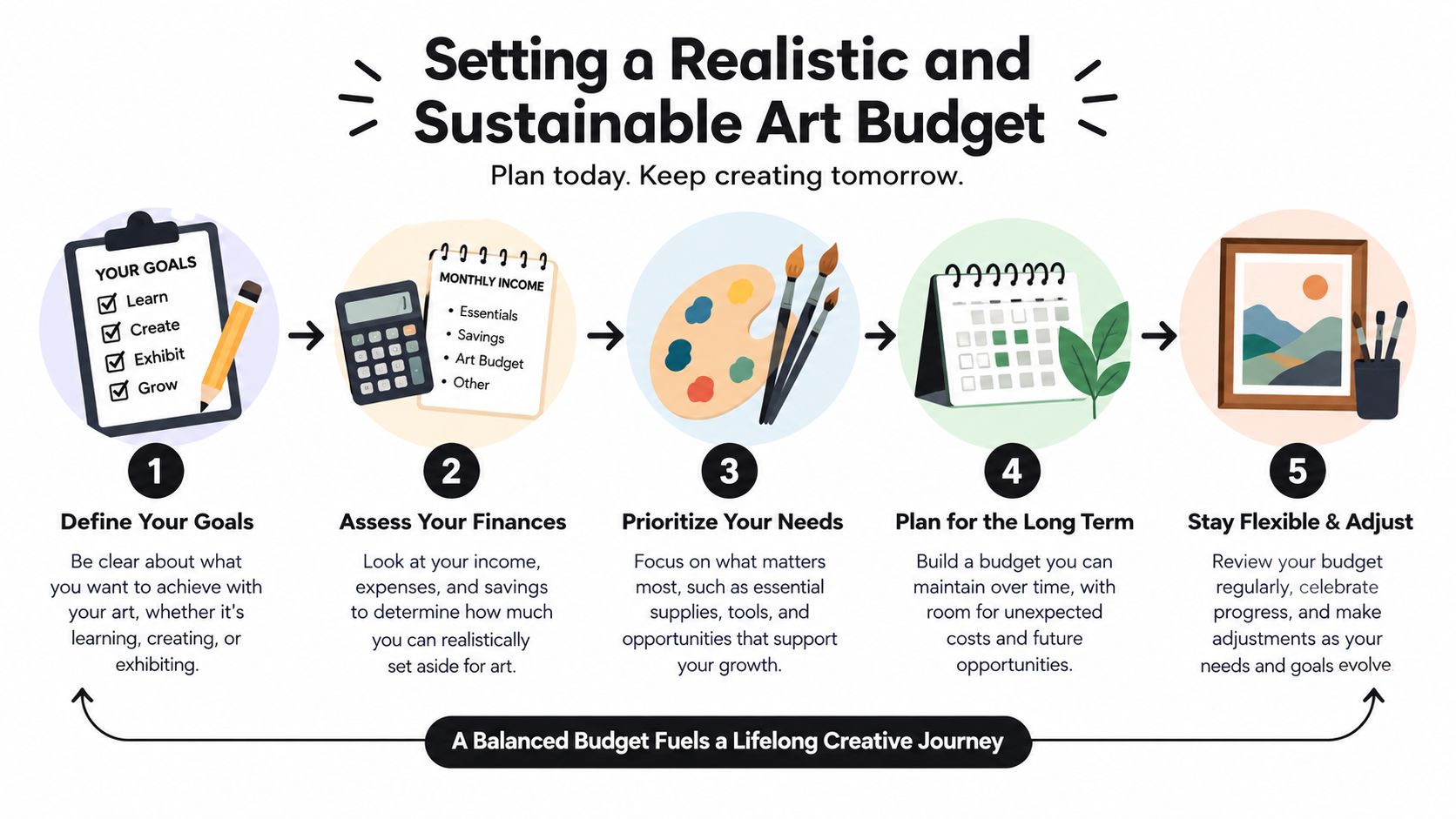
Use a simple spending framework
Keep decorative purchases separate from collecting purchases. An inexpensive poster may suit a room perfectly. An original or signed edition deserves a different record when you plan to follow the artist's work, learn its history, and build a relationship with the practice.
Use this structure:
- Choose an annual ceiling. Set an amount that leaves rent, savings, debt payments, and necessary household spending untouched. If the figure makes you tense, reduce it.
- Create a monthly art fund. Transfer a manageable amount into a separate savings category. You can act when the right work appears without using credit or buying on impulse.
- Reserve part of the budget for practical costs. Framing, shipping, installation, and conservation affect the final cost. Ask the artist, gallery, or seller about these expenses before committing.
- Leave room for one exceptional find. Do not spend the entire fund immediately. Flexibility lets you respond when a studio visit or local conversation introduces you to a work that fits your collection.
- Keep a purchase record. Note the artist, title, medium, dimensions, date, seller, price, invoice, certificate, and other paperwork. Good records strengthen provenance and make a group of purchases feel like a collection.
A commission needs separate planning because you are paying for a creative process rather than selecting a finished work. Read this guide to how much it costs to commission a painting before contacting an artist. Set expectations about the brief, materials, revisions, delivery, and waiting time, then decide whether the personal value justifies the commitment.
Your budget should leave room for learning. A lower price can be attractive, but condition, documentation, and a reliable relationship with the seller matter more than filling a wall quickly. Protect the ceiling you set; the discipline it creates is worth more than any single purchase.
Finding Affordable Art in Local and Online Ecosystems
Affordable art rewards buyers who learn where artists work and how the local trade functions. Begin with open studios, independent galleries, artist-run spaces, and community exhibitions rather than starting with famous auction houses or artists who dominate social media. The people making, showing, and selling art near you can offer better context and more useful access.
A local art fair gives you something an online listing cannot: direct conversation. Ask the artist which materials they use, how the work developed, and whether smaller originals or editions are available. The piece on the front wall may exceed your budget, while a related work in the studio could suit your collection. Ask about its condition and available documentation before discussing payment.
Walk through the local network
Visit university degree shows, cafés displaying local work, and small exhibitions alongside open studios and galleries. Pay attention to who answers questions carefully, documents work properly, and continues developing a recognisable practice. You are assessing the artist's seriousness, the work's history, and the quality of the relationship you could build.
Smaller dealers and artists often depend heavily on nearby buyers. A 2026 art market report cited by Observer's review of the art market says local collectors accounted for 71% of private collector sales at the smallest dealers, while local sales rose 9% at dealers with turnover below $250,000. These figures point to a practical opportunity for budget buyers. Local relationships can provide access before a work reaches a distant, highly competitive marketplace.
That access may mean a studio invitation, early notice of a new series, a smaller available work, or a clear explanation of the artist's process. Do not lead with a request for a discount. Ask informed questions, state your budget plainly, and remember that the artist's work is their livelihood. A respectful buyer is easier to help and more likely to receive useful guidance.
Use online platforms with the same discipline
Online platforms widen your search and make rushed purchases easier. Check for clear images, dimensions, medium, edition details, shipping terms, return policies, and seller contact information. Request anything missing before discussing payment. For a work with visible texture or age, ask for close photographs that could reveal surface damage or repairs.
A good online conversation should resemble a good gallery visit. The seller should explain where the work came from, how it was produced, and which documents accompany it. Vague or hurried answers are a reason to move on. Another artwork will appear.
Access is the genuine discount. A studio invitation or an early look at a new series can matter more to a developing collection than a small reduction in price.
Keep a short list of artists whose work interests you. Follow their exhibitions, subscribe to studio updates, and revisit their work before buying. You are building familiarity, which helps you recognise a thoughtful purchase when it appears.
Choosing Between Originals and Limited Edition Prints
Budget collecting becomes smarter when you stop treating format as a status signal. An original can be the right purchase, while a print can offer a more practical entry into an artist's work. Judge each piece by how it was made, how many exist, what condition it is in, and whether you will value living with it for years.
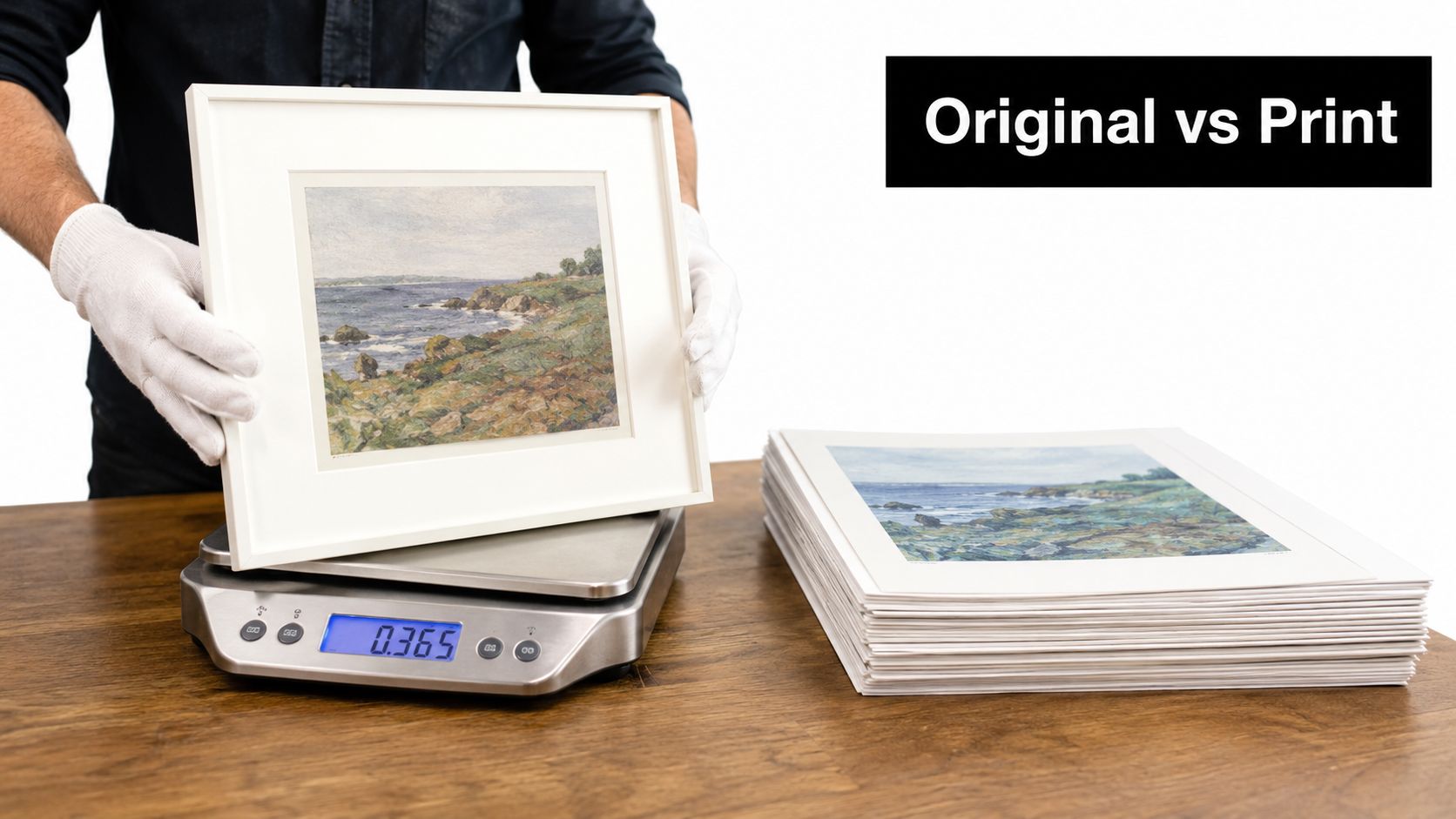
Understand the three common choices
| Option | What you're buying | What to examine |
|---|---|---|
| Original | A unique work made by the artist | Medium, condition, signature, provenance, and surface quality |
| Limited edition print | One impression from a defined numbered edition | Edition size, number, paper, printing method, and signature |
| Open-edition print | A reproduction that isn't restricted to a fixed edition | Image quality, paper, printing, framing, and your personal connection |
An original gives you the only version of that particular object. Its surface, texture, revisions, and physical presence can make the work especially compelling. Mixed-media and abstract pieces often reward close looking because the material decisions form part of the experience. A work such as William Tucker's Eye of the Storm or Graffiti Eyes can function as more than an image. Layered marks, texture, and environmental subject matter may give an original a strong presence at an accessible buying level.
A limited edition offers a different route into an artist's practice. You can own a carefully produced work connected to that practice while spending less than you might on a unique piece. Photography, works on paper, and well-made editions are useful starting points for new collectors. For a closer examination of the formats, read this guide to art prints versus originals before you decide.
Read the edition details
A notation such as “12/50” usually identifies one impression within a defined edition. The first number identifies the impression you have, and the second states the total number of numbered impressions. Ask whether the edition is complete, whether the artist made additional proofs, and whether the work carries a hand signature.
An open edition can still be beautiful and meaningful. It gives you the chance to live with an image you love or support an artist whose work speaks to you, though the quantity remains less defined.
Compare presentation standards by browsing high-end art prints from Fountainhead. Pay attention to paper, scale, colour reproduction, and framing. Use that comparison to sharpen your eye. Expensive presentation alone does not establish stronger art.
Choose the format you will still enjoy researching and living with in five years. Edition numbers and prestige matter less than that.
Check the full cost before paying. Confirm whether the price includes a frame, certificate, shipping, and taxes. A modest print can become a substantially different purchase after those expenses. For an original, request close photographs of the corners, surface, reverse, and signature. Condition and documentation should guide the decision as much as the image itself.
A visual comparison can make these distinctions easier to recognise. Watch the video below after considering the differences between a unique work and a printed edition.
Evaluating Quality and Provenance on a Tight Budget
A low price doesn't excuse weak documentation or poor condition. When funds are limited, every purchase needs to earn its place through quality, clarity, and a reason you'll still respect the work after the initial excitement fades.
Provenance means the available record of where a work came from and who has owned or sold it. For a new artist, that record may be simple. It could include a direct invoice, a certificate of authenticity, an exhibition record, or a written statement from the artist. You don't need an elaborate history for every affordable purchase, but you do need enough information to understand what you're buying.
Ask five questions before paying
The seller should answer these questions without defensiveness:
- Who made it? Confirm the artist's full name, signature, and relevant exhibition or studio information.
- What is it made from? Ask about the paper, canvas, pigments, photographic process, inks, adhesives, and other materials.
- What condition is it in? Look for fading, tears, stains, scratches, lifting paint, warped supports, or damage around the edges.
- What paperwork comes with it? Request a receipt and any certificate, edition record, exhibition note, or artist statement that applies.
- Who is selling it? Check the gallery, studio, fair organiser, or platform's reputation and communication standards.
Condition deserves special attention because inexpensive restoration can quickly change the economics of a purchase. A work may look fine in a small online photograph while showing foxing, creases, colour shifts, or surface damage in person. Ask for additional images in natural light and get any disclosed condition issue in writing.
Look for a coherent artist trajectory
You don't need to buy only established names. You should, however, understand how the artist works and where the piece fits within their practice. Look at earlier and recent work, exhibition history, recurring themes, and whether the artist can discuss their materials with precision.
Edition size also matters. A clearly documented, signed edition with consistent production information is easier to understand than a reproduction described only as “rare” or “exclusive.” Marketing language isn't evidence. Specific paperwork and transparent answers are.
Spend less on scale before you spend less on information.
An affordable work with sound materials and a clear record is a stronger foundation than a larger decorative object whose origins and condition remain uncertain. You're not guaranteeing future resale value. You're reducing avoidable risk and making sure your money supports a work with genuine substance.
Caring for and Displaying Your New Collection
Good care does not require a museum-sized budget. It requires sensible placement, suitable protection, and a record of each work from the day you bring it home.
Keep art away from direct sunlight, radiators, kitchens with heavy cooking vapour, bathrooms, and persistently damp areas. Works on paper are especially vulnerable to light, handling, and poor mounting. Paintings also need protection from harsh light, sudden environmental changes, and accidental contact.
Spend on protection before decoration
A basic frame can be upgraded later, but it must protect the artwork now. Choose glazing and backing suited to the medium, ensure the work does not touch the glass, and use a framer who explains the choices instead of steering you toward the costliest package.
For a budget-conscious approach:
- Frame works on paper properly. Use a mount or spacer that keeps the paper away from the glazing.
- Choose placement carefully. A wall opposite a bright window may expose the work to more light than you realise.
- Use stable hanging hardware. Secure fixings lower the risk that vibration, movement, or an accidental knock will send the frame to the floor.
- Keep the paperwork together. Store receipts, certificates, edition information, artist correspondence, and installation notes in one digital folder and one physical file.
- Record the work's condition. Photograph it clearly when you acquire it, including the front, reverse, signature, and frame.
Spend first on anything that prevents damage. Decorative upgrades can wait.
Lighting can transform a modest work. A gentle, adjustable picture light or track light often presents it better than a brightly lit room. Keep spotlights far enough away to avoid glare or heat on the surface.
Make the collection visible in daily life
Hang pieces where you will encounter them regularly, leaving enough visual space for each one to be seen. If you combine different artists, create a connection through framing, colour, subject, or scale. Matching every piece to the furniture can make a collection feel flat.
Care also means knowing when to ask for help. At the first sign of mould, flaking paint, lifting paper, a torn canvas, or an unexplained odour, stop handling the work and contact a qualified conservator. A prompt professional opinion can prevent a manageable problem from becoming permanent loss.
William Tucker Art offers wildlife, pet portrait, and coastal artwork combining detailed subjects with abstract backgrounds and environmental themes. Visit William Tucker Art to review available pieces for a personal, nature-focused addition to your collection.