
Small commissioned paintings typically cost $350 to $600, medium works about $1,200 to $2,000, and large originals around $4,000 to $8,000. Oil commissions commonly fall between $400 and $3,000 or more, depending on the painting's size, the artist's level, and the complexity of the request.
You may be sitting with a favorite photograph of your dog, cat, horse, or a wild animal, wondering whether it can become something more lasting than a print on your phone. The picture captures the expression, but it doesn't quite fill the wall or convey the personality you remember. Then the practical question arrives: how much does it cost to commission a painting?
The answer becomes much easier to understand when you treat the price as a build-your-price formula:
size + medium + complexity + artist level + project requirements
A custom painting costs more than a ready-made studio work because the artist isn't selling an existing object. They're interpreting your idea, reviewing reference images, making creative decisions, communicating with you, and accepting the risk that the finished piece must satisfy a specific person. This guide breaks those moving parts into plain language, with examples for pet and wildlife portraits.
Introduction to Commissioning a Custom Painting
Suppose you want a memorial portrait of an older golden retriever. You have chosen the photograph, measured the wall, and identified the warm expression you want preserved. The request is specific, so the artist is creating more than a general dog image.
A commission is easiest to price as a build-your-price formula:
size + medium + complexity + artist level + project requirements
Broad pricing guidance places small commissions at roughly $350 to $600, medium commissions at about $1,200 to $2,000, and large commissions at around $4,000 to $8,000. Many oil-painting commissions fall within the $400 to $3,000-plus range, with size and artist level affecting the quote. This commissioned-art pricing guide offers these comparison points.
Treat those figures as reference points, not a fixed menu. A small acrylic head study by an emerging artist may cost far less than a large, highly detailed oil painting by an established artist. The physical dimensions alone do not determine the workload. A plain background is quicker to plan and paint than a scene filled with textured fur, layered feathers, scenery, or several subjects.
The same formula applies to wildlife art. A close-up fox portrait with a simple background has different demands from a full wolf scene showing movement, and atmospheric effects. The subject may be similar in size, while the design and detail change the amount of work.
A useful starting point: Decide what matters most to you, the physical size, the medium, the detail, or the artist's established style. Those priorities shape the quote more than the word “portrait” alone.
A custom piece also costs more than an off-the-wall work because the artist must interpret your idea, study your references, make decisions for one buyer, and create an agreed result from the beginning. Once you understand that formula, you can describe the project clearly, compare quotes fairly, and adjust one part of the brief without unknowingly changing the entire workload.
What Commissioning a Painting Really Means
Buying a ready-made painting is like choosing clothing from a rack. The colors, proportions, and style are already set, so you decide whether the finished piece suits your taste and space. Commissioning a painting works more like visiting a tailor. You bring the subject and requirements, and the artist builds an original work around them.
The process usually starts with a conversation about dimensions, medium, pose, background, and mood. For a pet portrait, you may provide several photographs so the artist can study the eyes, coat, posture, and distinctive expression. For wildlife art, you might choose between a natural habitat, an abstract setting, or a composition that emphasizes movement. These choices form the first parts of a build-your-price formula: size, medium, complexity, and artist level.
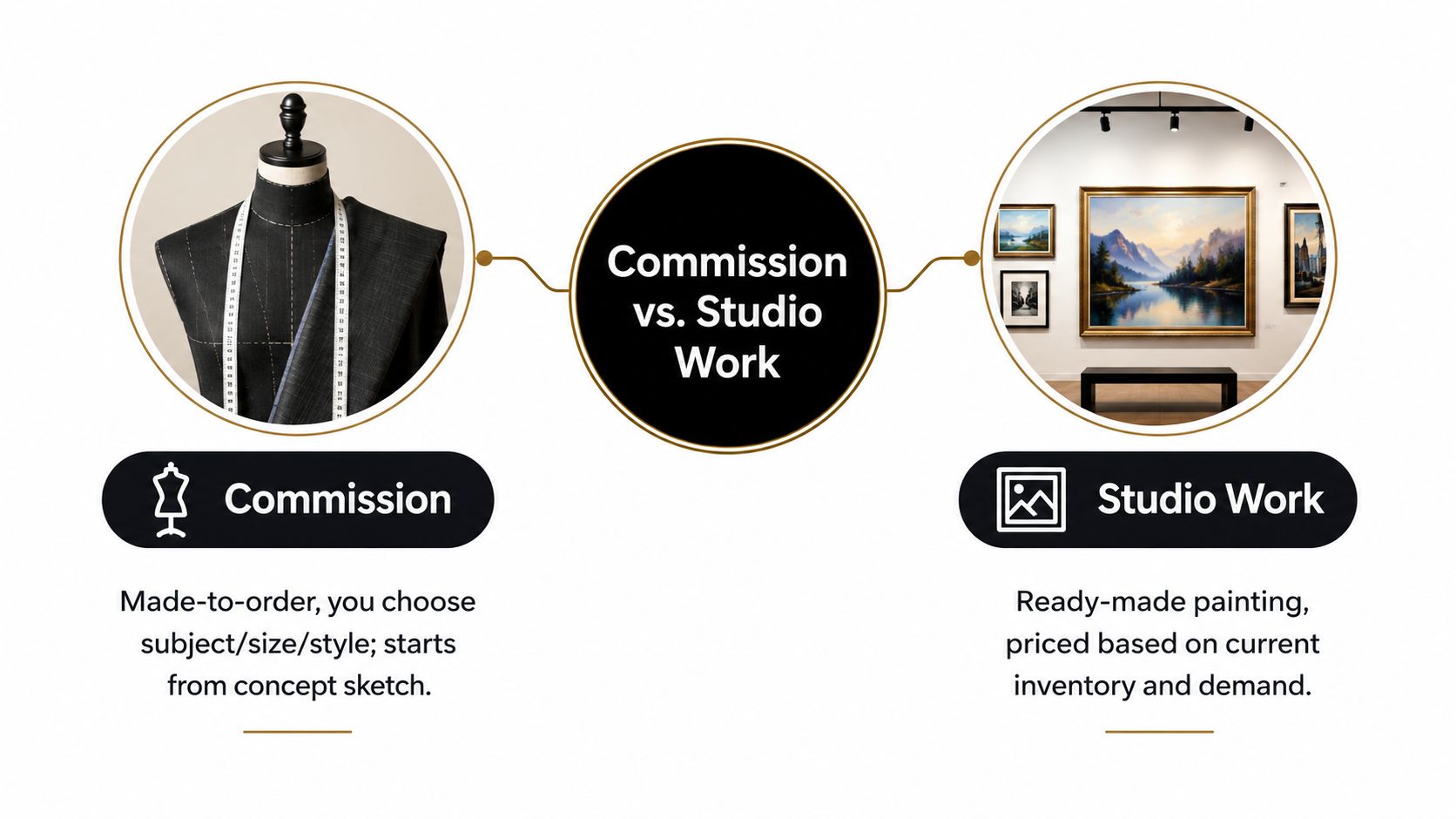
The collaborative part of the process
A typical commission can include reference review, an initial concept or sketch, progress updates, and an agreed opportunity for feedback. Each artist sets a different workflow, so ask what you will see before completion and which changes count as revisions.
A deposit is an upfront payment that reserves the project and lets the artist begin. A revision is an agreed change to the composition or details. Usage rights explain what you may do with the finished image beyond owning the physical painting, especially if you plan to reproduce it commercially.
The added communication and custom decision-making explain why commissioned paintings commonly cost about 20% to 50% more than comparable finished studio work. Milan Art Institute's commission pricing guidance gives a simple example: if a 16×20 studio painting sells for $400, a commissioned version of the same size often falls between $480 and $600.
That premium pays for more than paint and canvas. The artist must interpret your idea, study your references, make decisions for one buyer, and create an agreed result rather than sell existing inventory. A close-up pet portrait with a plain background may require fewer decisions than a wildlife scene with movement, habitat, and layered detail, even when the subjects occupy a similar area.
If you are comparing made-to-order options, custom creations on Julip offers a way to explore custom artwork as a category. For a pet-specific example, William Tucker Art Acrylic Pet Painting Final Payment is a listing used to finalize a custom acrylic pet portrait after preview images meet the client's expectations. Its catalog description says clients provide a pet photograph, the work is made with acrylics on gallery-wrapped canvas, and the portrait is inspected before shipping.
Key Factors That Determine Your Commission Price
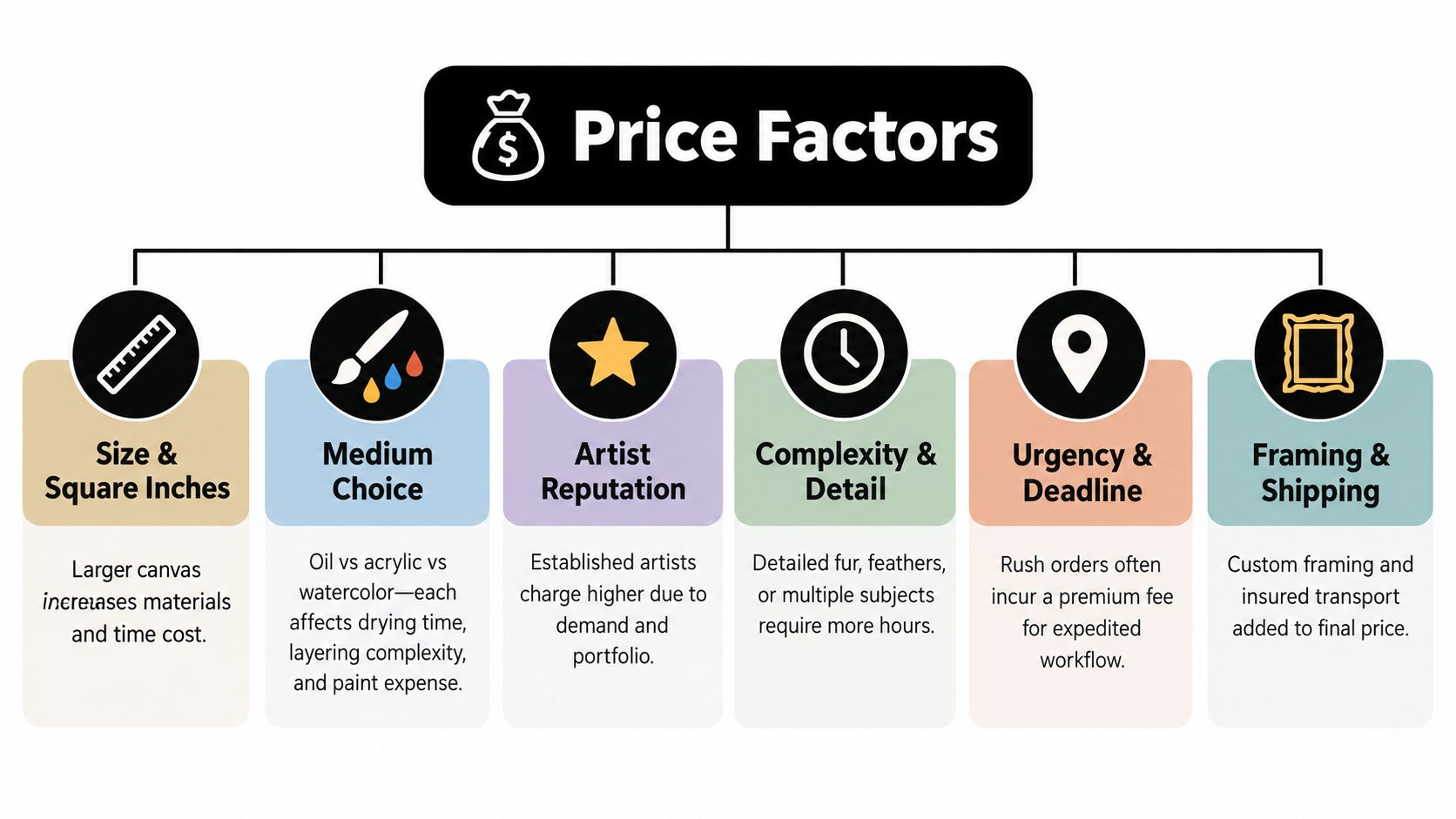
A commission quote becomes easier to understand when you treat it as a build-your-price formula: size + medium + complexity + artist level, with timing and delivery added where they affect the work. The total covers physical materials, studio labor, creative judgment, client communication, and the risk of reserving time for one specific result.
Size and square-inch math
Canvas area gives you a practical starting point. A 16×20 painting contains 320 square inches, while a 20×24 painting contains 480. The larger canvas gives the artist more surface to prepare, cover, handle, and inspect.
The labor does not always increase in perfect proportion. Setup and client communication take time for both sizes, so an artist may charge a lower rate per square inch for a larger work. Square-inch math works like comparing floor plans: it shows how much area the artist must fill, while the room's layout explains how demanding that area will be.
Medium choice
Oil, acrylic, watercolor, pencil, and mixed media each create different working conditions. Oil can support slow blending and layered effects, while acrylic often allows quicker, cleaner stages. Choose the medium that fits the artist's established process and the appearance you want, rather than judging it only by material cost.
Subject complexity
A single, calm head-and-shoulders pet portrait usually involves fewer decisions than two animals interacting in a wider setting. Fur direction, feather texture, reflective eyes, patterned coats, collars, foliage, water, and buildings each add visual problems to solve. Wildlife paintings can also require careful anatomy and environmental context.
A plain background may keep the focus on a pet's expression. A habitat scene asks the artist to balance the animal, movement, light, and surrounding detail.
Artist level
The artist's experience and demand affect the quote, as does the value of a recognizable style. Emerging, mid-career, and established artists may price the same assignment differently because their working histories, client demand, and creative judgment differ. The guide to pricing commissioned art offers further context for how labor and reputation enter a commission calculation.
Deadline and delivery requirements
A firm gift date can affect scheduling if the artist must rearrange other commitments. Rush work may require a different studio calendar. Framing, special packaging, and shipping can also add practical costs beyond the painted surface.
Before requesting a quote, decide which part of the formula can change. A smaller canvas can preserve the artist and detail level. A simpler background can preserve the size while reducing the workload. Those choices lower or redirect the labor without changing the portrait's emotional purpose.
Typical Price Ranges by Size Medium and Artist Level
Size provides the first budgeting anchor, almost like choosing the frame before selecting the image. A small painting may still require many hours if it contains fine fur, feathers, or a carefully built background. A larger work may use broad areas of color and a simpler composition. Your starting price therefore comes from a build-your-price formula: size + medium + complexity + artist level.
| Size Category | Typical Dimensions | Price Range | Per Square Inch Benchmark |
|---|---|---|---|
| Small | Compact portrait or study | $350 to $600 | About $2 to $5 per square inch |
| Medium | A substantial wall piece | $1,200 to $2,000 | Often around $2 to $4 per square inch |
| Large | Major original or multi-subject work | $4,000 to $8,000 | Often about $2.00 to $3.40 per square inch |
The table's size ranges reflect commission painting pricing guidance. The square-inch figures in this professional commission guide for outdoor scenes provide another way to check whether a quote fits the requested surface area. They include a $2.25 to $5.00 per square inch range, with a 5×7 minimum at $5 per square inch, or $175 total. These figures are planning tools, not a fixed menu. Artists may adjust them for the brief and their working process.
Why the unit price can fall as the painting grows
Square-inch pricing works like buying fabric from a tailor. A larger piece uses more material, yet the tailor does not charge a separate setup cost for every inch. The artist still prepares the reference, plans the composition, communicates with you, and organizes the project. Those fixed tasks are spread across a larger surface, so the per-inch figure can decrease while the total price increases.
Artist level changes the formula too. Emerging artists generally quote from the lower hourly band, mid-career artists occupy a higher range, and established artists may charge more for a recognizable, proven visual language. The approximate hourly benchmarks are $25 to $75, $75 to $150, and $150 to $250-plus, respectively, according to the pricing guidance cited above.
Medium is another part of the comparison. Oil commissions often fall within a broad $400 to $3,000-plus range, but size, technique, and the artist's position still shape the final quote. Compare the full brief rather than comparing acrylic with oil alone. Dimensions, subject count, background, revisions, framing, and delivery can shift the cost.
A custom painting also carries planning and creation work that an existing artwork does not. A ready-made piece can be purchased from inventory, while a commission requires the artist to produce and manage a specific request. Galleries may handle existing work through a consignment setup for art galleries, which follows a different arrangement from commissioning a new painting.
Real World Pricing Examples for Pet and Wildlife Portraits
The following examples are budgeting illustrations built from the verified size ranges and square-inch benchmarks above. They aren't promises of a particular artist's quote. The point is to show how the formula changes when you alter the canvas, medium, subject count, or background.
A small acrylic memorial portrait
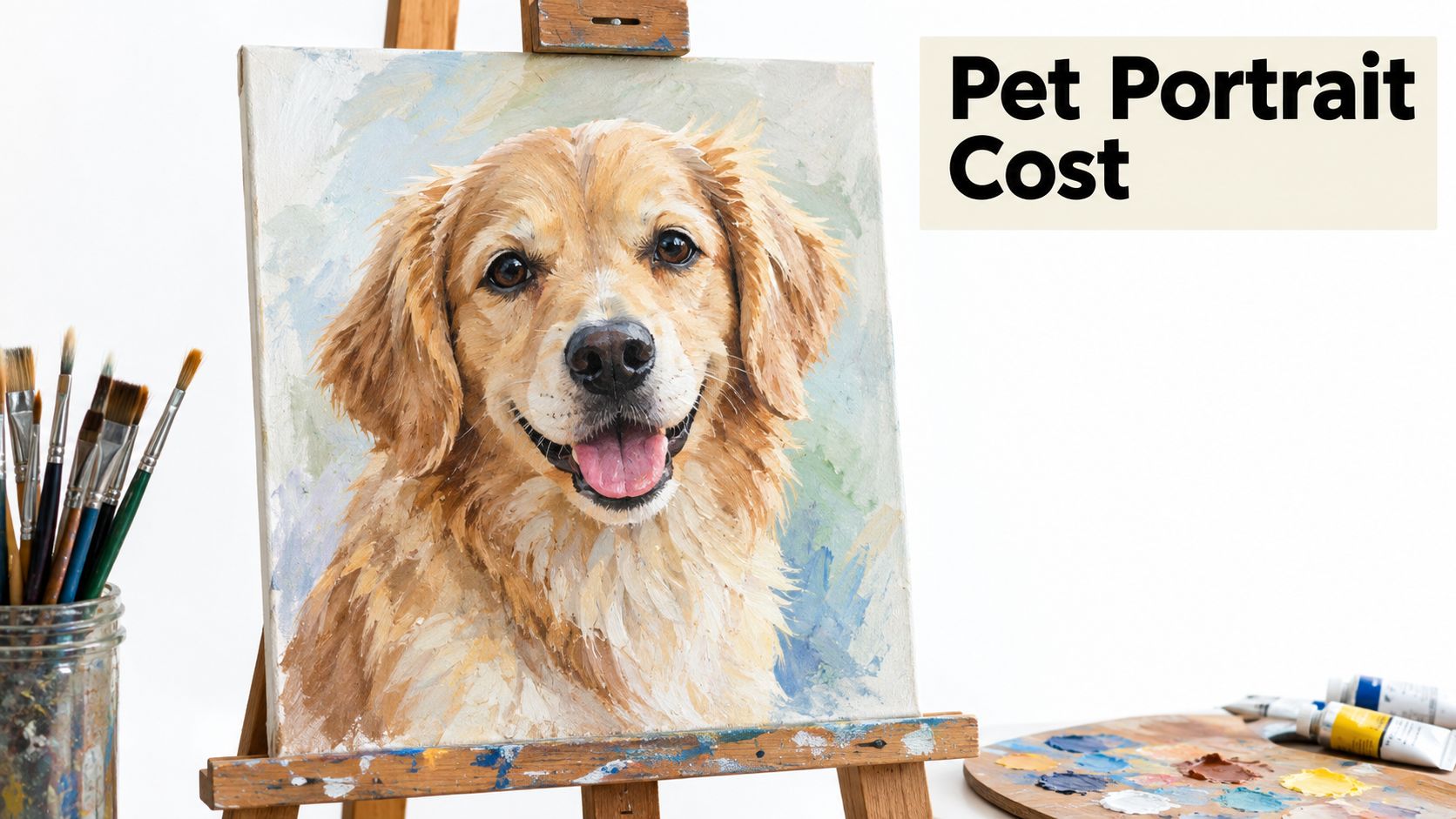
A small acrylic painting of one dog, shown from the shoulders up against a restrained background, sits naturally in the $350 to $600 small-commission range. The request stays manageable because the artist is focusing on one face rather than designing a complicated scene.
This option works well for a memorial gift or a first original painting. To protect the budget, provide a strong reference photograph and avoid combining several poses into one composition.
A medium wildlife painting with a designed background
A medium wildlife commission featuring one animal, carefully rendered fur or feathers, and an abstract background can fit around $1,200 to $2,000. The subject may be singular, but the artist is balancing realism in the animal with expressive decisions in the surrounding color and shape.
A request for a highly detailed habitat would increase the workload compared with a simplified background. Choosing oil may also move the quote because the artist's oil process can involve more layering or drying time, although the exact effect depends on the painter's method.
A large composition with multiple pets
A large original showing several family pets together can fall around $4,000 to $8,000, based on the broad large-commission range. Each additional animal introduces another likeness to resolve, and the artist must make the group feel unified rather than placing separate head studies side by side.
A simpler background can help keep attention and effort on the animals. If the budget is limited, reducing the canvas size or commissioning fewer subjects may be more effective than asking the artist to compress a large, complicated idea into a small format.
For a closer discussion of the variables behind pet portraits, consult pet portrait commission pricing. The most useful quote request will state the subject count, approximate dimensions, preferred medium, background direction, and deadline in one message.
How to Commission a Painting With Confidence
A successful commission starts with a clear brief, much like giving an artist a map before a journey. Gather sharp photographs, including front-facing views and images showing the animal's usual expression. Explain what matters to you visually. “Please preserve the alert ears and soft expression” gives clearer direction than “make it emotional.”
Ask for a written quote
Request an itemized estimate covering canvas size, medium, subject count, background treatment, framing, shipping, revision rules, and the expected delivery window. Comparing these details is like comparing complete shopping lists rather than headline prices. You can see which costs are included and which may be added later.
A commission agreement may require a non-refundable deposit of 33% to 50% before work begins. Ask what the deposit covers and what happens if either side cancels. The artist needs protection for custom labor already started, while you need a clear record of your financial commitment.
Put the creative boundaries in writing
Before paying, confirm:
- Reference approval: Agree on the photographs and compositional ideas the artist will use.
- Revision limits: Ask how many feedback rounds are included and when a change becomes a new request.
- Payment stages: Confirm the deposit, any progress payments, and the timing of the final payment.
- Delivery details: Clarify whether framing, packing, insurance, and shipping are separate.
- Ownership terms: Establish whether you own the physical painting only or also receive reproduction rights.
These points form the working frame around the artwork. They keep creative decisions from becoming unexpected charges or disagreements later.
A respectful budget conversation focuses on adjustable choices rather than asking the artist to reduce the value of the work. You might say, “My budget is fixed. Could we keep the medium and style while reducing the size or simplifying the background?” Size, background detail, and subject count can change the build-your-price formula without removing the qualities that matter most to you.
For a practical guide to preparing a brief and communicating with a painter, read how to commission an artist. Be cautious if an artist will not explain what the price includes, refuses to describe revision expectations, or requests payment before identifying the agreed subject and deliverables.
Final Thoughts on Budgeting for Your Custom Artwork
The answer to how much does it cost to commission a painting follows a build-your-price formula: size sets the foundation, while medium, complexity, artist level, and project requirements adjust the total. Small works may cost $350 to $600, medium pieces $1,200 to $2,000, and large originals $4,000 to $8,000. Oil commissions often range from $400 to $3,000-plus. These pricing ranges provide budgeting anchors, not fixed menus.
A custom pet or wildlife portrait also reflects planning and one-to-one craftsmanship, so it may cost more than off-the-wall art. Before contacting an artist, note your subject, dimensions, medium, background, animal count, photographs, deadline, and maximum budget. To lower a quote, adjust one element at a time, such as size or background detail.
William Tucker Art creates custom pet and wildlife artwork from client-supplied photographs, with acrylic, oil, and mixed media options listed in its catalog. Visit William Tucker Art to discuss an original painting using your reference image and project idea.