
You're staring at a favorite photo of your dog, probably one where the eyes are bright, the ears are perfectly crooked, and the background is less than perfect. You want to turn it into something warm and personal, but you also know how dogs treat blankets. They climb on them, shed onto them, drag them across the floor, and occasionally leave a muddy pawprint exactly where the face should be.
A blanket with dog picture needs to do two jobs. It must reproduce a recognizable portrait, and it must function as a washable household textile. I've seen beautiful custom pieces lose their detail, shed their softness, or look tired after very little use. The difference usually comes down to choices made before ordering, not luck after delivery.
Why Choosing a Dog Picture Blanket Is Different From a Regular Throw
A plain throw can succeed with a pleasant color, a comfortable hand-feel, and decent stitching. A blanket with dog picture has a much harder assignment. The printed surface needs to preserve the dog's expression, fur pattern, eye highlights, and tonal contrast while the fabric handles daily contact with people and pets.
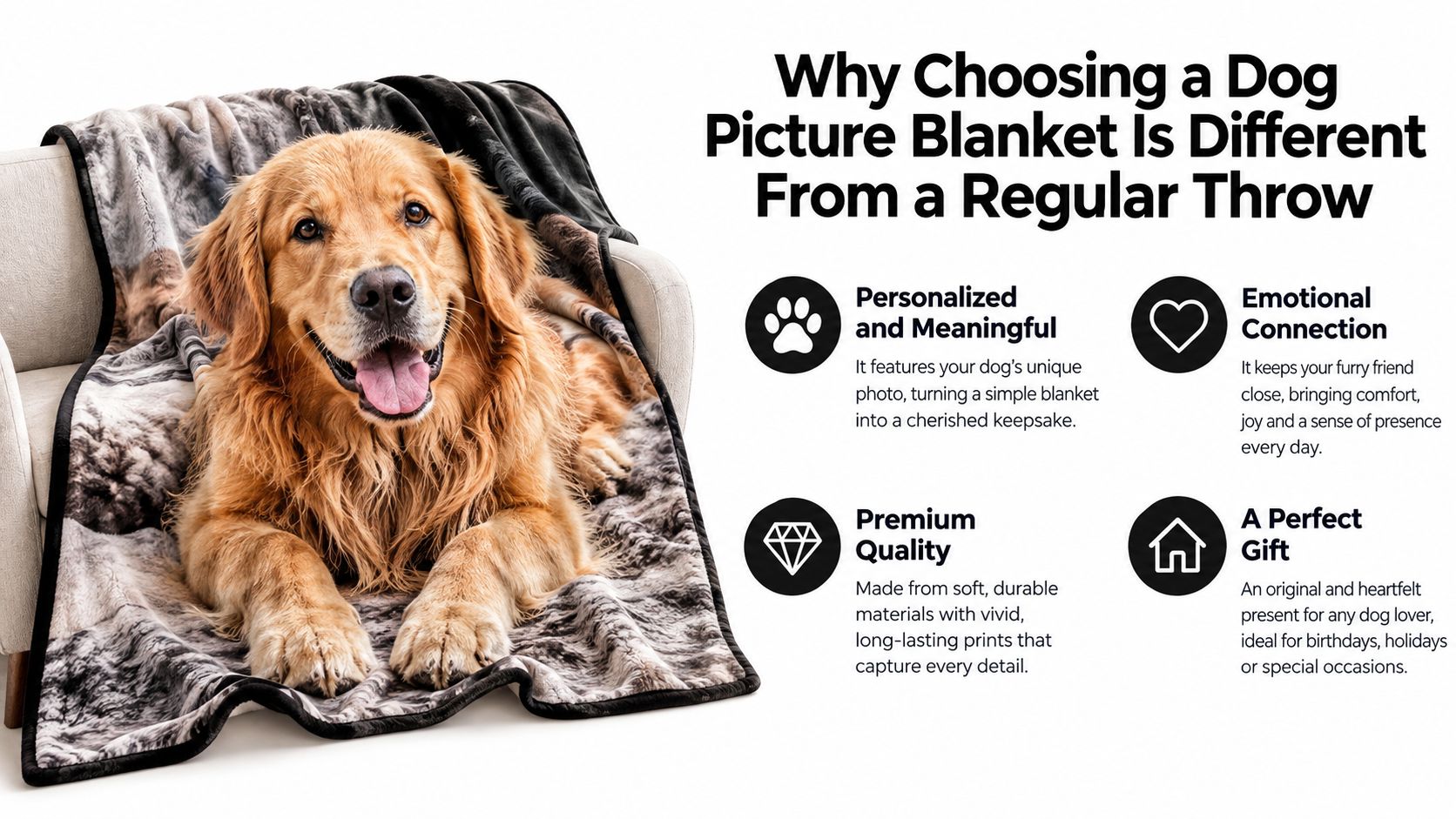
I think of the purchase as three connected decisions. First, you're choosing the photograph. Second, you're choosing the surface that carries it. Third, you're trusting the maker's print process, finishing, and safety controls. A strong photo can still look muddy on a poor surface, while an excellent fabric cannot rescue an out-of-focus face.
Working rule: If the seller only talks about softness and personalization, ask what happens to the image after laundering.
This category is mainstream, not a novelty corner of gift shopping. The American Pet Products Association's 2025 industry report reports that 51% of U.S. households, approximately 68 million households, owned at least one dog in 2024–2025. The same source reports approximately $158 billion in U.S. pet spending in 2024, across food, veterinary care, supplies, and other categories. That scale explains why personalized dog products can feel familiar and useful rather than niche.
What a cheap custom blanket gets wrong
Low-priced listings often make the image the selling point and leave the construction vague. You may not know whether the finished blanket was tested with the actual printed artwork, whether the edges are included in the quality check, or whether the seller has assessed color change after repeated washing.
That matters most with dark coats, white markings, and high-contrast eyes. A small shift in black fur can flatten the muzzle. A weak print can turn a white blaze into a gray blur. Treat the blanket as functional portrait art, not as a generic throw with a photo pasted onto it.
Preparing the Photo So the Portrait Actually Looks Right
Start with the file, not the fabric. A blanket enlarges every weakness in an image, so a picture that looks acceptable as a phone thumbnail may look soft once it covers a broad textile surface.
Choose sharpness over sentimentality
The best source photo has the dog's eyes in clear focus, a visible expression, and enough separation from the background. A candid phone image often beats a formal portrait if it captures the dog's real personality. A slightly imperfect sitting pose with alert eyes usually makes a stronger blanket than a technically polished image where the dog looks tense or distracted.
Use the original camera file whenever possible. Avoid screenshots, compressed social-media downloads, and images sent through apps that reduce file quality. Check the eyes at full zoom. If the pupils and catchlights look soft, no amount of sharpening will create convincing detail.
Composition controls the mood. A close crop feels intimate and works well for a memorial or portrait-led design. A wider image gives the blanket breathing room and can make sense when the dog is shown in a favorite outdoor setting, beside a toy, or in a recognizable family setting.
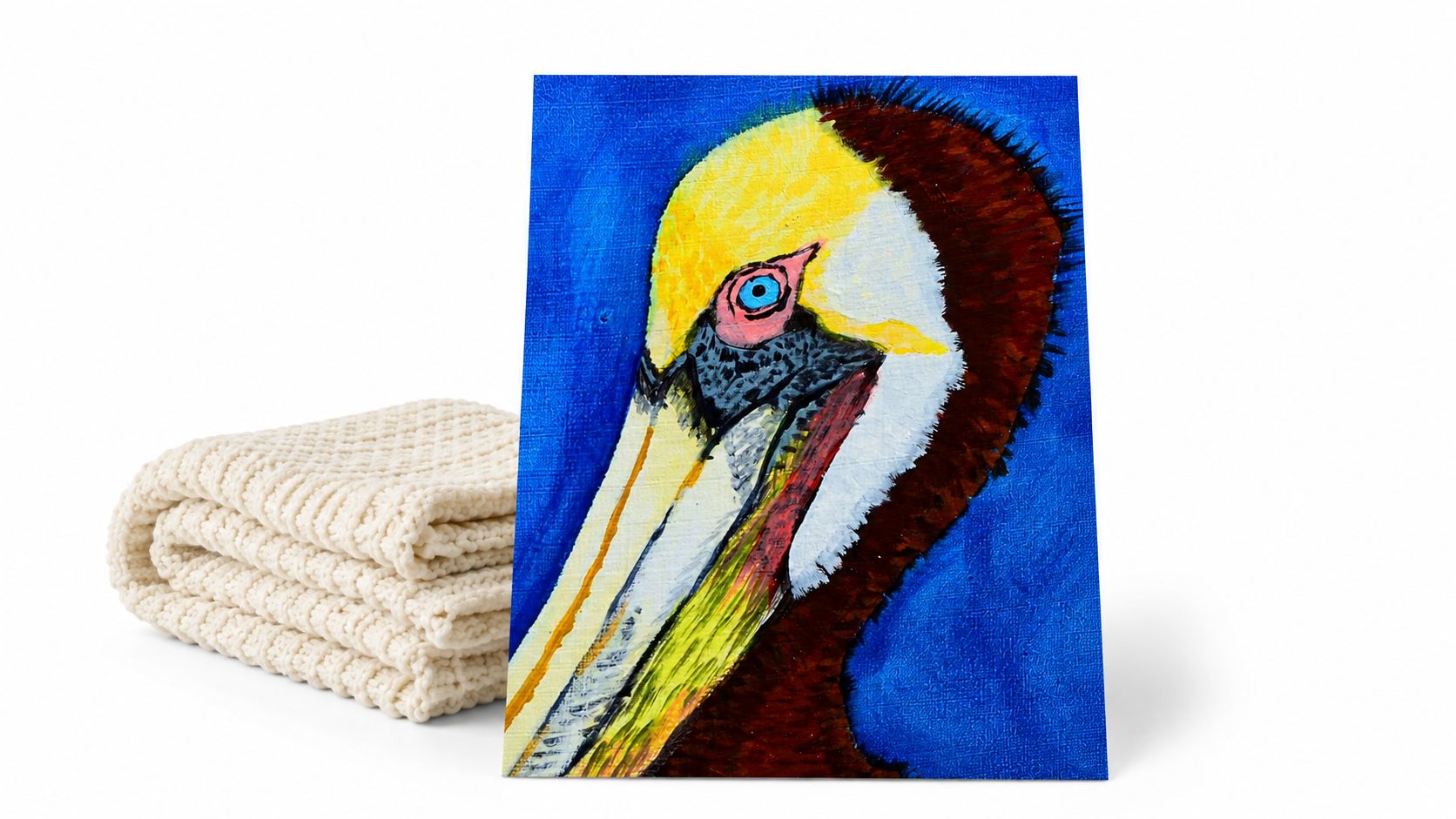
The same discipline applies to other animal artwork. For example, the William Tucker Pelican Wall Art Print - Coastal Decor - Pelican Portrait uses vivid blue, yellow, and deep brown tones in an 8x10 reproduction printed on professional-grade paper. A textile portrait needs the same attention to clear focal detail, controlled color, and intentional framing, even though the finished object has a different use.
Fix the background before it competes
Busy grass, patterned cushions, bright toys, and people cut off at the edge can pull attention away from the dog. You don't always need to remove them completely, but you should decide whether the background supports the portrait. A simple crop, gentle brightness adjustment, or subtle background treatment can make the subject read more clearly.
Avoid heavy filters. Strong clarity, artificial saturation, and extreme shadows may look dramatic on a screen but can produce harsh fur texture or blocked-up dark areas in print. Adjust brightness and contrast with restraint, then inspect the image on a second screen if you can.
For practical background on transferring photographic artwork onto textiles, review these durable photo transfer techniques. The material is focused on apparel, but the underlying questions about image preparation, transfer behavior, and finished-surface durability are relevant to custom textile work.
Dogs have been part of human life for an unusually long time. A peer-reviewed PNAS study on dog domestication identifies dogs as the first domesticated animal, with unambiguous domestic dogs present in parts of the Northern Hemisphere by approximately 12,000 years ago and generally accepted domestic-dog remains at Bonn-Oberkassel dating to approximately 15,000 years ago. That history helps explain why a dog portrait can feel like more than decoration. The image carries a familiar symbol of companionship into a useful household object.
Before submitting the file, run this checklist:
- Resolution: Send the original, full-size image rather than a screenshot.
- Eyes: Confirm that the eyes are sharp and readable at full zoom.
- Lighting: Lift blocked shadows without washing out pale fur.
- Crop: Keep ears, nose, and important markings away from the trim area.
- Color: Make sure black, white, and tan fur still look natural.
- Background: Remove or reduce distractions that compete with the dog.
For broader composition ideas, see this guide to dog portrait photos. The strongest blanket starts with an image that already has a clear subject and emotional presence.
Comparing Fabrics for a Blanket With a Dog Picture
Fabric changes more than comfort. It affects how sharply whiskers appear, how easily fur releases, how stains show, and how the blanket behaves after washing. Don't choose the softest sample automatically. Choose the surface that matches the dog and the job.
| Fabric | Print Clarity | Wash Durability | Fur Resistance | Best For |
|---|---|---|---|---|
| Fleece | Usually strong on a smooth surface | Good when the finished print is properly tested | Better than high-pile options | Everyday sofa throws and active households |
| Cotton | Natural, breathable appearance | Depends heavily on construction and print process | Moderate, with a surface that can show lint | Light-use décor and owners who prefer natural fibers |
| Sherpa | Image can look less precise across the pile | Plush construction needs careful laundering | Low, because fur and moisture can lodge in the texture | Decorative comfort pieces and supervised use |
| Quilted | Can provide structure and visual depth | Often practical, but seams and layers need inspection | Moderate to good, depending on the face fabric | Bed covers, layered décor, and structured blankets |
Fleece is my default recommendation
A smooth fleece face gives a portrait a clean field. It doesn't eliminate shedding, but loose hair is easier to shake or brush away than it is from a deep plush pile. Fleece also suits a dog blanket that will move between the sofa, car, and wash.
The trade-off is that fleece may feel less luxurious than sherpa. That is a fair exchange if the blanket is meant to carry a recognizable photograph rather than function as a purely decorative accent.
Cotton rewards restraint
Cotton can feel breathable and substantial, but it isn't automatically the best choice for a printed pet portrait. Natural fibers may show a different color character from polyester surfaces, and shrinkage or dimensional change becomes a more important question. Ask how the finished construction was tested, not just whether the fabric is cotton.
Cotton makes sense for a lighter decorative piece or a household that values a natural hand-feel over maximum image saturation. I wouldn't choose it blindly for a blanket that a heavy-shedding dog will use every day.
Sherpa looks inviting and behaves messily
Sherpa photographs beautifully in product listings because it signals warmth and luxury. In practice, the pile can trap fur, hold moisture, hide crumbs, and soften fine printed details. A dog that nests, digs, or arrives wet from the yard will expose those weaknesses quickly.
Use sherpa when the blanket is mainly for human lounging or controlled decorative use. If your dog treats every textile as a bed, choose a smoother face.
Quilted construction prioritizes structure
Quilting can make a blanket feel more substantial and help it sit neatly on a bed or chair. It also introduces seams, layers, and edges that deserve inspection. If the design crosses multiple quilted panels, check whether the portrait remains visually coherent rather than breaking across raised lines.
My recommendation is simple: smooth fleece for everyday dog use, cotton for a lighter natural feel, sherpa for appearance and supervised comfort, and quilted construction when structure matters more than a smooth portrait surface.
Print Methods, Inks, and Why the Standard Matters
“High-quality print” tells you almost nothing. It doesn't identify the ink, the bonding method, the tested fabric, or the behavior of the finished blanket after washing.

Dye sublimation turns ink into gas and bonds it into polyester fibers. It can produce a smooth hand because the image isn't sitting as a thick layer on top. This method is often a sensible fit for a polyester fleece blanket, but the seller still needs to demonstrate that the finished product, not merely the fabric, holds its color.
Digital pigment printing on coated polyester places pigment on a treated surface. It can produce rich color, but the hand may feel firmer and the coating becomes part of the durability equation. Ask whether the print is tested after laundering and whether the actual blanket construction was used.
Reactive dye printing chemically bonds color to natural fibers such as cotton. It can suit non-synthetic blankets, but the seller should explain how the process handles the chosen fiber blend, shrinkage, and color control.
Direct-to-garment-style processes are better understood as surface-printing approaches rather than a guarantee of blanket performance. The phrase alone doesn't tell you whether the image will resist cracking, abrasion, or repeated washing.
Ask for evidence, not adjectives
For laundering, look for AATCC TM61. The AATCC TM61 method is designed for textiles expected to undergo frequent washing. Its 45-minute procedure can approximate the color and surface change of about five home or hand launderings, with options around 40°C for low-temperature hand washing, 38°C for normal home-machine washing, or 60°C for vigorous washing.
That doesn't mean the blanket is guaranteed to last forever. It means the manufacturer has a recognized accelerated test to use when evaluating color change, staining, print cracking, and dimensional change.
Ask this before ordering: Was the test performed on a production-representative blanket containing the actual image, seams, backing, binding, and finishing details?
Safety deserves the same precision. A claim such as “non-toxic ink” isn't the same as independent finished-product certification. If the blanket will touch skin, children, or pets, ask whether documentation covers the fabric, dyes or inks, thread, labels, trims, adhesives, and filling.
For a useful comparison between textile reproduction and wall display, see dog canvas prints. The medium changes, but the buyer's core question remains: can the material preserve the artwork in the conditions where it will reside?
Picking the Right Size and Layout for How You Will Actually Use It
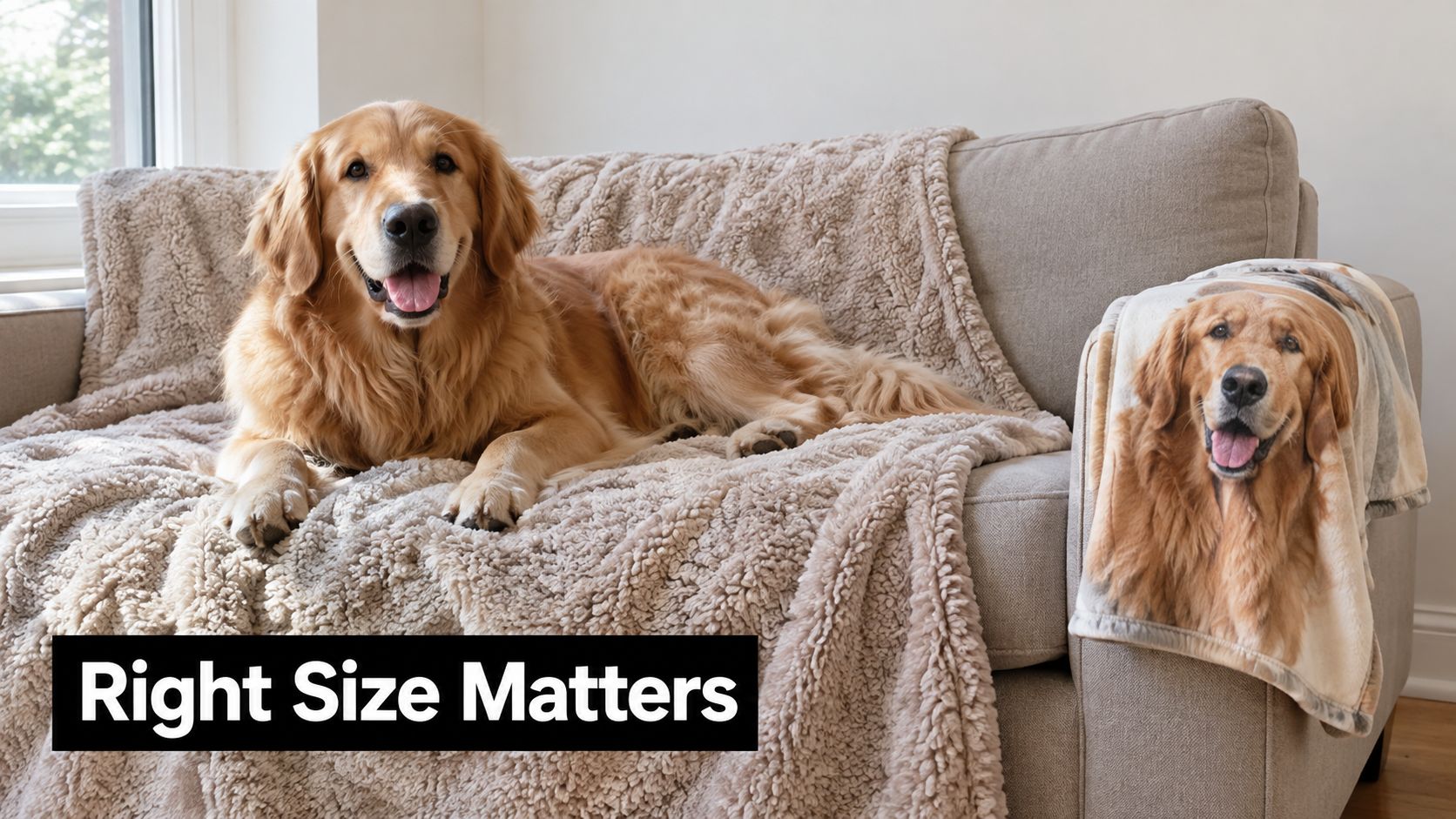
A blanket size should answer a practical question. Is it for your lap, the sofa arm, a dog bed, a shared couch, or full-body coverage? The right dimensions depend on the intended use and the image's proportions, not on the first option in a dropdown menu.
A 30x40-inch format can work as a compact lap piece, a crate cover, or a small gift. It keeps the image close and is easier to wash and store. A 50x60-inch throw gives a dog and person more room on a sofa without becoming awkward to handle. A 60x80-inch piece is closer to a bed or full-body cover and demands more attention to image resolution, edge placement, and laundering logistics.
Match the shape to the photograph
A vertical portrait can work on a rectangular blanket if the dog sits naturally within the frame. A square crop suits a centered headshot or a collage. A wide panoramic image needs room on both sides, especially if the dog is looking toward an object, person, or open space.
Don't place the nose, ears, or distinctive markings directly against the trim line. Production may require a bleed area, meaning the artwork extends beyond the intended visible edge so small shifts won't leave an unprinted strip. Keep important features inside a safe area and confirm how much of the border may be folded, stitched, or rounded.
A border can rescue a tight crop. It creates visual breathing room and reduces the risk that the dog's face feels cramped against the edge. A border also gives the piece a more deliberate art-object quality, especially when the original image has a busy background that you don't want stretched across the entire blanket.
Design around the viewing distance
A couch throw is seen close up, so subtle eyes and whiskers can matter. A larger bed covering is often viewed from farther away, which rewards stronger overall shapes, cleaner tonal contrast, and a simpler composition.
Before approving the mockup, check four points:
- Face placement: The dog's eyes and nose sit comfortably inside the safe area.
- Edge behavior: Ears, paws, and meaningful markings won't disappear into seams.
- Blanket orientation: The image reads correctly when the blanket is draped, folded, or laid flat.
- Room context: The colors won't fight the sofa, bedding, or surrounding décor.
For safety documentation, ask about the finished article rather than the base cloth. OEKO-TEX STANDARD 100 applies to the textile product as a whole and includes testing for substances such as formaldehyde, heavy metals, phthalates, pesticides, and certain dyes. The relevant certificate should cover the exact finished construction if the blanket will contact skin, children, or pets.
The Honest Truth About Using a Dog Blanket With Real Dogs
The prettiest blanket isn't necessarily the best dog blanket. Deep plush feels excellent in a product photograph, but it can trap fur, moisture, crumbs, and odor. A heavily textured surface can also soften the appearance of fine whiskers and eyes, especially after washing and repeated nesting.
For everyday use, I prefer a smooth, tightly constructed face. It should release hair with brushing or shaking, accept a practical wash routine, and keep enough surface clarity for the dog to remain recognizable. That may look less glamorous than a high-pile finish, but it usually produces a more useful object.
More than 40% of U.S. pet owners reportedly prefer upgraded products over standard alternatives, and customization is becoming a major feature across pet accessories, according to Grand View Research's pet accessories market coverage. That preference raises the standard for buyers. A personalized product shouldn't receive a pass on cleaning performance just because it carries an emotional image.
Separate décor from daily duty
Use a decorative blanket when the goal is display, gifting, or occasional human use. Keep it folded over a chair, supervise contact, and don't pretend it is built for muddy paws.
Use an everyday blanket when your dog will sleep, shed, dig, and return to it repeatedly. Choose a washable construction, avoid delicate raised surfaces, and accept that practical care matters more than maximum plushness.
Shedding control starts before the blanket enters the wash. Regular brushing and appropriate dog coat care tips can reduce the amount of loose hair transferred to household textiles. It won't make a dog blanket maintenance-free, but it can keep the fabric cleaner between washes.
My blunt recommendation: If your dog sleeps on it every night, buy for cleaning and image retention first. Luxury texture comes second.
Ordering, Caring For, and Living With Your Dog Picture Blanket
Before paying, ask the seller for a proof that shows the full composition, including the edges. Confirm the selected fabric, finished dimensions, care label, and whether the image will be cropped. If the seller refuses to show how the portrait sits on the actual format, choose a different maker.
A useful guide to blankets for dogs can help you think through use before you commit. The key question is simple: will this be a keepsake, a sofa throw, or the textile your dog uses every day?
Inspect the finished piece
When it arrives, spread it flat under even light. Check the eyes, dark fur, pale markings, seams, corners, binding, and any areas where the artwork crosses construction details. Compare the result with the approved proof, not just with the product photograph.
Wash according to the care label. In general, use a gentle or cool cycle when permitted, mild detergent, and low heat or air drying. Avoid bleach, high direct heat, and ironing across the printed area unless the manufacturer specifically permits them. Treat accidents promptly, but test any stain treatment on an inconspicuous area first.
A practical care checklist:
- Before use: Photograph the new blanket and retain the order proof.
- Between washes: Shake out loose hair and spot-clean fresh marks.
- During washing: Follow the label and avoid harsh chemicals.
- During drying: Use low heat when allowed, or air dry away from strong direct sunlight.
- After washing: Check print clarity, seams, and dimensions before returning it to the dog.
A custom blanket often marks a meaningful occasion rather than a casual purchase. BCG's 2025 survey coverage reports that 80% of pet owners considered their pets vital family members, while 74% reportedly mark a pet's birthday with a gift. Adoption anniversaries, memorials, and major family changes deserve the same care in image selection. Choose a photo that respects the dog's story, then choose materials that can carry it with sincerity.
William Tucker Art offers animal-focused artwork and portrait work that treats the subject as more than a disposable graphic. Visit William Tucker Art to explore wildlife and pet art, then use the same standards here, strong source imagery, intentional composition, and a finished piece made to live meaningfully in your home.