
Your dog is curled on the couch, the room is chilly, and you're reaching for the nearest throw before muddy paws, shedding, or a surprise accident reaches the upholstery. Maybe you need a soft layer for crate training, a washable cover after a wet walk, or a cozy surface for an older dog who settles better with extra support.
A blanket for dog use has four jobs: keep the sleeping area comfortable, protect furniture, clean up without drama, and look deliberate in your home. The right choice depends on more than softness. It needs to fit your dog, survive your washing routine, suit the room, and stay safe when your dog is alone.
The market context is substantial. The global pet bedding market reached $4.8 billion in 2025 and is projected to reach $8.7 billion by 2034, with dogs representing about 52.4% of market value according to DataIntelo's pet bedding market report. In the United States, pet bedding and furniture accounted for 21.8% of pet accessories sales in 2025, while dogs represented 47.1% of related demand, as reported by Market Data Forecast.
Finding the Right Blanket for Your Dog
Start with the job, not the color. A blanket used inside a crate needs to fit neatly and resist chewing. One placed on a sofa should protect the fabric and wash easily. A layer for a senior dog should feel warm without becoming heavy or difficult to move. A throw used during a photo session has another requirement: it should make the dog look comfortable while keeping the composition tidy.
My practical rule: Buy for your dog's routine first, then choose a style you won't mind seeing every day.
A blanket can also help you build a more comfortable cold-weather setup. Keep the sleeping area dry, away from drafts, and easy for your dog to leave. For broader seasonal preparation, the essential winter weather tips for pet owners are useful because warmth is only one part of winter care.
The best all-purpose option is usually a lightweight, machine-washable blanket sized to the dog's resting surface. Choose something breathable for indoor use, especially if your dog already sleeps in a warm room. For car rides or dogs that come in wet from outdoors, add a water-resistant layer instead of expecting one plush blanket to handle every mess.
Think about appearance, too. A neutral blanket can protect a sofa without looking like a temporary fix. In portraits, a controlled texture gives the image depth. In framed-art staging, a folded blanket can add warmth near a canvas without competing with the artwork.
The next decisions are concrete: measure the dog, match the fabric to the coat and mess level, remove hazards, establish a washing routine, and use the blanket intentionally when a camera comes out.
Measuring Your Dog and Picking the Right Size
A blanket that's too small slides away when your dog turns. One that's too large bunches under the body, hangs into a crate door, or gives a burrowing dog too much loose fabric to manage. Measure before shopping.
Have your dog stand or lie relaxed. Measure body length from the base of the neck to the base of the tail, then measure around the widest part of the chest. Add a few inches for coverage, but don't turn a sleeping pad into a mound of fabric. The blanket should cover the resting area while leaving enough room for curling, stretching, and repositioning.
Retail sizing varies, so use the chart as a starting point rather than a guarantee. The measurement method and common size heuristics are outlined in this independent dog blanket sizing guide.
Dog Size to Blanket Dimension Chart
| Dog Size Class | Weight Range | Recommended Blanket Size | Best Use |
|---|---|---|---|
| Small | Under 20 pounds | 24 by 30 inches | Crates, carriers, laps |
| Medium | 20 to 50 pounds | 30 by 40 inches | Beds, sofas, travel |
| Large | 50 to 90 pounds | 40 by 50 inches | Floor beds, couches |
| Extra-large | Over 90 pounds | 50 by 60 inches or larger | Large beds and broad furniture |
These weight ranges are practical shopping categories, not substitutes for measuring. A long, slim dog may need more length than a compact dog in the same class. A blanket for a Great Dane or mastiff should cover the sleeping surface without forcing the dog to curl tightly.
For a crate or dog bed, measure the interior sleeping area and choose a blanket that covers it with modest overlap. A few inches to tuck under the mattress can help, but excess material shouldn't collect near the door or around the dog's legs.
If you're planning a portrait or framed display around your dog's resting setup, dog canvas prints offer another way to think about proportion. The blanket, bed, and artwork should feel connected rather than randomly sized.
Choosing Fabrics and Fill That Match Your Dog
Fabric decides whether a blanket feels like a useful household tool or an attractive nuisance. Fleece is warm, light, affordable, and easy to layer, but it can pill and hold onto hair. It works well for short-coated dogs and quick sofa changes.
Cotton breathes better and is a sensible choice for puppies, warm climates, and dogs with sensitive skin. It's machine-washable and feels less insulating than plush fabric, but it can take longer to dry. Sherpa and fleece blends create a deep, den-like surface that suits senior dogs and cold nights. Their drawback is bulk, especially if your washing machine is small.
Microfiber feels smooth, tends to shed minimally, and handles moisture well. It's a strong choice for droolers, dogs prone to small accidents, and homes where hair removal matters more than a fluffy finish. A water-resistant blanket, often built with a nylon or polyester shell and a soft backing, is better for couches, car seats, crates, and post-walk use.
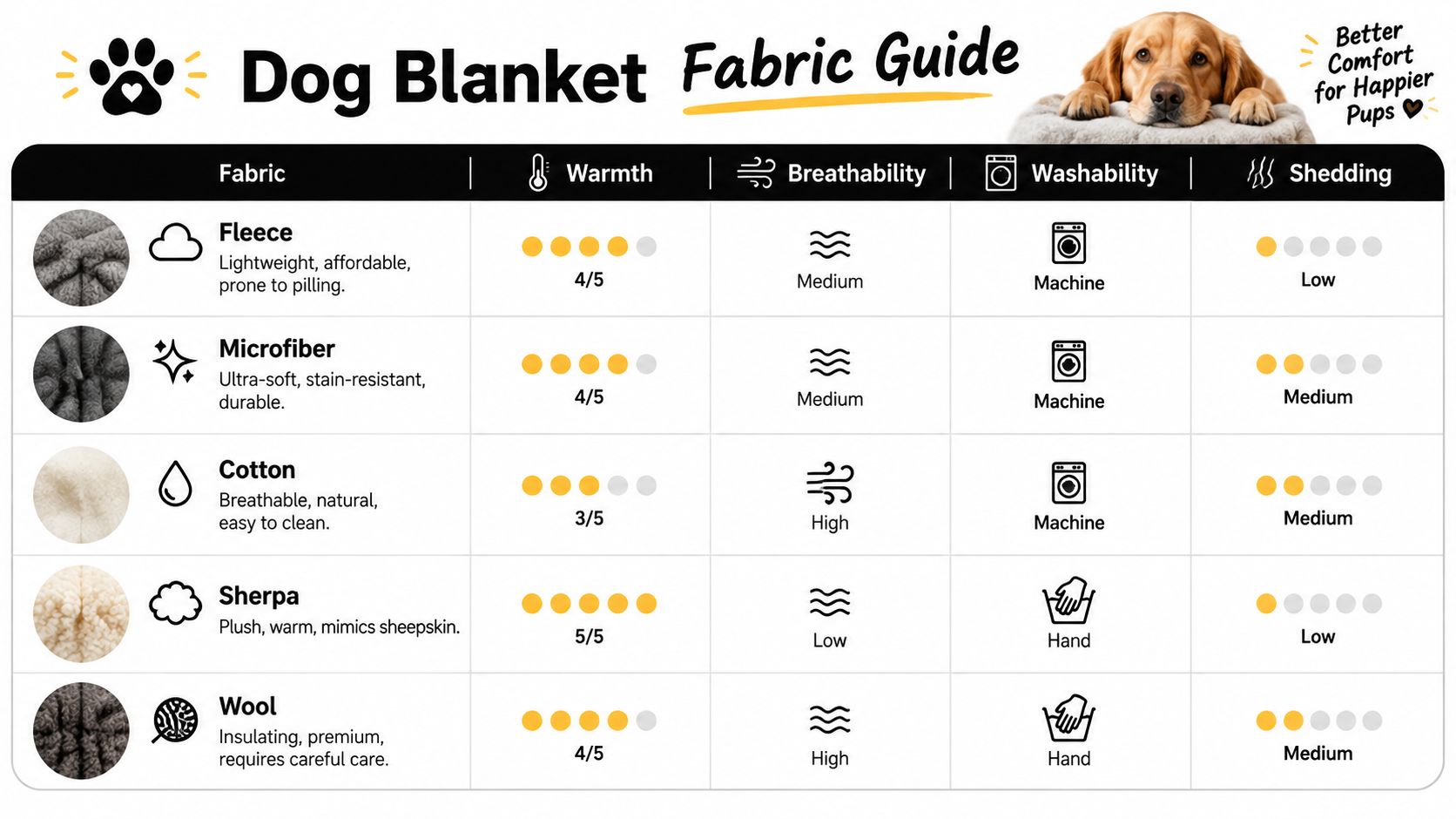
Match the material to the mess
- Short coat: Fleece provides warmth without much weight, though you'll need to remove trapped hair before washing.
- Sensitive skin: Cotton is the safer starting point because it's breathable and less likely to feel overly warm indoors.
- Senior or thin-coated dog: Sherpa or a fleece blend adds insulation and a soft surface, but check that your machine can handle the bulk.
- Drooling or accidents: Microfiber and water-resistant layers make spot cleaning less frustrating.
- Heavy shedding: Choose a tighter, smoother surface over long plush fibers, then shake the blanket outdoors before laundering.
Fill matters as much as the outer fabric. Low-loft polyfill is easier to wash and dries more predictably. Heavier plush fill feels luxurious, but it can retain moisture and become unwieldy. Skip anything with poorly enclosed stuffing, especially if your dog chews.
For a creative sewing project or a themed minky surface, you can find the Barkley Blue Dog minky kit from On Pins & Needles Quilting Co. A dog-themed textile can work as a small throw, crate cover, or photo-session accent, provided the finished edges are secure.
A thoughtful blanket also supports a cleaner visual environment. Ideas in this guide to eco-friendly home decor can help you choose a washable textile that works with the rest of the room instead of adding another disposable accent.
If you're turning a favorite dog photo into wall art, the William Tucker Art Acrylic Pet Painting Final Payment listing is used to finalize a custom pet portrait after preview images meet expectations. The finished portrait is painted with acrylics on gallery-wrapped canvas.
Safety Rules Every Dog Blanket Should Follow
A blanket is safe only when your dog can use it without chewing, overheating, or getting trapped. Start with fit. The fabric should drape comfortably over the resting area, but it shouldn't be so oversized that your dog disappears beneath it or tangles in a loose corner.
Inspect the blanket before every new use, especially with puppies and determined chewers. Loose threads, unraveling hems, fringe, tassels, buttons, and other detachable details can create choking or intestinal obstruction hazards. Oversized fabric can also contribute to smothering or tangling risks, as emphasized in the American Kennel Club's dog blanket safety guidance.
The non-negotiable rules
- Choose breathable fabric: Lightweight materials are easier for a dog to move away from if warm.
- Remove damaged bedding: If your dog starts pulling threads or opening seams, take the blanket away.
- Skip weighted blankets: Human weighted designs can restrict movement and place unnecessary pressure on a dog's body.
- Supervise heated products: Never leave a heated blanket running with a dog that can chew the cord or heating area.
- Keep the head uncovered: Don't drape fabric over your dog's face or encourage deep covering.
- Check first use: Watch how your dog burrows, scratches, and settles before leaving the blanket unattended.
A teething puppy, small breed, or habitual burrower needs closer supervision than a calm adult dog who lies on top of the fabric. Heated bedding deserves particular caution because cords, hot spots, and chewing create risks that a regular throw doesn't have.
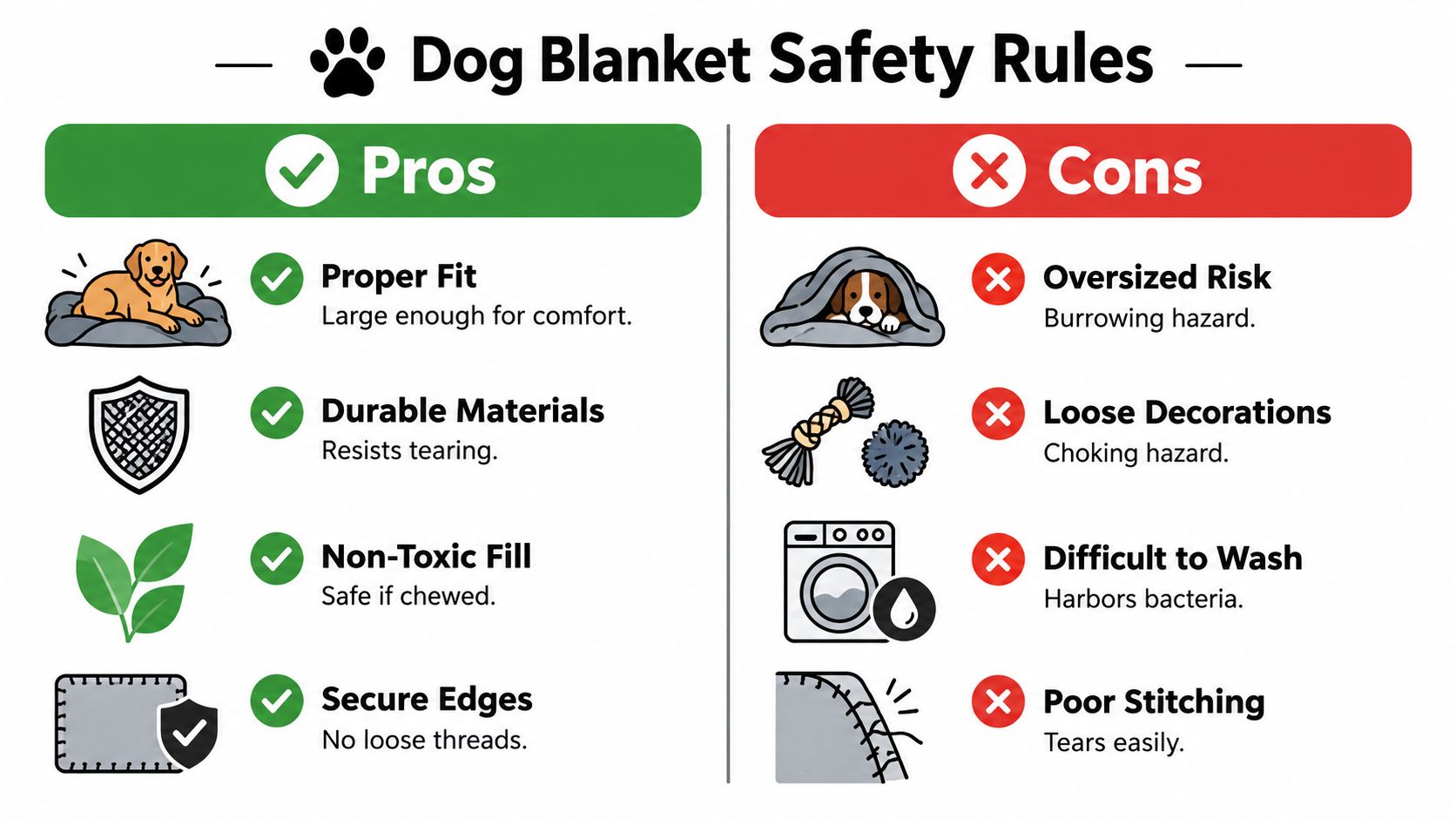
A safe blanket should remain structurally sound through ordinary use. If the seams loosen, fill becomes exposed, or the fabric starts to tear, replace it rather than hoping a quick repair will hold.
Washing and Caring for a Dog Blanket the Right Way
Clean bedding matters more than extra plushness. The CDC's pet-supply cleaning guidance recommends cleaning pet beds and blankets every week, which is a practical baseline for indoor dogs.
Shake hair and outdoor debris off the blanket outside before it reaches the washing machine. Spot-clean small accidents between full washes, and wash more often if the blanket regularly contacts wet fur, muddy paws, food, or heavy drool.
A routine that works
Use a fragrance-free, dye-free detergent if your dog has sensitive skin or reacts to strong scents. An enzymatic cleaner can help break down organic odors, but follow the product label and fabric-care instructions rather than pouring extra detergent into the machine.
Warm cycles suit many cotton and fleece blankets. Sherpa may hold its texture better on a cool cycle, especially when the care label warns against heat. Air-drying helps preserve fibers, while tumble-drying on low is a reasonable fallback when time is tight. Remove the blanket promptly when the cycle ends so damp fabric doesn't sit and develop a stale smell.
For furniture throws, look for practical cleaning ideas such as the machine-washing advice collected at Casamé Home. The most useful design is the one you'll remove, wash, dry, and put back without postponing the job.
A clean blanket also pairs well with a visually deliberate home. If your room includes environmental or nature-focused artwork, William Tucker Climate Change Art Painting Abstract Collection, Cyclones presents swirling forms and layered color on canvas, while a neatly folded washable throw can add texture nearby without distracting from the piece.
Retire a blanket when it has visible thinning, persistent odor after washing, exposed stuffing, or a hole large enough for a paw or muzzle to catch. Don't wait for total failure. Damaged bedding becomes a safety problem before it becomes unusable.
Styling Dogs and Art With Blankets in Photo Sessions
The best dog blanket can do more than catch hair. It can set the color, texture, and mood of a photograph while giving your dog a familiar place to settle.
For a pet portrait, choose a solid or lightly textured throw in oatmeal, sage, slate, or another muted neutral. These shades tend to support many coat colors without stealing attention from the dog's eyes. A grey knitted blanket, for example, gives a golden retriever a soft contrast while keeping the scene relaxed.
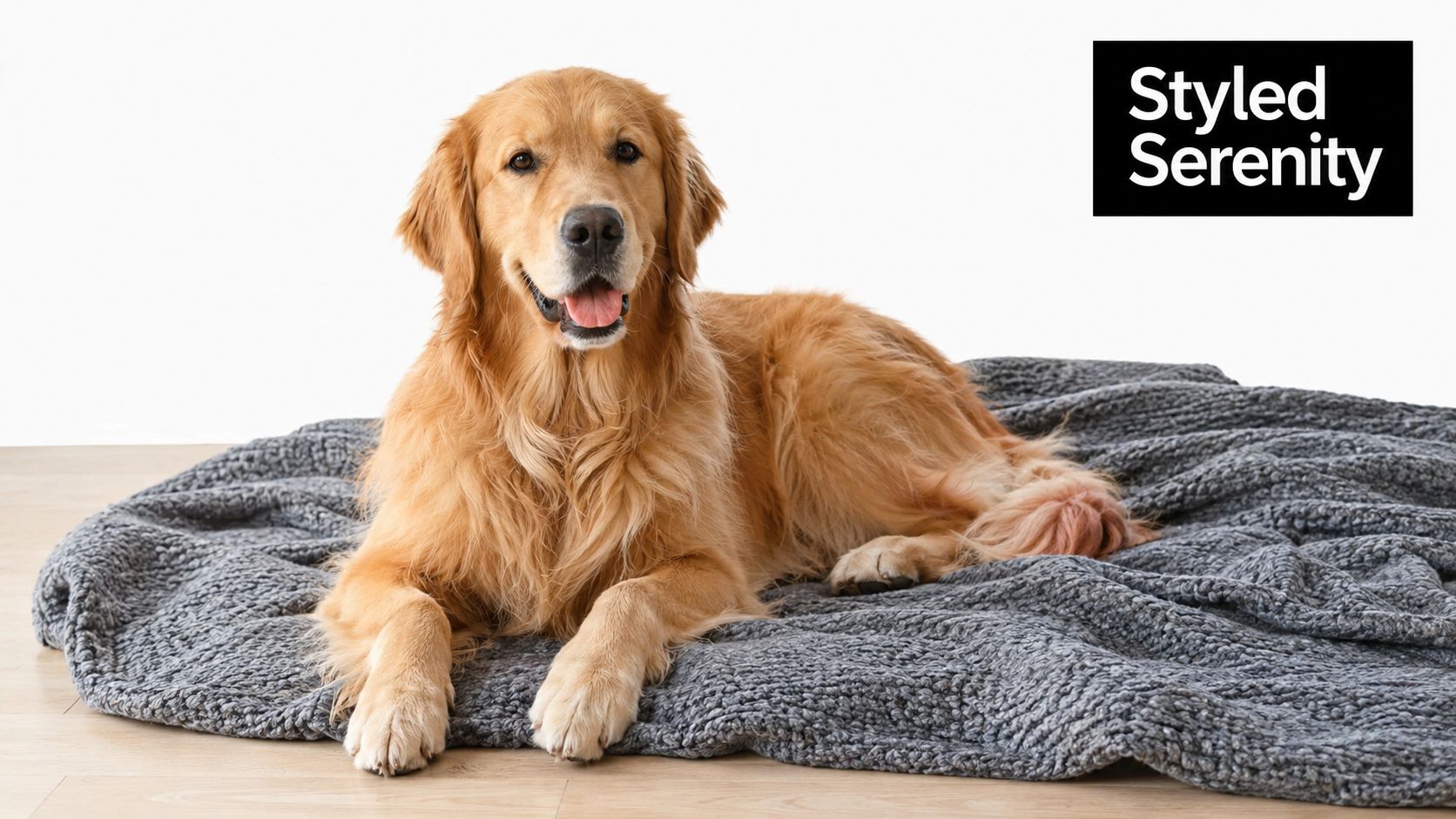
A flat layer on the floor encourages a relaxed down-stay and keeps the dog's body grounded. For a smaller dog, drape the throw over a crate, stool, or low bench to create a little height and soften hard edges. Keep the folds intentional. One broad fold looks styled; a pile of wrinkles looks like laundry.
For framed-art or listing photography, fold the same blanket at the base of a frame or wrap it around a print tube. The textile introduces a tactile domestic detail that can make a room scene feel lived in. Choose a blanket one shade lighter or darker than the wall so it separates from the background without clashing with the artwork.
A good styling blanket supports the subject. It shouldn't become the subject.
Steam the throw before the shoot, brush off visible hair between takes, and keep an identical backup nearby. The second blanket is especially useful when a dog tracks in dirt, drools on the first setup, or refuses to pose until the fabric has been rearranged.
For another visual reference on staging a relaxed dog scene, watch this video before planning your shoot:
Use the blanket as a quiet link between the dog and the room. A coordinated throw can echo a frame, rug, or wall tone, helping a candid dog photo feel suitable for a gallery wall rather than an accidental snapshot.
Putting It All Together With a Quick Checklist
Keep this list open while you shop. It turns a vague search for a “cozy” blanket into a decision based on fit, safety, maintenance, and appearance.
- Measure the dog: Record body length from the base of the neck to the base of the tail, then check chest width.
- Add practical coverage: Leave enough room for curling, stretching, and a small amount of tucking, without creating a loose pile.
- Match the fabric: Pick fleece for light warmth, cotton for breathability, microfiber for moisture, or a water-resistant shell for furniture and travel.
- Check the care label: Machine-washable construction is far more useful than fabric that needs delicate handling after every accident.
- Inspect the edges: Reject loose threads, fringe, tassels, weak stitching, and detachable decorations.
- Review the fill: Low-loft, securely enclosed fill is easier to clean and less concerning if your dog investigates the seams.
- Avoid risky heating: Don't use weighted or heated designs casually, and supervise any product with heating elements.
- Choose a useful color: A shade that complements your dog's coat and your room will look better in daily life and photographs.
- Keep a washing rhythm: Clean the blanket weekly as a baseline, then adjust for wet walks, swims, accidents, and heavy shedding.
- Rotate two blankets: One can be in use while the other is washing or drying, so your dog always has a familiar surface.
- Prepare for photos: Steam the fabric, remove hair, smooth the folds, and keep a backup ready.
- Watch the dog: Your dog's behavior is the final test. Chewing, overheating, or repeated tangling means the blanket isn't suitable.
A thoughtful blanket for dog comfort pays back every night on the couch, every clean-up day, and every time your camera comes out. Choose one that fits the dog, survives the routine, and looks at home in the room.
If you're building a space around your dog's personality, visit William Tucker Art to explore vibrant pet portraits and wildlife artwork. A custom pet painting can turn the same character who inspires your blanket choice into a lasting piece for your wall.