
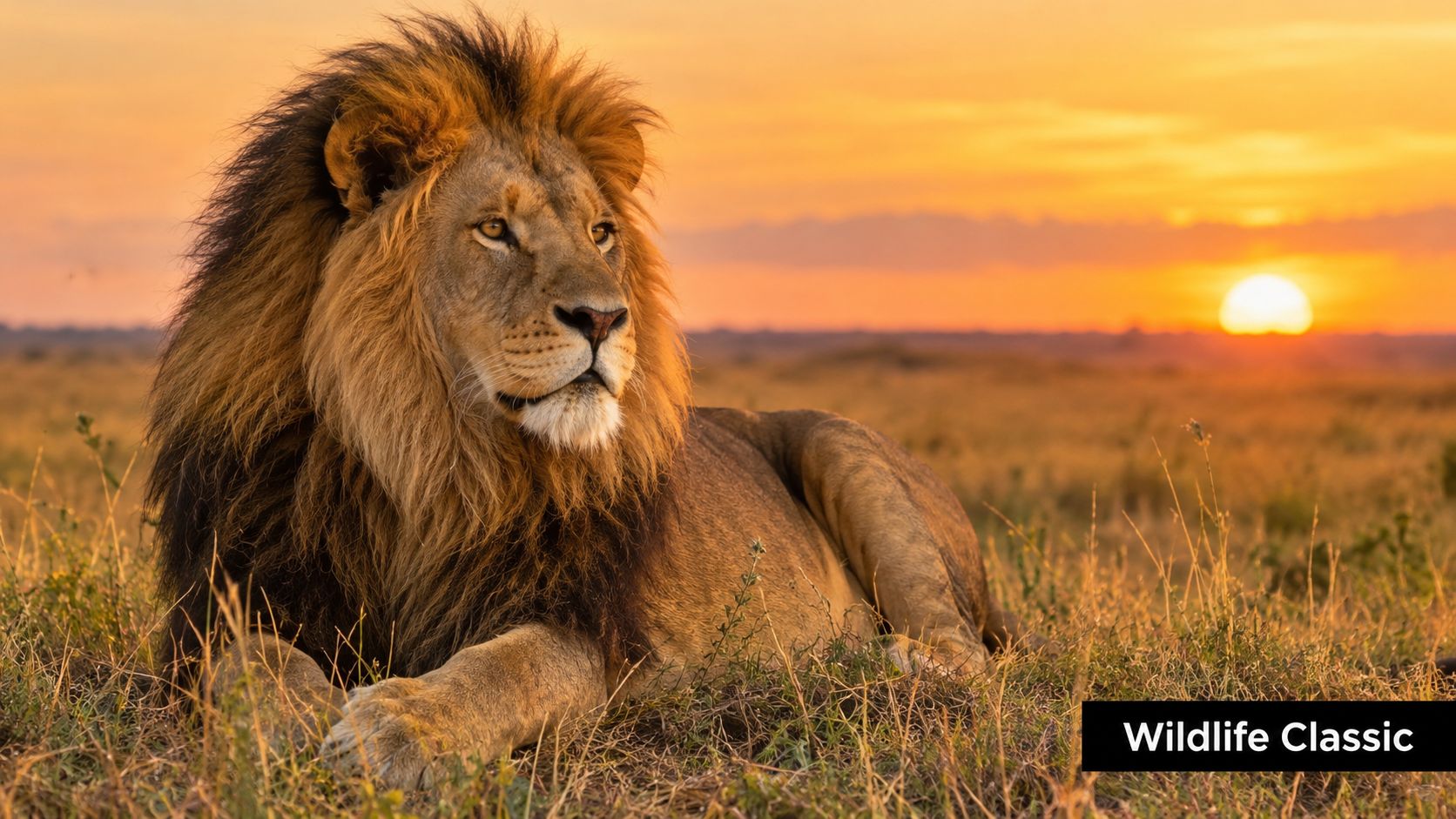
Wildlife canvas prints for sale sit in a market that's much bigger than animal imagery alone. The wall art industry was valued at USD 61.01 billion in 2025 and is projected to reach USD 99.15 billion by 2033, with canvas holding roughly 45% of wall art sales in 2026 and North America appearing as a leading region in one market summary at 42.5% in 2025. That matters because a wildlife canvas isn't a fringe purchase, it's a format people already trust for living rooms, bedrooms, offices, and collector walls.
A homeowner choosing a lion canvas for a hallway, or a zebra piece above a sofa, isn't just picking a subject. They're choosing a medium that already has mainstream acceptance, a visual surface that can carry fine detail, and a format that can handle larger statements without feeling fragile. The result is a product that sits somewhere between decor and art object, which is exactly why buyers keep returning to it.
Why Wildlife Canvas Prints Are the Modern Classic
Wildlife imagery didn't start as retail decor. Its roots reach back to prehistoric cave painting, then through Egyptian, Greek, and Roman decorative art, before artists such as Albrecht Dürer and Leonardo da Vinci brought sharper observation into the picture. Later, natural history shaped the work of artists like John James Audubon and Carl Rungius, who painted animals with a stronger sense of habitat and behavior.
A gallery-wrapped canvas print gives that long tradition a modern home. It keeps the subject accessible, but it also gives the buyer a surface that feels substantial on the wall, not temporary or flimsy. That's one reason wildlife images translate so well to canvas, the medium can support both decorative use and collector-minded display.
Why the medium feels so natural
A living room can feel empty with plain walls, but a wildlife print changes the room's tone immediately. A moody wolf study can add quiet drama, while a bright bird composition can make a dining area feel more active and alive. The subject carries emotional weight, and the canvas format gives it enough presence to stand on its own.
For sellers and buyers who need strong presentation assets, resources like interior visuals for sellers can help show how the art behaves in a real room, not just as a cutout on a white background. That matters because wildlife art is rarely bought only for the image, it's bought for the atmosphere it creates.
Understanding Canvas Materials and Build Quality
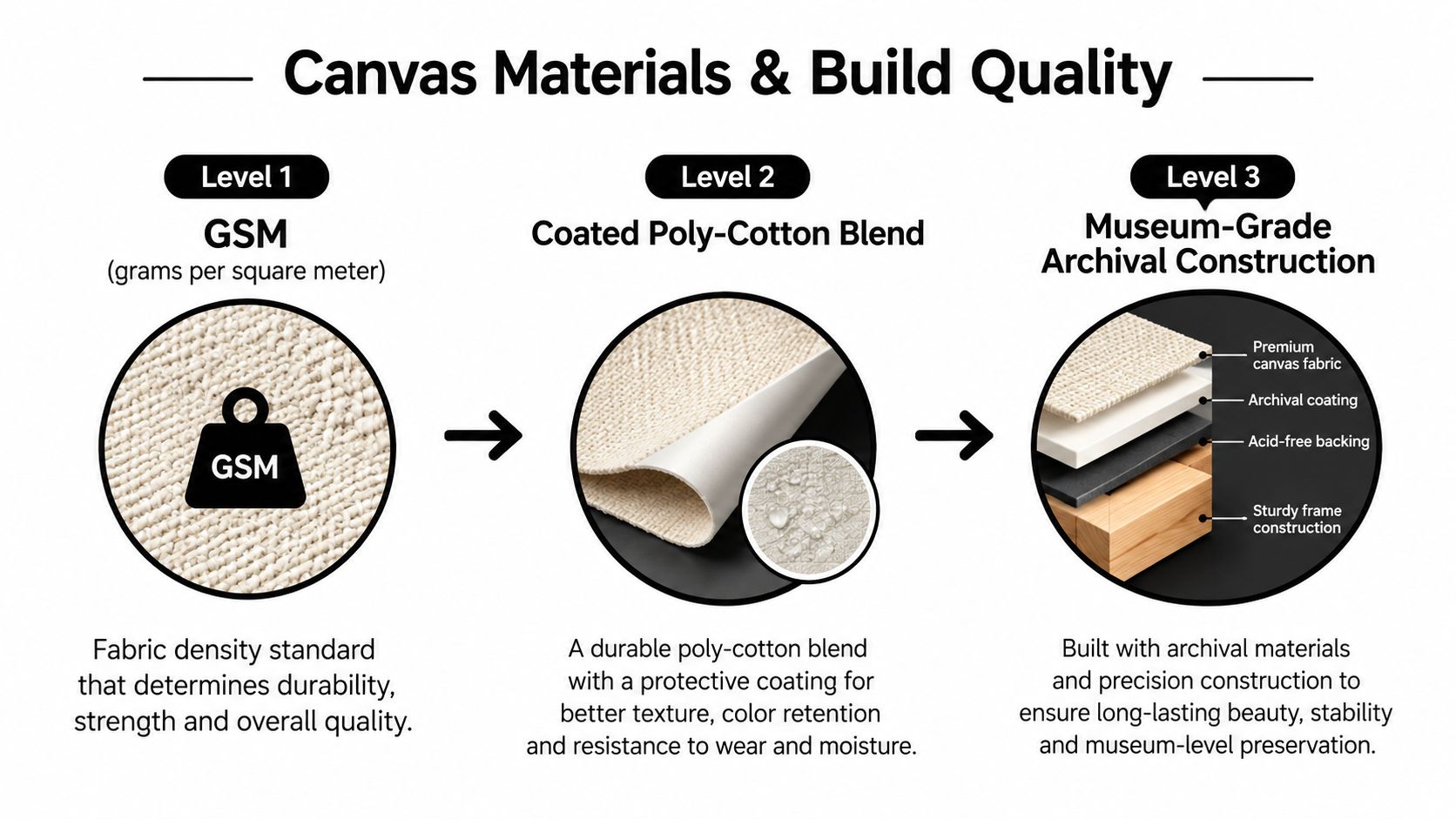
The word canvas sounds simple, but the construction beneath it changes everything. Major consumer-market canvases are typically built on a coated poly-cotton substrate in the 300 to 400 gsm range, with common thickness around 0.017 inches and a printable gesso layer that improves ink receptivity and color range (Walgreens photo canvas specifications). For wildlife imagery, that structure matters because fine detail lives in the fur, feathers, eyes, and edge transitions.
What the numbers mean in practice
GSM refers to fabric density. A heavier canvas generally gives more stiffness, less show-through, and a more stable surface for stretching. In practical buying terms, 320 to 360 gsm often sits in the middle ground between texture and stretchability, while 400 gsm is usually positioned as a premium, gallery-grade option.
That difference isn't abstract. A thin, loosely coated canvas can let detail soften or distort, especially in dark animal coats or finely patterned plumage. A coated poly-cotton blend with a good gesso layer gives the printer a more predictable surface, so the black lines around an eagle's beak or the subtle color shifts in a leopard's face stay cleaner.
Practical rule: if the product description avoids GSM, coating, or substrate details, assume the listing is optimized for marketing copy, not long-term ownership.
Thickness and stretch matter too
The canvas surface is only part of the story. The stretcher bars behind it affect how flat the piece sits, how well it resists warp, and how it looks from the side. That's why buyers should read the build section as carefully as the title image. A print that looks rich online can still feel light or sag-prone once it's on the wall.
If you want a simple comparison point, the internal guide on pre-stretched canvas construction is useful for understanding why the frame beneath the print matters as much as the image on top. Even a strong wildlife subject can look cheap if the support system is weak.
The William Tucker Climate Change Art Painting Abstract Collection - Cyclones shows how canvas also handles layered mixed media in a different context. Its acrylic, oil, and mixed media construction uses movement and texture to create a bold surface, which is a good reminder that canvas quality affects not just wildlife prints, but any image that depends on visible depth and edge control.
Printing Methods and Framing Options Explained
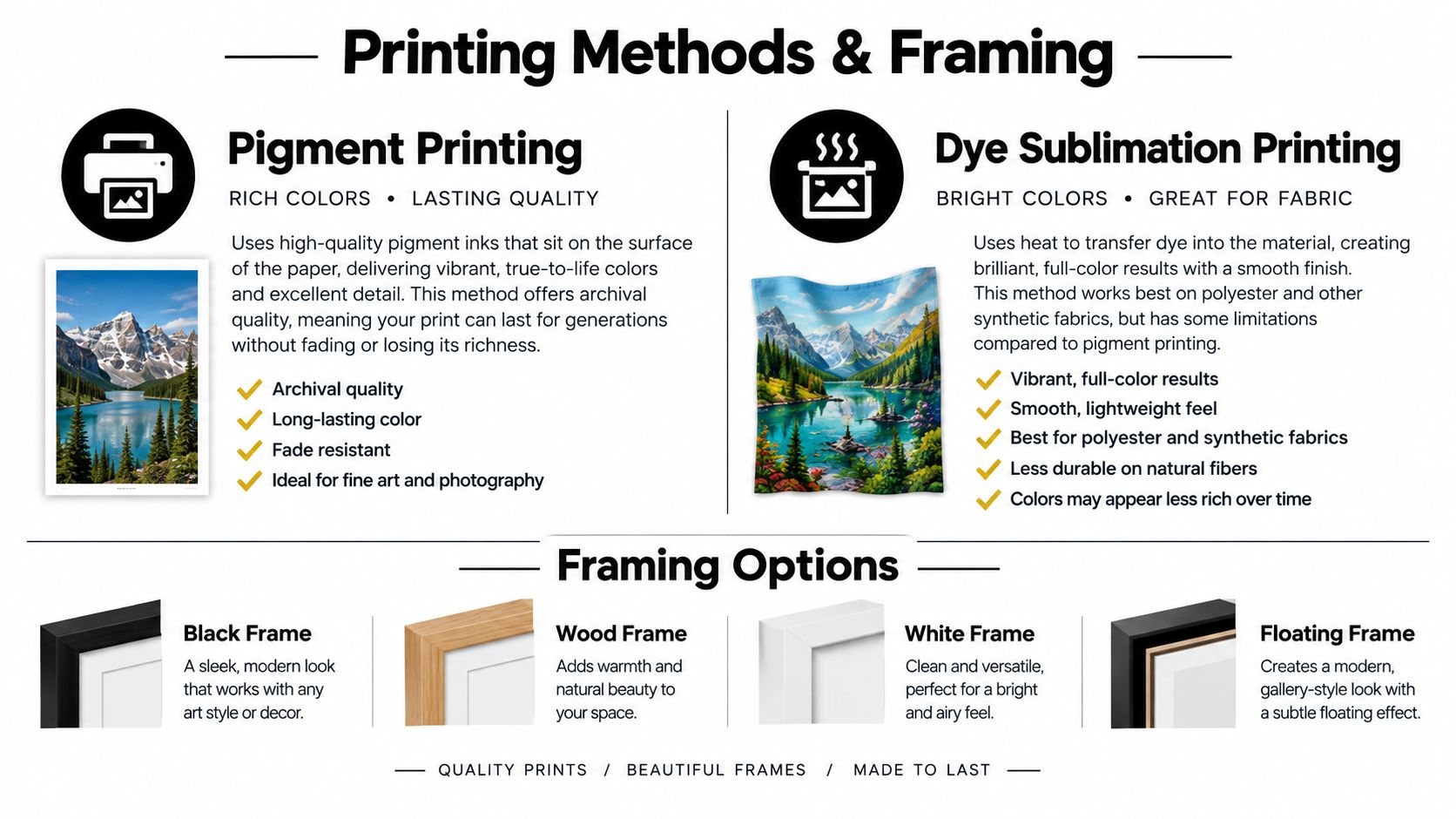
Printing method shapes how a wildlife canvas ages on the wall. For pieces meant to last, pigment printing usually deserves the closer look because the color sits well on quality canvas and is designed for better stability over time. Dye-based methods can look vivid at first, yet buyers who plan to keep the work on display often prefer a process that supports deeper darks and smoother tonal shifts.
Pigment versus dye sublimation
Pigment printing lays down color with strong detail and clear surface definition. That matters in wildlife art, where the image often depends on sharp control around whiskers, fur texture, and the iris of the eye. Dye sublimation can work for some products, but its final result depends heavily on the material receiving the image and the production system behind it.
Framing changes the way the print behaves in the room. A gallery wrap carries the image around the edges, which keeps the presentation clean and reduces visual weight. A floated frame adds space around the canvas and gives it a more finished gallery feel. Standard wooden frames feel more traditional and can help a wildlife print sit comfortably in classic interiors.
A ready-to-hang piece saves setup time. A custom finish gives you more control over how the art sits beside your furniture, wall color, and lighting.
What to ask before you buy
Before buying, ask three simple questions. Is the edge wrapped or framed. What depth does the finished piece have. Does the crop keep the animal's focal point, especially the eyes or head, intact. Those details matter because wildlife prints lose strength when the subject is trimmed too tightly or the frame competes with the image.
For practical framing guidance, how to frame canvas paintings explains the difference between a clean wrap and a more architectural presentation. That choice also affects long-term ownership. A frame can add protection during handling and shipping, while a wrap may reduce bulk and keep the piece lighter on the wall. For buyers who care about durability and waste, that trade-off matters as much as appearance.
Pricing Factors and Sizing for Maximum Impact
Price in this category comes from a mix of image rights, production quality, size, and finishing. A larger canvas costs more because it uses more material and often needs stronger support. A print with a better coating, deeper edge build, or frame-ready finish will also cost more than a basic wall poster style product.
What moves the price
Artist reputation matters when you're buying a piece meant to last. So does whether you're buying an original, a limited print, or a broader-edition decor item. The subject itself can influence value too, especially when the work carries ecological or conservation themes, because buyers often connect that subject matter to a stronger emotional reason for purchase.
The same logic shows up in original environmental art. [Eye of the Storm] isn't a wildlife print, but it demonstrates how mixed media and a strong environmental theme can push a canvas beyond simple decoration and into statement-piece territory. That helps explain why some shoppers are comfortable paying more for work that feels conceptually tied to nature rather than merely illustrated.
Sizing for the room
Size should follow the wall, not the other way around. A large living room can handle an oversized animal portrait because the piece has space to breathe. A bedroom usually benefits from something calmer and more proportioned, while an office often needs a format that can energize the room without overwhelming it.
A simple rule helps: if the wall is wide and uncluttered, a single large canvas can carry the space. If the wall is broken by furniture, shelving, or windows, a smaller print or a grouped arrangement often looks more balanced. Wildlife art works well in both formats, but the animal's scale should still feel intentional.
Buying mindset: pay for surface quality first, then image size, then decorative extras. A large weak print is still a weak print.
If you're on a budget, compare the full ownership picture, not just the sticker price. Shipping protection, framing, and how long the canvas is likely to stay flat all affect what the purchase really costs over time. That's the kind of practical decision that keeps a piece enjoyable after the excitement of unpacking fades.
Where to Buy and How to Commission Unique Art
A wildlife canvas can look impressive on day one and still disappoint later if the build, packing, or materials are weak. That is why the safest place to buy depends on how much control you want over the finished piece. Large marketplaces offer breadth, but a dedicated artist or specialist site usually gives clearer information about the canvas, the subject, and the way the print is handled before it reaches your wall.
How to judge a seller
Start with the portfolio. Look for consistency in subject handling, clean edges, and careful print presentation. Then check whether the seller explains the substrate, framing method, and shipping protection in plain language. If those details are missing, you are left guessing about durability and transit risk.
Commissioning works differently from buying a finished print, but it can be the better choice if you want a pet portrait, a specific species, or a composition tied to your own room. The guide on how to commission an artist is a useful starting point because the same practical questions apply whether you are ordering a custom wildlife piece or a personalized animal portrait.
A curated catalog can also help buyers compare craftsmanship without losing sight of long-term ownership. William Tucker Art offers wildlife-driven work alongside broader nature themes, and the William Tucker Wild Things Collection Endangered Animal Wall Art - Red Ivory shows how a single subject can function as both decor and a conservation-minded statement. For a broader decor reference point, see Param wall decor for homes to see how wall art is often positioned within a room rather than treated as an isolated object.
What to look for before you commit
The best buyers ask direct questions. Does the seller show close-ups of the canvas texture? Is the piece ready to hang? Is the packaging designed to reduce corner damage in transit? Those answers matter more than polished sales language on the product page.
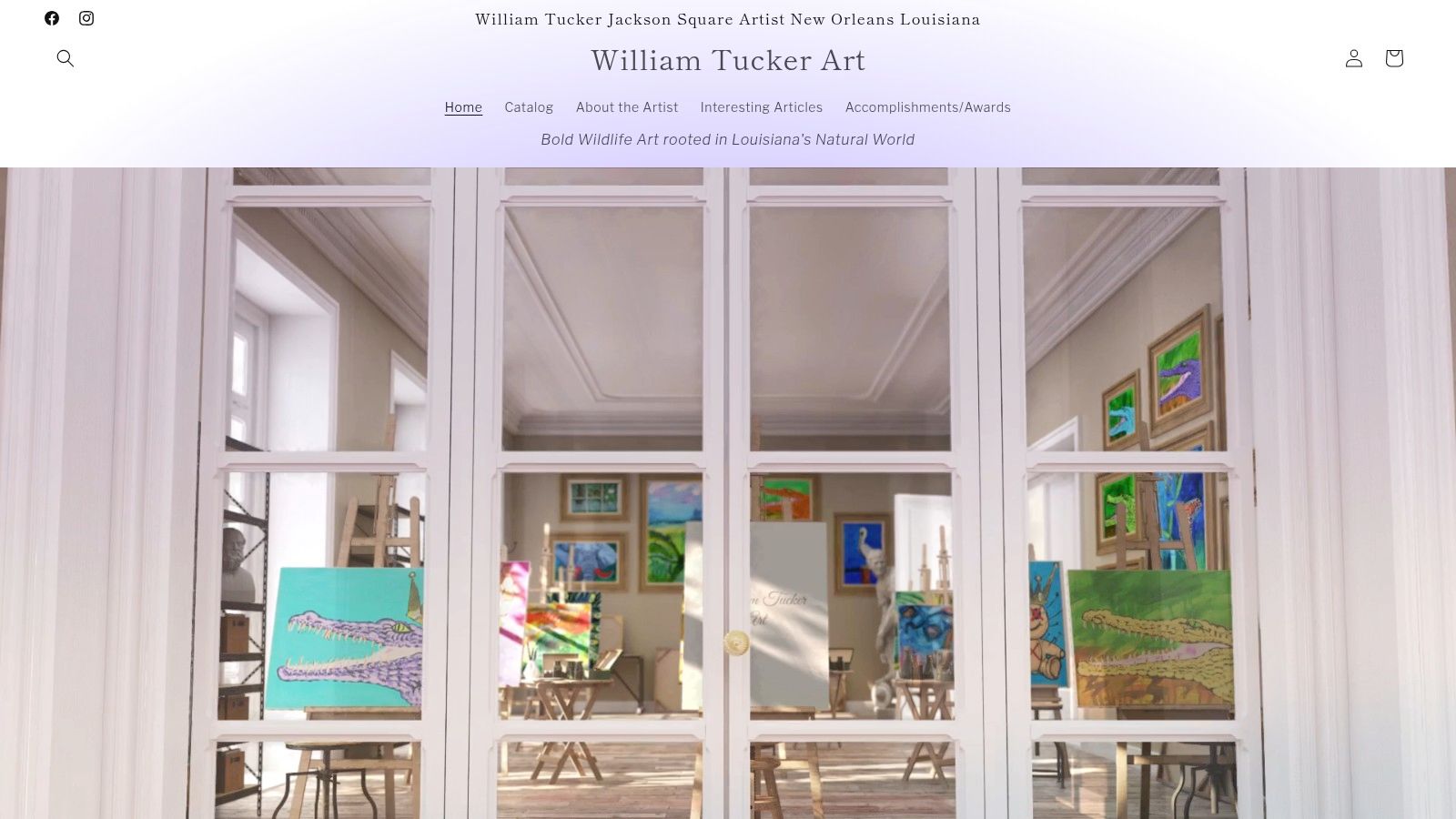
A screenshot of the artist's studio or storefront can also help you judge how the work is presented in real life. That context is useful when you are weighing mass-produced decor against a smaller, more intentional studio setup. It can also signal how carefully the seller handles the practical side of ownership, from packing to presentation.
Making Your Final Choice with Confidence
A good wildlife canvas should satisfy three tests. It should be built well enough to stay straight, printed well enough to show fine detail, and shipped well enough to arrive in one piece. If any of those weakens, the purchase becomes harder to justify, no matter how good the animal looks online.
A short checklist before you buy
- Check the build details: Look for canvas weight, coating, and whether the print is gallery wrapped or framed.
- Check the image quality: Make sure the animal's eyes, fur, feathers, or markings are crisp in the product photos.
- Check the shipping setup: Find out whether the seller protects corners and edges properly.
- Check the room fit: Match the scale to the wall so the piece feels anchored, not crowded.
- Check the values fit: If sustainability matters to you, ask how the canvas and shipping align with that priority.
Ownership trade-offs are where this category becomes interesting. A framed paper print may suit some buyers, but canvas can offer a different mix of durability, reduced fragility, and simpler display. That's why so many people treat wildlife canvas as a long-term decor choice rather than a temporary accent.
The best purchase is the one you won't second-guess after it's on the wall for months. If the material feels sturdy, the print looks faithful, and the artist or seller gives you clear information, you're probably looking at a piece that will keep rewarding you every time you walk past it.
If you're ready to compare wildlife canvas prints for sale with a more discerning eye, explore William Tucker Art and look for work that balances strong image-making with the kind of build quality that lasts. You'll find wildlife-focused pieces and nature-driven canvas art that fit the same practical standards discussed here, so you can choose with confidence instead of guesswork.