
You've got a phone photo of your cat, a gift deadline, and a recipient whose desk is already crowded. A small painting sounds right, but you still want those unmistakable eyes and that slightly crooked expression, not a generic cat squeezed onto a tiny surface.
Mini pet portraits work when the artist chooses what to preserve. Start with where the painting will live and how close someone will stand. Then choose a size, a crop, and a frame that give the pet enough room to be recognisable.
Mini Pet Portrait Sizes and What Each One Holds
Use this chart as a set of hypothetical commissioning options, not standard product sizes or guaranteed viewing distances. The dimensions describe the painted surface, not the outside of the frame. The distance suggestions are practical starting points to test in your own room.
Mini pet portrait sizes, detail and viewing distance
| Size | Detail that survives | Comfortable viewing distance |
|---|---|---|
| Keychain or pendant, for example about 1 to 1.5 in | Eye shape and coat colour | In the hand or at arm's length |
| Desk or travel piece, for example 3 x 3 in | Face, eyes and collar | Seated close to the piece |
| Mini canvas, for example 4 x 4 in | Full face, expression and fur markings | About 2 ft as a starting test |
| Small frame, for example 5 x 7 in | Face, whiskers and fur texture in broad strokes | From a nearby chair or beside the shelf |
| Shelf or gallery mini, for example 6 x 8 in | Head, shoulders and eye highlights | About 4 ft as a starting test |
| Upper edge of mini, for example 8 x 10 in | Fine fur detail and background texture | Try 4 to 6 ft in the intended room |
Read the detail column before choosing
A square mini canvas gives an artist space for a face without requiring an elaborate setting. It's a useful starting format, but ask what the artist means by mini rather than assuming the label describes a particular dimension.
Say your cat has a white muzzle, dark forehead and an uneven patch beside the nose. On a pendant, the painter may need to reduce those features to clear shapes. On a larger shelf portrait, there's room to show the muzzle turning into shadow and the direction of the cheek fur.
The detail column describes priorities, not a promise that every whisker will be visible. A painter can include delicate marks that disappear when you step away. Those marks add interest up close, but the main shapes must still carry the likeness.
Choose for the room, not the listing photograph
A close-up product photograph can make a miniature look substantial. Ask to see the proposed crop at its actual painted size, especially if the composition includes more than the pet's head.
Multiple pets need particular care. Dividing a tiny surface between faces leaves less space for each animal's expression; a wider format or separate companion portraits may serve them better.
Practical rule: Tape a paper template to the intended wall, then stand where people will normally view it. If you have to walk over to understand the face, choose a larger format or a closer display position.
For keychains and pendants, confirm whether you're buying a hand-painted original or a printed reproduction. Both can make thoughtful gifts, but they're different objects and should be described clearly before payment.
Where Mini Pet Portraits Work Best
Suppose a coworker's cat has a birthday coming up, and you want something personal that won't take over their workspace. The useful question isn't whether they like cats. It's whether they'll carry the portrait, prop it beside a monitor, or keep it somewhere private.
Miniature likenesses have served as intimate, portable keepsakes for centuries, and that portability still suits a small painted pet. The modern choice is about how the owner will use the object.
Match the object to the occasion
- Carried daily: A pendant or keychain needs a clear silhouette and a finish suited to handling. Ask about protection from rubbing, moisture and contact with keys.
- Displayed nearby: A desk or bedside frame suits someone who wants to notice their pet throughout the day. Check that the stand is stable and doesn't occupy more space than the painting.
- Sent as a gift: An adoption-anniversary present or pet-sitter thank-you should be easy to unpack and display. Confirm whether a stand, hanging hardware or frame is included.
- Kept in remembrance: A small portrait beside an existing photograph can feel personal without turning a shelf into a formal memorial.
A canvas portrait is a different kind of object from a wearable keepsake.
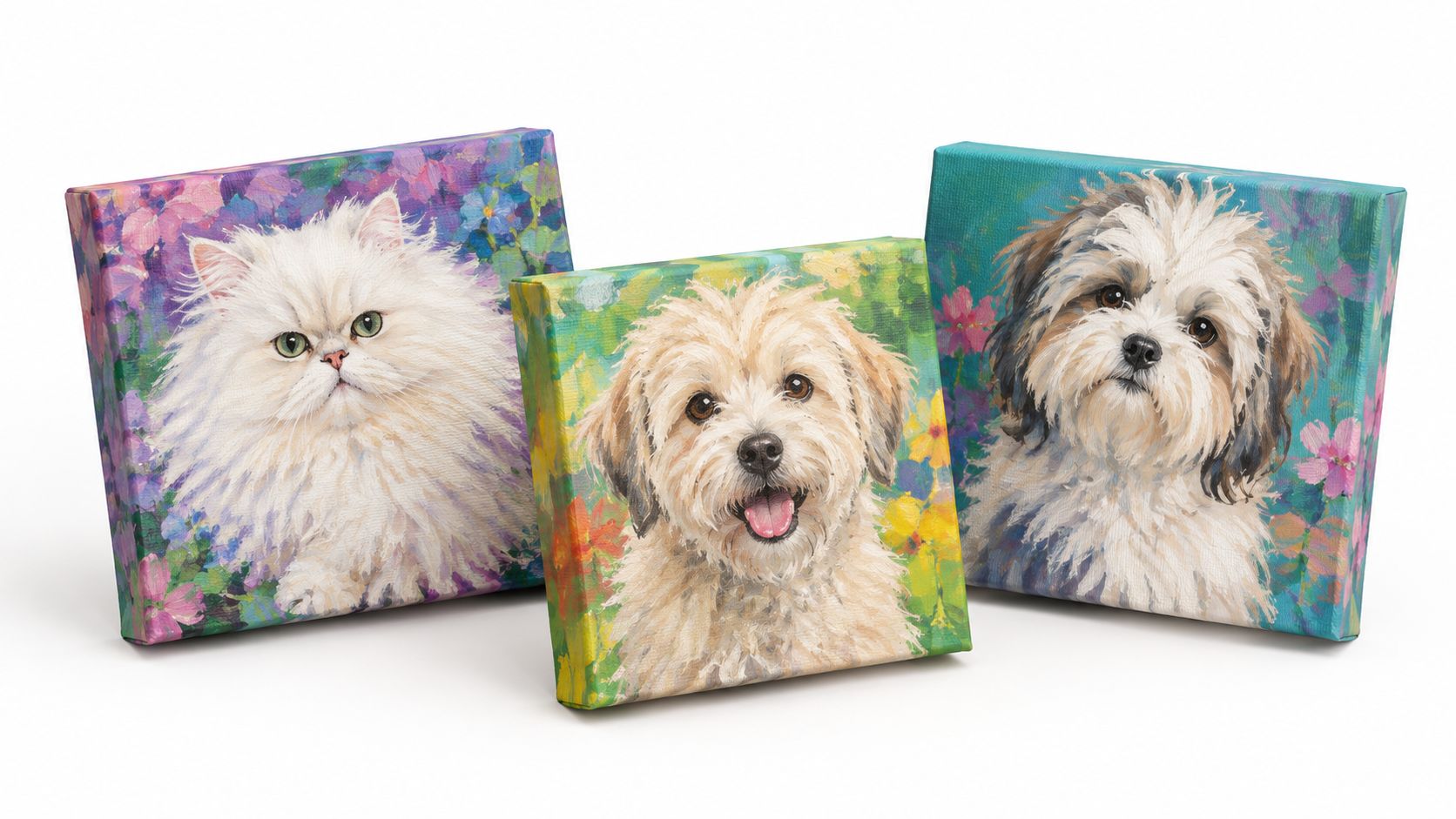
For example, the William Tucker Art Acrylic Pet Painting Final Payment listing describes a photo-based acrylic commission finished on gallery-wrapped canvas, with final payment made when preview images meet expectations. That's a wall or shelf artwork, not a description of a pendant format.
Choose a sturdier support and a restrained design for something that will be handled. For a painting viewed across a room, give the face more physical space.
How to Prepare a Pet Photo for Small-Format Work
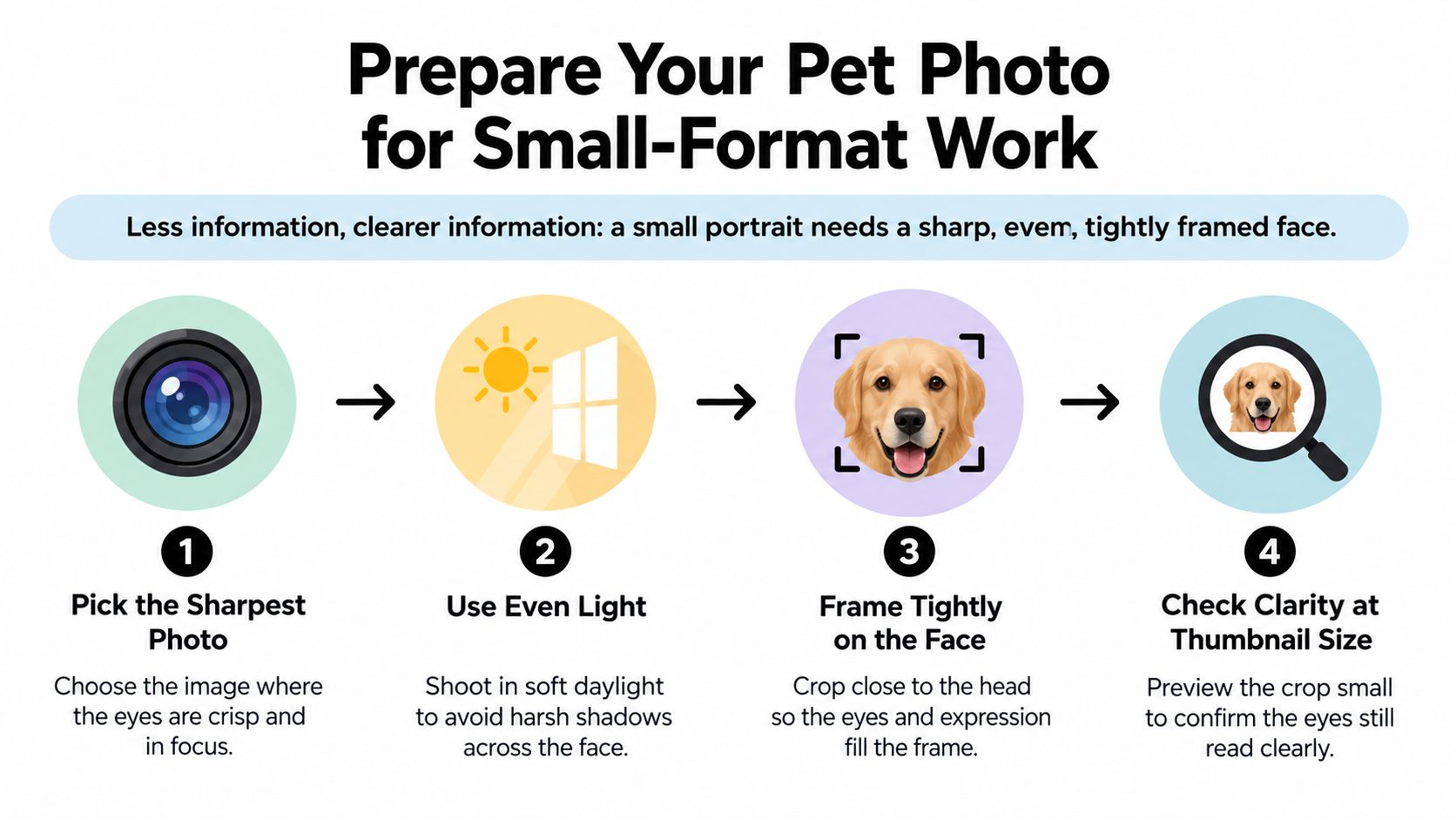
A small portrait needs less information, but clearer information. The artist needs to distinguish the eyelids, muzzle, ear edges and coat markings without guessing what a shadow or blurred patch represents.
Build a useful reference set
- Choose the sharpest eyes. Open the photograph and inspect the eyes rather than judging only the pose. A charming expression is useful, but blurred eyelids leave the painter without the shapes that make the gaze distinctive.
- Send the original file. Use the camera file rather than a screenshot, social-media download or image pasted into a document. The artist needs enough information to inspect and crop the face, so ask them to confirm suitability before taking replacement photographs.
- Use soft window light. Position the pet beside a window with indirect daylight, and turn off nearby lamps that cast a different colour. Avoid direct flash because bright reflections can obscure the eyes and flatten the difference between shiny fur and pale markings.
- Try a gently turned head. A three-quarter view can reveal the muzzle's depth and the shape of the cheek more clearly than a flat frontal image. Don't force that angle if your pet's familiar expression is best seen straight on.
The visual checklist below keeps the main photographic decisions together.
Preserve information while simplifying the view
- Make a separate cropped copy. Frame the head and shoulders to show the expression you want, but keep the uncropped original. The painter may need the missing ear tip, chest shape or surrounding light to build a convincing composition.
- Leave colour effects off. Beauty modes and filters can soften markings or shift the coat away from its actual colour. If the artist needs a JPEG rather than a HEIC file, ConvertHEICto's guide to manage color and metadata during JPEG conversion can help you prepare the file without treating conversion as an opportunity to restyle it.
- Add purposeful supporting photographs. Include an eye close-up, a clear view of important markings and an image showing the pet's usual posture. Identify the main reference so the painter doesn't have to choose between conflicting expressions.
- Explain what must remain recognisable. Mention the folded ear, pale eyebrow, crooked tooth or habitual head tilt that matters to you. Tell the artist whether a collar is part of the pet's identity or simply something they happened to be wearing.
For help setting up the photograph, use these tips for photographing pets before trying another session. Finish by reducing your chosen crop to thumbnail size: you should still recognise the expression without zooming back in.
Composition Choices That Hold Up at Small Size
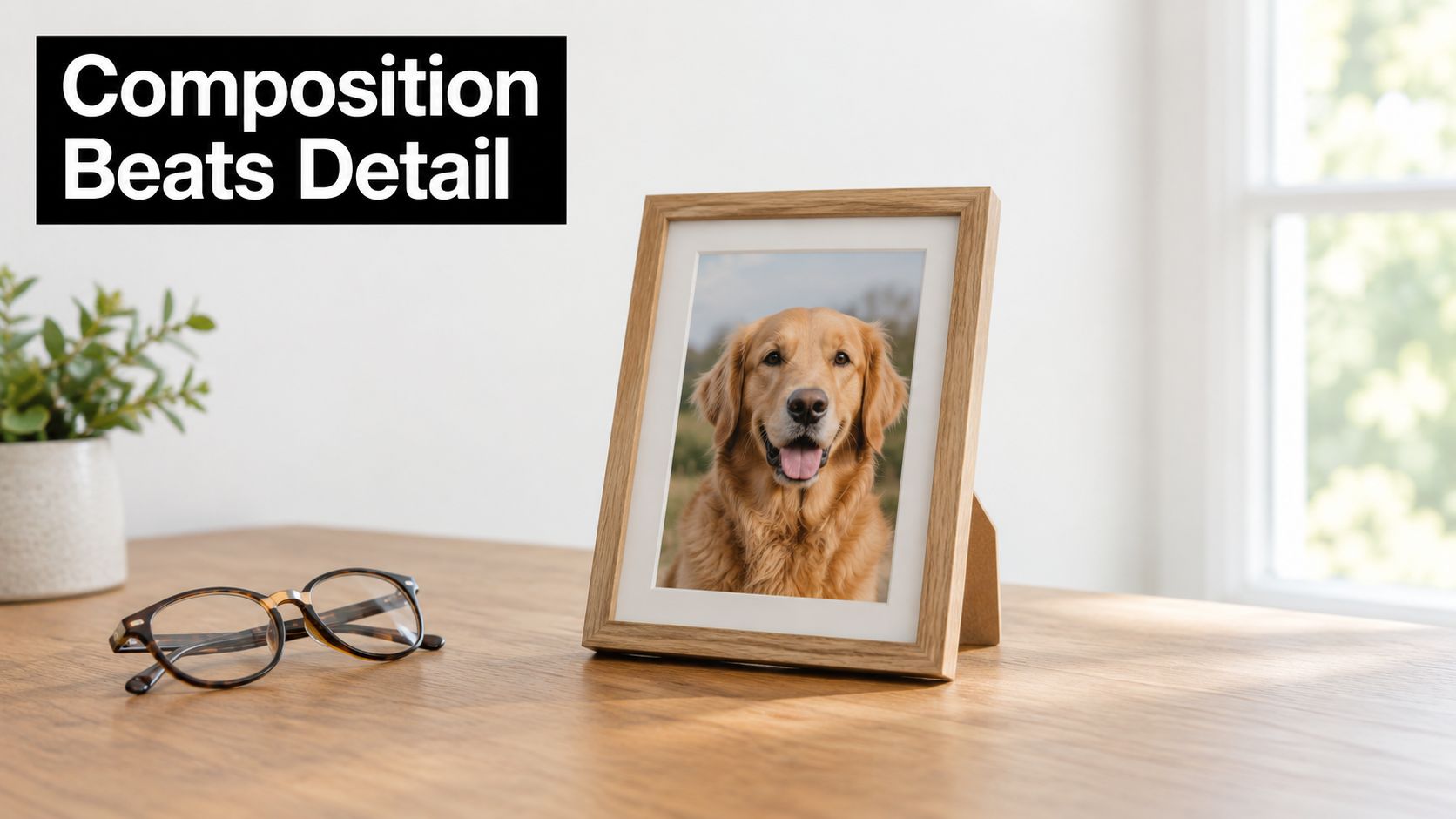
Mini does not mean minor. A small portrait reads as intentional when its composition, value contrast and frame suit the way it will be viewed. Composition decides whether the face reads first. Extra fur detail cannot rescue eyes that blend into the surrounding shapes.
Make the face readable before adding detail
- Place the eyes deliberately: Position them above the centre when it suits the pose, with enough room for the muzzle and ears.
- Keep a dominant subject: A simple background can support a detailed animal. Busy marks behind the eyes compete with the expression.
- Separate light from dark: Dark fur against a lighter ground reads more clearly than fur and background with similar brightness.
- Crop with purpose: Head and shoulders can carry more expression than a distant full-body view. Keep the whole body when posture defines the likeness.
Shrink the sketch to the proposed finished size before approving it, then check it in grayscale. Cover the background with your hand: if your eyes still go to the pet's eyes, the focal point is holding. If the head merges with its surroundings, colour changes alone may not fix the value contrast.
The expression should fit the portrait's purpose. JD's pet-industry report discusses emotional support as a reason people keep pets. Use that as a prompt to choose an expression that feels meaningful, not just a pose that looks attractive.
Ask for changes to the large shapes at the sketch stage. Moving the head or simplifying the background is more useful than requesting extra hairs after the composition is settled. At small scale, those structural choices matter more than fine detail.
Honest Portraits for Emotional and Difficult Subjects
What must this portrait carry: age, a scar, a blind eye, a three-legged stance, or the worn blanket your pet always chose? Decide which details preserve identity and which belong only to the circumstances of the reference photograph.
An idealised face can feel less familiar than an honest one. Softening every grey hair or correcting an uneven ear may remove precisely what an owner wants to remember.
Decide what belongs in the likeness
For an older animal, distinguish between a flattering interpretation and a younger-looking replacement. You might want gentle lighting while keeping the grey muzzle, relaxed eyelids and changed posture.
For a disabled pet, give the artist clear anatomical references. A blind eye shouldn't be replaced with a sighted one by assumption, and a three-legged animal needs a believable stance rather than a conveniently hidden limb.
- Favourite objects: Keep a blanket, toy or familiar perch if it explains the relationship. Use a recognisable fragment rather than filling the painting with accessories.
- Medical equipment: Decide whether a cone, bandage or mobility aid belongs in the memory you want to preserve. Neither inclusion nor omission is automatically more respectful.
- Symbolic details: Choose background colour and pose before reaching for stock hearts or halos. Personal associations are usually more specific than generic memorial imagery.
Bring separate memories into one scene carefully
Combining living and deceased pets requires more than placing unrelated photographs side by side. Agree on relative scale, eye direction and lighting so the animals appear to share a believable space.
Be clear if the pets never met. The artist can create a commemorative grouping without implying a shared moment that didn't happen.
Before the sketch: Put sensitive choices in writing. Don't leave the artist to infer whether you want an accurate record, a comforting interpretation, or a symbolic tribute.
Frame, Mat and Display Choices for Small Portraits
Frame and mat starting points for mini portraits
These are hypothetical framing layouts for flat artwork, not product specifications. The arithmetic assumes equal mat borders and matching proportions; the framer must allow for the overlap needed to hold the artwork.
| Portrait size | Frame size | Mat width | Placement note |
|---|---|---|---|
| 4 x 4 in | 8 x 8 in | 2 in | Gallery-style arrangement; consider UV-protective glazing |
| 5 x 7 in | 8 x 10 in | 1.5 in | Shelf or hallway option |
| 6 x 8 in | 10 x 12 in | 2 in | Desk or bookshelf beside a lamp |
| 8 x 10 in | 12 x 14 in | 2 in | Pair with another artwork on a larger wall |
Match the frame to the support
For these examples, the frame opening equals the artwork dimension plus the mat border on each side. A wider mat gives a small image breathing room, but an excessive border can make the pet look stranded.
Don't apply a paper-framing layout directly to stretched canvas. Works on paper need conservation-quality mounting and separation from glazing. A stretched canvas generally needs a frame with suitable depth, such as a float frame, rather than a conventional window mat.
A CanvasDiscount customer survey published by the National Law Review highlights design and material quality as purchasing considerations. In practice, check the mounting materials and frame construction as carefully as the finish colour.
Protect the piece without hiding it
- Glazing: For paper, ask about UV-filtering glazing and reflection control separately. They solve different problems, and neither makes direct sunlight safe.
- Placement: Hang near a comfortable viewing height or use a stable shelf stand. Group a small painting with compatible objects rather than leaving it isolated on an expansive wall.
- Humidity: In humid homes, including New Orleans, avoid steamy bathrooms, cooking areas and walls where condensation forms. Use indoor climate control and keep the backing away from damp surfaces.
The pet portrait framing guide can help you prepare questions for the framer. The frame should support the artwork, not become the first thing you notice.
Confirm the Size and Medium Before You Order
A clear agreement protects both you and the artist. Even a small painted surface can require careful likeness work and finishing, while the medium and presentation affect how the piece looks and is handled. Before you commit, make sure the listing and your expectations describe the same finished artwork.
Settle the physical artwork
- Artwork size and display: The sizes section explains how to read the artwork dimensions. Confirm whether the piece is intended to hang, stand on a shelf or travel with its owner.
- Medium and support: Ask what the artist offers in your chosen format. Acrylic on gallery-wrapped canvas behaves differently from work on paper or a rigid panel, particularly at the edges and during framing.
- Reference approval: Have the artist accept the main photograph before the composition is settled. Send supporting images and a written list of details that must remain accurate, such as the pet's markings or expression.
- Finished presentation: Clarify whether the price includes a frame, backing, hanging hardware, protective finish and gift packaging. A staged product photograph may not show everything included.
Make the approval process explicit
Ask when you'll see a sketch or preview, what revisions are included, and when the remaining payment is due. If the portrait is a gift, agree on the delivery deadline before paying. A small painting still needs time for painting and finishing.
Use the pet portrait commission pricing guide to prepare questions about scope and cost. Compare like with like: an original painting, a printed reproduction and a framed commission are different purchases.
A useful approval message names the crop, expression, background and required markings. “Make it cute” leaves the painter without clear direction.
Before placing a deposit, request a consultation and share your best photograph, a picture of the intended display spot, and your written list of must-keep details. These give the artist a practical starting point and help you choose a size and composition that read as intentional on the wall.
William Tucker Art offers photo-based acrylic pet portraits on gallery-wrapped canvas, with preview approval before final payment. Visit William Tucker Art to discuss whether a small-format commission suits your pet's photograph and intended display spot.