
You've found the photo you want to use, opened several artists' portfolios, and still aren't sure what happens after you send the first message. That uncertainty is normal. A custom pet portrait isn't just a photo converted into paint. It's a commissioned artwork with decisions about composition, materials, approvals, revisions, framing, and delivery.
The best way to get a portrait you'll love is to make the important choices before the brush touches the surface. Choose a medium that suits your room and patience, send reference images that show the eyes and markings clearly, and treat the preliminary sketch as a serious approval stage rather than a formality.
What Commissioning a Custom Pet Portrait Actually Involves
You send an artist three photos, request a large canvas, and mention that the portrait is a birthday gift. The artist still needs to confirm whether the images support the pose, whether the requested size suits the composition, and whether your deadline fits the studio schedule. A commission starts with that practical conversation, not a checkout button.
In your first message, state the pet's name, preferred medium and size, delivery location, intended use, deadline, and any details that must appear in the artwork. Explain whether you want a physical original, a digital file, or both. The artist can then recommend a workable format and give you a quote based on the actual brief.
The next step is normally a deposit and place in the studio queue. The deposit reserves production time and lets the artist schedule materials and approvals. Before paying, ask what the deposit covers, whether it is refundable, when the balance is due, and how many revision rounds are included. Confirm these points in writing.
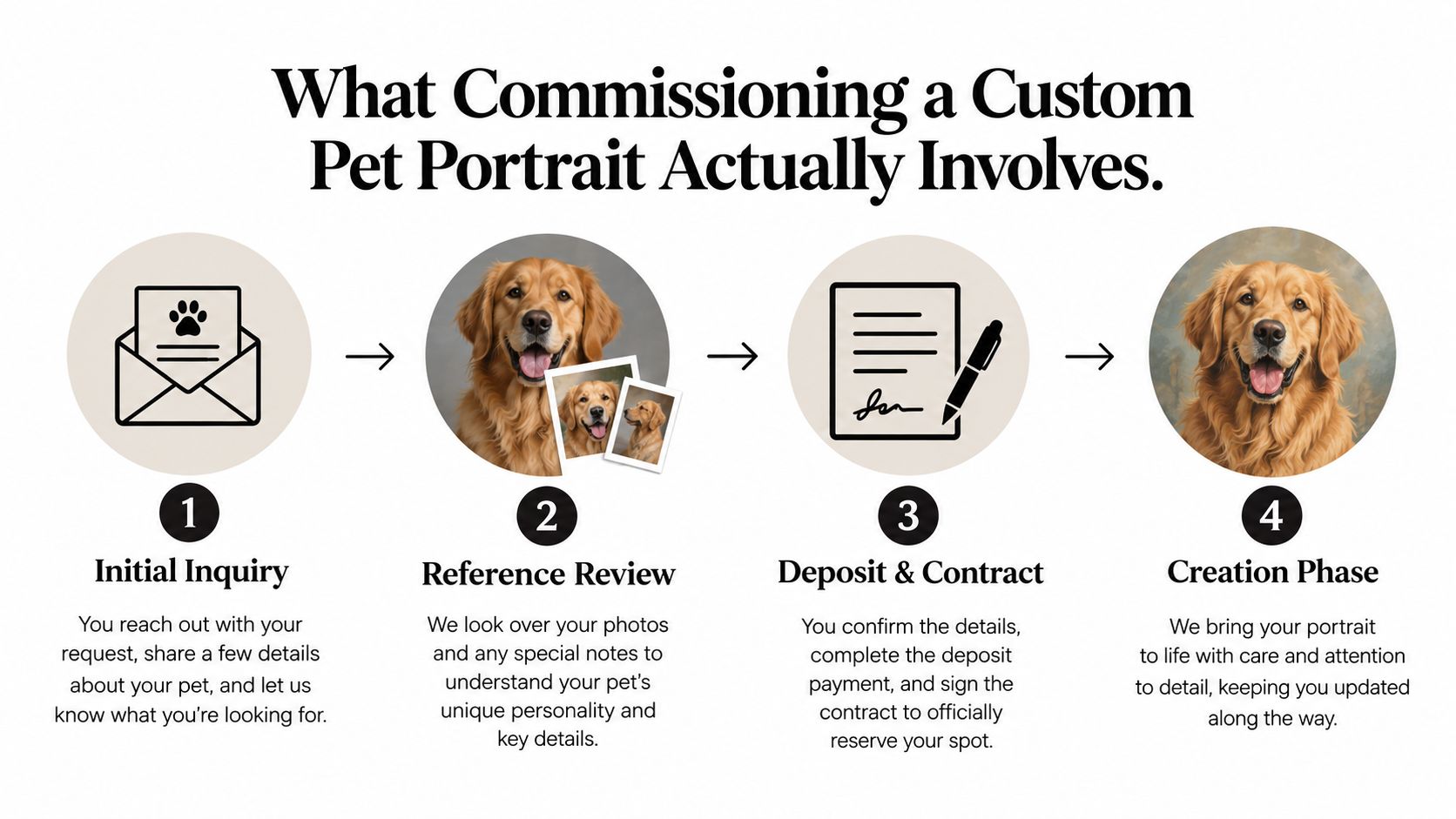
The production stages
A clear commission usually follows this sequence:
- Initial inquiry: You provide the subject, preferred medium, approximate size, reference photos, delivery location, and desired timing.
- Reference review: The artist checks image quality, pose, coat detail, composition, and whether several photos can be combined.
- Deposit and agreement: You approve the quote, pay the deposit, and confirm the project details in writing.
- Sketch and creation: The artist prepares the composition, sends a preliminary sketch, makes agreed changes, paints the portrait, and shares progress or final images.
- Finishing and delivery: The work is sealed or varnished where appropriate, packaged, shipped, or prepared for collection.
Treat the preliminary sketch as a decision point. Check the crop, head angle, expression, ear position, markings, background, and relative scale before painting begins. Small corrections are usually cheaper at this stage than after paint, finishing, or framing has been completed.
The base price usually assumes one pet, a standard size, a straightforward background, and an unframed artwork. Read the artist's individual terms because this is not a universal contract. Extra pets, unusual dimensions, elaborate scenery, accessories, custom framing, and rush requests can change the quote by adding materials, labor, or scheduling pressure.
Practical rule: Put every detail that matters in the initial brief. Written instructions prevent disputes about what the base price includes.
For visual ideas about presenting personalized wall art in a finished interior, browse Jessie's Home portrait art. Use it as a presentation reference, then review the chosen artist's commission terms separately.
Before you contact an artist, write down your preferred medium, size, number of pets, background, framing preference, and deadline. You do not need every decision finalized, but two or three clear priorities will produce a more accurate first quote and fewer expensive changes later.
Choosing Medium Size and Style Before You Reach Out
The wall above your sofa is empty, but the available width is limited and the room already has bold colors. That decision affects the commission before you choose an artist. Measure the wall, photograph the intended spot, and note the usual viewing distance. A portrait that looks balanced online may feel too small above substantial furniture or too dominant on a narrow shelf.
Choose the medium based on the finish, handling time, and room. Oil on canvas gives a traditional surface, rich color depth, and visible layering. It also requires more patience because drying and finishing take longer. Acrylic on canvas dries faster, supports crisp shapes and saturated color, and handles layered backgrounds well. It suits buyers who want a painted original without the slower process of oil.
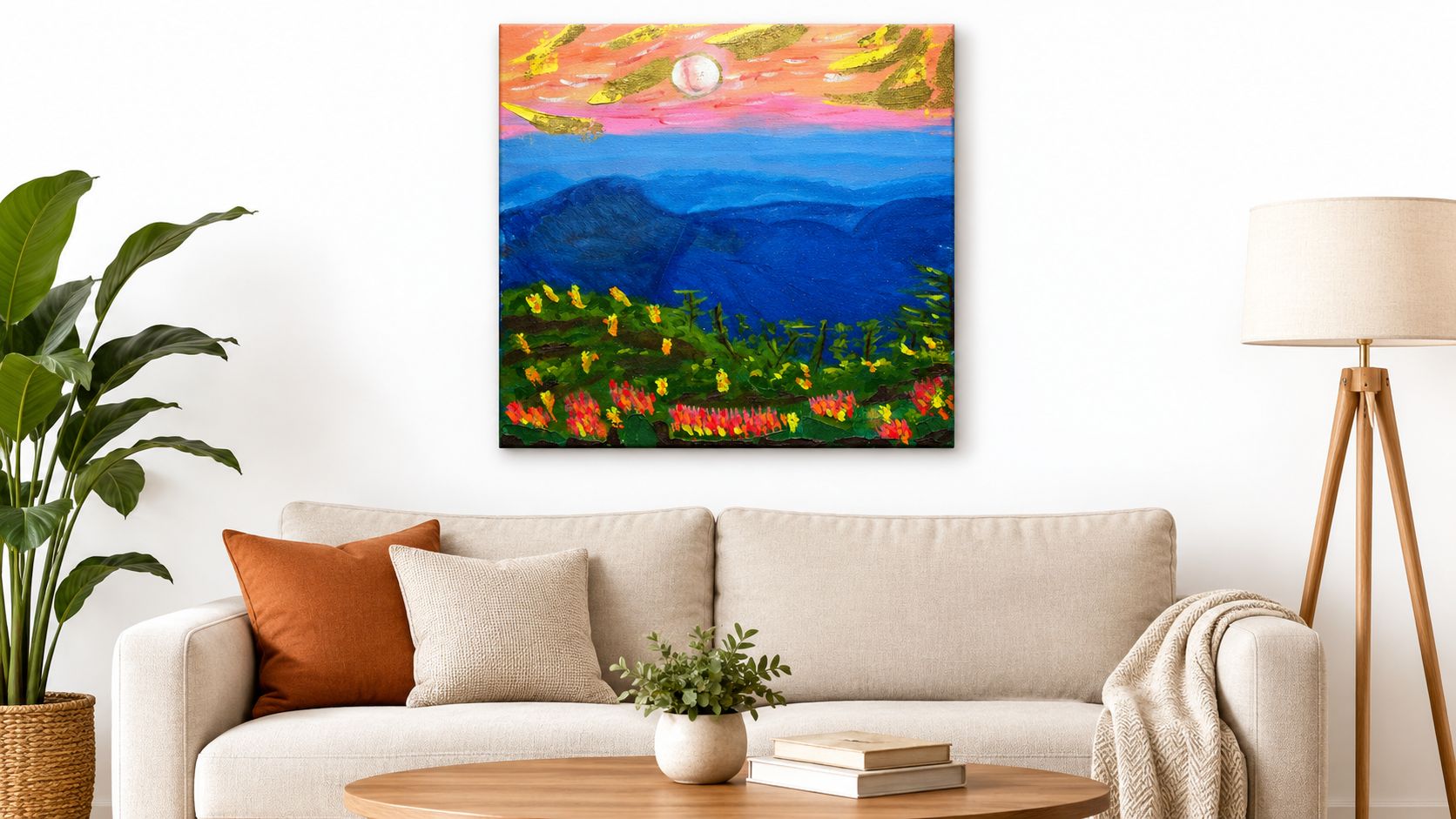
For an example of acrylic handling on canvas, see this Mountain Abstract original as a reference for color saturation and edge treatment.
Watercolor on paper creates a lighter, more delicate result, but it normally needs framing and glazing for protection. Graphite or charcoal is strong for expression, silhouette, and precise tonal structure. It works particularly well for black-and-white pets, although it cannot provide the color range of a painted portrait.
| Option | Best For | Typical Cost Tier | Lead Time | Framing Needs |
|---|---|---|---|---|
| Oil on canvas | Traditional, layered portraits with deep color | Higher | Longer | Optional frame, depending on canvas |
| Acrylic on canvas | Strong color, modern interiors, quicker painted handling | Mid to higher | Moderate | Optional frame or floater frame |
| Watercolor on paper | Light, airy portraits and subtle expression | Mid | Moderate | Frame and glazing recommended |
| Graphite or charcoal | Detailed monochrome likenesses | Lower to mid | Often shorter | Frame and glazing recommended |
| Digital portrait | Fast delivery, gifting, and online sharing | Lower | Shorter | No physical frame unless printed |
Let the location set the size. A small piece can work on a shelf or bedside table. A larger canvas needs enough surrounding space to avoid crowding nearby furniture. Above a sofa or console, ask whether a horizontal composition will use the wall better than a square crop. For multiple pets, choose enough width for every face to remain readable. Compressing several faces into a tight arrangement weakens the likeness.
Style determines what the artist prioritizes. A realistic portrait preserves structure, coat pattern, and expression. An illustrative approach simplifies shapes while emphasizing personality. A painterly treatment leaves more brushwork visible and can suit a room with other expressive artwork. A minimalist portrait reduces background detail and keeps attention on the face.
Match the background to the pet's coloring. A dark-coated dog often needs a lighter background for clear edge separation. A white cat needs controlled highlights so its features do not disappear into a pale field. An energetic pet may suit a looser composition, while an older, dignified animal may look stronger in a quiet, centered pose.
Before requesting a quote, ask what the artist's process includes. Confirm the selected medium, finished dimensions, number of pets, background treatment, framing status, sketch approval, revision limits, and delivery target. A preliminary sketch is useful only if you know what you can change before paint begins. Ask whether revisions after approval cost extra, and submit one consolidated set of corrections rather than scattered requests. That keeps changes affordable.
For a practical explanation of acrylic handling, read this guide to custom acrylic painting. For a broader reference in bold environmental color and loose abstraction, see William Tucker Mountain Abstract original.
Write down at least two priorities before contacting the artist. “Acrylic on canvas, medium size, realistic head-and-shoulders pose” supports a useful quote. “Something nice of my dog” leaves the production decisions unresolved.
Preparing and Submitting Photos That Artists Can Actually Use
A reference photo can determine whether the artist produces a convincing likeness or spends the commission guessing. A sentimental snapshot may capture a beloved moment while hiding the eyes, flattening the coat color, or merging the face with a dark background. Submit images that show the features the artist must paint.
Use soft window light or open shade, and avoid direct flash. For fairly still pets, a shutter speed around 1/200 second, single-point autofocus on the eye nearest the camera, and a wide aperture can help keep the face sharp while separating it from the background. See the full Canon pet photography guidance for these capture principles.
A useful photo checklist
- Sharp eyes: Keep both eyes visible when possible, with clear focus on the nearer eye.
- Natural color: Send an unfiltered image showing the actual coat, nose, eyes, and markings.
- Eye-level angle: Photograph from the pet's height rather than looking steeply down.
- Useful resolution: Send the original phone or camera file, not a compressed messaging-app screenshot.
- Multiple views: Provide 2 to 5 reference photos, including a close facial image, a full head-and-body view, and another angle.
- Clean surroundings: A plain background helps isolate the subject, but keep ears, whiskers, paws, and distinctive markings in frame.
Check the images at full size before sending them. A small preview can hide blur, clipped highlights, or a missing patch of fur.
Dark-coated pets need separation from dark furniture and shadows. White animals need visible detail in the face and fur instead of a bright, featureless area. Short-nosed breeds are easier to assess with a natural three-quarter view and a front view. Long fur requires images that show its direction and volume, particularly around the ears and muzzle. These details affect how the artist plans edges, contrast, and the final crop.
For a pet that has died, send the strongest available images, even if they were taken in different years. Identify the features that must appear, such as a crooked ear, a particular blaze, a favorite collar, or a specific expression. Several references are workable when you explain which image shows the pet's structure and which best captures its personality. Label those roles clearly rather than leaving the artist to compare them without guidance.
What to include with the files
Add the pet's name, species, age if relevant, personality, favorite toy, recognizable markings, and any requested accessory. State whether the final pose should closely follow one photograph or combine elements from several. Confirm which file types and delivery method the studio accepts, whether that means an upload form, email attachments, or a shared folder.
Keep the reference pack focused. Avoid heavily filtered photographs, AI-generated images, and old low-resolution snapshots unless they are the only available sources. AI imagery may change anatomy, markings, or eye placement, giving the artist invented information instead of a reliable likeness.
Use these practical tips for photographing pets if you need help taking new images. You do not need a professional photoshoot. You need clear information that lets the artist make confident choices before the sketch and keeps avoidable corrections out of the paid painting stage.
Following a Commission From Deposit to Delivery
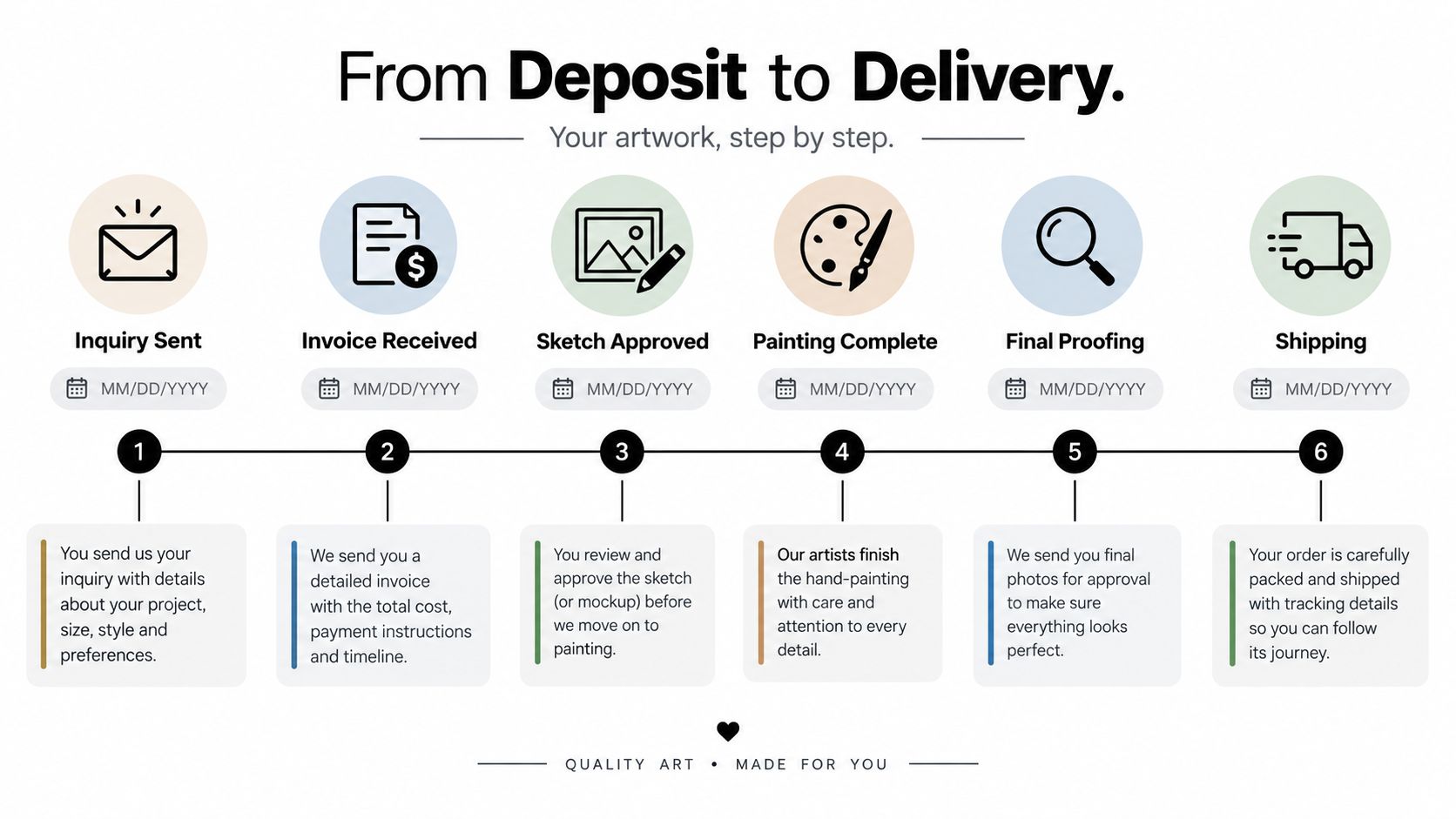
A smooth commission depends on decisions made in the right order. After the deposit clears, the artist works through a series of handoffs, and you have a defined task at each one. Confirm the requested decision, answer promptly, and avoid reopening settled choices without a clear reason.
Inquiry and deposit
Before paying, review the written quote or invoice line by line. Confirm the number of subjects, final dimensions, medium, background treatment, framing, shipping or collection arrangements, revision policy, and remaining balance. A deposit usually reserves a place in the studio queue. It may not include framing, rush handling, delivery, or substantial changes to the agreed design.
Ask what the deposit triggers. Some artists begin with a written brief, while others schedule the sketch or reserve materials first. Know which stage your payment covers and when the balance becomes due.
The artist may send a brief confirmation after payment. Correct the pet's name, identify the preferred reference, and confirm whether a collar, toy, or background element belongs in the finished piece. Treat this as the last inexpensive point for settling the central concept. A changed subject, pose, or format later can affect both the schedule and the price.
Composition and sketch approval
The first visual step may be a rough thumbnail or a written composition note. It establishes the overall direction, such as a head study, three-quarter view, full-body portrait, or arrangement of multiple pets. Approve that direction before detailed drawing begins.
The preliminary sketch is a structural checkpoint. Check whether the planned pose, proportions, crop, expression, and distinctive features follow the agreed brief. It does not need to show finished fur, final color, or the exact background treatment.
Reply in one organized message. Separate required factual corrections from personal preferences, and identify the requested change precisely. “The face feels off” gives the artist no usable instruction. “The crop needs to include more of the chest” identifies a decision the artist can act on. Send the response within the review period stated in the agreement, because delays can push the painting behind other queued work.
Painting and progress checks
After sketch approval, the artist applies the chosen medium. Oil, acrylic, watercolor, and drawing media have different working and drying times, so the delivery estimate is a range rather than a fixed appointment. Queue position, drying or curing, subject count, framing, and revision requests can all change the schedule.
Progress photos, if included, are for checking broad color relationships and major rendering choices. Use them to confirm that the approved direction remains intact. Save redesign requests for an agreed revision point, since changing the pose during painting can require additional labor and affect the balance due.
Final proof and shipping
At the final reveal, inspect the likeness, requested markings, accessories, surface finish, and overall presentation. Approve the work or request a covered correction under the written agreement. The artist then collects the balance if applicable, signs or documents the piece as promised, and prepares it for shipping or collection.
A commission can take several weeks from deposit to delivery. Ask for the current estimated range before paying, then allow extra time if the portrait is a gift. Confirm the shipping address, packaging method, tracking details, and who pays for any agreed delivery charge before the work leaves the studio.
Reading the Preliminary Sketch and Keeping Revisions Cheap
You approve a sketch, then notice the eyes sit too far apart. Fixing that line now is quick. Fixing it after paint covers the surface can require layering, drying, and repainting a much larger area. Treat the preliminary sketch as your lowest-cost decision point.
Read the sketch as a structural document, not a miniature finished portrait. Start with the pet's overall silhouette, crop, and position. Then inspect the details that establish identity. A good sketch should give you enough information to approve the design, even if it contains no finished fur, texture, or polished background.
What to approve and what to question
Review these points before you approve:
- Pose and composition: Does the body angle follow the agreed reference? Will the crop work with the selected size and intended wall?
- Proportions: Do the head, muzzle, neck, body length, and paws look believable for this animal?
- Expression: Do the eye direction and mouth shape show the personality you wanted?
- Key details: Are the ear position, facial blaze, nose shape, whisker pattern, collar, tag, and requested accessory present?
- Multiple subjects: Are the pets balanced in scale and placement, or does one draw attention unintentionally?
Flag misaligned eyes immediately. They can change the entire likeness. Question an incorrect ear position, unusual body length, or pose that bears little resemblance to the source photo. Ask the artist to mark the requested change on the sketch or describe it clearly in writing, so both sides share the same reference.
The sketch is not the place to demand finished fur. It is the place to protect the pet's identity.
Leave room for the artist's established style. Loose fur edges, simplified markings, a slightly altered background tone, and visible brushwork may be deliberate. If you expect every marking to match the photo exactly, state that before work begins and choose an artist whose portfolio shows that level of precision.
Send one consolidated feedback message instead of a stream of separate requests. Confirm what the base price includes, whether one or two small revision rounds are covered, and how the artist charges for additional changes. A major redesign after sketch approval, or any request made after paint is applied, can add labor and delay the commission.
Approve only after checking the pose, proportions, expression, crop, and requested details. Once those decisions are settled, let the artist execute the agreed design.
Framing Care and Shipping for a Portrait That Lasts
A portrait can look finished and still arrive without the presentation you expected. Confirm the framing arrangement before paying the deposit: is the piece framed, made to the exact artwork dimensions, or shipped unframed for local selection? Ask whether framing is included in the base price or quoted separately. The answer affects both your budget and the delivery timeline.
A standard wood frame gives the artwork a traditional finished edge. A floater frame works well with deep-edge canvas because it leaves a deliberate gap around the painting and makes the panel appear to float. For detailed work on paper, museum glass can reduce reflections and provide added protection. Choose based on the medium, room, display light, and budget, not on the frame alone. For presentation ideas, review this guide to framed pet portrait presentation.
Choose the hanging location carefully
Keep the portrait out of direct sunlight. Strong light can alter the appearance and longevity of pigments over time, even after professional finishing.
Avoid hanging it directly above a heating vent, against a damp exterior wall, or in a humid room such as a bathroom. Stable indoor conditions protect canvas, paper, wood, frames, and surface finishes. Measure the location before ordering a frame, and leave enough clearance for the frame depth and hanging hardware.
Clean the surface gently
Use a clean, dry, soft cloth for the frame, or a suitable soft brush for loose dust. Keep household sprays, chemical cleaners, silicone polish, and water away from the painted surface. Spray can drift onto the artwork even when aimed at the frame.
If the surface becomes scratched, cloudy, loose, or otherwise damaged, contact the artist or a qualified conservator before attempting a repair. Household cleaner can turn a small maintenance problem into permanent surface damage.
Confirm the shipping handoff
Ask how the artist protects the finished work. Oil and acrylic pieces are commonly shipped with wrapping, corner protection, sturdy outer packaging, and insurance. Confirm what the packaging covers, how damage claims are handled, and whether you must inspect the parcel before discarding its materials.
Photograph the unopened package and the artwork immediately if damage appears. Contact the artist promptly and follow the studio or carrier instructions. Do not repaint, clean, or reframe the piece yourself before documenting the condition. If you later choose a different frame, expect to cover return shipping and new framing costs.
Keep the invoice, care instructions, certificate, and signed documentation with the artwork's records.
Buyer Checklist and Questions Before You Start
A clear first inquiry saves time for both you and the artist. Before contacting a studio, settle the practical choices that affect the quote, schedule, and final result.
- Medium: Choose oil, acrylic, watercolor, graphite, charcoal, or digital work. Ask how the medium handles the level of detail and finish you want.
- Size: Measure the wall or furniture location. Record whether the portrait should be square, vertical, or horizontal, and check how much space the frame will need.
- Style: Specify realistic, illustrative, painterly, or minimalist treatment. Refer to examples, because style labels can mean different things to different artists.
- Reference photos: Gather sharp, unfiltered images with visible eyes and enough information to show the coat, markings, and proportions.
- Subject count: State exactly how many pets should appear. Say whether the artist must combine animals from separate photographs.
- Background: Choose a plain field, loose color treatment, or recognizable setting. A detailed background can change the amount of work and the quote.
- Framing: Ask whether the price covers an unframed piece, standard frame, floater frame, or paper artwork with glazing.
- Delivery: Give the destination country or region and state whether the portrait is a gift.
- Timing: Share the deadline early. A rush request may not fit the studio's schedule, especially when drying, framing, or shipping time is involved.
Questions worth asking directly
How much is the deposit? Request the amount or percentage, payment schedule, and cancellation terms. A deposit commits both sides, so do not treat it as a casual reservation.
How many revisions are included? Confirm whether revisions apply only to the preliminary sketch, whether small adjustments are covered, and how larger changes are priced. Approve the composition before detailed work begins to keep revisions affordable.
Which payment methods are accepted? Confirm whether the studio accepts card, bank transfer, or another method. Ask for a written receipt or invoice.
Who owns the copyright? Purchasing the physical artwork does not settle display, reproduction, or commercial-use rights. Get those permissions in writing.
Can the artist send the portrait as a gift? Confirm the shipping address, packaging, reveal timing, and whether an invoice will be placed inside the parcel.
Is rush delivery available? Ask before paying. A rush fee cannot always shorten a fully booked queue, and drying or framing may still set the schedule.
What happens if the pet dies during the commission? Explain if the portrait is memorial or time-sensitive. Agree on how the project will continue if circumstances change.
How do background and extra pets affect the quote? Additional subjects and detailed surroundings require more decisions and labor. Request an updated quote instead of assuming they are included in the base price.
Send your preferred medium, size, style, number of pets, reference photos, delivery location, and deadline in the first message. William Tucker Art accepts pet and wildlife commissions through its website, where buyers can provide these requirements and ask about the next steps.