
Commissioning a portrait isn't like buying something off the shelf. It's a creative partnership, a conversation between you and a skilled artist to bring something deeply personal to life. Think of it as co-creating a future heirloom. This guide is here to walk you through that journey, making sure the process is just as special as the final painting.
So, Why Commission a Portrait?
When you hire a commission portrait artist, you’re investing in a story. It’s your vision, filtered through their unique talent and interpretation, resulting in a piece that's truly one-of-a-kind. It captures a personality, a relationship, or a fleeting moment in a way a simple photo can't.
Understanding the heart and soul that goes into handcrafted work is key. For a great look into what defines artisan work, this article really breaks down the skill and dedication involved. A commissioned portrait is the pinnacle of personalized art, carrying an emotional connection that mass-produced prints will never have.
A Tradition of Art Patronage
Commissioning artists isn't a new idea—it's a tradition with a rich history. Portrait painting was a major source of income for artists for centuries, especially during the Renaissance and Baroque periods.
Take the 17th-century Netherlands, for instance. A booming middle class wanted to see themselves immortalized on canvas, leading to a massive demand for portraits. Artists like Rembrandt were incredibly busy, and historians estimate that Dutch artists produced over 1.3 million paintings in that era alone. A huge chunk of those were portraits. You were not just buying a painting; you were cementing your legacy.
That tradition is alive and well today, giving you a chance to connect directly with an artist and play a part in their creative process.
Why It Still Matters Today
In a world overflowing with digital snapshots, a hand-painted or drawn portrait offers something real and lasting. It becomes a centerpiece in your home, a conversation starter that tells a story.
People come to me for a portrait for all sorts of personal reasons, but here are some of the most common ones:
- Celebrating a Milestone: A wedding, a big anniversary, a graduation, or the arrival of a new baby. A portrait turns that moment into a timeless treasure.
- Honoring Someone Special: It could be a tribute to a family patriarch, a beloved pet who’s part of the family, or an influential mentor.
- Capturing a Feeling: Sometimes it's about freezing a specific memory—the way the light hit, a certain expression—and having an artist translate that feeling onto the canvas.
- Giving an Unforgettable Gift: A commissioned portrait is one of the most thoughtful, personal gifts you can give. It shows you put real heart into it.
A commissioned portrait is a dialogue between the subject, the client, and the artist. It's an opportunity to translate personal stories and emotions into a visual language that will endure long after a photograph is swiped past on a screen.
By choosing to commission a portrait, you're not just getting a beautiful piece of art. You’re supporting a working artist and becoming a modern-day patron. Let's get you started on this exciting journey.
Finding an Artist and Defining Your Vision

So, you're ready to commission a portrait. This is where the real fun begins! Think of this initial stage as a creative treasure hunt. Finding the right commission portrait artist is a lot like finding the right musician for a meaningful event; you’re looking for someone whose style and skill connect with you on a personal level.
Your perfect artist is out there. The key is knowing where to look and, just as importantly, what you’re looking for.
Where to Discover Your Perfect Artist
You don't have to be an art-world insider to find incredible talent. These days, artists are more accessible than ever, though there's still something special about discovering them in person.
Here are a few of my go-to spots for finding great artists:
- The Digital Gallery: Instagram and Pinterest are visual goldmines. I suggest searching with specific hashtags like #portraitartist, #customportrait, or #petportraitartist. When you find someone you like, give them a follow! It’s a fantastic way to get a feel for their process and see their work evolve.
- Curated Online Marketplaces: Sites like Etsy, Saatchi Art, and Artfinder are basically huge, juried art shows online. They bring thousands of independent artists together in one place, and their search filters make it easy to narrow things down by style, medium, and price range.
- The Local Scene: Never underestimate the power of seeing art in person. Here in a vibrant city like New Orleans, local art fairs and open studio events are the best way to meet artists face-to-face. You get to see the true texture, color, and scale of their work—something a screen can never fully capture.
Decoding an Artist's Portfolio
Once you’ve got a few contenders, it's time to dive into their portfolios. A portfolio is so much more than a gallery of their greatest hits; it’s their resume, their creative signature, and a peek into what they're truly passionate about.
Here's what I always look for:
- A Consistent Vibe: Is their style consistent and recognizable? A strong, cohesive body of work tells you the artist has found their voice and mastered their craft. You know what you're going to get.
- The Right Experience: Do they paint subjects similar to yours? If you're after a portrait of your golden retriever, look for an artist whose portfolio is full of animals. You want someone who genuinely understands how to capture that furry personality. We talk more about this in our guide to finding a custom pet portrait artist.
- That Gut Feeling: Seriously, how does their work make you feel? Art is all about connection. The right artist’s work will just click, resonating with the exact mood and personality you’re hoping to capture.
A portfolio tells you what an artist can do, but their style tells you who they are. Look for the artist whose style feels like the natural voice for your subject's story.
Clearly Articulating Your Vision
Alright, you've found "the one." Now comes the most important part: translating that picture in your head into clear, helpful direction for the artist. Great artists are intuitive, but they aren't mind readers. The better you can communicate your vision, the better the final painting will be.
Before you even reach out, jot down some notes. Go beyond just "a portrait of my cat."
Key Elements to Define:
- The Mood: Is this portrait meant to feel joyful and energetic, or calm and introspective? Try using descriptive words. For instance, instead of "a happy picture," you might say, "I want to capture his goofy, tongue-out-the-side-of-his-mouth energy."
- Your Color World: Got a color palette in your home you'd like the painting to match? Mention colors you love and even any you'd rather avoid. It all helps.
- The Setting: Do you want a simple, abstract background that puts all the focus on your subject? Or would you prefer to include a meaningful spot, like their favorite armchair or a view of the park?
- Your Favorite Examples: Point to specific pieces in the artist's portfolio that you love. Saying something like, "I absolutely love the soft lighting and loose brushstrokes you used in that portrait of the German Shepherd" is incredibly useful.
Taking a few minutes to think through these details will make that first conversation so much more productive. It builds a solid foundation for a great collaboration and helps ensure the final piece is everything you've been dreaming of.
Let's Talk Money, Contracts, and Payments
Alright, let's get into the business side of things. Talking about money and contracts can feel a little formal, but honestly, this is where a great creative partnership is built. Getting clear on the numbers and the agreement from the start builds trust and makes sure there are no awkward surprises down the road. It turns what could be a simple transaction into a true, professional collaboration.
The first thing on everyone's mind is usually the cost. The truth is, pricing a custom portrait is a mix of tangible things and the artist's unique value. It’s not just about the hours they spend at the easel; it’s about the years they’ve dedicated to honing their craft, the quality of the materials they use, and the distinct vision they bring to your piece. That final number isn't pulled out of a hat—it’s a direct reflection of the skill and artistry you're investing in.
Breaking Down the Cost of a Commission
So, what actually goes into the price of a custom portrait? A few key things influence the final number, and knowing what they are helps you set a realistic budget and truly appreciate the work involved.
- Size and Scope: It makes sense that a small, intimate 8x10 headshot will have a different price point than a grand, full-body 36x48 portrait designed to be the centerpiece of a room. A bigger canvas requires more materials and a whole lot more time.
- The Medium Matters: The specific materials an artist works with play a huge role. Oil paints, for instance, are a significant investment and need long drying times between layers. A charcoal or pencil drawing, on the other hand, involves a different set of materials and a quicker process.
- Complexity is Key: A simple head-and-shoulders portrait with a soft, out-of-focus background is one thing. A detailed scene with two pets, intricate collars, and a specific landscape behind them is another beast entirely. Every extra element adds to the artist's time and creative energy.
- Artist's Experience and Reputation: An emerging artist who is just starting to build their portfolio will naturally have different rates than a seasoned professional with a decade of commissions and gallery shows under their belt. You're paying for their expertise, their signature style, and the demand for their work.
The art market is surprisingly strong and continues to expand. To give you some perspective, the global portrait art market was valued at around $1.2 billion in 2023. Prices can swing wildly—a top-tier artist in the UK might charge anywhere from £3,000 to over £15,000 for a commission. This just shows the incredible range of what "custom art" can mean. You can learn more about the current market for portraits and how it's growing globally.
Why a Contract is Your Best Friend
Once you and the artist have settled on a price, the next step is to make it official with a contract or a commission agreement. Please don't skip this! This document is your safety net—it protects both you and the artist by laying out all the expectations for the project in black and white. It’s not about a lack of trust; it’s about ensuring a professional, smooth process for a significant creative investment.
A good contract should feel like a clear road map for your project, preventing any "I thought you meant..." moments later on.
Think of the contract as the blueprint for your collaboration. It lays out every detail, from payment schedules to final delivery, ensuring that the creative journey is as beautiful as the final artwork.
Your agreement should be written in plain, easy-to-understand language. If an artist doesn't offer one upfront, don't be shy about asking for a simple written document that outlines the key terms you've discussed.
Essential Clauses to Look For
When you get the agreement, give it a good read-through and make sure these key points are covered. Think of this as your checklist for a stress-free commission.
- Total Cost and Payment Schedule: The final price should be clearly stated. The industry standard is often a 50% non-refundable deposit to get the ball rolling, with the final 50% due once you've given your final approval of the finished portrait, right before it’s shipped.
- Project Timeline: The contract should give you an estimated completion date. A good one will also mention potential variables that could affect the timeline, like the necessary drying time for oil paints or the back-and-forth of revisions.
- The Revision Process: This is a big one. How many chances will you get to offer feedback? The agreement should spell out when you can give input (for example, after the initial sketch is done) and clarify if there’s an extra cost for making major changes late in the game.
- Copyright and Usage Rights: This sounds technical, but it’s simple. Typically, the artist retains the copyright to their work. This means they can use images of the painting in their portfolio or on social media. You, as the client, own the physical painting itself and can display it however you like for personal enjoyment. If you think you might want to use the image for a business logo or merchandise, that’s a commercial use and needs to be negotiated separately.
- Cancellation Policy: What happens if, for some unforeseen reason, one of you needs to back out? The contract should define these terms. It will often state that the initial deposit is non-refundable, which is fair, as it covers the artist's initial time, consultation, and materials.
From Your Favorite Photo to a Timeless Work of Art
Alright, this is where the real fun begins. With the contract signed and the deposit taken care of, we get to move from the paperwork to the painting. This is the part of the journey where your vision and my artistic process come together, and it all starts with a single, crucial element: the reference photo.
A great portrait is born from a great photo. Seriously. It's my primary guide—I study it for lighting, expression, and all the tiny details that make a person or pet unique. A blurry, dark photo can be a real roadblock, but a clear, personality-filled image gives me everything I need to create something truly special for you.
What I’m Looking For in a Reference Photo
You don't need a professional camera to take a fantastic photo. The phone in your pocket is probably more than powerful enough! It’s all about a few key details that make a massive difference.
Here’s a quick checklist of what makes a reference photo perfect for a portrait:
- High Resolution is Key: I need to be able to zoom in and see the little things, like the specks of color in an eye or the way a pet's fur curls. Always send the original, full-sized file, not a version you've downloaded from social media, which is often compressed.
- Good, Natural Light: The best light is often found outdoors on a slightly overcast day or indoors near a bright window. Try to avoid harsh, direct sun that creates stark shadows, and please, no direct flash! It tends to flatten features and wash out all the beautiful, subtle tones.
- An Expression That Shines: This is the most important part. Look for a photo that captures the true essence of the subject. Is it a thoughtful, quiet gaze? A big, joyful smile? That spark of personality is what I aim to translate onto the canvas.
I always say the best reference photo is a window into the subject's soul. It's not about a "perfect" pose, but about capturing that unique glimmer of personality that makes them, them.
Once you’ve sent over a few of your best options, I'll get to work. Now you can sit back and watch the magic happen.
This is a good time to remember the initial steps that got us here: agreeing on the scope and budget, signing the contract, and handling the first payment.
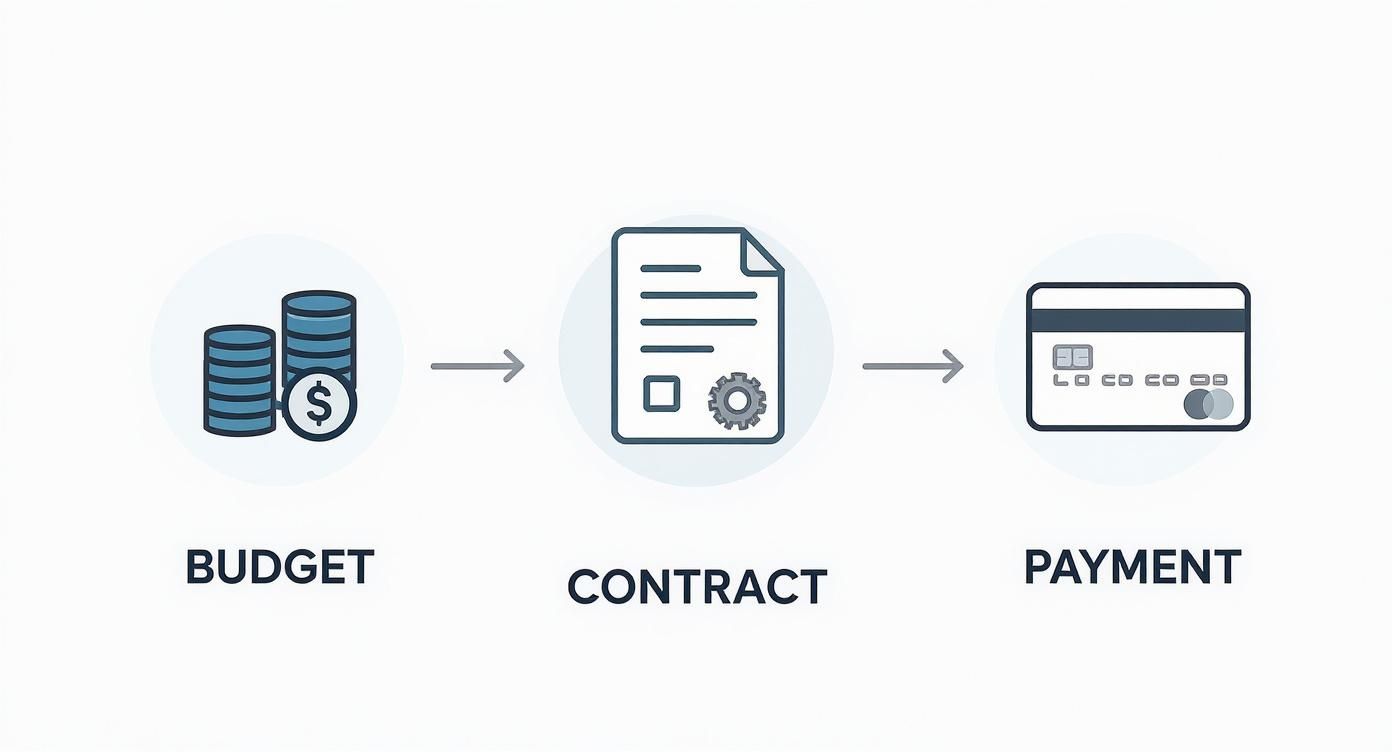
These practical steps ensure we're both on the same page and protected before a single brushstroke is made.
From the First Sketch to the Final Details
Every artist has their own unique rhythm, but the general path from a blank canvas to a finished portrait is usually pretty similar. Knowing these stages helps you understand what to expect and when your feedback is most valuable.
Most of my commissions start with a preliminary sketch or a small color study. This is my initial blueprint—where I map out the composition and capture the basic likeness from the photo. It’s also your first opportunity to see the piece coming to life and the most important time for any major feedback.
After you give the thumbs-up on the initial sketch, I start building the layers of the painting. For me as an oil painter, this means carefully applying base colors, letting them dry, and then gradually adding more and more detail. For a pencil artist, it’s about meticulously building up tones and textures. This middle phase is where the portrait really starts to breathe.
The Art of Giving Good Feedback
Your role in this process is so important! Knowing how to give feedback is a skill, and the goal is to be helpful and specific without taking away from the artistic interpretation you hired me for. That's what the revision process we agreed upon in the contract is for.
Here are a few tips for giving feedback that helps the process go smoothly:
- Be Specific: Instead of saying, "Something seems off about the mouth," try something more pointed like, "In the photo, the left corner of their smile seems a bit higher." This gives me a clear, actionable adjustment to make.
- Point Back to the Photos: Use your reference shots as our shared source of truth. For example, "Could we bring out more of the golden highlights in her hair that I see in this photo?"
- Trust the Process: While your input is absolutely essential, remember you chose me for my specific style and skill. It’s a beautiful dance between your vision and my artistic interpretation.
This collaboration is what makes a commissioned portrait so much more than just a painting. You're part of the creative journey, ensuring the final piece is a perfect fusion of your memories and my craft. The idea of turning a beloved photo into a tangible keepsake isn't unique to painting; it's the same principle behind beautiful custom photo jewelry, where personal images become cherished, wearable art.
Receiving and Caring For Your Finished Portrait
The moment has finally arrived! After all the collaboration and anticipation, your portrait is complete. Seeing that final image is a thrill, but the journey isn't quite over. Now it's all about getting this one-of-a-kind piece safely into your hands and onto your wall.
A professional commission portrait artist takes just as much pride in the safe delivery of their work as they do in the painting process itself. This last leg of the journey is a partnership, making sure the art arrives securely and finds its perfect home with you.
Safe Shipping and The Grand Unboxing
Once your portrait is ready, I’ll begin the meticulous process of packaging it for shipment. This isn’t just about putting it in a box; it’s a multi-step procedure designed to protect the artwork from moisture, dings, and any other bumps along the way.
For a canvas painting, this usually involves several layers of defense:
- A sheet of glassine paper laid over the painted surface so nothing sticks.
- Plenty of bubble wrap or foam to absorb any shocks during transit.
- A sturdy, perfectly sized cardboard box to keep it from shifting around.
I always ship my work fully insured. It’s peace of mind for both of us, covering the full value of the piece in the unlikely event something goes wrong. When your package shows up, resist the urge to tear right into it. Take a second to look over the box for any major damage—if you see any, snap a few photos before you open it.
Then, find a clean, flat surface and carefully unbox your portrait. This is your first chance to see the texture of the brushstrokes and the true depth of the colors. It’s a special moment.
Framing Your Portrait to Perfection
Now that your art is home, it’s time to think about framing. A great frame does more than just hang on the wall; it becomes part of the art itself, creating a beautiful transition from the painting to the rest of your room.
Don't rush this decision. You want a frame that complements the artwork without overpowering it, and it should also fit in with your home's decor. For oil or acrylic paintings on canvas, a "floater frame" is a fantastic modern choice. It leaves a small gap between the canvas and the frame, creating a sophisticated, gallery-like look. If your portrait is a drawing on paper, framing it behind UV-protective glass is an absolute must to prevent fading.
Your frame is the final brushstroke. Its purpose is to present the artwork, not compete with it. Choose a style that feels like a natural extension of the portrait's mood and your personal aesthetic.
If you’re ever in doubt, talk to a professional framer. Their expertise is invaluable. They can help you pick the right materials and ensure the art is mounted correctly for long-term preservation, protecting your investment for decades to come.
Long-Term Care and Display
Your beautiful new portrait is framed and ready to hang. But where you put it matters. The biggest enemies of fine art are direct sunlight, extreme humidity, and wild temperature swings.
To keep your portrait looking its best, just follow a few simple rules:
- Avoid Direct Sunlight: UV rays are the number one cause of fading. Pick a wall that doesn't get blasted with intense sun at any point during the day.
- Keep Conditions Stable: Try to avoid hanging art in super humid places like a bathroom, or right above a radiator or fireplace. Constant changes in temperature and moisture can cause the canvas and wood to warp over time.
- Clean with Care: When it gets a little dusty, just use a very soft, dry brush (like a brand-new, clean makeup brush) to gently sweep the surface. Never, ever use water, chemical cleaners, or even a damp cloth on the painting itself.
Following these simple steps will ensure that the masterpiece you commissioned will remain a vibrant and treasured part of your family for generations. For a deeper dive, check out this guide on how to preserve acrylic paintings.
Have Questions? We've Got Answers
Thinking about commissioning a portrait is exciting, but it's natural for questions to pop up along the way. This is where we get into the nitty-gritty. Let's walk through a few of the most common questions I get, so you can feel completely confident as you move forward.
Is Commissioning a Pet Portrait Different?
The short answer is yes, in a few key ways. While the overall process is similar, getting a portrait of an animal companion requires a special touch, and it all starts with the photos you provide. After all, we can't exactly ask your dog to sit still for a few hours!
Because of this, high-quality reference photos are absolutely essential. An artist who specializes in animal portraits needs to see more than just a clear picture of their face. We’re looking for images that really show us who they are.
- Their Personality: Send photos of them in their happy place—snoozing in a patch of sun, holding that goofy, well-loved toy, or giving you that look you know so well.
- Fur Texture and Color: Natural light is your best friend here. It helps us see all the subtle shifts in color and texture in their coat, which is what brings the portrait to life.
- Unique Markings: Don't forget those little details that make them them—that one floppy ear, a special spot on their nose, or an old scar from a past adventure.
When you reach out, don't just send the photos—tell me their story. Is your cat a quiet observer or a mischievous troublemaker? Knowing these little things helps me capture their spirit, not just their likeness. A great pet portrait is a celebration of who they are right now.
What’s the Deal with Copyright and Usage Rights?
This is a big one, and it’s something that should always be crystal clear in your commission agreement. It boils down to a simple distinction: owning the physical painting is different from owning the rights to the image itself.
In almost every case, the artist retains the copyright to the artwork. This is the legal right to reproduce the image. It allows us to use photos of the finished piece in our professional portfolio, on our website, or on social media to show other potential clients what we can do. Think of it as a vital part of running our business.
As the person who commissioned the piece, you own the physical artwork. It’s yours to hang on your wall, cherish forever, and enjoy. Your contract will grant you rights for all personal, non-commercial use. So go ahead and share photos of it online with your friends and family! A tag or credit to the artist is always deeply appreciated when you do.
The Bottom Line: You own the painting, the artist owns the right to reproduce the image. If you're thinking about using the portrait for anything commercial—like on your business cards, merchandise, or in an ad—you'll need to talk to the artist about a separate commercial license, which usually comes with an additional fee.
Can I Commission a Portrait as a Surprise Gift?
Of course! A custom portrait is one of the most thoughtful and moving gifts you can give. That moment of reveal is often something people never forget. The main challenge, naturally, is keeping it all a secret.
Your biggest task will be gathering great reference photos on the sly. This might mean you have to put on your detective hat and scroll through their social media for clear, well-lit pictures. Another fantastic move is to get a friend or family member in on the secret to help you snap a few candid shots.
When you first contact the artist, make sure to mention that it’s a surprise. This is a heads-up for us to be extra discreet in our communications and to avoid tagging the recipient if we post any in-progress photos online. And remember, custom art doesn't happen overnight. To keep things stress-free, it's always best to start the process well ahead of the big day to leave plenty of time for creation and shipping.
Ready to turn a cherished memory into a timeless piece of art? At William Tucker Art, we specialize in creating stunning wildlife and pet portraits that capture the unique spirit of every subject. Explore our galleries and learn more about the commission process today.