
You've found a painting you like. A pelican on a weathered post, maybe, or a line of sandpipers working wet sand at low tide. It would sit well above the sofa, and the price is in a range you can justify.
Then a small doubt arrives. Is this a real bird, painted by someone who looked at one, or a decoration that happens to have feathers in it?
That question is worth answering before you buy, and it's easier to answer than many expect. A coastal bird painting carries two kinds of information at once. One is pictorial, meaning colour, composition, brushwork and the mood of the light. The other is ecological, meaning which species, in which habitat, at which season, doing what that bird does. Strong paintings hold both. Weak ones show a bird floating in scenery that tells you nothing about how it lives.
Coastal Bird Subjects at a Glance
Start with the bird. The species decides the posture, the habitat, the scale of the scene and often the shape of the canvas itself. Settling the background first is working backwards.
It helps to treat coastal bird as an ecological category rather than a single look. The NOAA National Marine Sanctuaries education page draws the line clearly: shorebirds use marine or freshwater margins for feeding, breeding and nesting, seabirds spend a substantial portion of their lives in marine environments, and waterfowl commonly occupy both fresh and salt water. Each of those lives leaves different evidence on the canvas.
Shorebirds such as sandpipers and plovers work mudflats and tidal edges with their heads down and their legs in wet sand. Compositions built around them run low and wide, with the horizon placed high or pushed out of frame. What matters most is proportion around the head and legs, because a small wader seen at a distance reads as a bird mostly through bill shape and stance. Wading birds like herons and egrets stand. Upright posture over a shallow pool or a marsh edge is the entire point, and reflective water does more work in these pictures than any sky does. Seabirds, gulls, terns and pelicans, live over open water or on rocky shore and breeding ledges, which is why sky, wave and ledge backdrops suit them so naturally. Waterfowl sit at the marsh margin among reeds and calm bays, and there the feather pattern carries the picture.
A useful test: if a label says only "seagull" or "shorebird", the description is too vague to judge. Ask which species, and watch whether the answer matches the habitat in the frame.
Habitat cues have to match behaviour. Mudflats, shallow pools, tidal edges, dunes and coastal vegetation each signal a different feeding or nesting context, and a bird painted against the wrong one looks off even to viewers who can't name the species yet.
| Bird group | Typical habitat | Typical composition | What to check |
|---|---|---|---|
| Shorebirds (sandpipers, plovers) | Mudflats and tidal edges | Low, wide scenes with wet sand | Bill-to-head proportion and leg length |
| Wading birds (herons, egrets) | Shallow pools and marsh edges | Upright figure over reflective water | Neck and leg posture for shallow foraging |
| Seabirds (gulls, terns, pelicans) | Open water, rocky shore, breeding ledges | Sky, wave or ledge backdrop | Plumage by season and age |
| Waterfowl (ducks, geese) | Freshwater and saltwater marsh | Reed edges and calm bays | Feather pattern and age class |
Pick the group you love most and start there. A collector who knows why they love terns will build a sharper collection than one buying "beach art" by the metre.
Where the Coastal Bird Tradition Began
The tradition behind the pictures on gallery walls today runs straight back to John James Audubon. His The Birds of America, published in London between 1827 and 1838, set the model that coastal and wildlife bird painting still follows: birds shown in dynamic, natural settings rather than as isolated specimens on blank paper.
The brown pelican plate shows why that mattered. The bird fills its "double-elephant" sheet at nearly life size, and the four-volume work around it contained 435 hand-coloured engravings of 1,065 individual birds across 489 species on sheets of roughly 38 by 26 inches, reaching subscribers in 87 installments of five plates, with about 200 complete sets produced and some 120 surviving today, as the Cleveland Museum of Natural History's collection notes record.
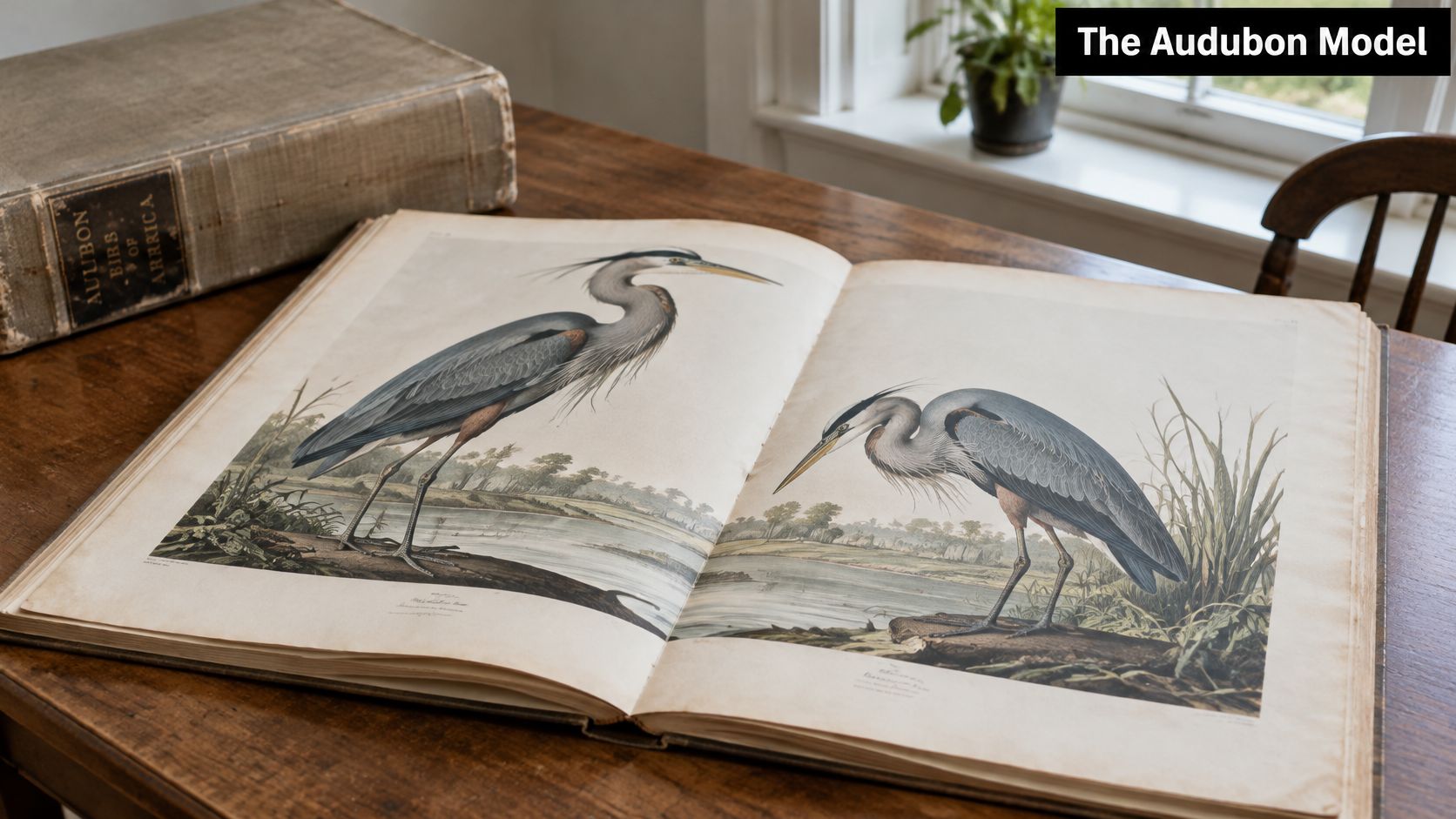
The pelican also shows the whole journey from shoreline to frame. Audubon painted the underlying watercolour years before the engraving was published, and the image went on to become one of the 435 plates. Each bird sits inside habitat the species uses, doing what that species does, which is why the plates still read as ecology rather than decoration. For anyone buying or painting coastal birds now, the test he set survives intact: habitat-based composition, convincing scale and an accurate species record.
Painting Styles and How Each Is Built
Style changes how far a bird reads from across a room. A sharply painted pelican holds a hallway at a glance, while the same bird dissolved into loose brushwork asks you to step closer before it resolves. The choice also decides how much of the animal's biology survives the translation into paint, and how clearly the finished piece speaks about the coast that produced it.
| Style | How it is built | Best for | Watch for |
|---|---|---|---|
| Realist portrait | Detailed feathers and accurate anatomy | Field-guide collectors and gallery walls | Can feel static without a strong background |
| Abstract background with detailed subject | Loose colour fields behind a sharply painted bird | Modern interiors and statement pieces | Background must not compete with the bird |
| Impressionist coastal scene | Broken brushwork and light on water | Living rooms and soft décor | Species may be hard to identify |
| Layered glaze | Several thin acrylic layers with transparent glazes | Collectors who value depth | Needs drying time and careful handling |
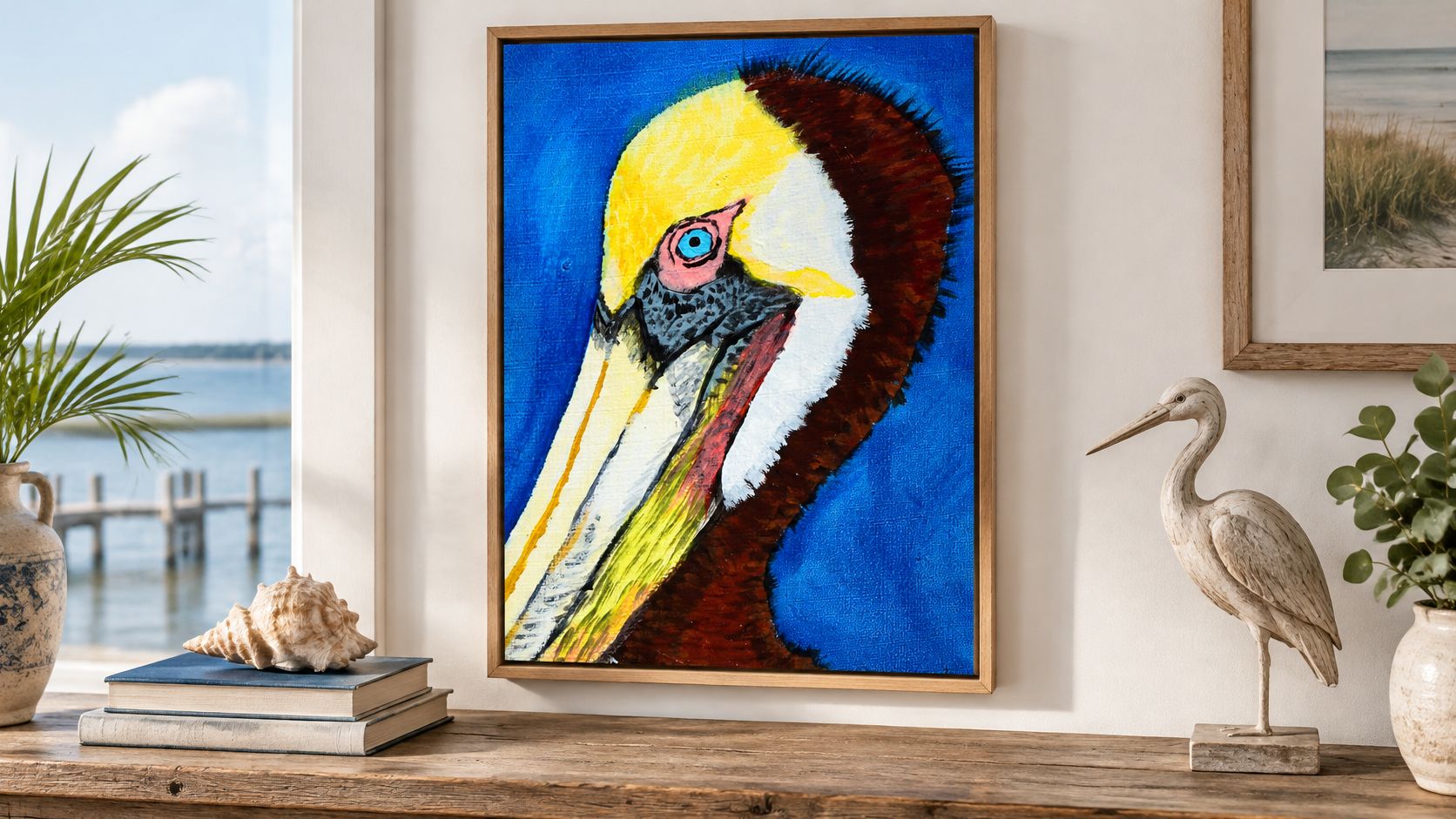
Realist portraits are built from observation first and paint second. Feather groups are laid in individually, the eye sits in a correctly shaped socket, and the bill keeps its proper taper. Collectors who keep field guides on the shelf tend to gravitate here, and a realist bird fails badly when the painter treats the background as an afterthought.
Abstract background with detailed subject places loose colour fields behind a sharply resolved bird. William Tucker works this way, and it is the reason his pelicans hold a wall without any habitat painted in at all. A New Orleans Artist Animal Painting by William Tucker - Pelican Portrait shows the approach at close range. With no marsh or shoreline painted in, the species has to carry the whole picture, which is why large, unmistakable coastal birds suit this style best. The risk is a background so loud that the bird loses its edge.
Impressionist coastal scenes trade identification for atmosphere. Broken brushwork and reflected light make a tern on wet sand feel like a morning rather than a specimen. Hang one in a living room and it will do its job, though you may not be able to name the bird from three metres away, and that is a fair trade if you know it going in.
Layered glazes are the slowest of the four. Tucker builds depth and texture with multiple layers of acrylic paint, using brushstrokes and transparent glazes, which is also how feather detail survives when you step close. If you want to understand what that detail takes, this guide to how to paint bird feathers walks through the layering.
Judge edges in person. Sharp edges on the bird and soft edges in the background create focus. Sharp edges everywhere create noise.
Then match the piece to the wall. A small room takes one bold bird and nothing else. A large wall needs a scene with habitat around the subject, or the painting looks stranded. If the bird itself matters more to you than the mood, choose the style that keeps its anatomy legible from wherever you will stand.
Checking Anatomy and Habitat for Accuracy
Accuracy matters twice over. Collectors care because a wrong bird dates a painting. Educators care because a wrong bird teaches the wrong thing to a room of children. The checks below take about ten minutes and separate a carefully observed painting from a decorative one.
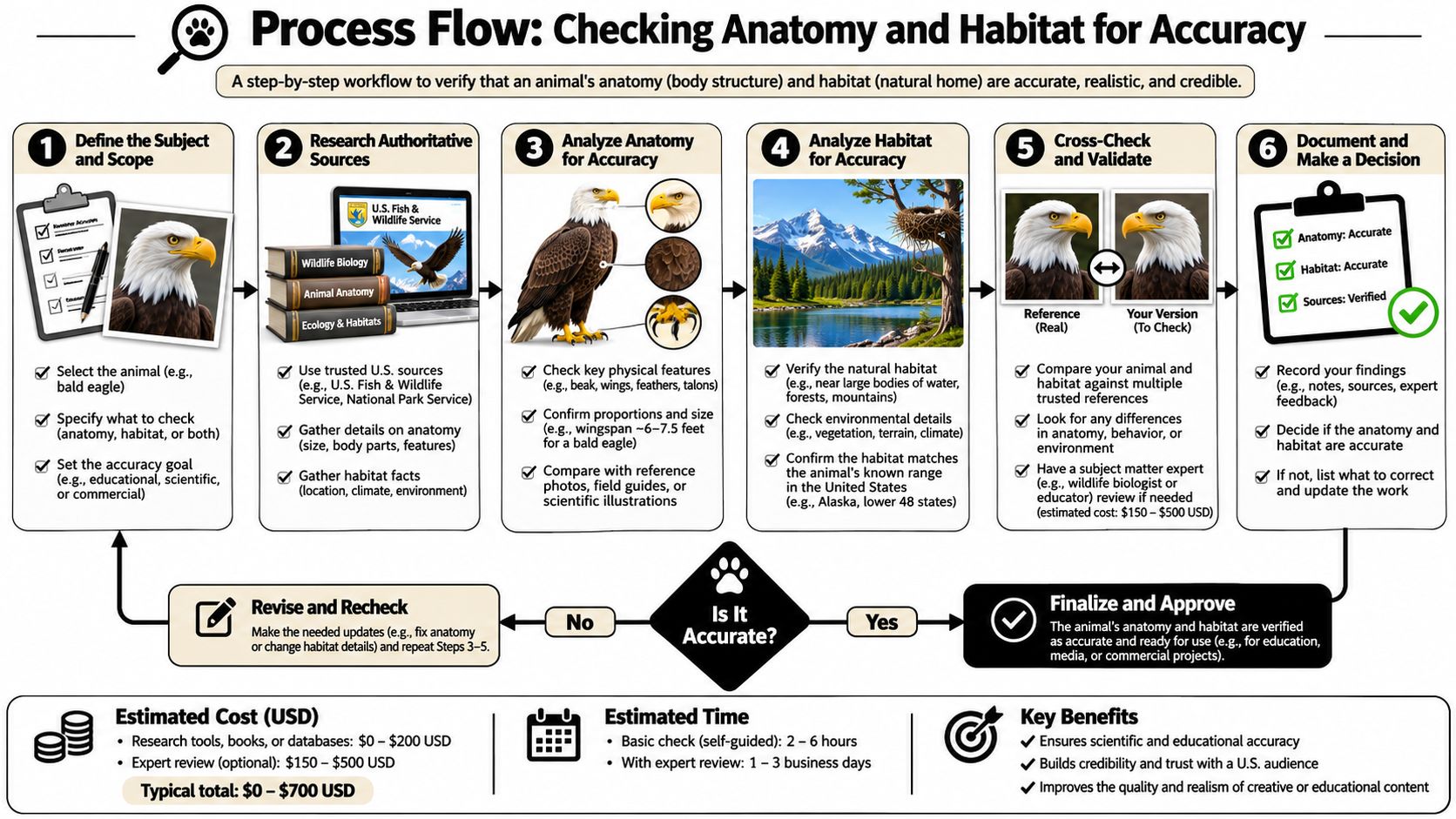
- Name the species, the season and the age class. Juvenile and breeding plumages are different outfits, not variations in mood. A painting that shows a breeding-plumage adult as the year-round standard is wrong, and documenting species, season and age makes the colour choices defensible.
- Check proportions with simple ratios. Divide bill length by head length, and leg length (tarsus) by body length, then compare those numbers with a reference photo. Most errors hide in these comparisons. Exaggerate the bill slightly against the head and a sandpiper turns into a generic wader that lives nowhere in particular.
- Ask whether the legs suit the behaviour. Leg length and the angle of the tarsus tell you whether a bird probes mud, wades through shallow water or grips uneven rock. A long-legged bird standing on a flat dry beach is a mismatch you can spot before you know the species.
- Match the habitat to the activity. Feeding, nesting and roosting happen in different places. If the bird is hunched and probing, the ground should look like mudflat. If it's on a nest scrape, the surface should be sand or shingle, not a painted dune.
- Look for the source of the measurements. Serious wildlife artists work from specimen data, not memory. The U.S. Geological Survey shorebird dataset holds more than 10,000 observations covering 35 species, including bill length, wing dimensions, tarsus measurements, body mass and age-specific plumage. That's the kind of reference sheet a painter can normalise ratios from before touching canvas.
Why the ratios matter more than the details: a viewer forgives a feather that's slightly the wrong shade. They don't forgive a head that belongs to a different bird.
Run these five checks on three candidates side by side and the differences stop being subtle.
Why Conservation Gives These Paintings Weight
A gallery label usually gives medium, size, price and a moody title. The better questions start after that: which species is this, does the behaviour match its real feeding or breeding life, and what is happening to the shoreline behind it.
The context is stark. The State of the Birds 2025 seabird report documents steep declines across nearly all North American seabird species between 2012 and 2022.
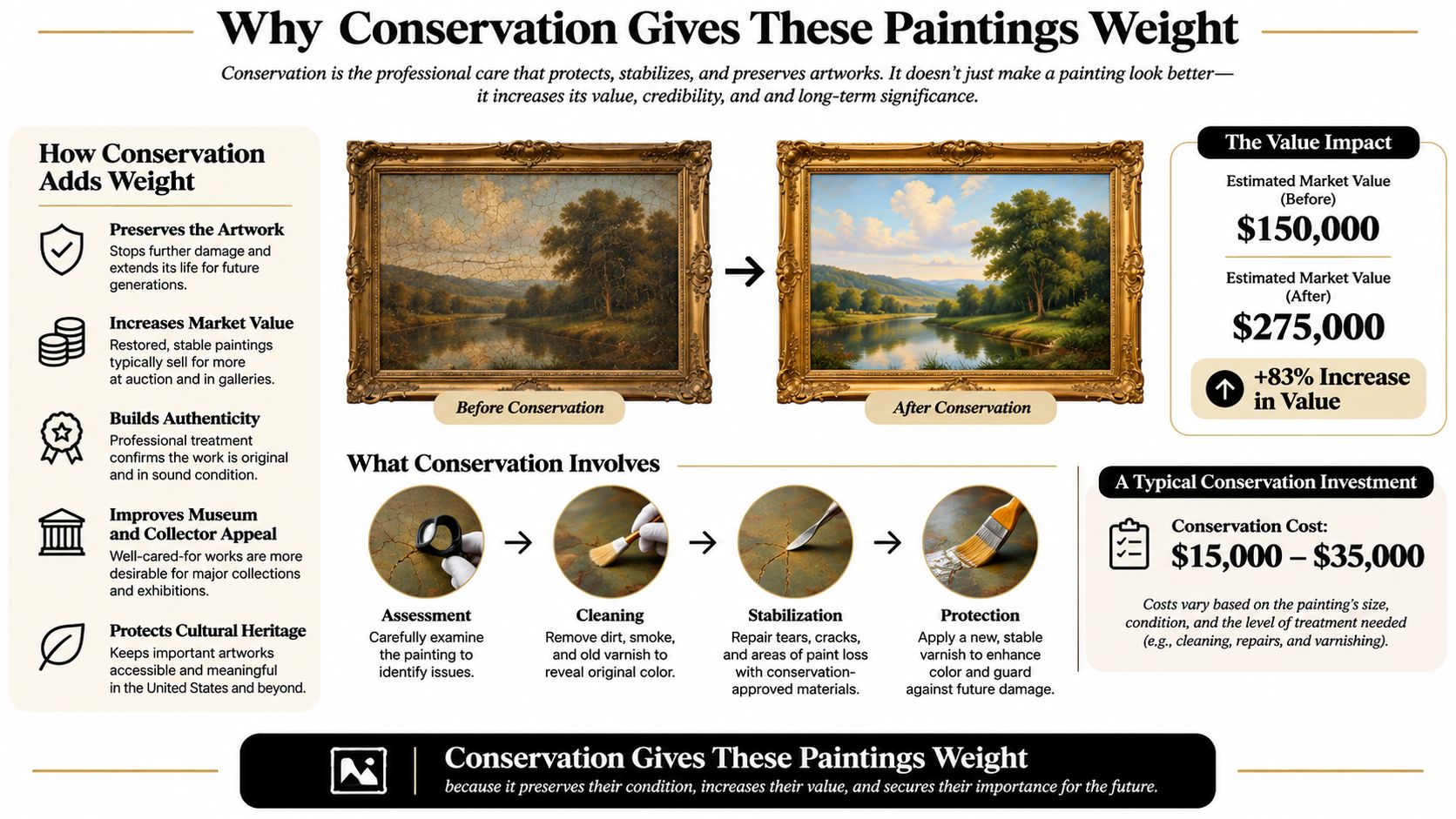
Pressure reaches a painting through habitat. Sea-level rise, warmer surface water, shifting tides, salinity changes, prey disruption, pollution and fishing bycatch all alter where a bird can feed, rest or nest. Each becomes a question you can put to the image: does this bird feed in the shallows or dive offshore, and does the painted shoreline look eroding, built over or still workable?
A field note beside the artwork answers those questions without turning the wall into a lecture. List species, range, habitat, seasonal behaviour and conservation status, then mark where observed natural history ends and interpretation begins. For the wider picture, read about endangered species conservation efforts.
A beautiful image can carry vulnerability without depicting catastrophe. Accuracy and emotional pull work together when the painting explains both the bird and the ecosystem changing around it.
That is what gives a coastal bird painting weight. Accuracy lets the bird be itself; context lets the viewer understand what stands behind the beauty.
What Collectors Pay for Coastal Bird Art
Two listing sets from the same marketplace give a sense of the spread. The averages sit far apart because the two sets don't contain the same kind of thing.
| Listing set | Average price | Price range | Published |
|---|---|---|---|
| Sea-bird artworks | $1,984 | $43 to $275,000 | 2026 |
| Sea-bird art | $360 | $95 to $11,734 | 2026 |
The first set, sea-bird artworks on 1stDibs, averages $1,984 with listed prices from $43 to $275,000, published in 2026. The second, sea-bird art listings on 1stDibs, averages $360 across a range of $95 to $11,734, also published in 2026. Read both as snapshots of what sellers are asking, not as a valuation of any single canvas.
What moves a price is less mysterious than it looks. Size, medium, whether the piece is an original or a print, the artist's track record and the framing account for most of the difference. A small signed work on paper makes a good first purchase. A mid-sized original earns a focal wall. Large or gallery-level originals belong to buyers who already know the artist's hand.
If you're browsing originals more broadly, this collection of wildlife paintings for sale shows the range of subjects and formats to compare.
Two habits keep you from overpaying. Compare pieces at similar size and similar medium rather than an original canvas against a reproduction. And check the basics, meaning signature and date on an original, edition numbering and paper weight on a print.
Choosing Your First Coastal Bird Painting
Start with the wall, because the wall decides more than taste does. Tape the exact width and height where the painting will hang, then stand back. A narrow space usually takes one bold bird against a quiet ground. A wide focal wall has room for water, sky or marsh around the subject, so the eye can travel instead of stopping at the edge.
Choose one subject group before you compare prices. Shorebird on tidal sand, heron at the marsh edge, tern over open water, duck among reeds. Keeping the first purchase inside one ecology makes the choice easier and gives the room a clearer story.
Match the handling of paint to the room. A modern interior can carry an abstract background behind a detailed bird. A traditional room usually wants a fuller scene. If you are still deciding, the Coastal Print collection is inspired by the Louisiana Coast and Bayous and printed on 325gsm fine art paper, a practical way to test scale and mood before committing to an original. If an original catches you, open a listing such as Pelican on a Post and read the listed medium, dimensions and format rather than trusting the thumbnail.
Run the accuracy check on every candidate. The bill should fit how the bird feeds, the legs should fit where it stands, and the plumage should fit the season you want on the wall. Then check the habitat cue: mudflat, marsh grass, reed bed or open Gulf light should agree with the species.
Hang the finished piece away from direct sun and ask for UV-protective glazing or framing, because fading is the one form of damage you cannot undo. Finished paintings are packed, insured and shipped to you for signature, so plan to be there on delivery day.
A strong coastal bird painting gives you both the picture and the bird. William Tucker builds that kind of surface with multiple layers of acrylic, visible brushstrokes and transparent glazes, aiming for the wonder and reverence toward nature that make a coastal piece more than decor. Visit William Tucker Art to compare current originals and prints, and choose the piece whose bird you can name.