
Last night you were probably scrolling through photos of your dog, pausing on the one where their ears perk up or their eyes catch the light, and thinking a phone screen just doesn't do them justice. That's the moment many start looking at canvas dog paintings, because they want something with more presence than a snapshot and more warmth than a generic print. A canvas portrait gives your dog room to breathe visually, like a small stage where their personality can hold the frame.
People also choose this format because it feels personal without being precious. It can be a memorial, a gift, or a statement piece for a living room, but it still needs to feel like your dog, not just a dog.
Introduction to Canvas Dog Paintings and Why Pet Owners Love Them
A canvas dog painting is simple to understand once you stop thinking of it as a category label and start thinking of it as an image with texture, scale, and presence. Canvas adds a tactile surface that changes how light hits the portrait, so the dog doesn't just sit on the wall, it occupies the wall. That matters for pet owners, because a beloved companion deserves more than something that disappears into the background.
For many buyers, the appeal is emotional first and visual second. You're not only buying an image of fur, ears, or a favorite pose, you're choosing a way to keep a dog's character visible in daily life. Collectors and gift-givers care about that same feeling, too, especially when they want art that reads clearly from across a room and still rewards a closer look.
What makes the format feel different
Canvas changes the mood. Paper can feel like a page, but canvas feels closer to a kept object, something that belongs in a room rather than tucked in a folder.
That's why people often use canvas dog paintings for memorials, birthdays, housewarmings, or just to make an ordinary wall feel more personal. The format works because it can hold both realism and stylization without losing the pet's identity.
Practical rule: if a portrait has to carry emotion from a distance, the composition should be clear before it is decorative.
This guide is for anyone who wants to understand what they're buying before they spend time or money on it. If you're choosing between hand-painted work, printed canvas, or a custom commission, the next sections will make those differences easier to see.
The Story Behind Canvas Dog Paintings From Royal Pets to Modern Homes
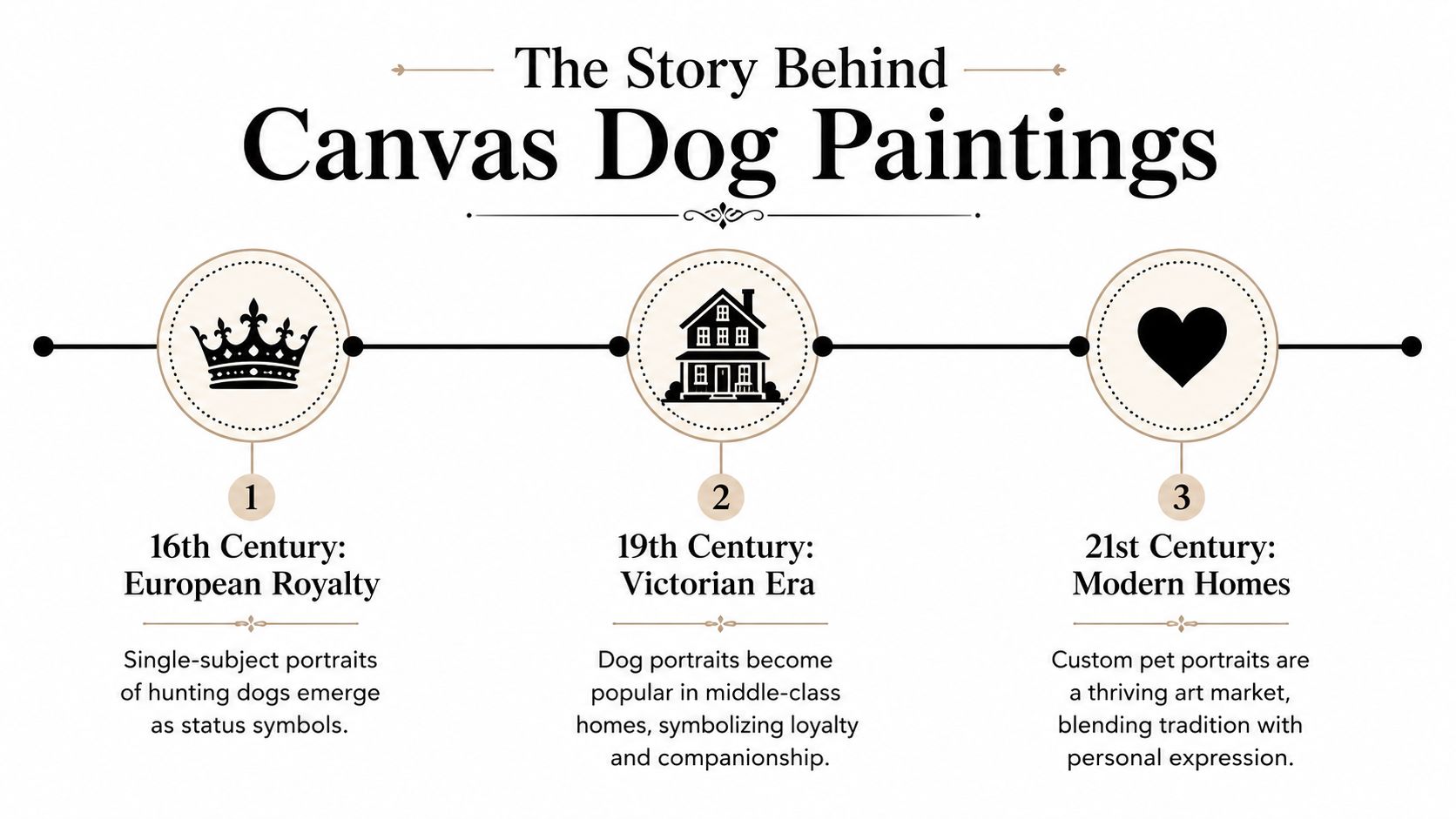
A dog portrait on canvas feels familiar now, but the idea has a long history. People were depicting dogs well before modern pet culture existed, with records reaching back to ancient Egyptian tomb paintings around 2500 BCE and to dog imagery in Roman and earlier settings. The move toward portraits focused on a single dog became clearer in Europe during the late 17th and 18th centuries NAHF historical review. By the 18th century, dog portraits were increasingly treated as stand-alone works rather than only decorative details inside human-centered scenes Bay Woof history of dogs in art.
Why the Victorian era changed the game
The Victorian period gave dog portraiture a stronger social role. Queen Victoria kept more than 70 canines at Windsor Castle and regularly commissioned oil-on-canvas portraits of her pets, which helped make dog portraiture a sign of status and affection Bay Woof history of dogs in art. The wider market also changed with the founding of The Kennel Club in 1873 and the American Kennel Club in 1884, which standardized breed descriptions and sharpened interest in accurate visual representation.
That history still matters because it shows the genre was never just a passing novelty. It grew from ownership, breed identity, and the rising social role of companion animals, which is why custom portraits still feel meaningful in homes now.
A later historical analysis divides 19th-century dog painting into sporting dogs and hounds, purebred dog portraits, and pet portraits NAHF historical review. That breakdown still fits the modern market, where buyers often want a memorial likeness, a breed-specific commission, or a decorative portrait for a room that needs a clear focal point.
Even contemporary exhibitions keep the tradition visible. The 2023 London show “Portraits of Dogs: from Gainsborough to Hockney” shows that dog portraiture remains an active, internationally recognized art form. For a contemporary canvas work that uses bold movement and layered surface in a different subject area, William Tucker Climate Change Art Painting Abstract Collection - Cyclones shows how canvas can carry strong color, texture, and compositional energy in a way that translates across subjects.
How Canvas Dog Paintings Are Made and What Makes Them Last
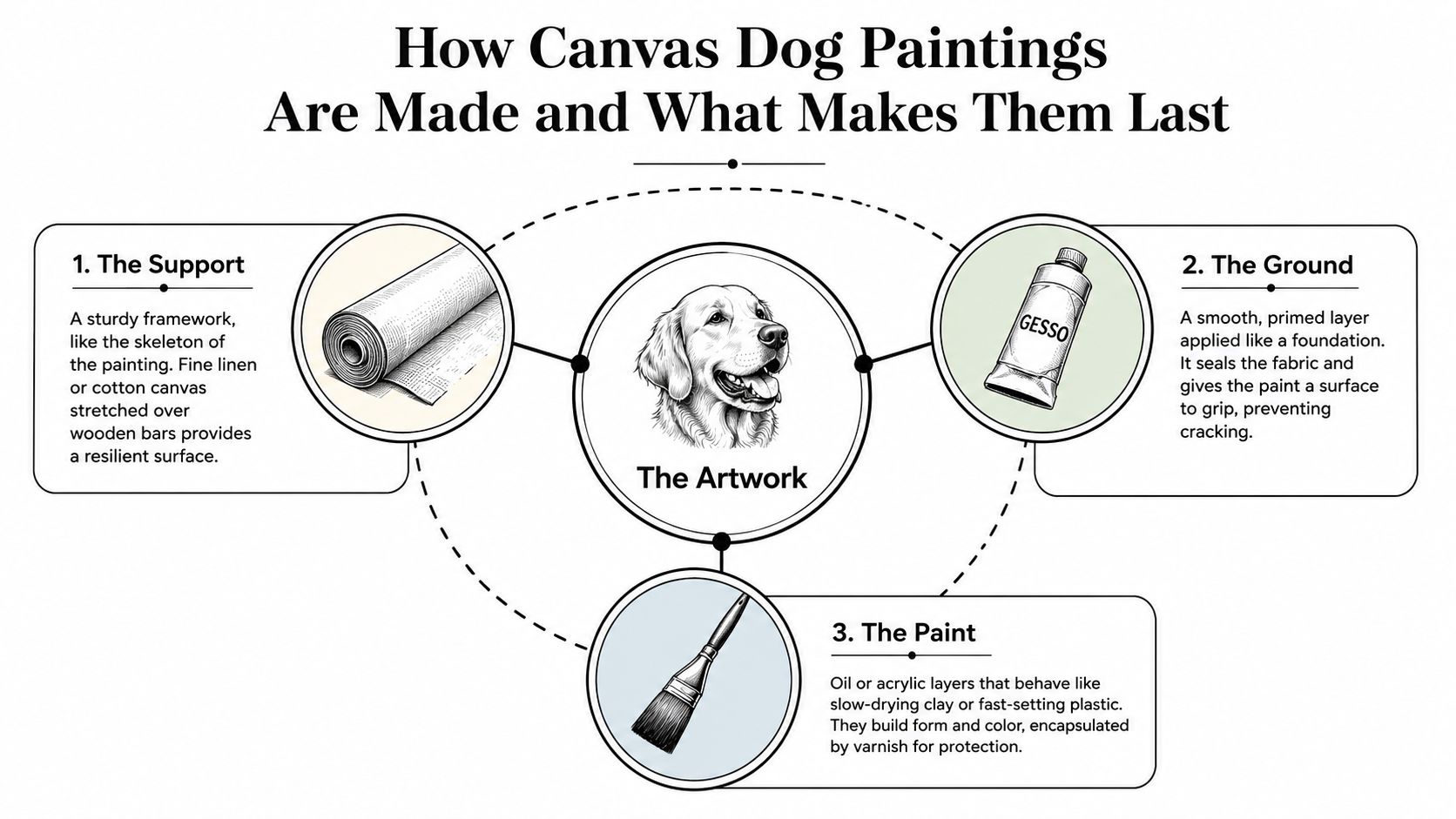
The first thing most buyers notice is the image. What usually decides whether a canvas dog painting keeps its character over time is the structure underneath that image. In museum technical studies of dog-centered works, fine or medium plain-weave linen or cotton supports are commonly prepared with a ground layer that masks the weave, then followed by an imprimatura or underpaint that controls absorbency and color interaction Nationalmuseum technical item. That hidden build is what helps a portrait look smooth and intentional instead of chalky or patchy.
Why surface choices shape the look
A good canvas is more than stretched fabric. It is built in layers, and each layer does a different job. The support holds the work steady, the ground sets the surface, and the paint carries the visible story.
One technical examination describes a thick smooth ground with a medium grey imprimatura that allowed thin background passages while denser impastos were saved for fur and highlights. Another example used a coarse plain-woven linen at 13 x 11 threads/cm, a warm yellowish-buff ground, and a bold black underpaint for the dogs, which created depth by letting semi-translucent darks work over the layer beneath. In plain language, artists do not need to pile thick paint everywhere. They create realism by balancing thin, scumbled fur passages with opaque accents in the eyes, nose, collar, and highlights Nationalmuseum technical item.
Studio insight: depth usually comes from contrast in paint handling, not from making every inch of the surface thick.
That difference matters for durability, too. Thin paint in high-wear areas, flattening from lining, abrasion, and retouching are common conservation concerns when the weave is too exposed or the paint film is too fragile. If you are evaluating a hand-painted portrait, ask how the canvas was primed and how the artist builds the fur, because those choices affect both visual depth and longevity Nationalmuseum technical item.
Printed canvas works are built differently. For edition-style pieces, the main questions are the substrate, ink permanence, and frame depth rather than paint behavior. Commercial canvas products commonly use archival-grade poly-cotton or coated substrates, with one market example specifying fade-resistant inks rated for 75+ years and another specifying hand-stretched canvas over a 1.5-inch wooden frame Wall Canvas Art dog paintings. If you want a practical learning resource on turning pet photos into painted-style imagery, this 2026 oil painting convert tutorial is useful for seeing how digital workflows differ from hand-applied paint.
Choosing Styles Materials and the Right Composition for Your Dog
A buyer often gets stuck on style before price even enters the conversation. Should the portrait feel realistic or a little loose, dark and moody or bright and airy, centered or more editorial? The first studio lesson is simple. The dog needs to stay the main focus, and the background should support that focus instead of pulling attention away from it YouTube composition guidance.
Hand-painted originals and prints on canvas
A hand-painted original shows visible paint choices, small irregularities, and the feeling that a person worked directly on the surface. A print on canvas behaves more evenly, but it can still look beautiful when the image quality and canvas coating are strong. The tradeoff is straightforward. Originals usually carry more collectable weight because they are one of a kind, while prints on canvas are easier to reproduce and place in different rooms at home.
That difference becomes clearer once you look at how the surface behaves. A hand-painted portrait can use value shifts, thin glazes, and raised highlights in ways a print cannot copy exactly. A print can still give strong display value if the composition is clean and the canvas has a stable receptive coating, but it will not have the same physical texture under changing light.
Buyer's shortcut: if the dog's expression is the emotional core, choose the version that keeps the face clearest at the viewing distance you actually use.
Background choice matters as much as medium. Composition guidance keeps returning to the same three ideas, form matters more than fur detail, the background should be established early, and the dog should remain the focal point YouTube composition guidance. That advice translates neatly into shopping language. A busy background can feel dramatic, but it can also pull attention away from the muzzle, eyes, and ear shape. A simpler background often makes a white-coated dog easier to read, because contrast and value structure do more work than a pile of tiny fur strokes.
If you are choosing for a living room, hall, or office, match the composition to the room's job. A quiet portrait feels calmer in a bedroom or reading corner. A more graphic portrait can hold its own in an entryway or shared family space.
Commissioning Your Custom Canvas Dog Painting Step by Step
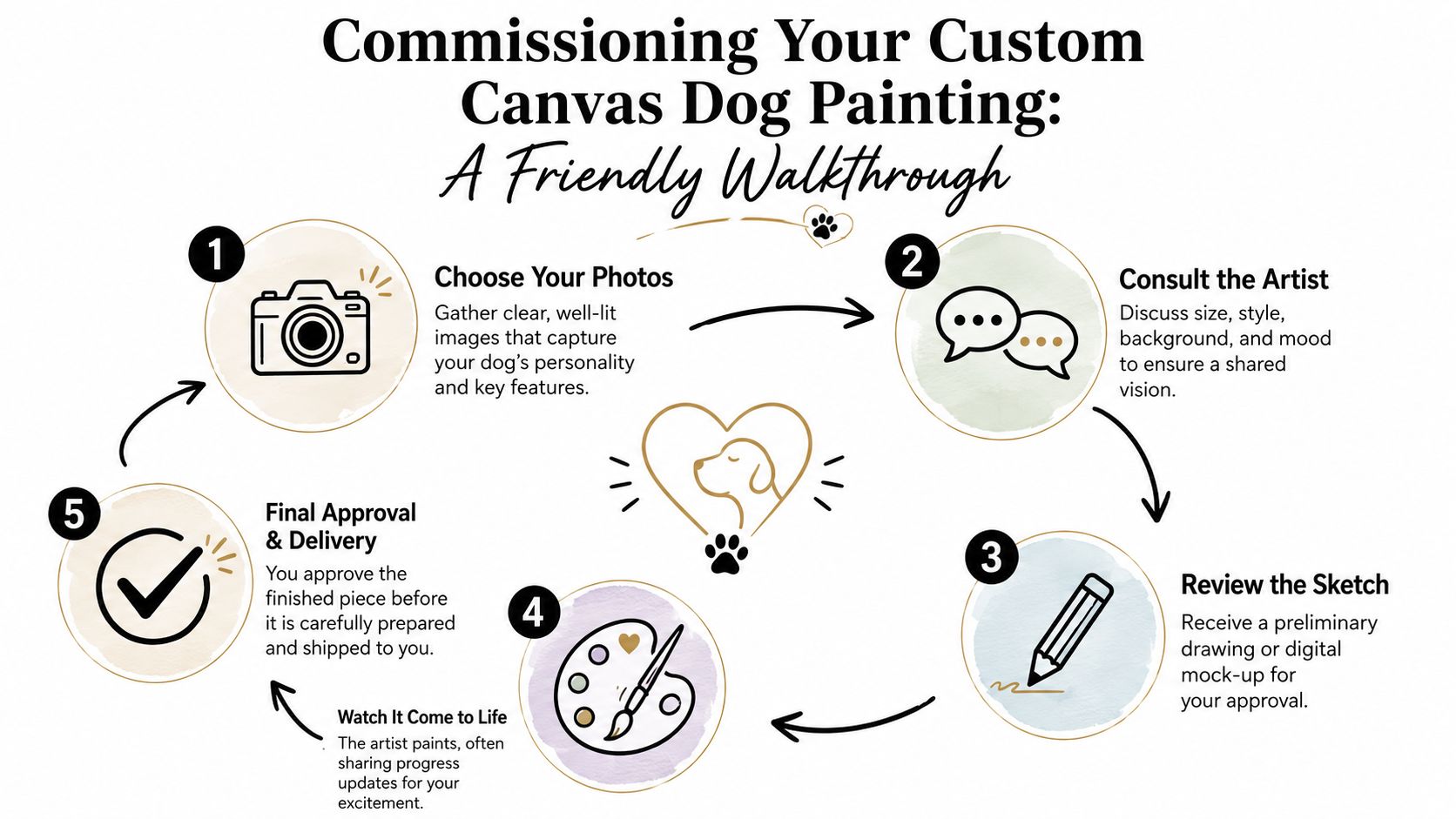
A good commission starts before anyone touches a brush. The clearest photo usually wins, not because it is the prettiest, but because the artist needs accurate structure in the eyes, nose, ears, and body angle. The photo should also match the mood you want, since a sunlit snapshot and a formal pose will lead the portrait in very different directions.
The next conversation should cover the image itself, not just the size. Ask about background complexity, crop, and whether the portrait will lean realistic, stylized, or somewhere in between. That is where the artist and buyer align on what belongs in the frame and what should be left out.
What to ask before you order
A strong custom commission gets clearer when you ask direct questions. The best ones are practical.
- What kind of source photo works best? Ask whether the artist prefers a single image, several references, or a particular lighting setup.
- How much review do I get? Proofs, sketches, and mock-ups help you catch issues before the final work is locked in.
- Is this hand-painted, printed, or a textured reproduction? That question matters because collectability, surface texture, and aging all differ.
- What size fits the composition? A portrait cropped too tightly can feel cramped, while one that is too large for the wall can lose intimacy.
- How is the canvas finished and shipped? Ask about stretcher depth, edge treatment, and whether the piece arrives ready to hang.
That last point matters more than many buyers realize. Existing content often blurs canvas dog paintings as fine art with mass-market wall décor, which leaves people unsure whether they are buying a one-off artwork, a digital print on canvas, or a textured reproduction YouTube market gap discussion. If you want a comparison point for an artist's process and presentation, the internal guide on working with a custom pet portrait artist is a useful place to understand how a portrait practice can be described clearly.
One more thing helps buyers a lot, and it is process transparency. AI-assisted pet portrait workflows and fast customization tools are part of the market now, so you should expect the artist to state what parts are hand-made, digitally assisted, or print-based. Clear disclosure does not make a piece less appealing. It makes it easier to judge.
Sizing Framing Display and Care Tips That Protect Your Artwork
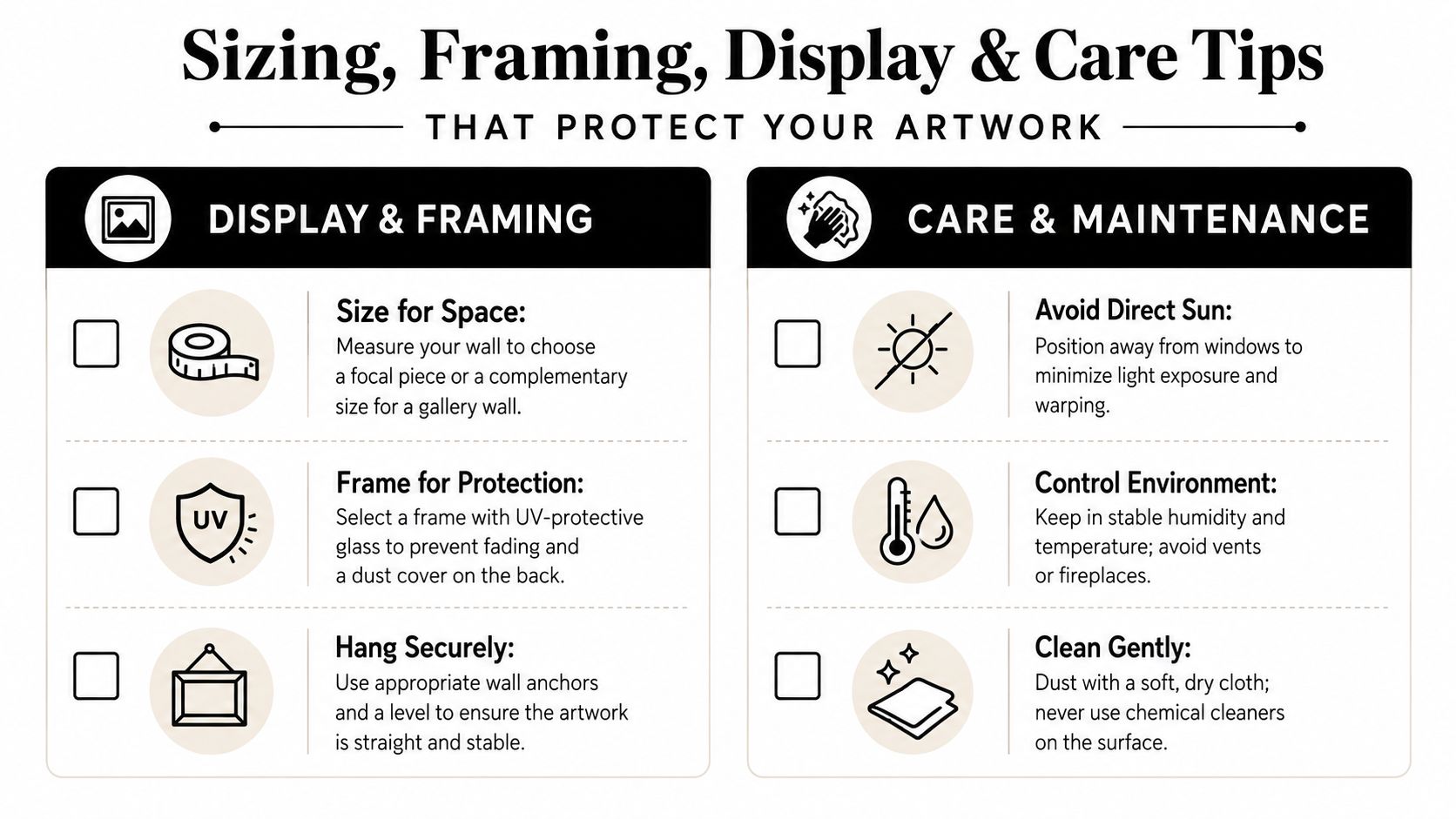
A canvas dog painting can look complete in the studio and still feel off once it reaches the wall. Size is usually the first place people notice the problem. A portrait that is too small can seem lost, while one that is too large can overpower the room and crowd nearby furniture.
The simplest way to judge scale is to think about viewing distance and visual weight. A focal portrait needs enough presence to hold attention across the room, while a smaller piece can work well in a grouped display if the image reads clearly from normal standing distance. Background choice matters here too, because a calm field behind the dog usually gives the face more room to breathe, while a busy background can make a small canvas feel visually crowded.
Framing and hanging choices that help
Printed or edition-style canvas dog paintings are often assessed by the surface, ink durability, and the depth of the stretcher or frame. A deeper stretcher usually helps the canvas sit more firmly and can reduce the look of bending or warping, especially on larger pieces. If you want a closer look at framing choices for stretched work, the guide on how to frame canvas paintings explains the main options in plain terms.
Framing also changes how the artwork reads in the room. A clean frame acts like a picture border around a window. It gives the eye a stopping point, which is useful when the portrait has strong color or detail. If you are hanging something closer to a poster or a lighter reproduction, the advice in protect your poster with a 30x20 frame is a helpful reminder that the frame should fit the image format, not force the image to fit the frame.
Hand-painted works ask for a little more caution. Thin paint layers and exposed weave can be more vulnerable if the surface rubs against anything or if the canvas is stored badly. That is why home care should stay simple and consistent. Treat the painting like a finished surface, not like decor you can wipe down any way you like.
- Avoid direct sun: light can soften color over time, especially on walls near windows.
- Keep humidity steady: stretched canvas reacts to air that swings too much from dry to damp.
- Dust gently: use a soft, dry cloth and avoid wet cleaners on the painted surface.
- Use proper hardware: hang the piece with hardware that keeps it level and secure.
- Check the edge finish: gallery-wrapped canvases look neater when the sides are painted or wrapped cleanly.
For printed pieces, archival coatings and fade-resistant inks are the clearest signs that the maker has thought about long display life. One market example also describes a 75+ year fade-resistant ink rating. That does not cancel out the need for good light and stable room conditions, but it does tell you the print was made with longevity in mind.
Finding the Perfect Canvas Dog Painting for Your Home and Collection
The best choice usually comes from balancing four things at once, not one thing alone. You want the dog to look like itself, the composition to suit the room, the materials to match your expectations, and the process to be clear enough that you know what you're bringing home.
If you want a point of comparison, the dog canvas artwork guide shows how subject choice and presentation can shape the final feeling of a piece. That's useful whether you're buying a memorial portrait, a decorative canvas, or a custom commission that needs to sit comfortably in an everyday space.
William Tucker Art offers another lens on canvas work through paintings that combine detailed subjects with abstract background treatment, including wildlife and conservation themes. If you care about supporting a New Orleans artist while choosing a work with strong visual character, that's a practical place to look, especially when you want something that feels personal rather than generic.
The cleanest next step is to decide what matters most, original texture, print clarity, or a custom likeness. Once you know that, choosing a canvas dog painting gets much easier, because you're no longer shopping for a category, you're shopping for the right kind of memory on a wall.
If you're ready to choose a portrait that feels personal, well-made, and easy to live with, visit William Tucker Art and explore work that brings strong composition and pet-centered storytelling together on canvas. You can compare the available pieces, think through what kind of image fits your space, and reach out when you're ready to turn a favorite dog photo into something lasting.