
You've found the perfect photograph of your dog, cat, horse, or favorite wild animal, but choosing an artist is more complicated than searching for the closest visual match. A realistic pet portrait, an atmospheric wildlife painting, and an AI-generated print may all look appealing on a screen, yet they offer very different kinds of value once they're hanging in your home.
The right animal painting artist brings more than technical accuracy. They interpret posture, expression, color, and presence in a way that preserves what you remember about the subject. In New Orleans, that can also mean choosing work shaped by coastal light, Louisiana wildlife, and the region's distinctive relationship with nature. The local practice represented by William Tucker Art offers a useful example, especially for buyers drawn to detailed animals set against expressive, abstract environments.
Why We Are Drawn to Animal Paintings
Animal paintings work because they meet us at the intersection of recognition and feeling. You may want to remember the tilt of a beloved dog's head, the alert gaze of a horse, or the quiet dignity of a pelican. A successful painting doesn't just copy the reference image. It preserves the relationship you have with the subject.
That distinction matters when you're choosing a commission. A technically polished portrait can still feel flat if the artist gives equal attention to every area of the image and none to the details that express personality. The best work usually has a visual hierarchy. The eyes, posture, silhouette, and a few characteristic marks carry the emotional weight, while the surrounding brushwork supports them.
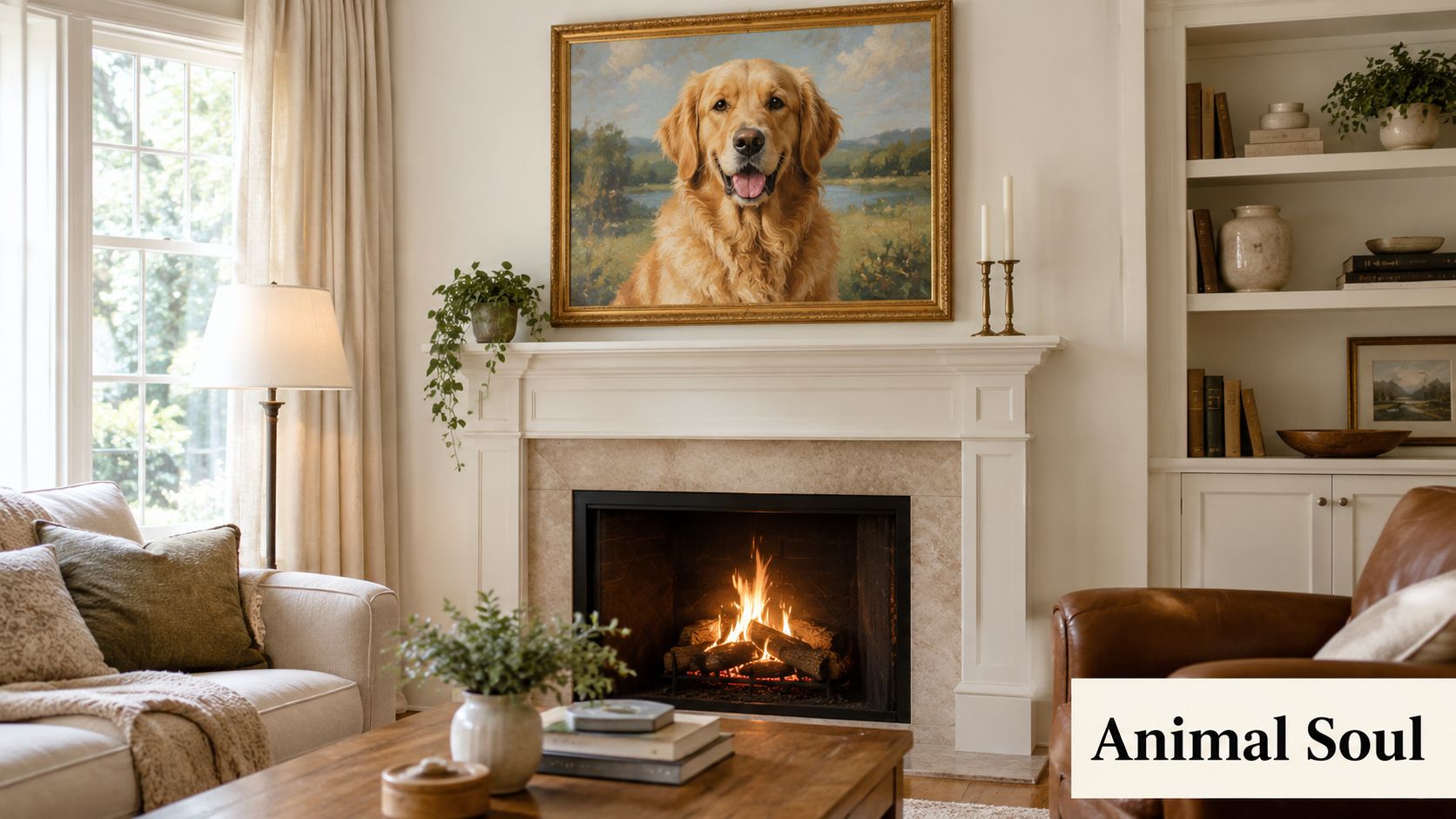
A painting can hold more than likeness
Pet portraits often become memorial objects, family gifts, or reminders of a particular period in life. That emotional function changes how you should assess the work. Ask whether the artist understands the difference between a pleasant image of an animal and a portrait that feels unmistakably connected to your animal.
For buyers who want to explore that emotional dimension, this discussion of the healing power of pet portraits offers a useful perspective. The practical question is not whether the painting looks attractive in isolation. It's whether you'll still feel something specific when you encounter it years later.
Practical rule: Choose an artist for their interpretation of animal presence, not only for their ability to reproduce fur.
New Orleans adds another layer to the decision. The city's coastal surroundings, birds, wetlands, and changing light give animal art a natural local vocabulary. A painter may use a pelican, egret, horse, or domestic pet as the central subject while allowing the background to suggest water, weather, habitat, or environmental pressure.
That approach suits collectors who want a piece that functions as both portrait and conversation. It also explains why abstract-naturalist work deserves consideration alongside traditional realism. You're not limited to choosing between a sentimental pet image and a formal wildlife study. An animal painting artist can create a work that feels intimate, contemporary, and connected to the living world.
The Timeless Roots of Animal Art
Animal painting isn't a modern niche created by the popularity of pet portraits. Surviving cave art shows that humans have painted animals for well over 30,000 years, making animal subjects one of the earliest persistent themes in visual history. A major study of Paleolithic cave art found that animals accounted for 53.7% of 5,786 depictions across 113 European caves, while plants accounted for 0.07%. Those figures are documented in this historical overview of animal painting.
The pattern reveals something important. People have long used animal images to observe, remember, symbolize, and understand the world around them. The subject has never depended on one fashionable technique. It has survived changes in materials, patronage, religion, commerce, and domestic taste because animals remain central to human experience.
From observation to specialized practice
Later traditions made the genre more specialized. The Dutch Golden Age produced dedicated animal painters, and animal subjects became widespread among middle-class collectors by the mid-19th century. That development established animal painting as a recognized category rather than a decorative afterthought.
Rosa Bonheur demonstrates how seriously the genre could be treated. She became the first woman artist awarded the Legion d'Honneur in 1865, and the first woman promoted to Officier in 1894, as recorded in the account of Bonheur's career and The Horse Fair. Because women were barred from the École des Beaux-Arts at the time, she pursued direct study in slaughterhouses and stockyards, even obtaining police permission to wear trousers in public.
Her example also connects craft with independence and professional ambition. Animal painting supported specialist careers, including those of George Stubbs and James Ward, because collectors consistently valued careful observation of living subjects.
A visual record of biodiversity
Animal art has also preserved knowledge. Scholars identified at least 67 bird species from 158 bird-flower paintings made during China's Song dynasty, from 960 to 1279 C.E., according to the same historical source. These works combined aesthetic design with close attention to species and natural detail.
Contemporary animal painting inherits both sides of that tradition. It can document a recognizable creature, but it can also ask what that creature represents in a changing environment. That is why a New Orleans animal painting may feel most relevant when it combines local observation with a modern visual language.
Identifying the Core Styles of Animal Art
Before you contact an animal painting artist, decide what kind of visual truth you want. Some buyers want the animal to look as though it could step out of the canvas. Others care more about atmosphere, movement, or the feeling a creature creates in a room.
Three broad approaches appear frequently in contemporary animal art: realistic portraiture, impressionistic atmosphere, and abstract symbolism. They overlap, but each one makes different demands of the artist and creates a different experience for the viewer.
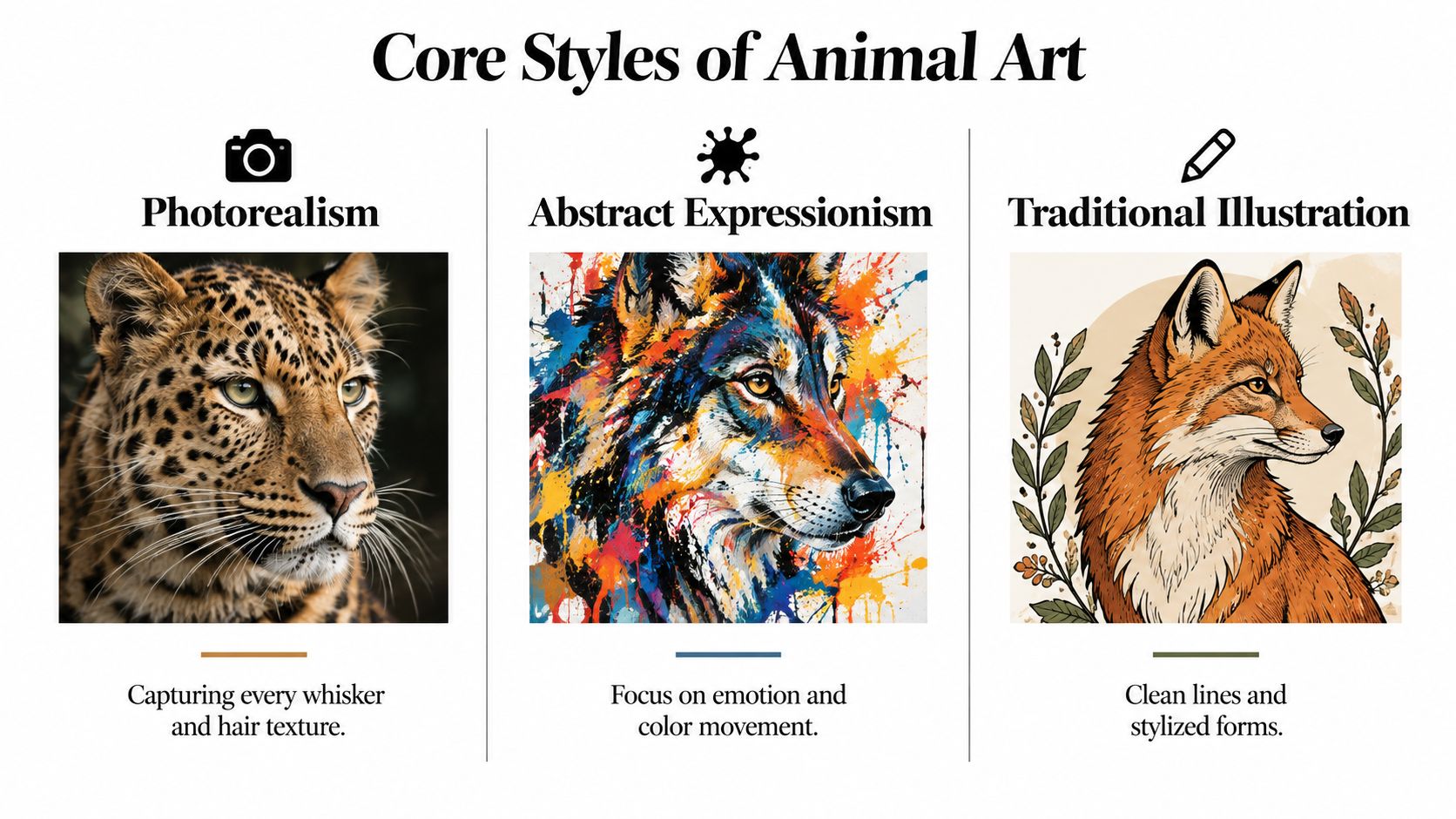
Realistic portraiture
Realism prioritizes identifiable anatomy, proportion, texture, and expression. In a pet commission, the artist may carefully render whiskers, individual hair patterns, the shape of the nose, and the reflection in the eyes. This style works well when likeness is the main purpose, particularly for memorial pieces or portraits based on one important reference photograph.
The trade-off is time and visual restraint. A highly detailed painting may require a quieter background because too much competing texture can weaken the subject. Realism also depends heavily on the quality of the reference photo. A low-resolution image, harsh shadow, or partially hidden face limits what the artist can confidently interpret.
Impressionistic atmosphere
Impressionistic animal art keeps enough information to establish the subject while allowing color and brushwork to carry mood. A horse might emerge from warm, broken strokes rather than a sharply outlined field. A bird may be recognized through posture, color blocks, and a few precise marks.
This approach often suits collectors who want a painting to integrate with a room rather than function as a literal record. It can also communicate movement and weather more effectively than tightly controlled detail. The risk is that a loose style may feel insufficiently personal if the artist hasn't captured the subject's distinctive expression.
Abstract symbolism
Abstract animal painting reduces or rearranges recognizable forms to emphasize an idea. The animal may remain clear, but the background, color, scale, and spatial distortion introduce associations with habitat, climate, memory, or vulnerability.
The abstract backgrounds used in the New Orleans work discussed here create a tension between a carefully observed animal and a more unsettled environment. That contrast can invite reflection on humanity's impact on nature without turning the painting into a literal illustration.
Use this decision guide before buying:
- Choose realism if exact likeness and anatomical detail matter most.
- Choose impressionism if mood, movement, and painterly energy matter more than complete description.
- Choose abstraction if you want the animal to carry a broader environmental or symbolic meaning.
Evaluating Human Craft Versus AI Generation
AI-generated pet art has changed the lowest-priced end of the market. A buyer can upload a photograph, select a visual style, and receive a decorative image quickly. That convenience has a legitimate place, especially if you want a playful experiment, a temporary accent, or a low-commitment gift.
It doesn't offer the same product as an original commission. Current coverage of the pet-portrait market describes photo-to-portrait apps as pushing down the low-price end, while Etsy requires sellers to disclose AI use and shoppers increasingly compare generated images with hand-drawn work. This market discussion of AI and pet portraits also identifies a continuing lack of clear advice about when human-made work is worth choosing.
Compare the object, not only the image
The most useful comparison involves the finished object and its purpose.
| Consideration | AI-generated portrait | Human-made commission |
|---|---|---|
| Speed | Usually optimized for rapid output | Requires consultation, preparation, and painting time |
| Variation | Can produce many versions from one image | Develops through an artist's selected interpretation |
| Likeness | May preserve broad visual traits but mishandle small features | Allows focused attention on expression, anatomy, and personal details |
| Emotional meaning | Often works as decorative imagery | Can preserve a relationship, memory, or memorial subject |
| Physical quality | Commonly ends as a digital file or printed product | May exist as an original painting with material presence |
| Authenticity | Depends on transparent disclosure and intended use | Comes from a named maker's decisions and handwork |
The central trade-off is not technology versus tradition. It's low-cost visual novelty versus intentional, durable meaning. An algorithm can generate a charming image of a dog in a royal costume. A human artist can discuss which photograph shows the dog's real character, notice that one ear sits differently when the animal is relaxed, and decide how much of the background should remain quiet.
Where original commissions earn their value
A commission makes the most sense when the subject carries a story that a generic style cannot supply. That might be a deceased pet, a working animal, a family horse, or a species connected to a particular place. The value comes from specificity and authorship, not from the claim that every hand-painted work is automatically superior.
Digital illustrations and printed merchandise can be good choices when portability, price, or repeatability matters. An original painting is better suited to buyers who want a singular object, visible brushwork, and a direct relationship with the maker's decisions.
The cheaper option is only the better option when it serves the same purpose.
Ask the artist how they handle corrections, reference photographs, materials, protective finishes, and delivery. Ask an AI service what is being disclosed, what rights accompany the output, and whether the result is intended as a one-off image or a commercial product. Clear expectations prevent disappointment on either side.
Techniques Behind Compelling Paintings
A compelling animal portrait begins before the first visible brushstroke. The artist must select a reference that reveals the subject's structure and character, then decide what to preserve and what to simplify. For pet and animal portrait work, a high-contrast photograph often provides a strong starting point. Artists commonly print it at the intended scale, trace major contours, and block in the background before refining the animal, a workflow described in this acrylic pet-portrait tutorial.
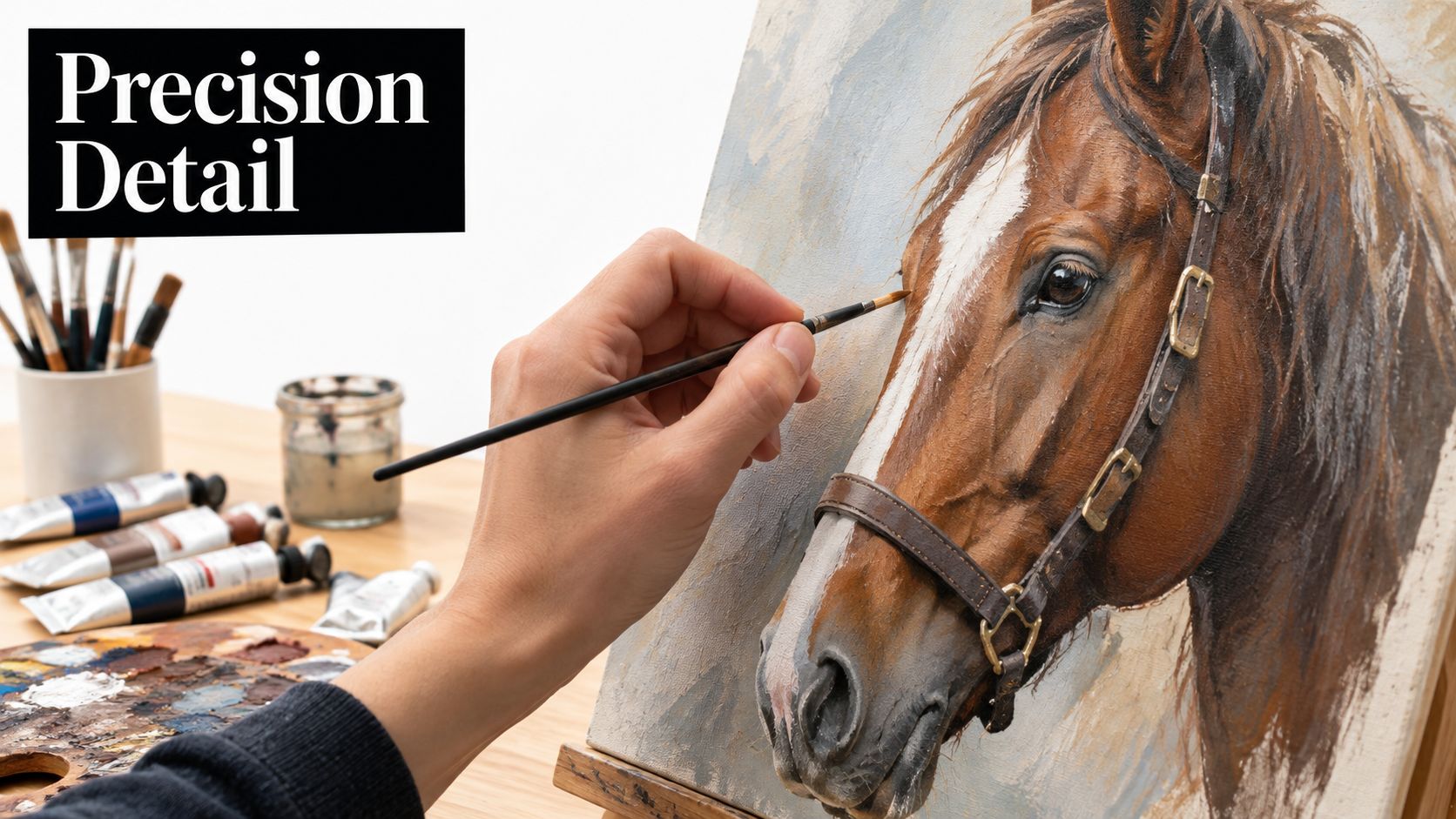
Structure comes before texture
Blocking in the background first helps the artist judge the silhouette against its surroundings. It also prevents a common beginner's mistake, spending hours on fur before discovering that the head, body, or overall posture is incorrectly placed.
Fur needs a different kind of discipline. The artist should follow the direction of natural growth, establish mid-tones, add highlights, and reinforce darker areas in layers. This guide to painting pet portraits explains the importance of layered strokes and early attention to the eyes, nose, and mouth. Those features anchor likeness and expression more effectively than an outline packed with detail.
Studio principle: Texture should support structure. It can't rescue an inaccurate silhouette or an expression that feels wrong.
A painter working in an abstract-naturalist style makes a further decision. The subject may receive controlled, highly observed detail while the surrounding field becomes more expressive. That contrast is not a shortcut. It requires knowing where precision matters and where suggestion creates more energy.
The New Orleans example
The New Orleans artist at the center of this article uses that contrast across coastal and abstract-oriented work. In a pelican portrait, close attention to the bird's form and features can coexist with strong color relationships and a background that feels more atmospheric than documentary. The animal remains the entry point, while the surrounding marks widen the subject into a meditation on habitat and fragility.
The same logic applies to climate-focused abstract work, including pieces built around storm movement and environmental unease. Rather than painting every natural detail with precision, the artist can use swirling forms, disrupted color, and directional movement to make weather feel active within the composition.
That approach works particularly well for collectors who want wildlife art without turning their interiors into natural-history displays. It also gives the painting room to change as you live with it. At first, you may notice the animal's face. Later, you may spend more time with the relationship between the subject and the unstable field around it.
The process is easier to understand when you see how an artist handles brush, surface, and subject in real time. The following studio video provides that kind of visual reference:
For a deeper look at the structural decisions behind this kind of work, this guide to animal anatomy for artists is especially relevant. Anatomy doesn't require every muscle to be visible, but the artist must understand how the body carries weight, turns, rests, and moves.
How to Commission or Buy Your Art
Buying an existing painting and commissioning a new one require different kinds of judgment. An existing work lets you respond to the finished composition, color palette, and scale immediately. A commission gives you personal subject matter, but you'll need to communicate clearly and accept that the final work will be an interpretation rather than a mechanical copy.
Start with the purpose
Write down why you want the piece before you contact an artist. “A portrait of my dog” is a subject. “A quiet memorial painting that shows her patience and keeps the background calm” gives the artist usable direction.
For an existing collection, assess the work in this order:
- Subject: Does the animal hold your attention without explanation?
- Style: Does the degree of realism or abstraction suit the room and your taste?
- Scale: Will the composition have enough visual authority on the intended wall?
- Material: Do you want acrylic on canvas, a work on paper, a wood panel, or a reproduction?
- Provenance: Can the seller identify the artist, medium, dimensions, and delivery conditions?
The New Orleans platform discussed here presents wildlife, coastal imagery, pet portraits, and abstract work, including pieces related to climate and natural environments. Reviewing a focused collection is often more productive than browsing an enormous marketplace because you can compare how one artist handles different species and subjects.
Prepare a useful commission brief
Send several reference photographs if the artist accepts them, but identify which image contains the most important expression. Explain the animal's age, temperament, habits, and any feature that must remain recognizable. If you want an abstract or atmospheric background, describe the emotional direction rather than prescribing every color.
Confirm the practical details before work begins:
- Medium and surface: Establish whether the painting will use acrylic, oil, pastel, paper, canvas, or wood.
- Dimensions: Measure the wall and consider furniture, lighting, and viewing distance.
- Review stages: Ask whether you'll approve a sketch, transfer, or preliminary composition.
- Delivery: Clarify packaging, insurance, framing, and estimated timing.
- Aftercare: Request guidance on sunlight, humidity, cleaning, and hanging.
Shipping deserves attention, particularly for original work. A professional artist or buyer should understand how to pack canvas and rolled art so the surface, corners, and frame are protected during transit.
A local purchase can also offer a more direct relationship with the maker. This article about the New Orleans artist and local art practice provides helpful context for buyers who want regional connection as part of the acquisition.
Bringing the Wild Home to You
An animal painting changes a room because it changes what you notice. A pelican can bring the coast indoors. A horse can introduce weight, patience, and movement. A pet portrait can turn an everyday space into a place where memory remains visible without becoming static.
The strongest choice usually has two layers of connection. First, you respond to the subject itself. Then you discover something in the handling, whether that's a restrained gaze, a forceful color field, or the tension between a detailed animal and an unsettled natural background.
Buy for sustained attention
Interior trends can influence what catches your eye, and recent trend coverage identifies decorative interest in subjects such as geese, swans, moths, and nature-centered imagery in 2026, while also describing a movement toward psychological presence, selective detail, and atmospheric backgrounds. This overview of animal-art directions for 2026 treats those motifs as part of a broader return-to-nature aesthetic.
Trends can help you discover a subject, but they shouldn't make the final decision for you. Ask whether you would want the work if the motif stopped appearing in interiors and social feeds. A painting earns its place when it continues to reward attention after the trend has moved on.
Support the local visual culture
New Orleans offers buyers access to a living artistic community shaped by place, weather, water, architecture, and wildlife. Supporting a local animal painting artist keeps those observations connected to the region rather than reducing Louisiana subjects to anonymous décor.
That support also benefits the buyer. You can ask better questions about the source of the imagery, the meaning of a species, the materials used, and the choices behind the composition. The result is more than a wall covering. It's a record of a relationship between artist, subject, place, and viewer.
Choose the work that makes you pause. If it captures an animal you love, preserves a memory, or makes the natural world feel newly present, it's doing more than decorating your home.
William Tucker Art offers original wildlife and pet paintings, coastal imagery, and abstract works shaped by the beauty and fragility of nature. Visit William Tucker Art to explore the collections and find a New Orleans animal painting that gives your space a lasting connection to the living world.