
Have you ever caught your cat meticulously grooming itself with a look of regal indifference and thought, "She really ought to be in a palace"? Or watched your dog strike a noble pose and pictured him as a decorated general? If you have, you’re definitely not alone.
This mix of humor, history, and heart is exactly why Renaissance-style pet portraits have become so incredibly popular.
Why We Can't Get Enough of Renaissance Pet Portraits
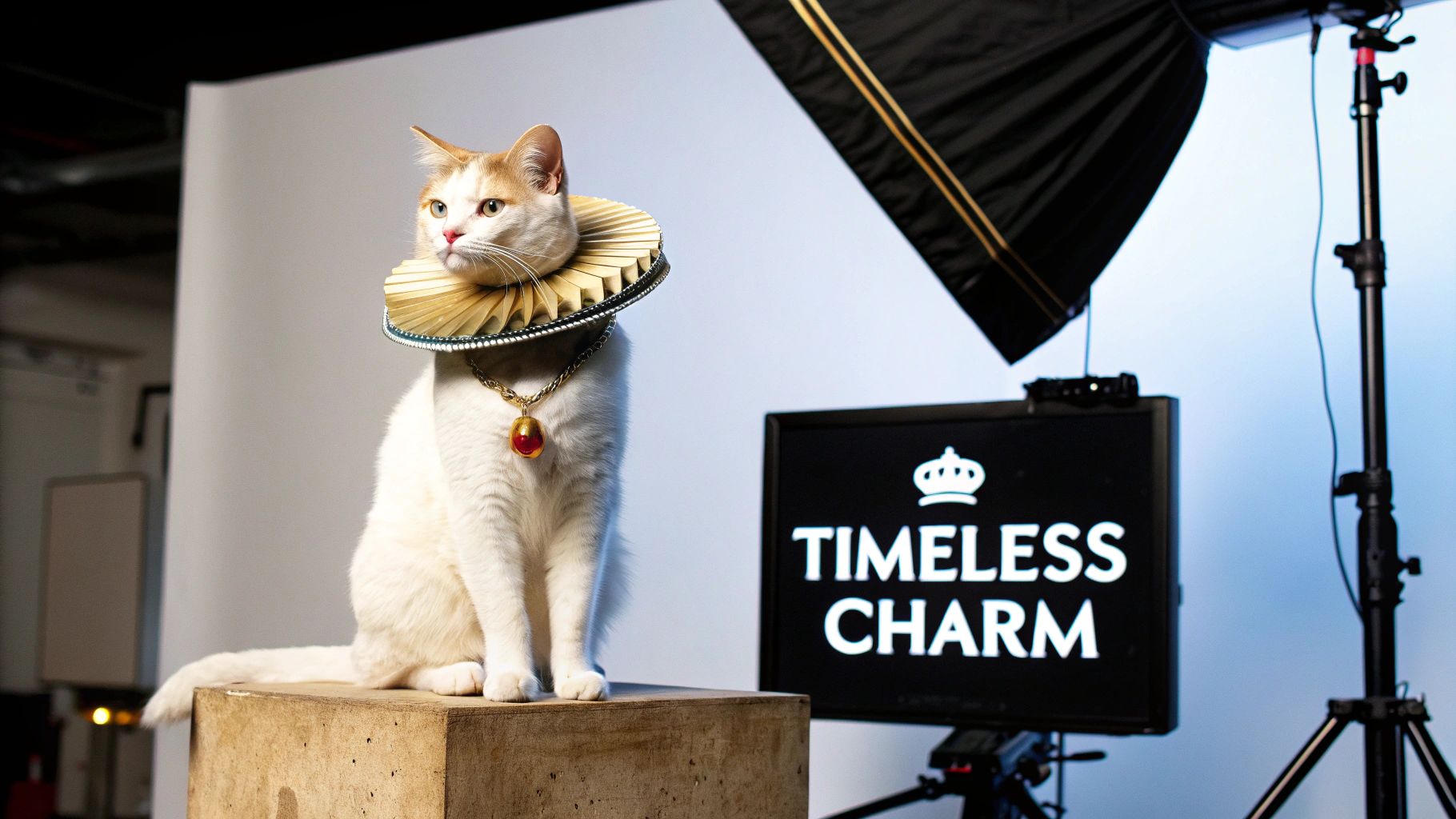
Let's be honest, this trend is about more than just getting a funny picture. It's a genuine celebration of the massive space our pets fill in our lives. We see them as family, and this unique art form finally gives them the royal status they so clearly deserve—at least, in our hearts. It’s a wonderfully quirky way to honor their one-of-a-kind personalities with a dash of unexpected grandeur.
The Magic is in the Mix
There’s something undeniably hilarious and charming about seeing a familiar furry face in a completely unexpected, stately setting. The contrast is just perfect. A goofy Golden Retriever decked out in an admiral's uniform or a perpetually grumpy Persian cat posing as a dignified queen? It's instantly delightful and practically made for sharing.
This fun juxtaposition does more than just make us smile; it taps into our deep-seated need to see our pets as more than just animals. We already give them complex personalities in our heads, and these portraits finally bring those imagined personas to life.
When we place our pets in these historical scenes, we aren't just creating a piece of art. We're telling a story. It’s a playful nod to how important they are, immortalizing them as the noble, silly, or stoic little characters we know and love.
A Modern Twist on Pet Devotion
The desire to celebrate our animal companions is bigger than ever, and it's driving some pretty big shifts. The boom in Renaissance-style pet portraits is part of a market where customized pet art has been growing by roughly 35% each year. People are constantly looking for unique and stylish ways to commemorate their animals, a trend you can see detailed on platforms like Purr & Mutt.
Ultimately, these portraits become so much more than wall decor. They’re treasured keepsakes and a timeless tribute to the joy and laughter our pets bring into our homes.
In this guide, I'll walk you through the entire process—from finding the right artist and snapping the perfect photos to making all the creative choices that will lead to a portrait you'll cherish forever.
Getting the Renaissance Vibe Just Right
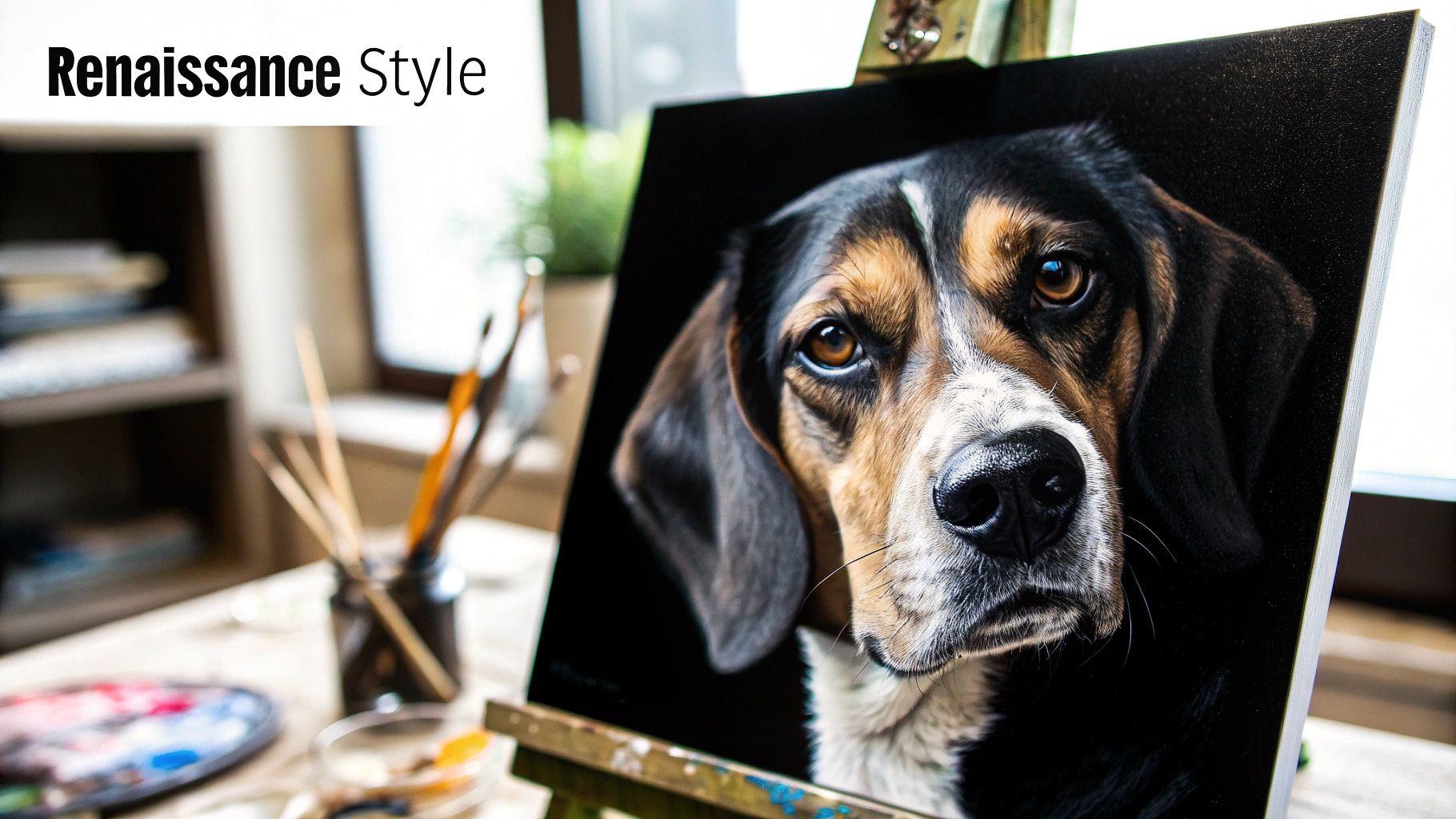
So, what’s the secret sauce that turns a fun photo of your pet into a genuine renaissance pet portrait? It's more than just putting them in a tiny ruff collar. It’s about capturing the feel of one of the most incredible periods in art history. Knowing a bit about these classic techniques will help you and the artist get on the same page to create something truly special.
One of the biggest giveaways of a Renaissance painting is the dramatic play of light and shadow, a technique called chiaroscuro. Think about those incredible portraits by Rembrandt or Caravaggio, where the subject seems to emerge from a dark, mysterious background, with light hitting them just so. It’s moody, it’s intense, and it gives the subject a powerful, three-dimensional presence.
For your pet, this means the light might catch the glimmer in their eye or highlight the soft curve of their ear, making them look impossibly noble and important. It’s pure drama.
Building the Perfect Old-World Scene
Lighting is just one piece of the puzzle. To really sell the Renaissance look, the colors and background have to be spot-on. Artists back then weren't afraid of rich, opulent colors that screamed luxury.
We're talking about palettes built on:
- Deep Jewel Tones: Imagine lush emerald greens, deep ruby reds, and brilliant sapphire blues—the kind of colors you’d see in the fine velvet and silk robes of a duke or duchess.
- Earthy, Moody Hues: Think rich, dark browns, burnished golds, and deep, inky blacks. These create those atmospheric backgrounds that make the subject pop.
- Regal Backdrops: The background is never an afterthought. It might be a heavy, draped curtain, a piece of ornate furniture, or even a peek at a stormy, pastoral landscape through a grand stone window.
All these little details come together to build a complete world for your pet. They stop being just a cat on a chair and become a timeless figure of aristocratic poise.
The goal isn't just to dress up your pet. It's to create an entire scene that feels authentic and artistically beautiful. Every single choice, from the texture of a collar to the shadows on the wall, helps craft the illusion.
And this isn't just a modern gimmick! Pets really did show up in portraits during the Renaissance, which stretched from about 1350 to 1620 CE. You'd often see them posing with their wealthy owners, acting as symbols of loyalty, status, and sometimes just pure companionship. Artists of the era prided themselves on painting animals with stunning realism, capturing their anatomy and unique spirit. If you're curious, you can learn more about the art of this period from the experts at Britannica. This historical connection is what gives your modern portrait that extra layer of cool.
How to Capture the Perfect Pet Photo
https://www.youtube.com/embed/nZnn9I4EZEM
The real secret to a breathtaking renaissance pet portrait isn't a tiny crown or a velvet cape—it's the photo you send the artist. A fantastic reference picture is the most critical piece of the puzzle, and you absolutely don't need a high-end camera to get one. Your phone is more than up to the task.
The mission is simple: capture your pet’s unique personality and features in crisp, clear detail. This photo is the artist's blueprint for translating your companion's noble (or goofy) spirit onto the canvas.
Find the Right Light and Angle
Great lighting is everything. Seriously. Stay away from harsh, direct sun, which throws dark shadows everywhere. And please, turn off the flash! It flattens your pet’s features and gives them that dreaded glowing-eye effect.
Instead, go for soft, natural light. Try posing your pet near a window or in a room filled with indirect sunlight. An overcast day outside is even better—the clouds act like a giant, natural softbox, giving you beautiful, even light.
Once you’ve found your light, get down on their level. Taking photos from your pet’s eye level makes for a far more intimate and engaging portrait. Looking down at them can make their head look huge and their body tiny, losing that personal connection. So, get on the floor and see the world from their perspective!
This guide shows exactly what a difference the right photo can make.
See how the "good" photos are clear, well-lit, and taken at eye-level? The "bad" ones are blurry, dark, or shot from an odd angle, which just doesn't work for a portrait.
Keep It Sharp and Focused
Clarity is king. The most important thing is to make sure your pet’s face—especially their eyes—is tack-sharp. Before you take the shot, just tap on their eyes on your phone screen to lock in the focus. An artist can't paint what they can't see, and a blurry photo makes it impossible to capture the little details, like the texture of their fur or that special glint in their eyes.
Your pet doesn’t have to be sitting perfectly still or staring right at you. Sometimes the best shots come from an inquisitive head tilt, a soft gaze into the distance, or even a sleepy, relaxed expression. What matters is capturing a moment that feels authentically them.
If you want to dig a little deeper, we have a whole guide full of tips for photographing pets to help you nail the perfect shot.
Ever wonder how artists turn that photo into the first draft of a painting? Getting a glimpse into how you can create your own custom pattern from any photo offers a cool peek into that initial design process. Just remember, it all starts with your photo—clear, well-lit, and eye-level is the recipe for a masterpiece you’ll cherish forever.
Choosing a Costume, Background, and Style
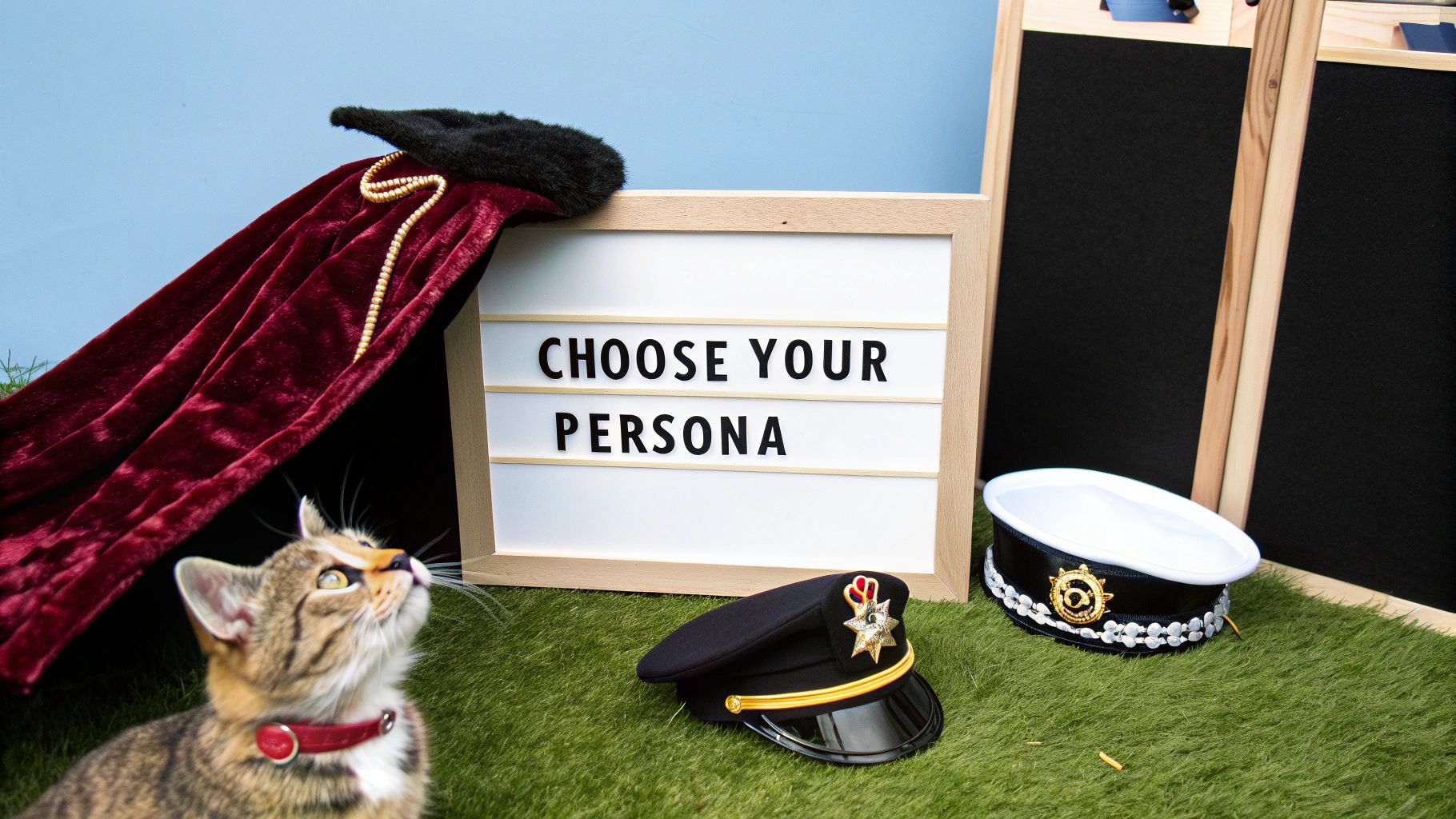
Alright, this is where the real fun starts. You've got the perfect photo, and now it's time to play casting director for your pet’s grand historical debut.
Is your goofy Labrador secretly a valiant knight? Is that serenely napping cat actually a dignified queen just waiting for her velvet robes? Choosing the right costume and setting is all about capturing your pet’s unique spirit in a way that’s both playful and timeless.
Think bigger than just an outfit. The best Renaissance pet portraits tell a story. A military uniform can speak volumes about loyalty, while a royal gown radiates pure elegance. And for that quiet, pensive cat who always seems to be pondering the mysteries of the universe? A scholar's robe might be just the ticket.
Matching Persona to Personality
The secret sauce here is picking an archetype that feels like a natural, if hilarious, extension of who your pet truly is. Don't try to shoehorn your boisterous puppy into the role of a stern judge if "court jester" is clearly a better fit.
The portraits that really sing—the ones that make you burst out laughing and say, "Yep, that is so them"—are the ones where the personality shines through.
Here are a few ideas to get the creative juices flowing:
- The Regal Ruler: Perfect for the calm, confident pet who owns every room they walk into. Think queens, kings, and majestic dukes.
- The Brave Warrior: An easy choice for loyal, protective, and high-energy dogs. Knights, admirals, and generals all fit the bill.
- The Wise Scholar: Ideal for that quiet, observant pet. Consider a philosopher, a poet, or even an astronomer.
- The Dashing Aristocrat: A great fit for a charming, slightly mischievous personality. Imagine them as a lady-in-waiting, a count, or a wealthy merchant.
Taking a moment to really think about this transforms the final painting from a simple costume picture into a genuine character study. It's the difference between a quick giggle and a story you'll treasure forever.
The Art of Selecting a Persona
To help you land on the perfect historical identity for your companion, I've put together this little guide. Think of it as a cheat sheet for matching their personality quirks to a Renaissance archetype.
| Pet Personality | Suggested Renaissance Archetype | Costume & Prop Ideas | Background Setting |
|---|---|---|---|
| Goofy & Playful | The Court Jester or Minstrel | Jester's hat, a small lute, colorful fabrics | A festive court or outdoor festival scene |
| Loyal & Protective | The Knight or Royal Guard | Suit of armor, helmet, family crest on a shield | Castle battlements or a forest on patrol |
| Regal & Aloof | The Queen or Empress | Ornate gown, crown, jeweled collar, scepter | A throne room, opulent chamber, velvet drapes |
| Curious & Intelligent | The Scholar or Alchemist | Robes, spectacles on the nose, scrolls, books | A cozy library, study with maps, a laboratory |
| Nurturing & Gentle | The Lady-in-Waiting or Healer | Simple but elegant dress, a basket of herbs | A serene garden or a castle window looking out |
| Adventurous & Bold | The Explorer or Sea Captain | Tricorn hat, spyglass, rugged coat, map | On the deck of a ship, a distant shore |
Remember, this is just a starting point! Feel free to mix and match ideas until you find the combination that perfectly captures your pet’s one-of-a-kind spirit.
Setting the Scene with Backgrounds and Props
Once you’ve nailed down the persona, the background and props are what will truly bring the scene to life. These little details add depth, context, and a welcome touch of authenticity.
A classic choice is a simple, dark, and moody backdrop. This mimics the chiaroscuro style of the Old Masters and guarantees your pet is the undisputed star of the show.
But a more detailed setting can really build on the story. An admiral might be painted with a stormy sea raging outside a cabin window. A queen could be seated near a grand, tapestry-draped throne, looking every bit the part.
Your pet's pose and expression, combined with the costume and background, create a complete visual narrative. A head held high exudes confidence, while a curious head tilt can add a touch of whimsy and charm.
To truly elevate the portrait, consider how the right props can enhance the story. Getting ideas from professional props for a photography studio can be incredibly helpful. Those small touches—a jeweled collar for a queen or a leather-bound book for a scholar—add layers of personality that make the final piece unforgettable. As the artist, I'll expertly blend all these elements together to create a cohesive masterpiece that feels just right.
Bringing Your Vision to Life with an Artist
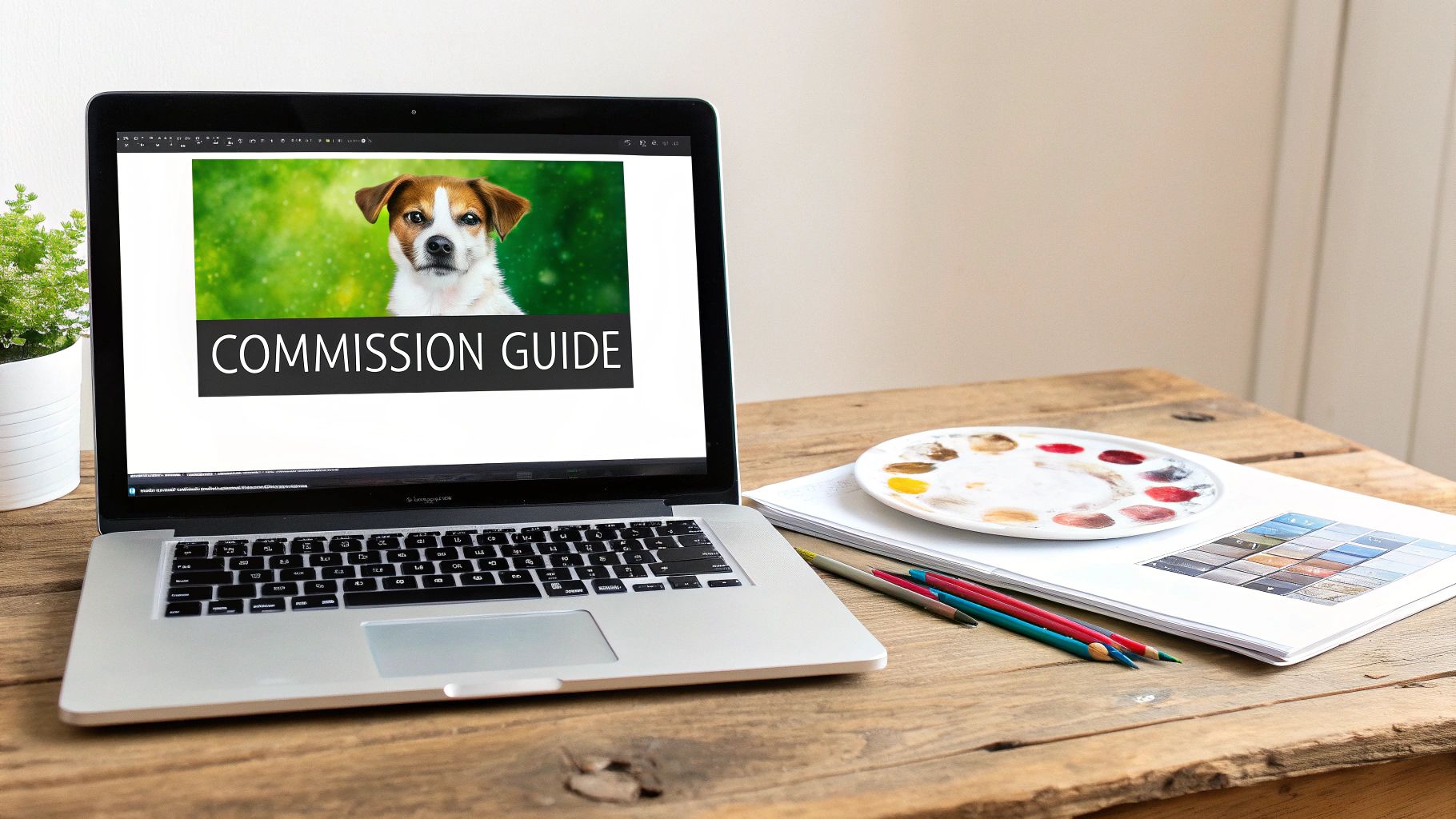
Ordering a custom piece of art can feel a little intimidating, but trust me, it’s an incredibly fun and collaborative journey. When you commission a Renaissance pet portrait, you're not just clicking "buy" on a product. You're actually teaming up with an artist to create something truly one-of-a-kind.
So, how does it all start? The first step is all you. You’ll get to browse through historical themes and pick the one that perfectly captures your pet's personality—maybe "The Admiral" for your brave terrier or "The Queen" for your regal calico.
Once you’ve found the perfect persona, you’ll upload that fantastic, well-lit photo you snapped earlier. This single picture is the artist's most crucial guide, so all that effort you put into getting a great shot really pays off here. At this stage, you'll also decide on the final format. Do you see it as a classic stretched canvas hanging over the fireplace, or maybe a sleek framed poster for the office? Each choice gives the final piece its own unique feel.
The Magic Behind the Curtain
After you send over your photo and creative brief, the artist rolls up their sleeves and gets to work. This is where the real transformation begins. They’ll use their digital artistry skills to seamlessly blend your pet's head onto the chosen Renaissance body, meticulously matching the lighting, fur texture, and colors to create a composition that looks like it was always meant to be.
In just a few business days, a digital proof will land in your inbox. This is your first look at the masterpiece-in-progress and your opportunity to give feedback.
Artist's Tip: When you get your proof, try to be specific with your notes. Instead of saying "something feels a bit off," point to what you see. For example, "Could the lighting on the left side of his face be a little softer?" This kind of detail helps the artist make precise changes and nail your vision.
Good communication is everything. A great collaboration between a pet owner and a custom pet portrait artist is what turns a good portrait into an unforgettable one. Don't be shy about asking for tweaks—we want you to be absolutely thrilled with it!
From Digital File to Your Front Door
Once you give the final, enthusiastic "yes!" to the digital proof, your portrait heads into production. Using high-quality, archival inks that make those rich colors pop, your artwork is printed on your chosen material, whether it's canvas or fine art poster paper.
After a few days for printing and careful quality checks, it's packed up and shipped right to your door. The hardest part is waiting, but it’s the perfect time to scout out the best spot to hang your new heirloom!
It's amazing to think that you're participating in a tradition that goes back centuries. During the 16th and 17th centuries in Northern Europe, artists like Jan van Eyck often included dogs in portraits as powerful symbols of loyalty and status. In fact, studies show that pets appeared in as many as 25-30% of high-status portraits from that era. This modern process continues that beautiful legacy, turning your beloved companion into a timeless piece of art.
Got Questions? Let's Talk Portraits.
Thinking about commissioning a renaissance pet portrait but still have a few things you're wondering about? That's completely normal. Diving into the world of custom art for the first time can feel a little mysterious, but I promise it’s a straightforward—and incredibly fun—process.
This is where I'll tackle all the common questions that pop up. My aim here is to make sure you feel totally comfortable and excited to see your best friend immortalized as the masterpiece they truly are.
Can We Squeeze More Than One Pet in There?
Of course! A portrait featuring multiple pets is one of my favorite things to do. It’s a wonderful way to showcase the unique dynamic of your furry (or feathered) family, whether you've got two dogs who are joined at the hip or a whole clowder of cats who rule the house together.
And don't worry about trying to wrangle them all for a perfect group photo. We both know that’s a fool's errand! All you need are good, clear photos of each pet individually. The artist will then work their magic, composing them into a single, seamless scene that looks like they were all posing together. Just keep in mind that portraits with multiple subjects are a bit more complex, so they often have different pricing.
What’s the Deal with Revisions and Approval?
Your happiness is what matters most, which is why a solid revision process is built right into creating your portrait. Any artist worth their salt wants you to be absolutely thrilled with the final piece.
It all happens during the digital proofing stage. Here’s a quick rundown of how it usually works:
- The Big Reveal: You’ll get an email with a digital proof of the portrait. This is your first look!
- Time for Feedback: Now’s your chance to ask for any reasonable tweaks. Being specific is a huge help. For example, instead of just saying "something feels off," try something like, "Could you make the red on his collar a little deeper, more like a ruby?"
- The Final Go-Ahead: Once every detail is perfect and you love what you see, you give the final thumbs-up.
Most services, ours included, offer at least one round of revisions to make sure everything is spot-on before the portrait goes to print.
So, How Long Does This Masterpiece Take to Create?
Good things come to those who wait, right? Custom art takes a little time, but the process is surprisingly quick.
Generally, you should see a digital proof pop into your inbox for review within 2-5 business days of placing your order. After you’ve given your final approval, printing and shipping will take another 5-10 business days. It's always smart to double-check the estimated timeline when you order, especially if you're aiming for a specific date like a birthday or holiday.
Remember, this isn't something pulled off a shelf. It's a one-of-a-kind piece of art being created just for you and your pet. That little bit of extra time is what makes it so special.
Do I Need to Hire a Pro Photographer?
Absolutely not! Your smartphone is more than capable of capturing the perfect reference photo. It’s not about having a fancy camera; it’s about how you take the picture.
Just focus on these three simple things:
- Find Good, Natural Light: Get your pet near a window. Soft daylight works wonders and avoids the harsh shadows you get from a flash or direct sun.
- Get on Their Level: Crouch down so you’re at eye-level with your pet. This angle creates a much more intimate and engaging portrait.
- Nail the Focus: Make sure their face, and especially their eyes, are sharp and clear. This is where their personality shines through, and it gives the artist all the detail they need.
A crisp, well-lit photo from your phone is the perfect starting point for your pet's grand debut as a Renaissance noble.
Ready to turn your beloved companion into a timeless work of art? At William Tucker Art, we live and breathe this stuff, specializing in creating stunning, personality-packed Renaissance pet portraits you’ll cherish forever.