
There's a reason pelican wall art has this incredible ability to turn a room into a coastal hideaway. It’s more than just a picture; it’s a feeling. A piece of pelican art can become the soul of a space, telling a quiet story of nature's resilience and grace. It's truly a timeless addition to any home.
What Is It About Pelican Art?
Have you ever just watched a pelican? There's something ancient and knowing about them, like they're the steady guardians of the coastline. When you bring pelican art into your home, you're doing more than just filling a blank wall—you're inviting in the very essence of that magnificent bird.
Think of it as opening a window to windswept beaches and the steady, calming rhythm of the ocean. The pelican represents a quiet strength and a peaceful presence, qualities that have a way of seeping into our busy lives and bringing a much-needed sense of calm. Tapping into that connection with nature is a wonderful way to create a restorative, relaxing atmosphere right at home.
The Pelican as a Symbol in Art
Artists have always been drawn to the pelican, not just for its unique shape but for what it represents. A painting or photograph of this bird isn't just a literal depiction; it’s packed with feelings and ideas that connect with us on a deeper level.
-
Grace and Poise: For such a large bird, the pelican moves with a surprising elegance. Whether it's soaring on the wind or gliding effortlessly onto the water's surface, that fluidity translates beautifully into art, adding a touch of sophisticated calm to a room.
-
Resilience and Endurance: Pelicans are survivors, built to withstand the coastal elements. Hanging a piece of pelican art can be a subtle, daily reminder of our own ability to weather life's storms.
-
Tranquility and Peace: What's more serene than the image of a pelican resting on a pier post as the sun goes down? It’s the definition of peaceful. This makes pelican wall art a perfect choice for creating a sanctuary in a bedroom, living room, or even a home office.
We all feel that pull to bring a piece of the outdoors inside. It's not just a decorating trend; it’s about our deep-seated need to feel connected to the natural world. This is a huge reason why nature-inspired decor has become so popular.
And the numbers back it up. The global wall art market was valued at around USD 53.05 billion back in 2022 and is expected to grow to USD 80.96 billion by 2030. That's a massive jump, showing just how much we all value having beautiful, meaningful art in our lives. If you're curious, you can read more about this market growth on kbvresearch.com.
Finding Your Perfect Pelican Art Style
Diving into the world of pelican wall art is a bit like birdwatching—each style you encounter has its own unique character and charm. Understanding the main differences between original paintings, fine art prints, and mixed-media pieces is the key to finding the one that feels right for your home and tells the story you want.
Think of it this way: an original painting is like a live, intimate acoustic set. It's a one-of-a-kind experience, full of raw emotion and the artist's personal touch. You can almost feel the texture of the brushstrokes. A high-quality art print, on the other hand, is like a perfectly mastered studio album. It captures the soul of the original with crystal-clear precision, making that amazing art accessible to everyone.
To help you decide, here’s a quick breakdown of what makes each type special.
A Quick Look at Pelican Art Types
This table gives you a bird's-eye view of the main types of pelican wall art, so you can quickly see which option might be the best fit for your space and budget.
| Art Type | Key Characteristic | Best For | Typical Price Range |
|---|---|---|---|
| Original Painting | One-of-a-kind, textured, direct from the artist | Making a statement; heirloom investment; a focal point | $500 - $5,000+ |
| Fine Art Print | Accessible, precise color, consistent quality | Decorating multiple rooms; curated collections; gifts | $50 - $400 |
| Mixed-Media | Multi-dimensional, highly textural, unconventional | Adding unique character; conversation starters | $200 - $2,000+ |
Ultimately, whether you choose the singular beauty of an original or the accessible elegance of a print, you're bringing a piece of coastal magic into your home.
Originals: The Soulful and Unique Choice
There's truly nothing like an original piece of art. Whether it's the rich, layered texture of oils, the vibrant pop of acrylics, or the soft, dreamy bleed of watercolors, an original holds the artist's energy. You can literally see and feel their process in the work. An oil painting, for instance, can give a pelican’s feathers a tangible depth that a completely flat print just can't match.
When you invest in an original, you're getting a piece that is yours and yours alone. It's a direct connection to the artist and a potential heirloom for your family.
Prints: The Accessible and Precise Option
Years ago, owning a piece from your favorite artist was often out of reach. Thankfully, modern printing has changed all that. High-end reproductions, especially Giclée prints, use archival-quality inks on beautiful papers or canvas to create art that’s incredibly faithful to the original. The color accuracy is stunning, and they're designed to last for decades without fading.
Fine art prints are a fantastic way to bring professional-quality artwork into your home without the price tag of an original. They give you the flexibility to build a whole gallery wall or find that perfect piece for a tricky spot.
If you're curious to see just how beautiful they can be, you can explore a whole collection of pelican art prints and imagine the possibilities for your own space.
This is a great time to talk about why pelican art connects with so many of us on an emotional level. It's more than just a picture of a bird.
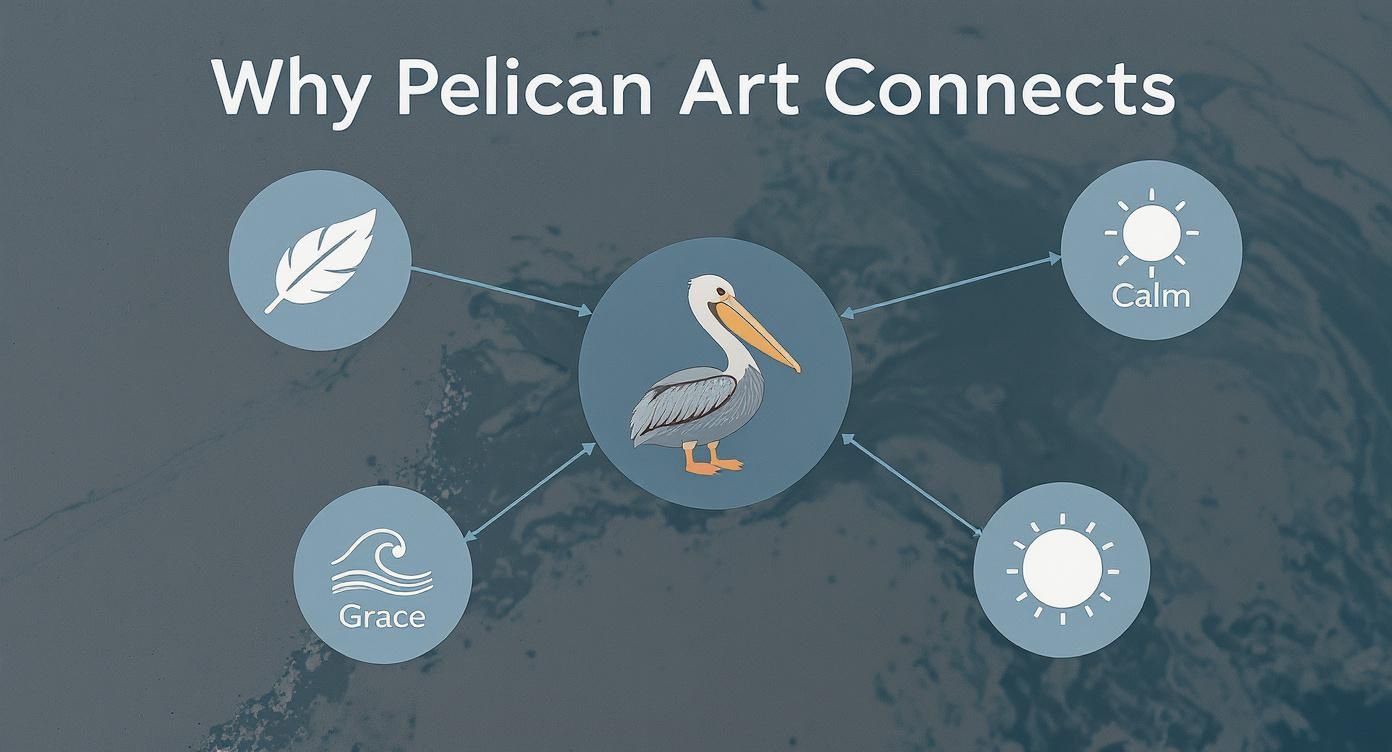
As you can see, a single image of a pelican can stir up powerful feelings of grace, resilience, and calm—reminding us of the quiet strength found in nature.
Mixed-Media: The Bold and Textural Approach
If you're looking for something that really breaks the mold, mixed-media is where the fun begins. This is where artists get to play, combining different materials to create something totally new. Imagine a pelican painted over a collage of old nautical charts, or with textural elements like fabric or reclaimed wood woven in.
This approach creates incredibly dynamic pelican wall art that just begs you to come closer and take a look. It’s an instant conversation starter. To get a feel for how a bold piece like this could work in your room, it can be super helpful to look at interior design mood board examples. It’s a great way to visualize how different textures and styles can come together.
How Materials Shape Your Artwork's Look
Picking the right pelican art is about more than just the image itself. The material it’s printed or painted on plays a massive role in the final piece's personality and feel. It’s like choosing between a leather-bound book and a modern paperback—the story is the same, but the experience is totally different.
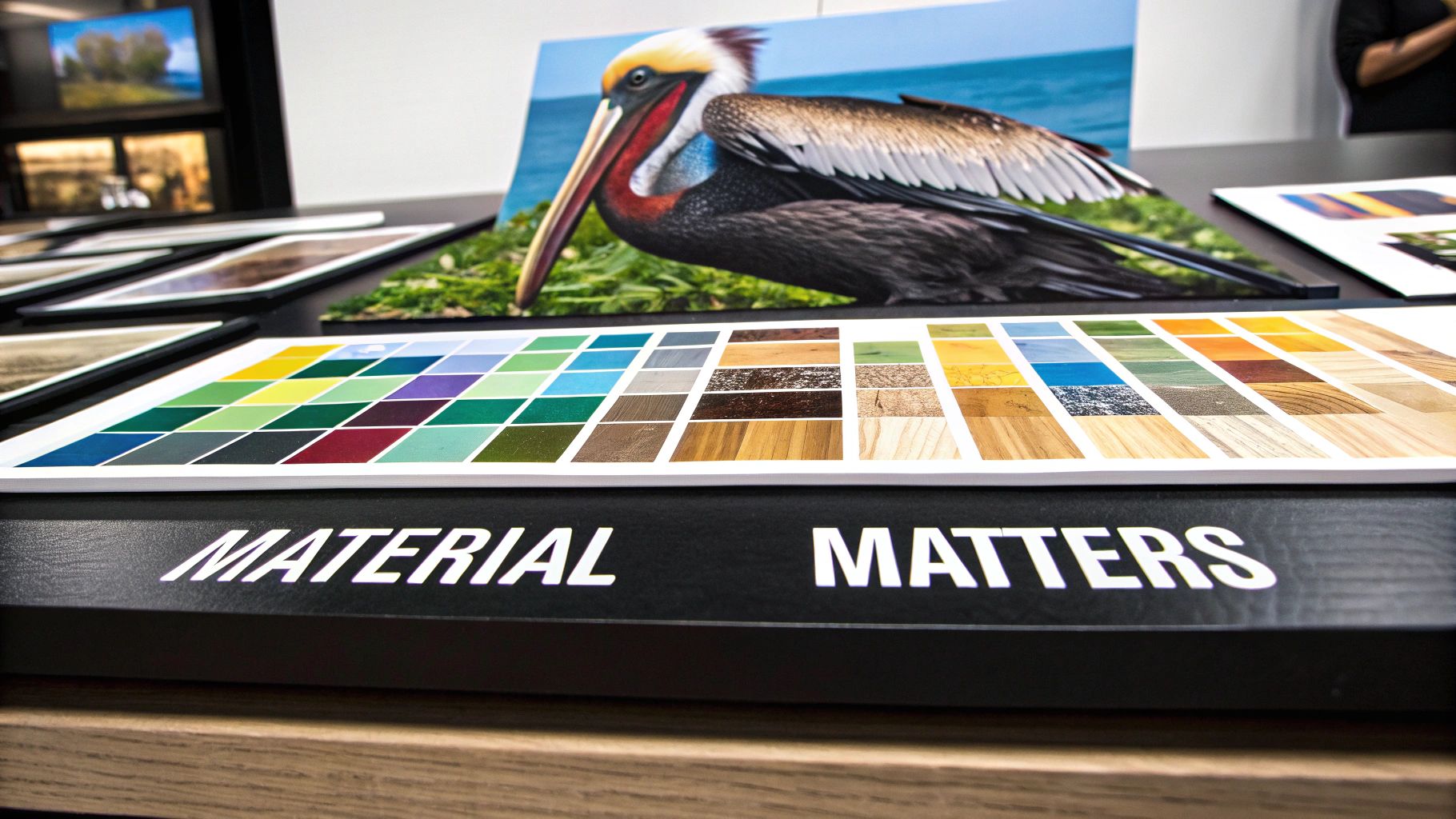
A gallery-wrapped canvas, for instance, gives off a modern, substantial vibe. The image wraps right around the edges of a sturdy wooden frame, so you don't need to add a formal frame. This creates a clean, three-dimensional effect that feels like it just came from a contemporary art show.
Then you have fine art paper, which offers a more classic, museum-quality elegance. This isn't just any paper; it's often an archival-grade cotton rag with a beautiful, subtle texture. It holds ink exceptionally well, making colors pop and fine details look incredibly crisp. It’s the perfect choice if you love the timeless look of a matted print behind glass.
Exploring Unique Textures
Beyond the usual suspects, many artists are getting creative with more rustic and industrial surfaces. These really make a piece stand out.
-
Wood Panels: Printing or painting on wood gives pelican art a wonderful, organic warmth. The natural grain peeks through the image, adding a unique texture that really connects the artwork to the natural world. It’s a fantastic fit for coastal, farmhouse, or rustic-inspired homes.
-
Metal Prints: If you want a sleek, ultra-vibrant look, nothing beats metal. The image is infused directly into a sheet of aluminum, which creates this incredible luminous quality that almost looks 3D. The colors are brilliant, and since the surface is water-resistant, it's a great option for a covered porch or even a bathroom.
This interest in unique materials is part of a much bigger picture. Pelican-themed art is a popular niche in the North American wall art market, which hit a staggering USD 9 billion in 2023. People are finding these incredible pieces in specialty shops and galleries, driving artists to experiment with new mediums. You can dive deeper into the North American wall art market trends on kenresearch.com if you're curious.
The Final Touch With Finishes
The finish is the last step, but it’s a big one. It protects the art and fine-tunes its appearance, much like how the right lighting can completely change the mood of a room.
A matte finish is your go-to for a soft, non-reflective surface that cuts out glare. It's a sophisticated choice that works beautifully in brightly lit rooms where you don't want reflections getting in the way.
On the flip side, a gloss finish makes colors sing. It gives the art an almost wet look, boosting vibrancy and contrast for a really punchy effect. Just be mindful that it's highly reflective, so it might not be ideal in a room with lots of direct sunlight.
Looking for the best of both worlds? A satin or semi-gloss finish is that perfect middle ground, offering a bit of color enhancement with much less glare than full gloss. Each one is a small choice that helps your new artwork feel perfectly at home.
Placing Your Art for Maximum Impact
Alright, let's get to the fun part—finding the perfect spot for your new pelican art. Where you hang a piece can completely change its vibe, turning it from just another picture on the wall into a real showstopper that pulls the whole room together. Think of it like setting a gemstone; the right placement makes the art truly sparkle.
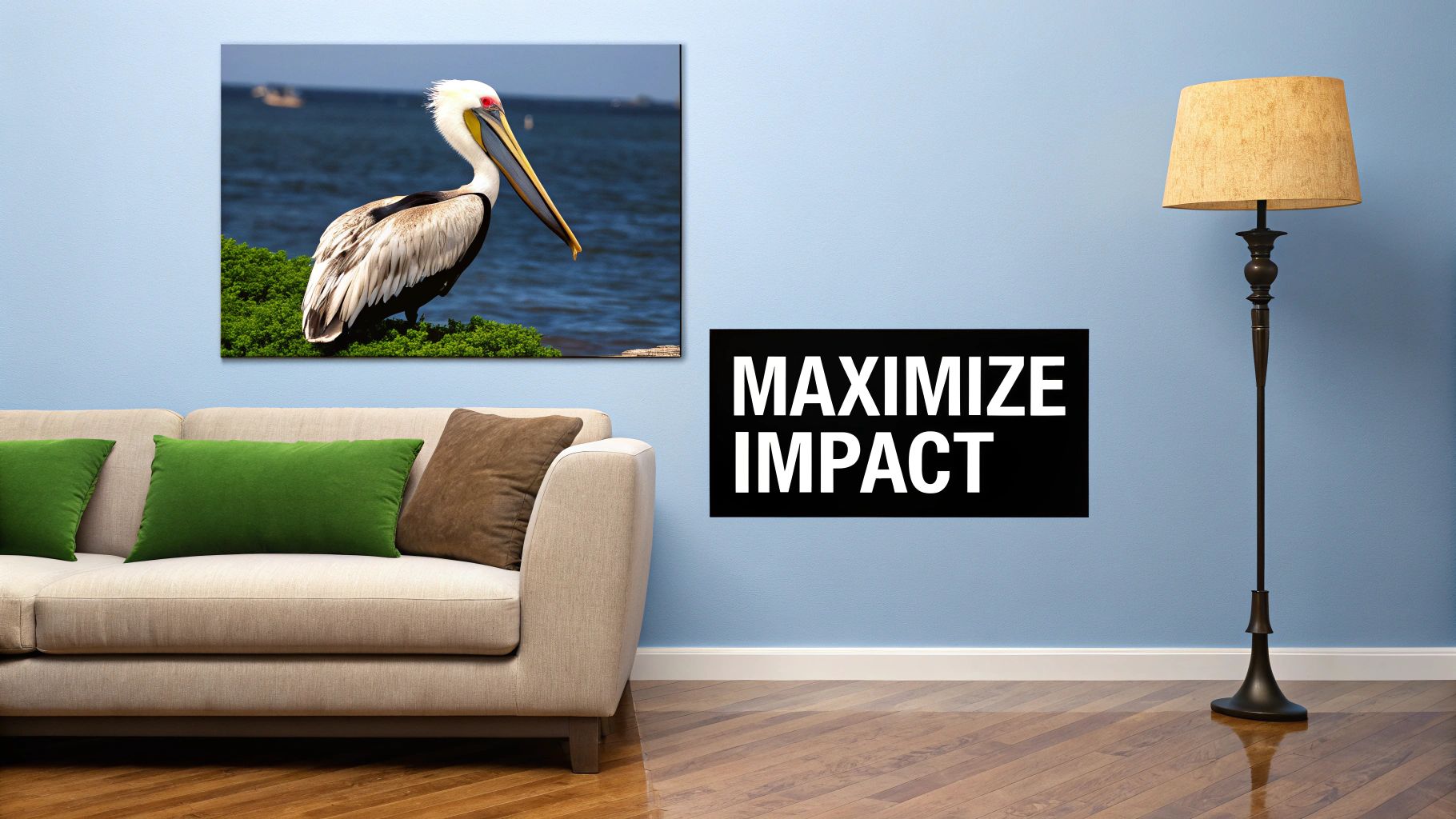
If there's one secret that professional designers swear by, it's hanging art at eye level. This simple trick keeps the artwork from feeling like it's floating away or sinking too low. It just feels right, connecting the piece to you and your space.
The Pro's Rules of Thumb
You don’t need an interior design degree to hang art like you know what you're doing. A couple of easy-to-remember guidelines are all it takes to make your pelican art look fantastic. It's all about creating a sense of balance and making the art comfortable to look at.
-
The 57-Inch Rule: Here's the magic number. Hang your art so the dead center of the piece is 57 inches from the floor. Why? That's the average human eye level, and it's the standard most galleries use. It puts the art in the sweet spot for viewing, whether you're standing up or kicking back on the sofa.
-
The Two-Thirds Guideline: When you’re hanging art over furniture—like a couch, a console table, or a headboard—choose a piece that's about two-thirds the width of what's beneath it. This simple proportion creates a beautiful visual anchor, so the art doesn't get swallowed by the furniture or look overwhelmingly massive.
A little tip from my own experience: grab some painter's tape and mark out the artwork's dimensions on the wall before you even think about grabbing a hammer. It lets you step back and really see how the size feels in the space. You'll thank yourself later!
Nailing these two simple guidelines will instantly make your room feel more polished and intentional, giving your pelican art the professional touch it deserves.
Creating a Coastal Gallery Wall
What if one piece just isn't enough? A gallery wall is a brilliant way to let your pelican art hang out with other coastal treasures. The secret to a great gallery wall isn't perfect symmetry—it's all about creating a balanced, collected look.
Start by arranging everything on the floor first. It's so much easier to play around with layouts this way. Place your largest piece, the pelican, a little off-center to serve as the anchor. From there, build outwards with your smaller items, keeping the spacing between frames consistent, usually around 2-3 inches.
Don't be afraid to mix things up to add personality and texture. You could pair your pelican print with:
- Framed nautical charts or vintage maps of your favorite coastline.
- Smaller abstract paintings with sea-glass blues and greens.
- Something textural, like a woven seagrass fan or a beautiful piece of driftwood.
- A few black-and-white photos from a memorable beach trip.
This approach transforms a blank wall into a personal story, with your pelican taking center stage. It’s a dynamic and deeply personal way to bring your love for the coast right into your home.
Bringing Your Vision to Life with Custom Art
What if the perfect piece of pelican wall art for your home doesn't exist yet? Sometimes, the art you're looking for is still just an idea in your head. That's where commissioning a custom piece from an artist like William Tucker comes in. It’s less like buying art and more like a creative journey you take together.
Think of it as a partnership. You get to be part of the magic, turning your vision into a real, tangible treasure that’s one-of-a-kind. It’s a chance to create something that fits your space and your story perfectly—a future family heirloom.
The Commissioning Journey Explained
So, how does commissioning a piece actually work? It's a really exciting process, and artists make sure you’re on the same page every step of the way, so there are no surprises—just a beautiful outcome.
It always starts with a simple conversation. This is your chance to share all your ideas—the exact size you need, the color palette that matches your room, or the specific feeling you want the painting to capture. You could bring your own reference photos, maybe of a pelican from a favorite family trip, or you can let the artist run with your concept and add their own creative flair.
"A commissioned piece of art tells a story that no print ever could. It's a dialogue between the collector's vision and the artist's hand, resulting in something truly irreplaceable."
This back-and-forth ensures the final piece isn't just stunning to look at, but also has a deep personal meaning. For those curating a completely bespoke environment, pairing unique art with the right illumination is key, which is why working with experts for custom lighting on the Central Coast can make all the difference.
Why Choose a Custom Piece
Going the custom route offers so much more than just getting a unique painting. It's about creating a perfect match between the art and the space it will live in.
- A Perfect Fit: Forget trying to make a pre-made size work. You specify the exact dimensions, guaranteeing the art fits your wall perfectly, whether it's a huge statement piece for a living room with high ceilings or an intimate work for a cozy corner.
- A Personal Narrative: The artwork becomes a true reflection of your taste and your story. It’s more than just decoration; it becomes a piece of your home's soul.
- An Enduring Connection: When you work directly with an artist, you build a connection to the art and its creator. That experience adds a priceless layer of history and meaning to the piece.
7. Caring for and Styling Your Pelican Art
Once you've chosen the perfect piece of pelican wall art, the real fun begins. Bringing it into your home is just the start; with a little bit of care and thoughtful styling, that piece will be a source of joy for a lifetime. Protecting your artwork is surprisingly simple, but it makes a world of difference in keeping the colors as vibrant as the day you got them.
Think of a quality frame as more than just a pretty border—it's your art's personal bodyguard. A sturdy frame fitted with UV-protective glass is your first and best defense, shielding your pelican print from the fading effects of sunlight and keeping everyday dust at bay.
Simple Care for Lasting Beauty
With a good frame in place, a few simple habits are all you need. The number one rule is to avoid hanging any art in direct, harsh sunlight. Even with UV-protective glass, constant exposure to intense light will eventually take a toll on the pigments.
When it's time for a little cleaning, a gentle touch is everything.
- For glass or acrylic: A soft, lint-free microfiber cloth is your best friend. If you need a bit more cleaning power, spray a gentle cleaner onto the cloth itself, never directly on the frame's surface.
- For canvas prints: Usually, a light dusting with a clean, dry, soft-bristled brush is all it takes to keep your canvas looking pristine.
Taking these small steps ensures your art remains a captivating focal point. It's a worthy effort, especially as nature-inspired decor becomes a more cherished part of how we design our living spaces.
This isn't just a fleeting trend. The global wall art market is expected to grow from USD 63.61 billion in 2024 to an incredible USD 118.79 billion by 2032, which really shows how much we all want to bring the beauty of the natural world indoors. You can see more details on the growth of the wall art market and see just how big this movement is.
Styling Your Pelican Piece
Styling your new pelican art is all about letting it have a conversation with the rest of your room. It’s about creating harmony.
A great way to do this is by pulling a few key colors from the painting and echoing them in your decor. Think about a blue-gray throw pillow that picks up the tone of the water, or a sandy-colored rug that mirrors the beach in the artwork.
To really lean into that coastal vibe, bring in natural textures. A piece of driftwood on a shelf, a few woven jute baskets, or breezy linen curtains can beautifully complement the art and make the whole room feel connected. For even more inspiration, check out our guide on coastal wall art ideas to get your creative juices flowing.
Your Questions Answered: Finding the Perfect Pelican Art
Diving into the world of art can feel a little overwhelming, but it doesn't have to be. Let's tackle some of the most common questions I hear from collectors and home decorators. My goal is to help you feel totally confident when you pick out that perfect piece.
How Do I Pick the Right Size and Style?
This is probably the number one question I get asked: "How big should the art be?" It's a great question, because scale can make or break a room.
A fantastic rule of thumb is to look for a piece of pelican wall art that takes up about two-thirds of the width of whatever furniture it's hanging above, like a sofa or a console table. If you're working with a big, empty wall? My advice is to go bolder than you think. A common mistake is choosing art that's too small, which can end up looking lost.
Here’s a simple pro tip: grab some painter's tape and outline the dimensions on your wall. Live with it for a day or two. This gives you a much better feel for the scale than just guessing.
Another thing people wonder is if pelican art can work in a room that isn't beach-themed. The answer is a resounding yes! It’s all about integration.
The goal isn't to make everything match perfectly. It's about creating a sense of harmony. A great piece of art should complement the room's overall vibe, not just its paint chips.
Focus on the color palette. A sleek, minimalist pelican print in a simple black frame can be a showstopper in a modern, contemporary space. On the other hand, a more rustic piece painted on reclaimed wood could bring just the right touch of character to a farmhouse-style living room.
What's the Deal with Art Print Editions?
Okay, let's clear up some art-world jargon. What's the difference between "limited edition" and "open edition" prints? It really just comes down to rarity.
- Limited Edition Prints: Think of these as a special, finite batch. The artist decides to produce only a specific number—say, 50 or 100—and that's it. Each one is usually numbered and signed. Because they're scarce, they often hold their value and can even appreciate over time, making them a bit more of an investment.
- Open Edition Prints: These prints can be reproduced as many times as needed. There's no cap on the number created, which makes them a wonderfully accessible and affordable way to bring art you love into your home without the collectible price tag.
Ready to find the piece that speaks to you? Come explore the full range of coastal and wildlife collections at William Tucker Art. You can see all the original paintings and high-quality prints right here: https://williamtuckerart.com.