
The zoo lover in your life already owns the merchandise. There's the plush gorilla from the gift shop, the elephant mug, the membership card in the wallet, the tote bag with penguins printed on it. You've bought a few of those yourself, and they were charming for about a week.
That's the trouble with souvenirs. Their meaning comes from a place and a day, so once the trip fades the object slides into clutter. Art doesn't behave that way. A painting or print of an animal hangs on a wall for years, and every visitor who stops to look at it asks a question, which is how a gift keeps working long after the paper comes off.
The upgrade in one line: trade the thing they bought at the zoo for a thing that makes them think about the animal every time they walk past it.
Zoos and aquariums draw more than 700 million visitors worldwide each year, according to a peer-reviewed study in Zoo Biology, which also reports roughly US$350 million a year in wildlife conservation spending by the worldwide zoo and aquarium community (Wiley, Zoo Biology). That's a big, conservation-literate audience, and they already know the animals.
So the buying logic runs in three steps. Decide original or print first, then bold color or earthy tones, then small wall or centerpiece. All five picks below are wildlife works by William Tucker, a New Orleans artist who paints endangered animals and the natural world, so every gift carries a habitat story instead of a zoo logo. They run from a coastal gator print to a wolf portrait, each matched to a room and a personality. While you're narrowing it down, browse the animal cafe blog for more animal-themed reading.
1. Bleau Gator Art Print 8x10 for the Small Wall and the First Apartment
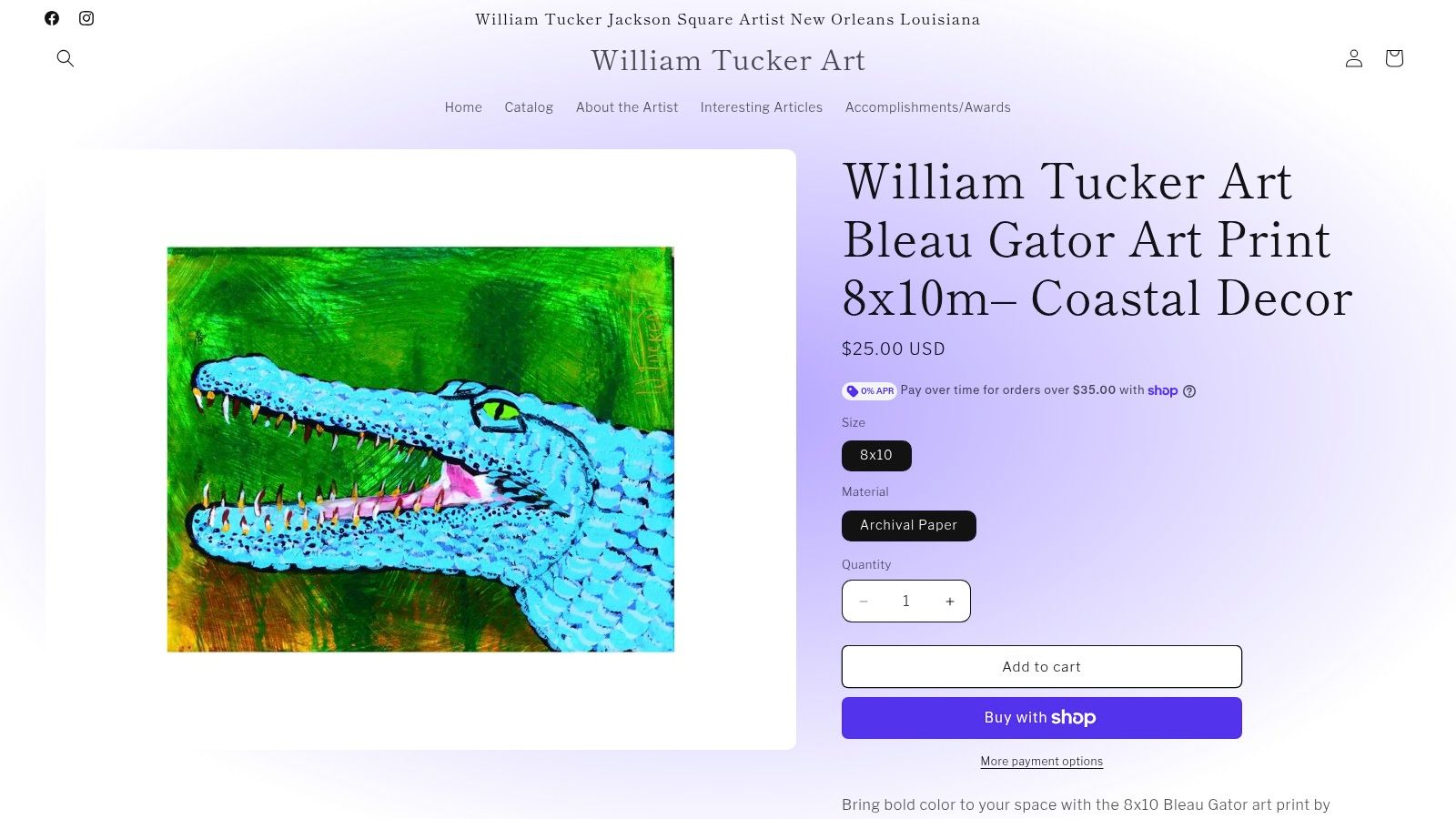
Put this on the narrow wall beside a bookshelf in a first apartment. The Bleau Gator art print sets a bright blue alligator against a vivid green ground, and its 8x10 size fits the tight spots that bigger art never reaches. It is a print, so buy it for the wall that needs color now, not for the milestone wall you are building slowly. The animal is magnetic, the palette is loud, and the conservation angle gives it more weight than generic zoo merch.
Taste matters more than budget here. This one suits the student in her first apartment, the renter who moves every two years, the colleague who keeps a zoo membership card in her wallet. Anyone whose wall is small and whose taste is loud.
Why the small format wins
- Standard frame, no custom order. An 8x10 drops into any ready-made frame off the shelf, so the gift is displayable the day it arrives.
- Cut a mat, not a hole. Give the print a 2-inch mat inside an 11x14 frame and it reads as a piece of art rather than a poster.
- Hang it at eye level. Center the piece around 57 inches from the floor, which is where eyes land first.
The audience for this is enormous and family-heavy. Association of Zoos and Aquariums reports more than 200 million visitors annually to AZA-accredited zoos and aquariums in the United States and overseas, with more than 50 million of them children. A print of a striking animal works for a six-year-old and a forty-year-old for the same reason: the color is the story. William Tucker is known for depicting endangered animals, and his work uses animals, bees, and oceans as central themes. That makes this a smart gift for someone who already cares about wildlife but wants the animal on the wall, not on a tote bag.
If you want to build the wall around it, coastal wall art prints covers spacing and how to pair two pieces without making the wall busy.
Practical rule: buy the frame and the mat before you hand over the print. A gift that's ready to hang goes up the same weekend. A print in a tube waits a year.
The verdict. Buy this one for anyone under 30, for a first apartment, or for the person whose taste runs brighter than their wall space. It is the lowest-risk pick in this list and the one most likely to get hung.
2. Orange Gator Painting for the Entryway or the Beach House
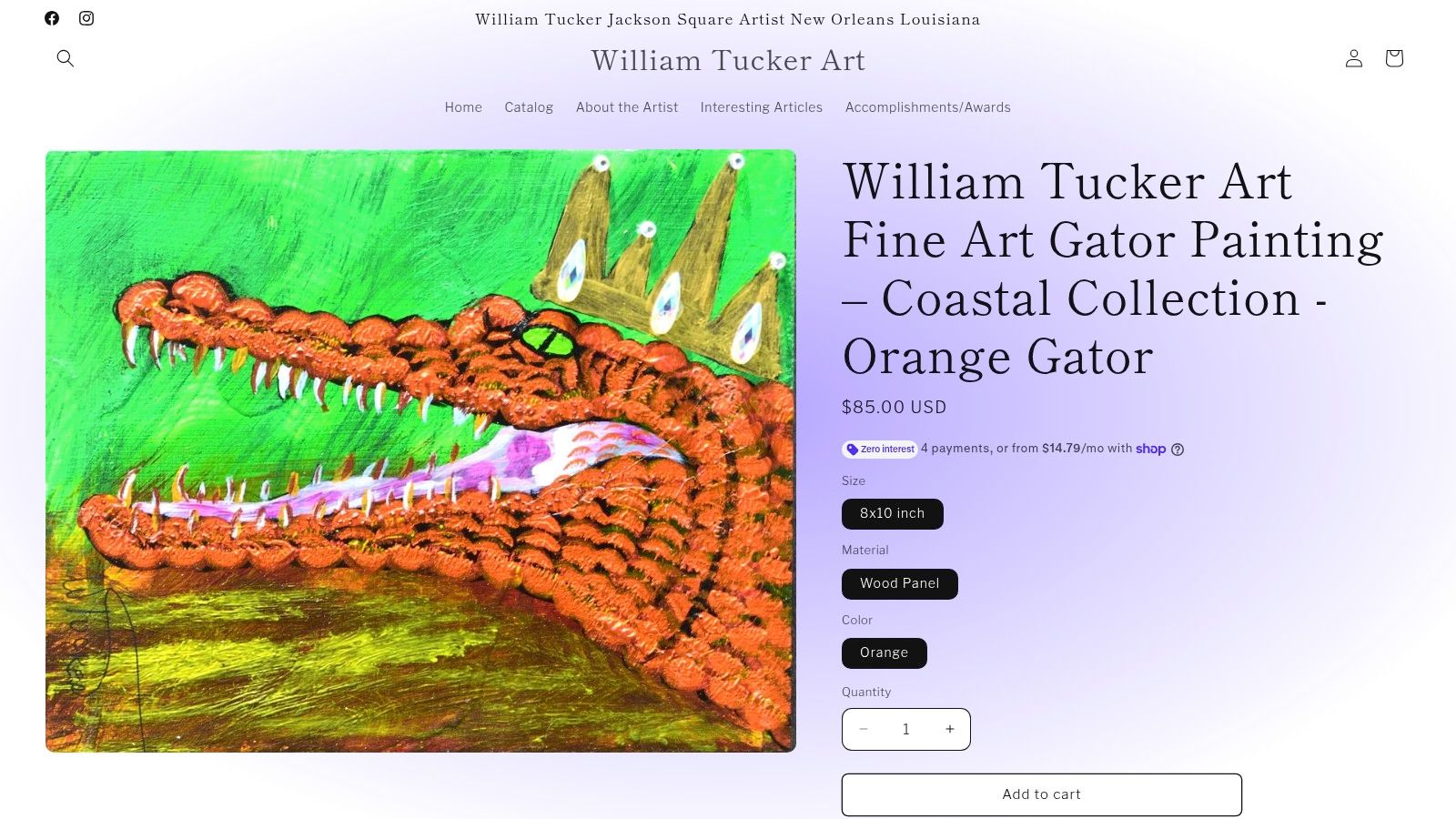
Buy the original when the room is the point. The Orange Gator painting comes from the Coastal Collection, acrylic on a quality surface, vibrant orange scales popping against a lush green background, with an open jaw that pulls attention from any angle. The brushwork carries real movement and texture, and that physical surface is exactly what a reproduction can only imitate.
Original or print
Three questions settle it.
- Is the room staying? A print suits a rental you'll leave in two years. An original belongs in a house, an entryway you chose, or a beach place that isn't going anywhere.
- Will people see it from a distance? The paint layer and the mark of the hand read across a hallway, so give it a wall people pass through rather than a corner they stand in.
- Is there an occasion worth marking? A housewarming, a retirement, a 40th birthday. Prints make lovely everyday gifts; originals make milestone gifts.
Hang it in a study, an entryway beside a console, or a living room with modern or coastal furniture. The coastal theme carries a beach house without needing a nautical chart in sight. One strong piece on a clean wall beats three small ones fighting for attention.
Then make the gift smarter by pairing it with a membership. A global study across more than 30 zoos and aquariums and over 6,000 visitors found positive biodiversity understanding climbing from 69.8% before a visit to 75.1% afterward, and the share of visitors able to name one action they could take to protect biodiversity rising from 50.5% to 58.8%, as ScienceDaily reported on the study. A membership keeps that momentum going, because every return visit is another hour in front of the animals and another chance for the lesson to stick. The painting hangs at home and asks the question; the membership answers it in person.
Buy the original for the person with a finished room and a milestone worth marking. If they're still renting, buy the print from pick one and put the difference toward a zoo membership.
3. Zebra at Waterhole Original for the Collector's Centerpiece
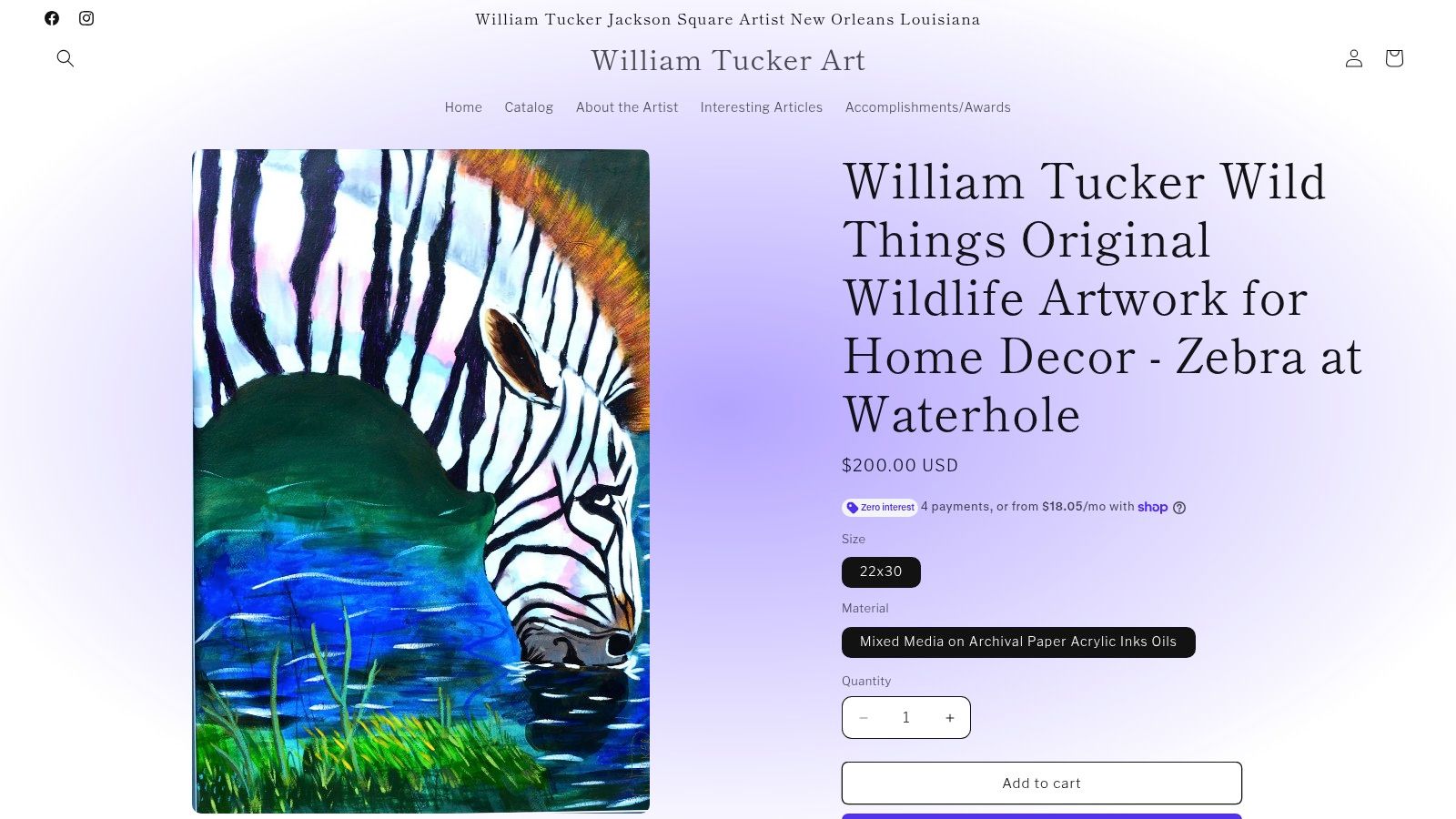
The wall over the sofa is the hardest wall in a house. It gets seen every day and it gets judged by every guest. The Zebra at Waterhole original from the Wild Things Collection answers it: a zebra drinking, black-and-white stripes cutting against vibrant blues and greens, built from acrylic, oil and mixed media, with a reflection in the water that adds depth. It's an original painting of an animal in habitat, not a portrait floating in white space.
This is the piece for the collector who has already bought two prints and wants the authentic piece. It also works for the person who wants one good object instead of five cheap ones.
The paperwork that makes art a gift
A certificate turns a canvas into an educational gift. Put four things on it.
- The species, properly named. Scientific name, native range, habitat and current conservation status, with the status source named on the page.
- The object, properly described. Medium, dimensions, surface, signature, and for prints the archival ink and paper specifications.
- A short conservation explainer. One page, reviewed by a zoo educator, museum curator or an established conservation body, explaining the pressure the species faces.
- How to read the certificate. A line telling the recipient these details exist, since recipients may not look inside an envelope twice.
The learning payoff is measurable. A 2025 multilevel meta-analysis found zoo-led interventions produced a small-to-medium positive effect on conservation knowledge, attitudes and reported biodiversity-supportive behavior, with an average effect size around d = 0.40 (95% CI 0.28 to 0.51), while formal education interventions reached roughly d = 0.57, per the Conservation Biology meta-analysis. Information attached to the object is the whole point.
For background on how the animals get chosen in the first place, this piece on zoo animal artwork explains the reasoning behind species selection.
The verdict. Buy the original for the collector with a centerpiece wall and a certificate habit. Ask for the species sheet, frame it behind the painting in the same size, and let people read it while they admire the canvas.
4. Tropical Companions Parrot Painting for the Color Maximalist
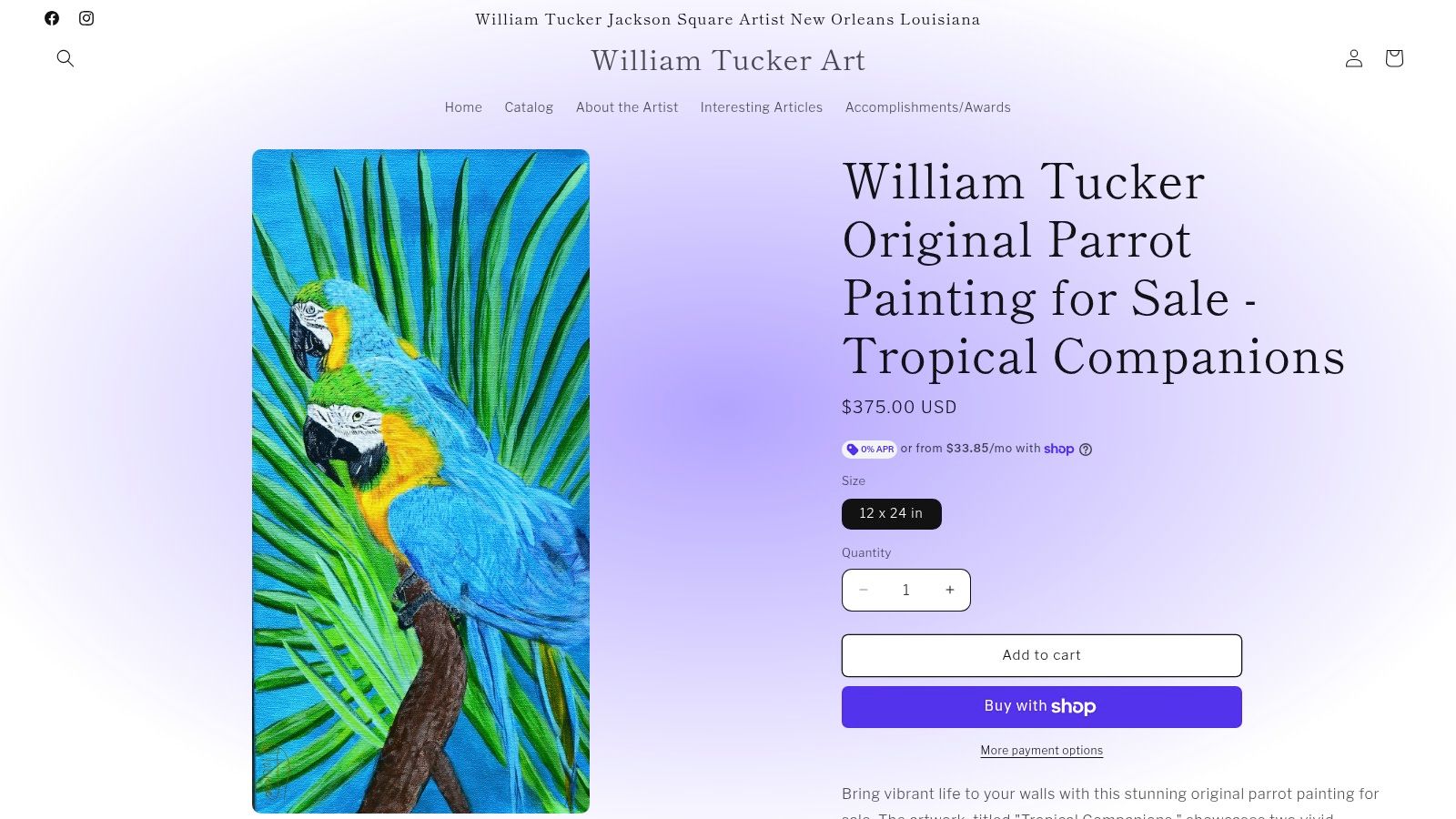
A sunroom with green plants, bright cushions and a teal ceramic lamp needs one bold animal to pull it together. Choose the Tropical Companions parrot painting. Two vivid blue-and-yellow parrots sit among lush green leaves, with layered acrylics and mixed media giving the feathers movement and texture. The rich background pushes the color forward, and the unframed format keeps the focus on the birds. Hang it in a hallway gallery, a bright kitchen corner or above a low console where the parrots can do the decorating.
Buy this for the friend who owns the patterned rug and still wants more color. It suits the parrot obsessive, the zoo member who stops at every aviary, and the person whose guest room needs one cheerful anchor. Choose the original when the wall is permanent and the giftee collects wildlife art. Choose a print when the room is rented, the budget is tighter, or the recipient wants the colors in more than one space. That print-versus-original decision matters here because the painting is color first, subject second. It should land in a room that already welcomes saturation.
A calmer version of a colorful gift
Some recipients love animals but dislike loud rooms, surprise gatherings and crowded shops. A 2024 professional-practice article on zoo accessibility describes sensory support kits with noise-reducing headphones, fidget items and visual supports, and calls for clearer communication about wheelchair access and sensory conditions (accessibility article in the tandfonline archive). Use that as your cue to present the gift with control and clarity.
Give the recipient three practical choices:
- Send the image first. A preview before you buy takes the guessing out of it, and the recipient gets to decide about a painting they will live with.
- Write the description large. A plain-language card in 16-point type beats a tiny tag with a paragraph on it.
- Offer the digital option. A printed file for a screen or a wall planner lets someone enjoy the work without needing wall space.
The verdict. Buy it for the tropical-color maximalist, the parrot obsessive and the animal lover who shops fast when the gift shop gets loud. Put it where color is welcome, and keep the framing simple.
5. Ghost of the Forrest Wolf Painting for the Moody Minimalist
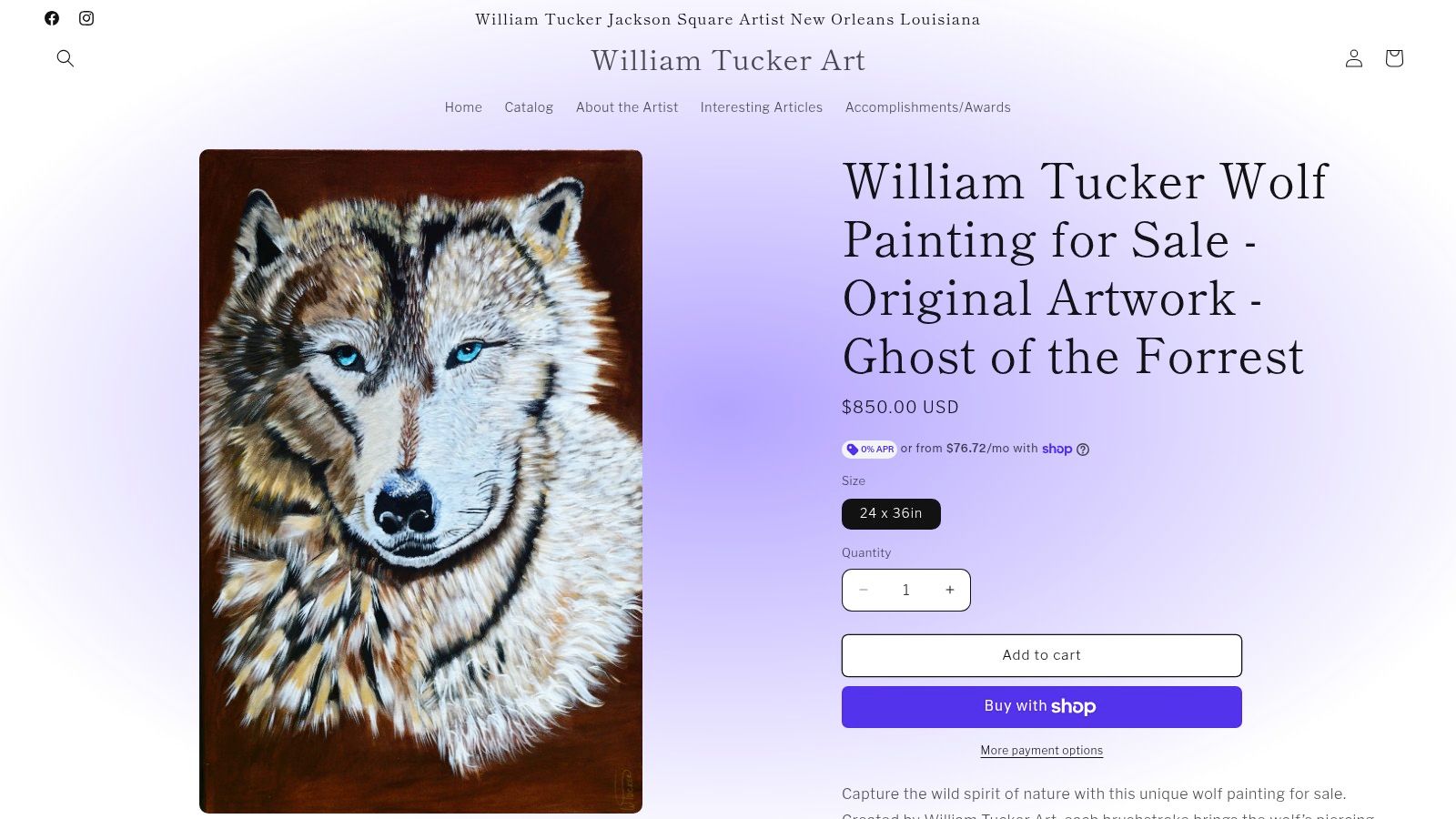
Leather sofa, dark wood, one lamp, no pictures on the wall for a year. That room is waiting for the wolf painting, Ghost of the Forrest, with its piercing blue eyes, detailed fur and deep brown background. Buy it for the giftee who wants one strong animal portrait and nothing fussy around it.
Earthy tones make this the easiest of the five to live with. It suits a study, an office, a reading chair in low light, and the person whose idea of decorating is removing things rather than adding them. Hang it where the wall can go quiet. Skip it over a busy console or a pattern-heavy room. This wolf wants space.
The transparency checklist
Every animal-themed gift deserves a quick values check, including wildlife art. Como Friends reported that its gift shop generated $2.6 million in merchandise sales and enabled more than $1.5 million in 2025 investments in animal care, horticulture, education and related operations, and says shoppers increasingly seek gifts that communicate the zoo's conservation story (Como Friends). That standard is useful here. A gift can look good and still raise fair questions.
Ask three questions before you buy. Where does the money go? What does the material claim actually mean? Will this object still be on the wall in five years?
- Money. A purchase funds a retailer, a zoo or a field project, and those are three different things. Ask which one.
- Materials. "Eco-friendly" isn't a standard. Named certifications and specific recycled content are.
- Durability. Ask what the piece is made from, how it is finished and whether it needs framing before it goes up.
This wolf works best as a conservation-minded gift, not as a claim of direct fieldwork. William Tucker is known for depicting endangered animals, and the broader wildlife paintings for sale collection includes lions, tigers, elephants, butterflies and more. Prints are offered from the Wild Things Collection, so choose a print when the room may change and an original when the wall needs a centerpiece.
The verdict. Buy it for the moody minimalist with a dark-walled study and one empty hook. Choose the original if the wall is the centerpiece, and the print if the room is still in flux.
The 5 Wildlife Art Gifts Side by Side
Choose by what you want the gift to emphasize: the animal, the color, or the painted surface. This comparison keeps those differences visible without repeating the room-by-room recommendations.
| Item | Surface and format | Deciding detail |
|---|---|---|
| Bleau Gator Art Print | 8×10 art print | Choose for the image rather than a painted surface. |
| Orange Gator | Original acrylic painting | Choose when bold color is the priority. |
| Zebra at Waterhole | Original acrylic, oil, and mixed media | Choose for the combination of painting materials and a peaceful subject. |
| Tropical Companions | Original acrylic and mixed media; unframed, ready to hang | Choose for tropical color without making framing part of the gift. |
| Ghost of the Forrest | Signed original canvas, ready to hang; prints also available | Choose the original for the painted object, or a print for the wolf image. |
The strongest distinction is print versus original. Buy the format the recipient will appreciate, with William Tucker's endangered-animal focus giving the gift a connection to nature beyond its decorative role.
How to Choose the Right Piece and Gift It Well
You already know which piece fits which person. Now make the gifting part work, because gifts for zoo lovers fail at the logistics more often than at the choosing.
Order two weeks before the occasion so a print has time to arrive before you need it. Pre-buy a frame in the standard size for prints: an 8x10 frame for the Bleau Gator print, no measuring required, and have it wrapped before the painting even lands. Originals are a different call. Either ship unframed and let the recipient choose the finish, or budget for a simple float frame in a dark wood or black finish, which suits every one of these pieces because the subjects carry enough color on their own.
Ship direct to the recipient with a handwritten note in the box. A painting that arrives with a frame and a note reads as a decision, while a tube on the doorstep reads as a task. If you want to start a gallery wall for them, pair the main piece with a smaller second work on the same subject family and hang them 2 to 3 inches apart.
One more option worth knowing about. If the zoo lover's favorite animal happens to be the one sleeping on their sofa, commission a pet portrait. William Tucker takes pet portrait commissions, and the client supplies the photographs and reference materials. A $50 non-refundable deposit starts the work, and when there are no delays on the client's end, most portraits are completed and delivered within 7-10 business days of receiving all reference materials, so plan backwards from the date you need it. Send sharp, well-lit photos taken at the animal's eye level, since the artist can only paint what the photos show. Final payment is due on delivery, and payments can be made online at williamtuckerart.com.
Pick the room first, then the animal, then the format. That is the whole method, and it beats another tote bag every time.
Gifts for zoo lovers are easy to buy badly and hard to buy brilliantly, and the difference comes down to whether the gift lasts longer than the visit. William Tucker Art paints endangered animals and the natural world from New Orleans, and the shop carries originals from the Coastal and Wild Things collections, prints of those works, and pet portrait commissions for the animal who already lives with you. Start with the room you are buying for, choose the animal that fits it, and visit William Tucker Art to see what is available now.