
If you think of zoos as just a collection of animals for public viewing, it's time for a fresh perspective. The modern, accredited zoo has evolved far beyond that old model. They've become frontline command centers in a global fight to save species from extinction—acting as modern-day arks for animals on the brink.
How Zoos Became Arks for Endangered Species
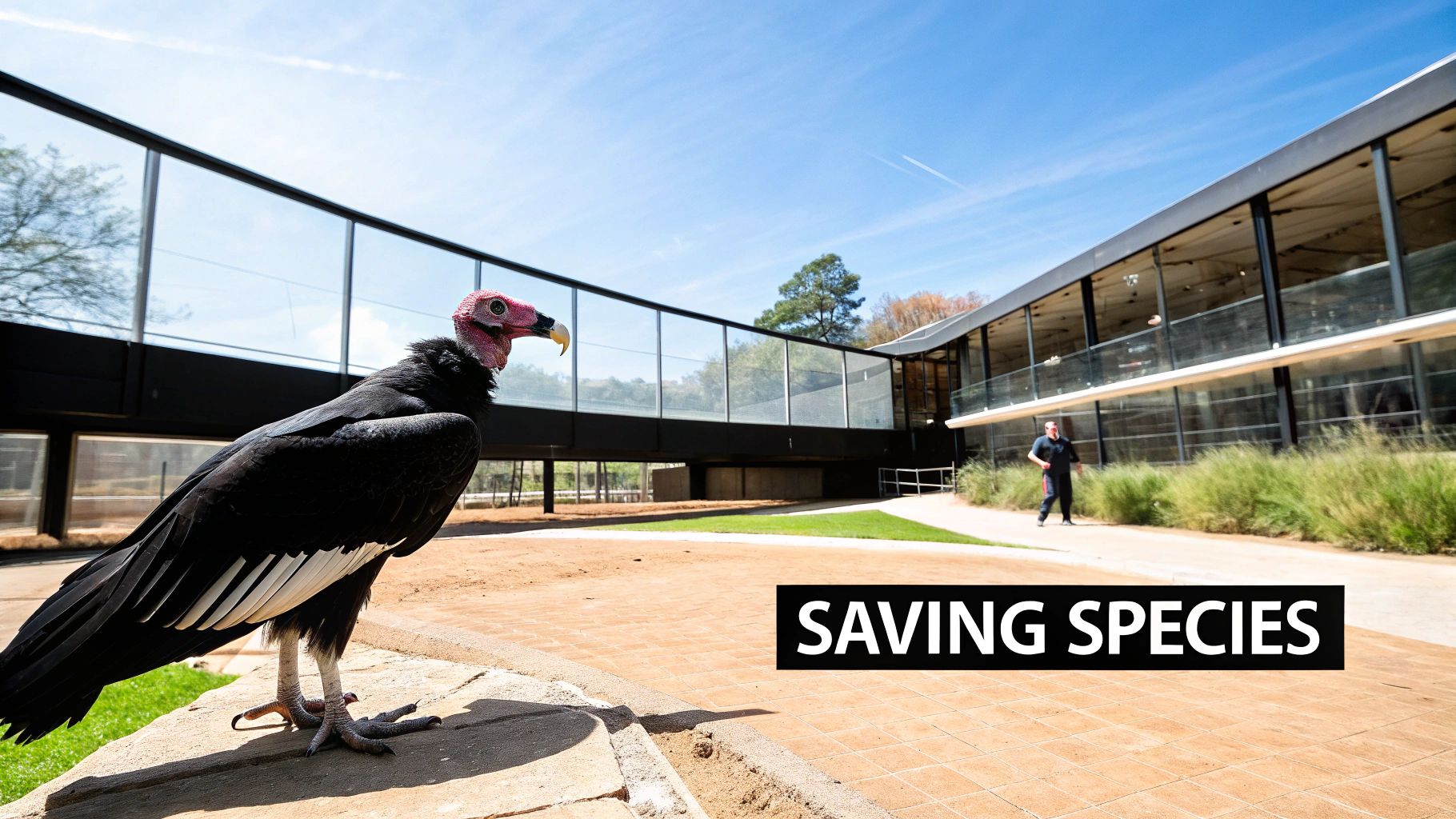
The journey from simple menageries to sophisticated hubs of biodiversity is one of the biggest success stories in wildlife preservation. In the past, a zoo's main job was to put animals on display. Today, that mission has completely flipped to prioritize conservation, research, and public education.
What drove this change? A harsh and unavoidable reality: countless species were disappearing because of habitat destruction, poaching, and our changing climate. Conservationists quickly learned that protecting animals only in their natural environments (in-situ conservation) wasn't always going to be enough. They needed a backup plan.
The Rise of Ex-Situ Conservation
This is where ex-situ conservation comes in—the crucial practice of protecting a species somewhere other than its native home. Accredited zoos stepped up to become the primary centers for this work, creating safe havens where animal populations could be stabilized, studied, and hopefully, one day, returned to the wild.
Think of it like a living genetic library, where every animal is a priceless volume of biological data. This is the heart of what modern zoos do. To really grasp their impact, it helps to understand why zoos are important in conservation across the globe.
One of the most powerful tools they have is the Species Survival Plan (SSP). You can picture an SSP as a high-stakes, highly scientific matchmaking service for animals. It’s a cooperative program where experts from zoos and aquariums work together to manage the population of a specific species.
Through SSPs, specialists meticulously track the genetic lineage of individual animals. This allows them to recommend breeding pairs that will produce the healthiest, most genetically diverse offspring, preventing inbreeding and strengthening the species' long-term chances of survival.
The story of the California Condor is a perfect, and truly stunning, example. By the 1980s, only 22 of these majestic birds were left on the entire planet. In a bold and desperate move, they were all captured for a zoo-based breeding program. Today, thanks to that SSP, hundreds of condors are flying free again.
The Science Behind Zoo Breeding Programs
Walk behind the public-facing habitats at any good zoo, and you'll find a hidden world driven by data, genetics, and a massive global network. These conservation breeding programs aren't just about putting two animals together and hoping for the best. They are a sophisticated, highly coordinated effort to create a genetic safety net for species on the brink of disappearing forever.
Think of it like a living library. Each animal's DNA is a unique and irreplaceable book. The goal isn't just to make more copies of the same popular title, but to preserve the diversity of the entire collection. Zookeepers and conservation scientists are the librarians, carefully managing this collection to keep it healthy and resilient for the future.
Global Matchmaking for Survival
At the heart of it all is a massive, data-driven matchmaking service. Experts use sophisticated programs, most notably Species Survival Plans (SSPs), to analyze the entire population of a species spread across hundreds of zoos worldwide. They pore over family trees, genetic markers, and health histories to figure out which animals should be paired to produce the healthiest, most genetically diverse offspring.
This is all about avoiding inbreeding, which can cause a cascade of health issues and cripple a species' ability to adapt. It's why an Amur leopard in Ohio might be identified as the perfect genetic match for another in a zoo in Australia. This incredible level of coordination ensures the "backup" population in human care remains strong—a vital insurance policy in case their wild counterparts vanish completely.
It's a stark reality, but these programs have never been more critical. Right now, over 10,000 species are classified as critically endangered, and for more than half of them, the numbers are still dropping. You can dive deeper into these urgent conservation needs and recent scientific findings on Mongabay.
The Studbook: A Species’ Family Tree
The absolute key to all this genetic matchmaking is the studbook. A studbook is exactly what it sounds like: a massive, detailed ledger that tracks the history and ancestry of every single animal within a managed population.
- Who's related to whom? It’s a meticulous family tree, recording every birth, death, and transfer between zoos.
- How important are their genes? Each animal gets a "genetic value" score based on how rare its genes are. An animal with underrepresented genetics is a VIP.
- Where should they go next? Studbook keepers use this data to recommend which animals should be moved to other zoos to form the most ideal breeding pairs.
This is how a coordinator can confidently arrange a pairing between two red pandas living on different continents, knowing their offspring will bring a fresh, healthy dose of genetic diversity to the entire global population.
It's Not Just About Genetics
While the genetic data is the foundation, a successful program is about so much more. Zookeepers are masters of animal behavior and work incredibly hard to create environments that encourage natural courtship, mating, and parenting. They might change the lighting, adjust the temperature, or reconfigure social groups just to get the conditions right, mimicking what the animals would experience in the wild.
The challenges are immense, from making a pair of Sumatran tigers feel secure enough to mate to hand-rearing a tiny, delicate flamingo chick. It takes a profound understanding of biology, a ton of patience, and a serious financial investment. But it’s this painstaking work that keeps hope alive for so many endangered species in zoos, acting as a final barrier against extinction.
The Long Journey from Captivity to the Wild
For many zoo breeding programs, the ultimate dream is a homecoming: reintroducing animals back into their natural habitats. But this journey is a lot more complicated than just opening a gate. It's a painstakingly planned, multi-stage process designed to give these animals the absolute best shot at survival.
This work starts years before an animal ever sets foot on wild soil. Conservationists essentially become teachers, showing zoo-born animals the critical survival skills their wild cousins would learn from their parents. This is a wildlife boot camp, covering everything from finding food and knowing which plants are safe to eat, to recognizing and avoiding predators.
From Protected Paddock to Wild Prairie
The reintroduction itself is usually a gradual affair. Many animals go through what’s called a “soft release,” where they’re moved to large, protected enclosures right inside their native habitat. This controlled space lets them get used to the local climate, sounds, and smells of the wild, all while having a safety net of extra food and vet care if things get tough.
This whole process is built on a foundation of careful planning and data, ensuring the health and genetic diversity of the species are protected from the very beginning.
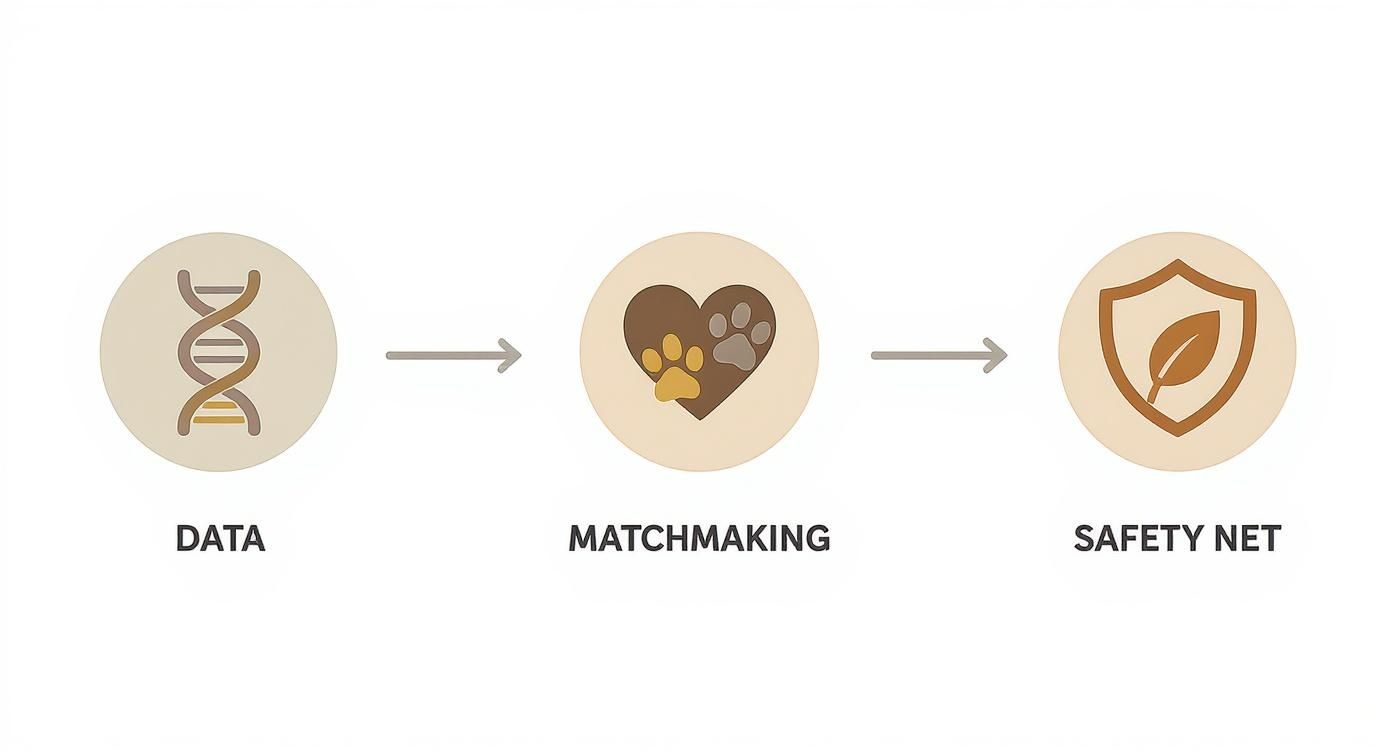
As you can see, it all starts with smart matchmaking to build a strong "safety net" population. That healthy, genetically diverse group is the non-negotiable first step before a single animal can even be considered for release.
One of the most powerful success stories is the Black-Footed Ferret. Once thought to be extinct, a tiny handful of them were discovered and became the founders of a zoo-led breeding program. Today, thanks to years of careful reintroductions across the American prairies, thousands of these feisty little carnivores are back where they belong.
The Tough Realities of a Homecoming
Despite these incredible wins, the road is never easy. The single biggest hurdle is often the lack of a safe place to go. The very threats that pushed a species to the brink in the first place—deforestation, pollution, and human development—have to be tackled before any animals can return. You can get a deeper look into these challenges by exploring different endangered species recovery plans.
Securing a safe, long-term habitat is the most critical factor for a successful reintroduction. Without a protected home to return to, even the best-prepared animal faces an uphill battle for survival.
On top of that, conservationists have to work closely with local communities to prevent human-wildlife conflict, making sure people and animals can coexist peacefully. It's true that initial survival rates for released animals can be heartbreakingly low as they face this new world of challenges.
But every single reintroduction, whether it succeeds or fails, provides priceless data. It helps scientists fine-tune their methods and improve the odds for the next generation. It’s a long, tough journey, but it’s a powerful step toward restoring a little more balance to our planet.
Meet the Animal Ambassadors in Our Zoos
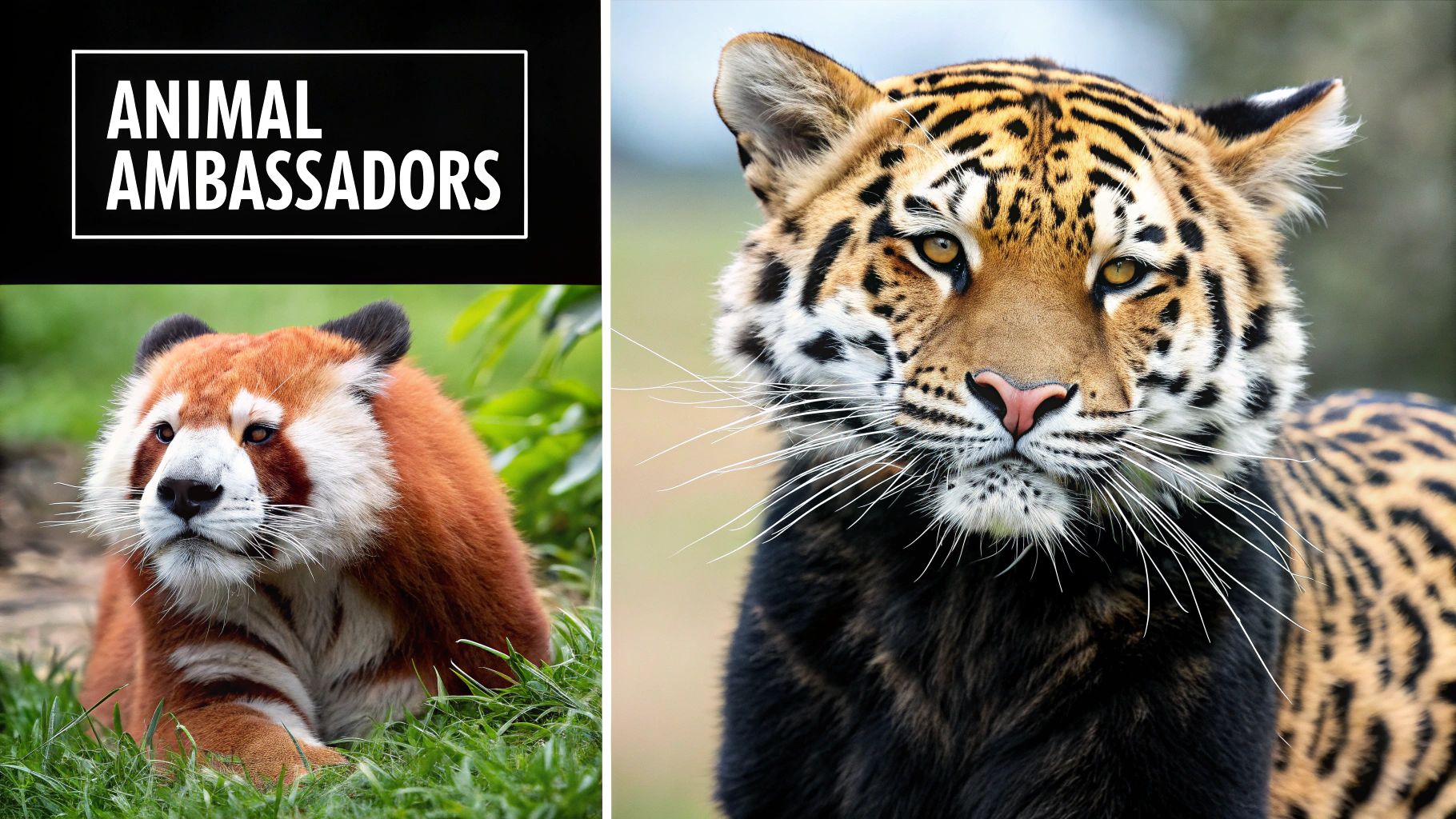
Facts and figures can tell you a species is in trouble, but nothing hits home quite like looking one of its members in the eye. That's the power of animal ambassadors. These are the individuals in our zoos who represent their entire species, putting a face to the abstract threat of extinction and inspiring millions to care.
When you see one of these incredible animals, you’re not just looking at an exhibit. You’re meeting a vital link in a worldwide survival plan. Let’s get to know some of the most recognizable endangered species in zoos and the critical roles they play in the fight for their future.
Sumatran Tiger
The Sumatran Tiger is a magnificent, powerful predator—and the smallest of all tiger subspecies. It's also in terrible danger. Found exclusively on the Indonesian island of Sumatra, their wild population has plummeted to just a few hundred.
The threats they face are relentless:
- Deforestation: Their forest home is being wiped out at an alarming rate, mostly for palm oil plantations, which shrinks their hunting grounds and food supply.
- Poaching: These tigers are still illegally hunted for their skins, bones, and other parts to be sold on the black market.
Zoos are on the front line of this battle. They coordinate a global breeding program that acts as a genetic insurance policy, maintaining a healthy and diverse population. This work also directly supports conservation on the ground by helping to fund anti-poaching patrols in Sumatra.
Red Panda
Often mistaken for a tiny bear or a strange raccoon, the Red Panda actually belongs to its very own unique family. These impossibly charming, tree-dwelling mammals inhabit the Eastern Himalayas and southwestern China, but their population has dropped by an estimated 50% in the last two decades alone.
Habitat loss and fragmentation are their biggest enemies. As forests are cleared for logging and farming, their territories become isolated patches. This makes it incredibly difficult for red pandas to find mates, leading to inbreeding and a weaker wild population.
Zoo breeding programs for Red Pandas are designed to counteract this. By carefully managing genetics and moving animals between zoos, conservationists create a robust and healthy backup population, preserving the species' genetic blueprint for the future.
Amur Leopard
The Amur Leopard is one of the rarest big cats on the entire planet. At one point, its wild population crashed to a terrifying low of just 30 individuals. Intense conservation work has helped those numbers creep back up, but the species is still living on a knife's edge.
Native to the forests of the Russian Far East and northern China, these leopards are threatened by poaching, forest fires, and human development. Just as importantly, the tiny wild population has a dangerously small gene pool, leaving them extremely vulnerable to disease.
This is where zoos play an absolutely essential role. The global zoo population of over 200 Amur Leopards holds far more genetic diversity than the entire wild population combined. This captive group is the key to potential reintroduction programs, offering the genetic vitality needed to give the species a real fighting chance.
Here's a quick look at how these and other key species are being helped through zoo-based conservation.
Conservation Focus Species in Zoos
| Species | IUCN Status | Primary Threats in the Wild | Zoo Conservation Focus |
|---|---|---|---|
| Sumatran Tiger | Critically Endangered | Habitat loss (palm oil), poaching | Global breeding program, genetic reservoir, funding for anti-poaching patrols |
| Red Panda | Endangered | Habitat fragmentation, logging, agriculture | Managed breeding to ensure genetic diversity, public awareness campaigns |
| Amur Leopard | Critically Endangered | Poaching, small gene pool, habitat loss | Maintaining a genetically diverse "ark" population for future reintroductions |
| Orangutan | Critically Endangered | Deforestation for palm oil, illegal pet trade | Rescue and rehabilitation support, breeding programs, advocacy for sustainable palm oil |
| Black Rhino | Critically Endangered | Poaching for horns | Secure breeding sanctuaries, genetic management, supporting anti-poaching tech |
Each of these animal ambassadors tells a story of survival against the odds—a story where zoos are writing a critical chapter of hope.
How Zoos Help Wildlife Beyond Their Walls
When you visit a zoo, the animals you see are just the tip of the iceberg. The real story of modern zoo conservation reaches far beyond the fences, deep into wild habitats, research labs, and communities all over the world.
Think of your ticket as more than just an entry fee. It's an investment in a global mission.
A huge part of a zoo's impact is its role as a hub for scientific research. So many studies that are essential for saving species—like understanding genetics, reproductive health, or developing new vaccines—are almost impossible to pull off with elusive animals in the wild.
Zoos provide a safe, controlled environment where scientists can gather this critical data without harming the animals. What they learn then directly helps wild populations by shaping smarter conservation plans, from restoring habitats to providing better vet care for rescued wildlife.
Powering Conservation in the Field
Good zoos are also major financial supporters of boots-on-the-ground conservation. A portion of every ticket, membership, and souvenir you buy often goes straight to fieldwork. This support is the lifeblood for projects protecting our planet’s most fragile ecosystems.
This funding pays for critical work, including:
- Anti-poaching patrols that guard rhinos, tigers, and elephants.
- Habitat restoration efforts, like replanting forests for orangutans.
- Community outreach programs that help local people and wildlife live together peacefully.
Beyond their own projects, many zoos are part of a massive support network. They often contribute to and benefit from resources like grants for animal rescue, creating a safety net for animals in need. And it's not just big institutions doing the work.
In fact, the scale of this cooperative effort is immense. Data shows that approximately 5,376 individual endangered animals are cared for across 433 facilities worldwide, including zoos and private keepers. A remarkable 64% of these participants are private individuals who voluntarily breed highly endangered species in their own homes, showcasing a powerful citizen-led conservation movement. Discover more insights about this global animal population management on citizen-conservation.org.
Creating a Generation of Advocates
Perhaps the most profound impact zoos have is through education. They give millions of people a chance to connect with living, breathing animal ambassadors, creating a sense of awe and empathy that a documentary or statistic just can't match.
Seeing an Amur leopard or a Sumatran tiger up close sparks a genuine curiosity. It makes the threats they face feel real and urgent. That emotional connection is what turns a fun family outing into a lifelong passion for conservation, inspiring a casual visitor to become a dedicated advocate for the planet.
Practical Ways You Can Help Protect Wildlife
Feeling inspired by the incredible work zoos are doing for endangered species? The best part is, you don't have to be a scientist to make a real difference. Your choices and actions can create a ripple effect, contributing to the global effort to protect wildlife.
The most straightforward way to help is by putting your support behind the institutions on the front lines. When you're planning a day out, look for a zoo accredited by the Association of Zoos and Aquariums (AZA) or a similar reputable organization. This simple check ensures your ticket money is funding top-notch animal care and legitimate conservation programs.
Make Your Support Count
Beyond just buying a ticket, you can get even more involved. Most zoos have programs that let you contribute directly to their preservation work, which can be a really rewarding experience.
- Symbolically Adopt an Animal: This is a fantastic and fun way to provide direct funds for an animal's food and care, and it often helps support conservation projects for their cousins in the wild.
- Donate to a Conservation Fund: Many zoos run specific funds that finance crucial on-the-ground efforts, like anti-poaching patrols or restoring damaged habitats.
Your support for accredited zoos is an investment in a global safety net. These institutions are vital partners in larger conservation strategies, helping to safeguard vulnerable populations and giving them a fighting chance for survival.
Everyday Actions for Global Impact
Conservation also begins at home with the small decisions we make every day. If you're curious about how daily habits can make a difference, we've put together a detailed guide on how to protect endangered species. You'd be surprised how tiny adjustments can protect habitats thousands of miles away.
Think about making more sustainable choices when you shop. For example, avoiding products with unsustainable palm oil is a huge help, as its production is a major driver of deforestation in the homes of tigers and orangutans.
You can also just use your voice! Share what you've learned with friends and family. In the United States alone, the Endangered Species Act protects 1,677 species, which shows the massive scale of the collaborative effort zoos are part of. You can discover more about the complete US wildlife guide on curlewcall.org. Every single action adds up, helping secure a future where wildlife can thrive.
Common Questions About Zoos and Conservation
It’s completely natural to have questions about the role zoos play in conservation. The whole topic is filled with nuance, so let's tackle some of the most common questions that pop up when people think about protecting endangered animals in zoos.
Are All Zoos Actually Involved in Conservation?
That's a great question, and the short answer is no. Not all animal parks are on the same page. The gold standard to look for is accreditation from organizations like the Association of Zoos and Aquariums (AZA).
Getting that AZA seal of approval is a big deal. It means the institution is held to incredibly high standards for animal welfare, participates in critical scientific research, and actively funds conservation projects out in the wild. Those unaccredited, often roadside, attractions? They usually don't have the resources or the mission to do that kind of vital work.
Is It Better to Donate Directly to Projects in the Wild?
You might be surprised to learn that these two things aren't in competition—they're deeply connected. Think of it this way: accredited zoos are often the financial and scientific powerhouses behind those on-the-ground conservation projects. They funnel not just money, but decades of expertise, into protecting wild habitats.
When you donate to an accredited zoo's conservation fund, you're really making a two-for-one investment. You're supporting the crucial genetic safety net of their breeding programs while also backing the global partnerships working to save wild places. It’s a beautifully holistic approach.
Why Can't All Zoo Animals Just Be Released Back Into the Wild?
This is the dream, isn't it? The ultimate goal for any conservation program is to see animals thriving in their natural homes. But sadly, it's often not that simple.
The biggest hurdle is that for many species, their wild homes no longer exist or are incredibly dangerous due to deforestation, human encroachment, and climate change. Releasing an animal back into a world without a safe place for it to live would be a death sentence. For now, the healthy populations in zoos act as a critical insurance policy—a living ark—while conservationists fight tooth and nail to protect and restore the wild habitats they need to survive.
At William Tucker Art, we aim to capture the soul of these incredible animals, hoping to inspire a deeper connection to the wild. Explore our wildlife collections and find a piece that speaks to you.