
So, you're thinking about a watercolor portrait of your dog? It's a beautiful way to capture your best friend's spirit. A watercolor isn't just a painting; it’s a living, breathing piece of art where vibrant pigments and water dance together on paper. It's about turning a favorite photo into a story told with color and light, creating a masterpiece you'll cherish for a lifetime.
Why Choose a Watercolor Portrait for Your Dog
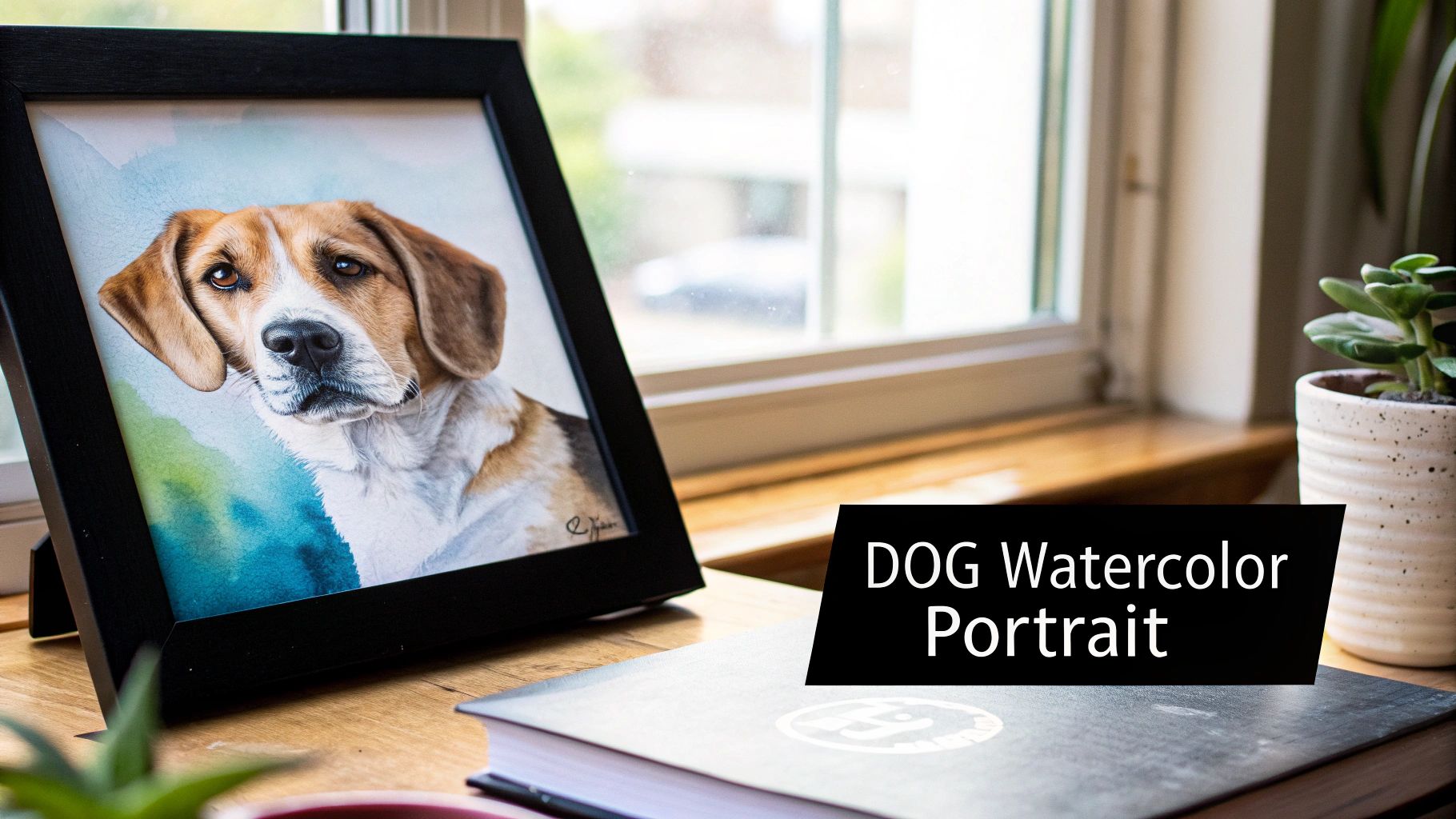
When you decide to commission a portrait, picking the right medium can feel like a big decision. But watercolor has a certain magic that other styles just can't replicate. Think of it this way: a photograph captures a moment, but a watercolor captures a feeling. It brings emotion, fluidity, and a touch of soul to the image.
The very nature of watercolor—with its transparent layers and the beautiful, often unpredictable way the colors blend—is perfect for bringing a dog's personality to life. It's the ideal medium for capturing:
- Softness and Texture: Those gentle washes are amazing at suggesting the fluffy, varied texture of fur without laboriously painting every single strand.
- Life and Energy: The way the colors bleed and swirl on the paper perfectly mirrors the boundless energy and playful spirit of our pups.
- Expressive Eyes: Watercolor can create a luminous, "wet" look in a dog's eyes, capturing that soulful gaze every pet owner knows so well.
A Medium That Breathes Life into Art
Unlike thicker paints like oil or acrylic that sit on top of the canvas, watercolor pigment actually soaks into the fibers of the paper. This technique creates a radiant quality. Light travels through the paint, bounces off the white paper beneath, and shines back out, giving the artwork a beautiful inner glow. It’s this luminosity that makes dog portraits watercolor paintings feel so vibrant and alive.
This unique quality hasn't gone unnoticed. The demand for watercolor pet portraits has exploded over the last few decades, and for good reason. It has become a go-to medium for artists who want to capture more than just a likeness—they want to capture a personality. Art marketplaces now see a huge interest in watercolor dog art, with some collections showcasing images of over 100 different breeds, which really speaks to the wide appeal of this style.
A watercolor portrait is a collaboration between the artist, the water, and the pigment. It's this unique partnership that results in a piece of art that is truly one-of-a-kind, just like your dog.
The Timeless Appeal of Watercolor
Finally, there's just a classic, timeless feel to a watercolor that ensures your portrait will be a treasured family heirloom. It’s a medium that feels both modern and traditional at the same time, so it fits beautifully into any home.
Of course, the unique beauty of watercolor isn't just for dogs; it captures the essence of all kinds of animals with grace, as you can see in stunning pieces like watercolor animal artwork. By choosing watercolor, you’re not just getting a picture of your dog. You're investing in a piece of fine art that celebrates their unique and wonderful place in your family.
So, you're ready to commission a watercolor portrait of your dog—that's fantastic! Now for the really fun part: figuring out the artistic style that best captures your best friend’s one-of-a-kind personality. This isn't about a "right" or "wrong" choice, but about finding the style that truly speaks to you and tells your dog's story.
Every dog has a unique spirit, right? From the wise, gentle gaze of an old Golden Retriever to the whirlwind of happy chaos that is a Jack Russell puppy. Just like that, every artist has their own way of bringing that spirit to life on paper. Most of these approaches fall into two big buckets, each offering a beautiful, yet very different, way to remember your pet.
Photorealistic Precision: Capturing Every Last Whisker
First up, we have photorealism. As the name implies, this style is all about creating a breathtakingly lifelike portrait of your dog. Artists who excel at this are true masters of detail. They patiently build up thin, transparent layers of watercolor—we call them washes—to create incredible depth, texture, and color that's spot-on.
Think of it as turning a high-definition photograph into a piece of fine art. The artist’s mission is to capture every tiny, perfect detail you love:
- The specific whiskers that curl just so around their snout.
- The exact way the light hits their fur, creating subtle highlights.
- That wet, soulful gleam in their eyes.
- The unique spots and markings that make them them.
A photorealistic portrait is perfect if you want a true-to-life keepsake that feels deeply personal and precise. If you cherish all those little physical details that make your dog unique, this style is an amazing choice. It takes an incredible amount of skill and patience, and the results are often so accurate they'll take your breath away.
Loose and Expressive: Capturing the Vibe
On the other side of the coin, you have the loose and expressive style. Instead of zooming in on every single hair, this approach is all about capturing the feeling and energy of your dog. It’s less about making a perfect copy of a photo and more about conveying personality through fluid brushstrokes, vibrant colors, and a real sense of movement.
I like to think of this style as a beautiful poem about your dog, rather than a detailed biography. Artists working this way might use bolder, unexpected colors, let the watercolors bleed and mingle on the paper organically, and even leave some areas blank to give the painting a light, airy feel. The finished piece feels alive, spontaneous, and just buzzing with personality.
This style is brilliant for communicating:
- Energy and Motion: Quick, flowing strokes can perfectly suggest a furiously wagging tail or a playful pounce.
- Unique Personality: A splash of bright, joyful color might be the perfect way to show off a quirky, fun-loving spirit.
- Emotional Essence: The overall impression captures the sheer joy and love your dog brings into your life, not just what they look like.
Choosing between styles is like deciding how to tell a story. Do you want a detailed, factual account (photorealism), or a vibrant, poetic interpretation (expressive)? Both are beautiful—the right one just depends on the story you want the portrait to tell.
Comparing Watercolor Portrait Styles
Still on the fence? Totally normal. It's a personal decision, and what matters is what resonates with you. To help you think it through, here’s a quick breakdown of how the two styles stack up.
| Characteristic | Photorealistic Style | Loose/Expressive Style |
|---|---|---|
| Focus | Capturing precise, lifelike details and accuracy. | Capturing energy, emotion, and personality. |
| Technique | Meticulous layering, controlled washes, fine lines. | Bold brushstrokes, wet-on-wet techniques, color splashes. |
| Best For | Memorial portraits, highlighting unique physical traits. | Showcasing a dog's vibrant spirit and playful nature. |
| Overall Feel | Detailed, accurate, and incredibly personal. | Dynamic, energetic, and emotionally evocative. |
Ultimately, there is no wrong answer here. The best thing you can do is spend time browsing artists' portfolios. Look at different dog portraits in watercolor and pay attention to your gut reaction. When you land on an image that makes you smile and think, "Yep, that feels just like my dog," you've found your style.
How to Find and Select Your Perfect Artist
Alright, you’ve got a vision for the perfect portrait of your dog. Now comes the fun part: finding the right artist to bring it to life. This is more than just scrolling through pretty pictures; it's about finding a creative partner you click with—someone whose style, communication, and process all feel right. You're trusting them to capture your best friend's spirit, after all.
Think of it like hiring a storyteller. Lots of people can tell a story, but you want the one who tells it in a way that really hits home for you. Luckily, there are some fantastic places to discover artists who specialize in exactly this.
Where to Discover Talented Artists
The hunt for your artist usually starts online, where countless creative communities are waiting to be explored. Each platform has its own vibe, giving you different ways to browse portfolios and connect with people. A great first step is to check out a custom pet portrait artist to see what they offer and get a feel for their unique approach.
Here are a few of the best spots to start your search:
- Instagram: A visual goldmine. Just search for hashtags like #dogportraitswatercolor, #petportraitartist, and #watercolorpetportrait to see a flood of amazing work. It’s a great way to see an artist's latest pieces and get a sense of their personality through their posts and stories.
- Etsy: As the go-to marketplace for custom and handmade treasures, Etsy is packed with artists offering commissioned portraits. You can easily filter your search by price, style, and even location. Plus, the built-in review system gives you honest feedback from other pet parents.
- Specialized Art Galleries: Online galleries like William Tucker Art often showcase a curated selection of professional artists. These are perfect for finding established pros who have a consistent, high-quality portfolio you can count on.
This diagram breaks down the two main artistic paths you'll likely come across.
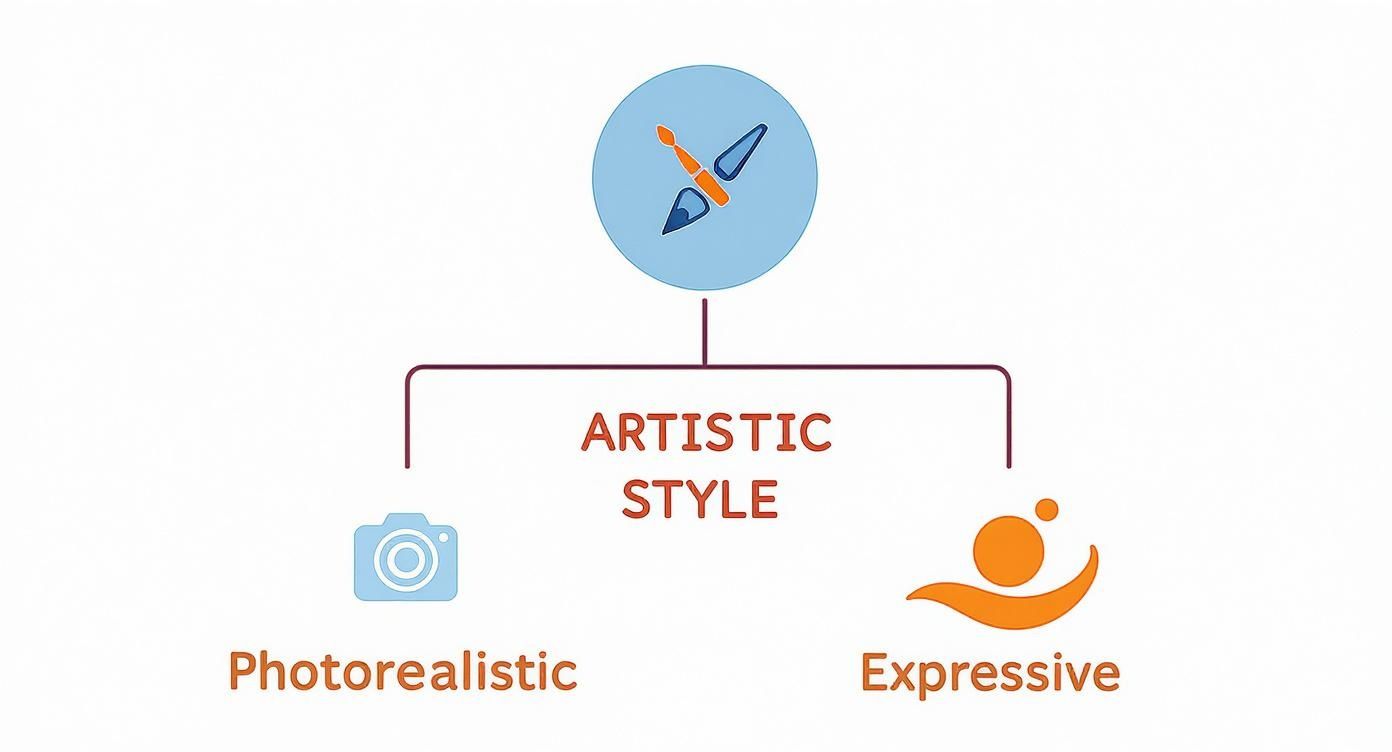
Knowing the difference between photorealistic and expressive art will help you zero in on artists who create the kind of work you truly love.
How to Evaluate an Artist's Portfolio
Found a few artists you like? Awesome. Now it’s time to take a closer look at their body of work. It’s so important to look beyond that one painting that first caught your eye. What you’re really looking for is consistency, skill, and a genuine knack for capturing animals.
A solid portfolio is the best preview of what you can expect for your own commission. Here’s what to look for when you're browsing their collection of dog portraits.
-
Consistency in Style and Quality: Does the quality hold up from one painting to the next? Every piece will be unique, of course, but the skill, color use, and overall style should feel steady. This tells you they have a reliable process, not just a few lucky hits.
-
Specific Experience with Dogs: Look for someone who has painted a lot of dogs—ideally, dogs with similar features or breeds to your own. Nailing the anatomy of a floppy ear or the texture of a wiry coat takes practice. An artist who lives and breathes pet portraits will know how to get those soulful eyes just right.
-
Connection to Their Work: This one is all about gut feeling. Do their portraits make you feel something? A truly great pet artist does more than just copy a photo; they capture a personality. If you find yourself thinking, "That dog looks so joyful," or "I can almost feel how soft that dog's fur is," you’re on the right track.
"Choosing an artist is incredibly personal. You want to find someone whose work just speaks to you. When you feel that connection, you know you’ve found your match."
The Importance of Reviews and Communication
An artist's skill is only one piece of the puzzle. The whole commission process is a collaboration, and you want it to be a great experience from start to finish. Clear, friendly communication is key.
Before you make a final decision, do a little digging. Check for client reviews or testimonials on their website, Etsy shop, or social media. Look for comments that go beyond just loving the final painting. Happy clients will often mention that the artist was responsive, easy to work with, and kept them in the loop. Those are all fantastic signs.
And when you first reach out, see how it feels. Are they friendly and professional? Do they answer your questions clearly? A good artist will be happy to help and will make you feel excited and confident about the whole thing. That first conversation usually tells you everything you need to know.
How to Commission Your Portrait with Confidence
Ordering a custom piece of art can feel a little mysterious, maybe even intimidating. But honestly? It’s just a friendly conversation that ends with a beautiful painting of your best friend. Think of it less like a formal transaction and more like a creative team-up between you and the artist.
I'll walk you through the whole journey, step by step, so you can feel excited and in control from that first "hello" to the final, joyful unboxing.
It's amazing to think that when you commission dog portraits watercolor, you're joining a tradition that goes back thousands of years. Seriously! One of the first known examples is the "Cave Canem" (Beware of the Dog) mosaic from ancient Pompeii. It shows that even two millennia ago, we were celebrating our dogs as symbols of loyalty. If you're curious, you can dive into the rich history of famous dog paintings and see how our four-legged family members have been stars of the art world for centuries.
Kicking Things Off: The First Message
Your journey starts with a simple hello. It doesn't matter if you're using an artist's website contact form, sending an Etsy message, or sliding into their Instagram DMs—keep it simple and friendly.
Just introduce yourself, say you're interested in a custom watercolor portrait, and ask about their current availability. To make things even smoother, it helps to include a few key details right from the start:
- Size: Do you have a rough idea of what you want? Even something like "around 8x10" or "something for over the fireplace" is a great starting point.
- Timeline: Is this a surprise birthday gift or for a special occasion? Giving the artist a heads-up on any deadlines is super important.
- Photos: Go ahead and attach one or two of your favorite pictures. This gives them an immediate feel for your dog's personality and look.
That first message opens the door and gives the artist everything they need to give you a helpful, personalized reply.
Understanding the Quote and Deposit
Once you've reached out, the artist will get back to you with a detailed quote and a rundown of how they work. The quote should clearly explain the cost based on size, complexity (like adding a detailed background or a second pet), and any framing options they offer. This is your moment—ask anything you're unsure about!
When you're happy with all the details and ready to say "let's do it!", the artist will likely ask for a deposit. This is a totally standard part of the process, usually around 50% of the total price. It secures your spot in their painting queue and shows you're committed, which allows them to start buying materials and blocking out time just for your portrait.
A commission is a partnership built on trust. Your deposit secures a spot in the artist's schedule, and their progress updates make sure you’re part of the creative journey every step of the way.
The Fun Part: The Creative Process
Now for the magic! A good artist won't just disappear for weeks and reappear with a finished painting. They'll bring you along for the ride, making it a fun, collaborative experience.
Here’s what that typically looks like:
- Sketch Approval: Before any paint touches the paper, you'll often get a pencil sketch. This is a super important step! It’s your chance to check the composition and suggest any little tweaks to make sure the likeness is just right.
- Progress Updates: Many artists, myself included, love sharing in-progress photos. It’s a fantastic little peek behind the curtain, letting you see your dog’s portrait emerge from the paper, one brushstroke at a time.
- Final Reveal: Once the painting is done, you'll receive a high-quality photo for your final approval. After you give the enthusiastic "yes!", you'll handle the remaining payment.
- Shipping: Your artist will then carefully package your new masterpiece and send it on its way. Trust me, the excitement of finally opening that package is one of the best parts of the whole experience!
When you break it down, the process is designed to be simple, collaborative, and genuinely enjoyable. It's a journey you and the artist take together to create something you'll treasure forever.
Providing Photos That Guarantee a Great Portrait
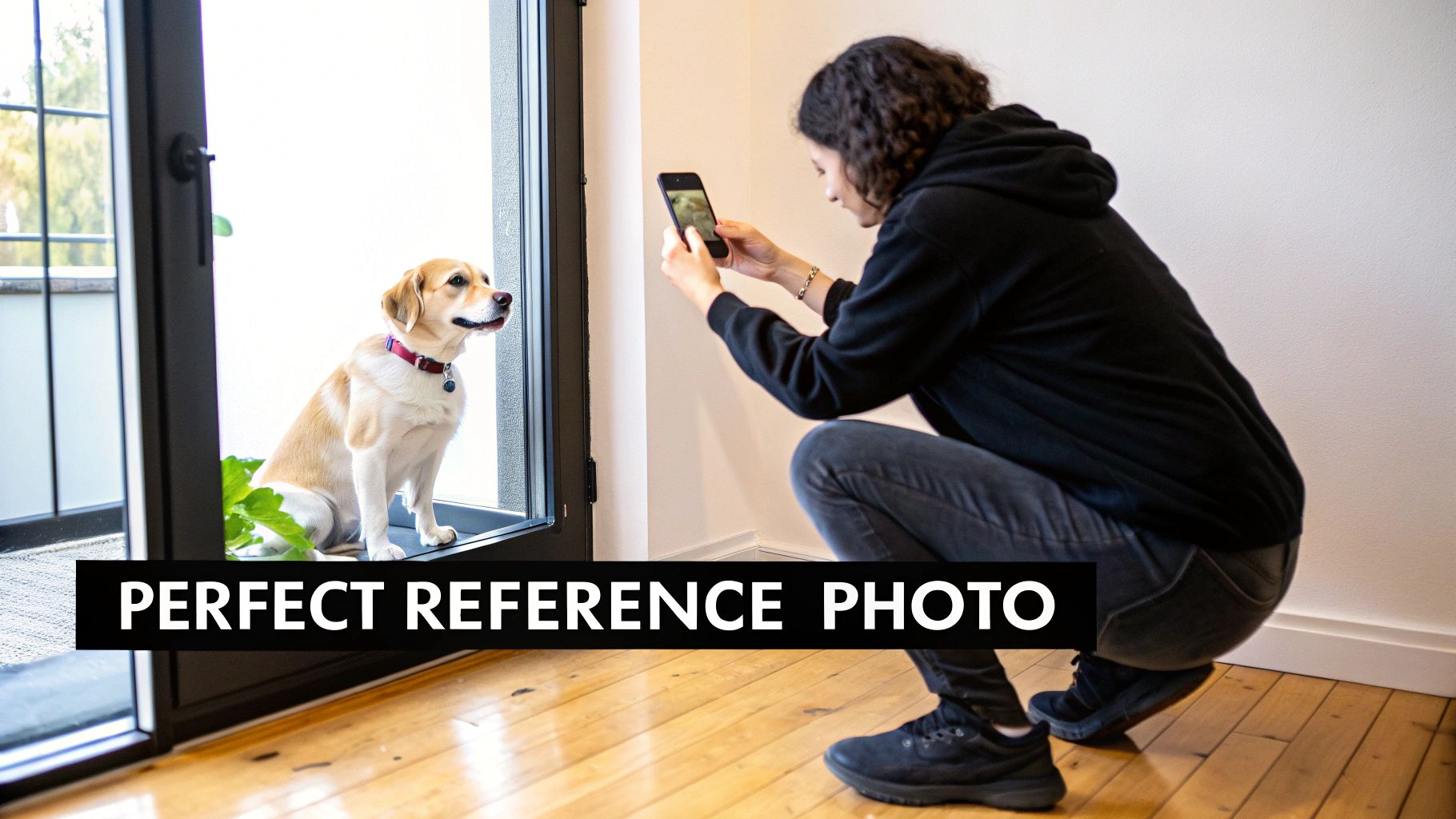
Think of your artist as a master chef. No matter how talented they are, they can't create a five-star meal from poor-quality ingredients. For an artist painting a dog portraits watercolor, your photos are everything. A fantastic photo is the foundation for a fantastic portrait. Simple as that.
The good news? You absolutely do not need a professional camera or fancy lighting rigs. Honestly, some of the best, most soulful portraits I've ever painted came from simple, candid moments captured on a smartphone. It’s all about knowing what an artist needs to see to bring your dog's unique spirit to life on paper.
I've put together my best tips here to help you snap that perfect picture. Follow these, and you'll be giving your artist the "gourmet ingredients" they need to create a masterpiece you'll cherish.
Lighting Makes All the Difference
If there's one thing to get right, it's the lighting. Bad lighting is the enemy of a good portrait—it hides crucial details, warps colors, and can completely flatten your dog's adorable features.
First rule: avoid the built-in flash on your camera at all costs. That harsh, direct light blows out details, creates weird shadows, and almost always gives you that "glowing demon eyes" effect. Not exactly the look we're going for!
Instead, think soft and natural. The absolute best light comes from an open window or a slightly overcast day outdoors. Just position your pup so the light falls gently across their face, and you'll see every subtle color in their fur and the beautiful depth in their eyes.
Get on Their Level
Think about how most people take pictures of their dogs—usually from above, looking down. It's an okay angle for a quick snapshot, but it doesn't really make for an engaging or personal portrait. To truly capture their personality, you have to get into their world.
So, get down on the floor and bring the camera to your dog's eye level. It's a simple trick, but the change in perspective is huge. It creates a much more intimate, powerful image that feels like you're right there with them. This is how we capture their true expression and posture in a way that feels natural and real.
The goal of a great reference photo is to capture personality, not just a pose. An eye-level shot where your dog is looking slightly off-camera often feels more candid and soulful than a stiff, straight-on photo.
Focus on Clarity and Resolution
As an artist, I need to zoom way in on your photo to see all the tiny details that make your dog unique—the way their fur grows, the little specks of color in their eyes, the specific shape of their nose. If the photo is blurry or low-resolution, all those wonderful details are completely lost.
When you send photos for your portrait, remember that understanding photo resolution is a game-changer. Always send the original, full-size image file directly from your phone or camera. Photos saved from social media or sent through messaging apps are often compressed and lose a ton of that essential detail.
Here’s a quick cheat sheet to make sure your photos are spot-on for a beautiful dog portraits watercolor:
-
Photo Dos:
- Do use bright, indirect natural light (think near a window).
- Do get down to your dog’s eye level.
- Do make sure their eyes and face are in sharp focus.
- Do send the original, high-resolution photo files.
-
Photo Don'ts:
- Don't ever use the camera's flash.
- Don't take the photo from too far away.
- Don't send blurry, pixelated, or small images.
- Don't let shadows or toys hide important features like their eyes or ears.
Want even more pointers? I've put together a complete guide with more tips for photographing pets. By providing clear, well-lit, and personal photos, you’re not just sending a picture; you’re setting us both up for success and guaranteeing a final portrait that truly feels like your best friend.
How to Preserve Your Watercolor Masterpiece
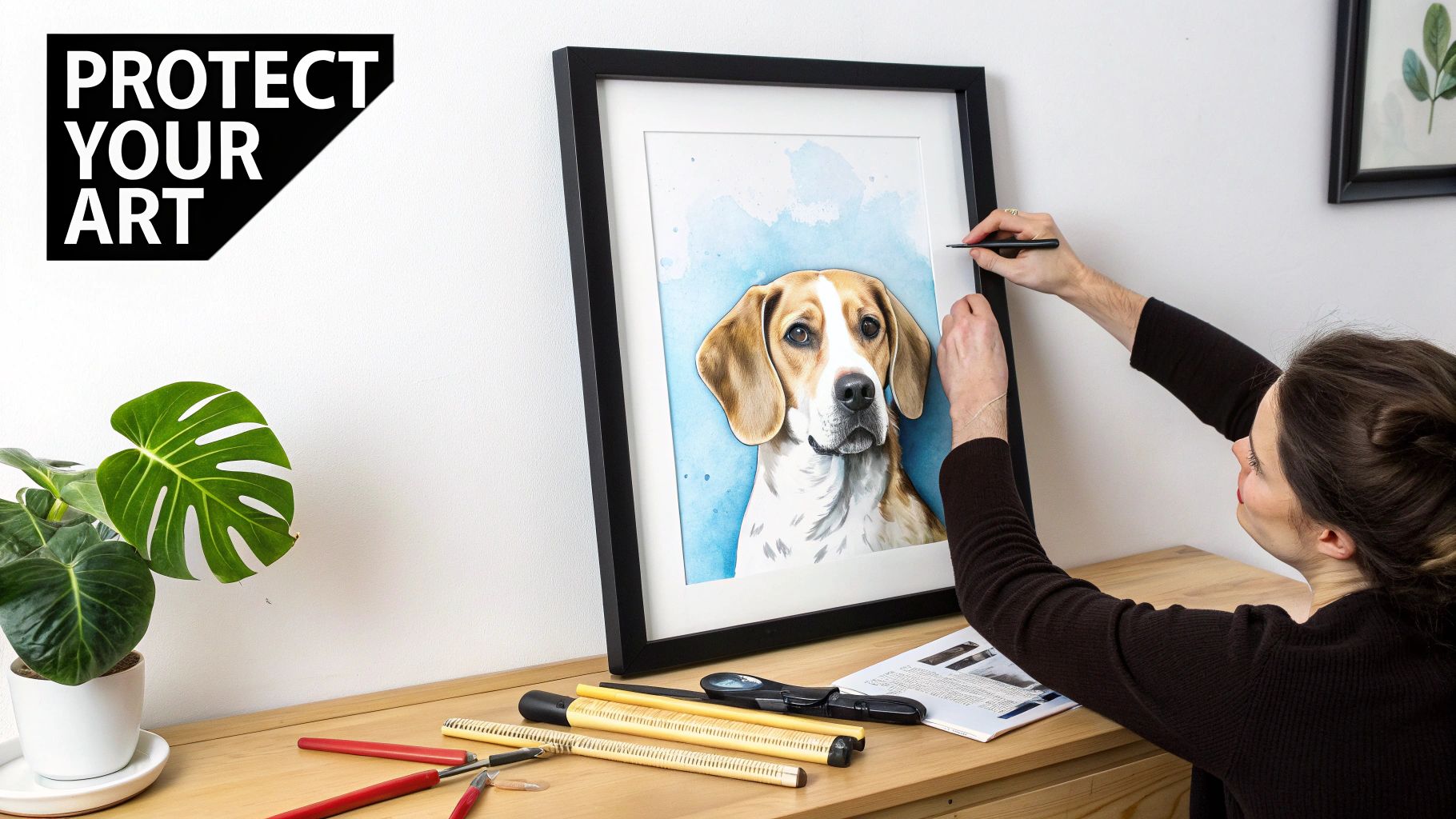
So, your custom dog portraits watercolor has arrived, and it's everything you hoped for. Now what? The final step is making sure this beautiful piece of art stays as vibrant as the day it was painted. Preserving a watercolor isn't rocket science, but it does require a little bit of care.
Think of your new painting as a delicate flower. It's stunning, but it's also sensitive to its surroundings. The two biggest enemies of a watercolor's longevity are direct sunlight and humidity. The pigments are water-based, which makes them susceptible to moisture, while the sun's UV rays can fade those brilliant colors over time.
This is more than just protecting a painting; it's about safeguarding a memory. With a few simple steps, you become the steward of a piece of your family’s history, ensuring it can be cherished for generations.
Framing Your Portrait the Right Way
Proper framing is your first and best line of defense. It's about so much more than just picking a frame that matches your decor; it's about creating a safe, protective little world for your artwork. When you head to a professional framer, there are two non-negotiable things you need to ask for.
- Acid-Free Materials: This is the big one. Absolutely everything that touches your painting—the matboard, the backing board, and any tape—must be 100% acid-free, sometimes called "archival quality." Standard materials contain acids that will slowly seep into the paper over the years, causing that ugly yellowing and making it brittle.
- UV-Protective Glass or Acrylic: Think of this as sunscreen for your art. Regular glass offers almost no protection from damaging UV rays. Spending a little extra on glass or acrylic with at least 98% UV protection is a wise investment that will stop the colors from fading.
A great framing job is a direct investment in your portrait's future. Using archival materials and UV-protective glass is the single most important thing you can do to keep the artwork pristine for a lifetime.
Choosing the Perfect Spot to Display It
Once your portrait is safely framed, the final piece of the puzzle is finding its perfect home. You want a spot where everyone can admire it without putting it in harm's way.
Steer clear of hanging your artwork in rooms with high humidity, like bathrooms or kitchens. All that moisture in the air can eventually cause the paper to ripple or warp inside the frame. Likewise, keep it away from direct heat sources like radiators or fireplaces, which can dry out the paper and make it fragile.
The ideal location is a wall that doesn't get hit with direct sunlight at any point during the day. A hallway, a cozy corner in the living room, or a bedroom wall are often great choices. Taking a moment to pick the right spot ensures your portrait remains a treasured part of your home for years to come.
By preserving this piece, you're taking part in a human tradition that goes back thousands of years. Dogs have been featured in art for over 8,000 years, from ancient cave paintings to symbols of status in the 18th century. You can read more about the cultural depiction of dogs throughout history to see how your new portrait continues this amazing legacy.
Your Questions Answered: What to Expect When Commissioning a Portrait
Taking the leap to commission a custom painting is a special decision, and it’s completely normal to have questions before you start. To help put your mind at ease, I've put together answers to a few of the most common things people ask when they're thinking about getting their own dog portraits in watercolor.
How Much Does a Watercolor Dog Portrait Usually Cost?
This is usually the first thing on everyone's mind! The honest answer is: it varies. The final cost really hinges on a few things, like the size of the painting you want, how detailed the background is, and of course, the artist's experience.
For a smaller, simpler piece from an artist who's just starting out, you might see prices beginning around $150. But for a large, incredibly detailed portrait from a well-known professional—the kind with a long waiting list—the investment could be over $1,000. Most artists, myself included, have a pricing guide on their website or are happy to chat and give you a specific quote.
What’s the Typical Turnaround Time?
A little bit of patience is a key ingredient in custom art. From the moment we start talking to the day your finished painting is safely in your hands, the whole process usually takes somewhere between three to eight weeks.
That timeline gives us the space to do things right. It covers our initial chat about photos, the first sketches for your approval, the actual painting (which can't be rushed!), and making sure the piece is perfectly dry before it’s shipped out.
If you have a special date in mind, like a birthday or an anniversary, it’s always a good idea to reach out well in advance.
A little insider tip: many sought-after artists book up quickly. Getting in touch early is the best way to get a spot on their calendar without rushing the creative magic.
Can You Work from an Old or Blurry Photo?
Yes, absolutely. This is something I get asked all the time, especially when creating a memorial portrait of a dog who has passed on. Sometimes, all you have are older, less-than-perfect photos, and that’s okay.
A good artist has the skill to breathe life back into those images. We can piece together details, sharpen features that are a bit fuzzy, and even merge different elements from a few photos to create one beautiful, cohesive painting. It all comes down to communication. Just show me what you have, and we can talk through what’s possible. A crisp photo is always a great starting point, but an artist’s touch can still capture the spirit of your best friend, no matter what.
Ready to see your favorite photo transformed into a piece of art you'll treasure forever? William Tucker Art is all about capturing the one-of-a-kind personality of your pet in beautiful watercolor. Commission your custom dog portrait today!