
When color disappears, character has to carry the portrait. That isn't just an artistic impression. A peer-reviewed study found that capuchin monkeys could recognize familiar individuals from facial photographs after the images were converted to grayscale, with performance significantly above chance in both tested comparison conditions PNAS research. A successful animal portrait black and white treatment therefore does more than remove hue. It redirects attention toward expression, silhouette, texture, contrast, and emotional atmosphere.
The five examples below use William Tucker's colorful wildlife and nature compositions as a springboard. They aren't presented as literal monochrome works. Instead, each one shows how an artist can translate color-led emphasis into value, texture, framing, and negative space, whether the subject is a pelican, elephant, scenic view, or even a small object with a strong tonal design.
1. New Orleans Artist Animal Painting by William Tucker Pelican Portrait
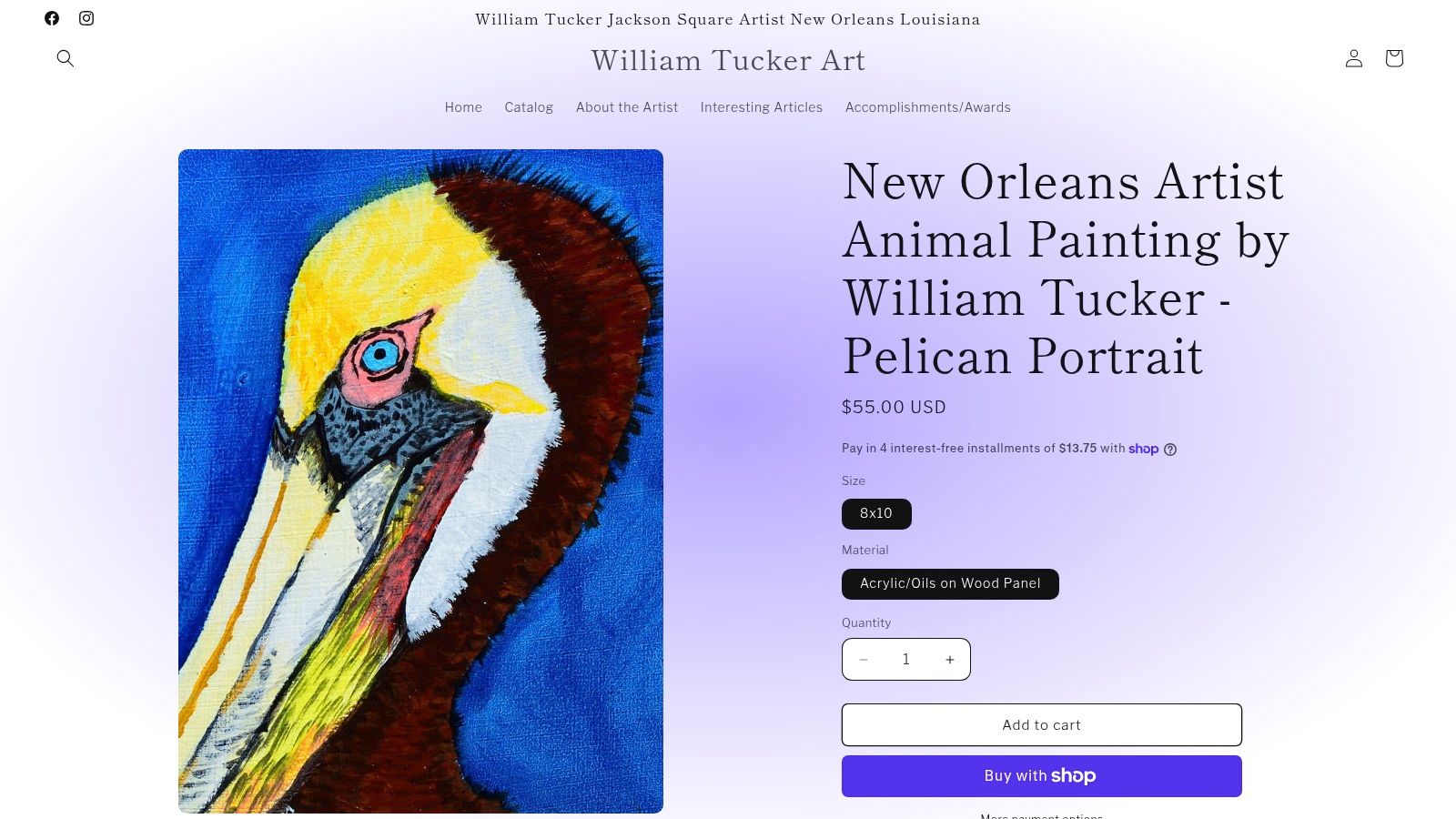
A pelican is an excellent subject for a black-and-white study because its identity depends on more than color. The long bill, heavy throat pouch, rounded head, alert eye, and compact body create a readable structure even before an artist considers plumage. In William Tucker's New Orleans artist animal painting of a pelican, a richly colored head stands against a deep blue background. That contrast gives the original work its immediate visual force. In grayscale, the same impact would need to come from the separation between the light head, darker bill, shadowed neck, and surrounding field.
The close-up framing is the first lesson. A tightly cropped bird portrait gives the eye fewer places to wander, so the viewer notices the animal's gaze and facial geometry. Grayscale can't rescue a weak composition with a bright color accent. The artist has to decide whether the eye, bill, or profile is the main point of attention, then build the surrounding values around that choice.
Replacing hue with value
To translate this pelican into black and white, begin with a small grayscale thumbnail rather than detailed feather work. Reduce the image to broad zones, such as the pale head, middle-value facial planes, dark bill, and deep background. The exact number of zones isn't a rule, but a limited value structure helps prevent every feather from competing with the eye.
Practical rule: Preserve the transition between light and shadow around the eye, bill, and throat pouch. Those changes carry more identity than isolated feather marks.
Texture should support the form. Short, directional strokes can describe the bill's smooth surface, while softer layered marks can suggest feathers around the cheek and neck. Don't outline every contour equally. A lost edge against the background can make the illuminated side feel more dimensional, while a sharper edge near the eye can intensify the pelican's calm, watchful expression.
A grayscale conversion also changes the mood. The original color contrast feels coastal and vivid. A monochrome version could feel quieter, older, or more documentary, especially if the background becomes a soft charcoal field. Photography's early animal portraits often involved tame, captive, or deceased subjects because long exposures required stillness, and this history helped associate black-and-white animal imagery with observation, anatomy, and authenticity historical overview of animal photography. That association can be useful, but it shouldn't tempt an artist to make every portrait look solemn.
For collectors comparing coastal subjects, the same close attention to gaze and negative space can be considered alongside the Gazing Egret product. Tucker's pelican art prints offer another way to study how a bird's personality can remain central when the surrounding design changes.
2. White Howlite Bracelet
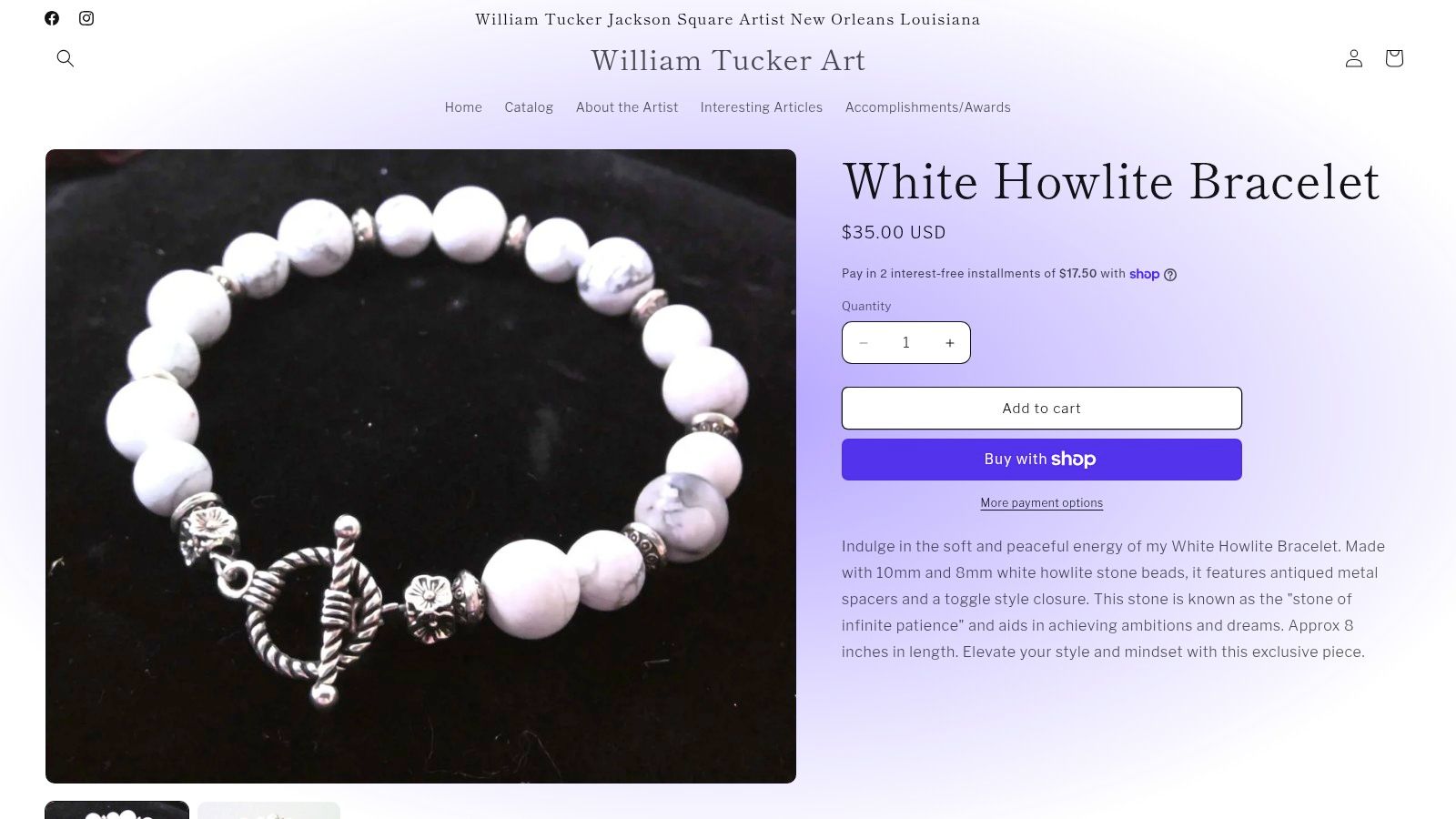
A bracelet may seem unrelated to animal portraiture, but it offers a precise lesson in grayscale. The White Howlite Bracelet uses white howlite beads in two listed bead sizes, antiqued metal spacers, and a toggle-style closure. Its light stones and darker hardware create a simple rhythm of pale circles, narrow gaps, and small metallic accents. That rhythm is directly useful when studying fur patterns, whiskers, claws, or repeated feather shapes.
The strongest black-and-white animal portraits often depend on controlled repetition. A tiger's stripes, a zebra's bands, or the broken markings around a leopard's face can become confusing if every mark receives equal contrast. The bracelet suggests a better approach. Let the repeated forms establish movement, then make one area more prominent through spacing, sharpness, or tonal intensity.
Building a portrait from tonal rhythm
Place a black-and-white animal reference beside the bracelet image and look for three kinds of structure:
- Repeated shapes: Notice how stripes, spots, beads, or feather groups create a visual beat.
- Hard transitions: Use crisp boundaries for eyes, nostrils, claws, and reflective surfaces.
- Quiet intervals: Leave softer or nearly blank areas around the focal feature so the portrait can breathe.
The black background in the bracelet image makes the pale stones immediately legible. That doesn't mean every animal portrait needs a black background. It means the subject needs enough separation from its surroundings. Research on rapid animal detection found similar recognition accuracy for color and grayscale images in one experiment, with 84.5% for color and 85.2% for grayscale, while eye-movement latencies were 170 milliseconds and 174 milliseconds, respectively animal detection research. Those findings support a practical studio test: reduce the portrait to thumbnail size and lower the display brightness. If the face still reads, the value structure is doing its job.
A pale animal against a pale background may lose its silhouette, even if the drawing is accurate. A dark animal can suffer the opposite problem when the shadows collapse into one flat shape. Preserve midtones around the eyes, jaw, nose, and directional fur so the viewer can read volume instead of seeing a single black mass.
The bracelet also makes a useful lesson in restraint. Its light stones don't need elaborate color to hold attention because the arrangement, surface variation, and metallic details provide enough contrast. Artists can use the same principle when turning a colorful wildlife reference into an animal portrait black and white study. If the value pattern is clear, the image can remain expressive without decorative color. For a related accessory comparison, see animal-print bangles and the broader fashion jewelry bracelet collection.
3. William Tucker Wild Things Endangered Animal Wall Art New Dawn
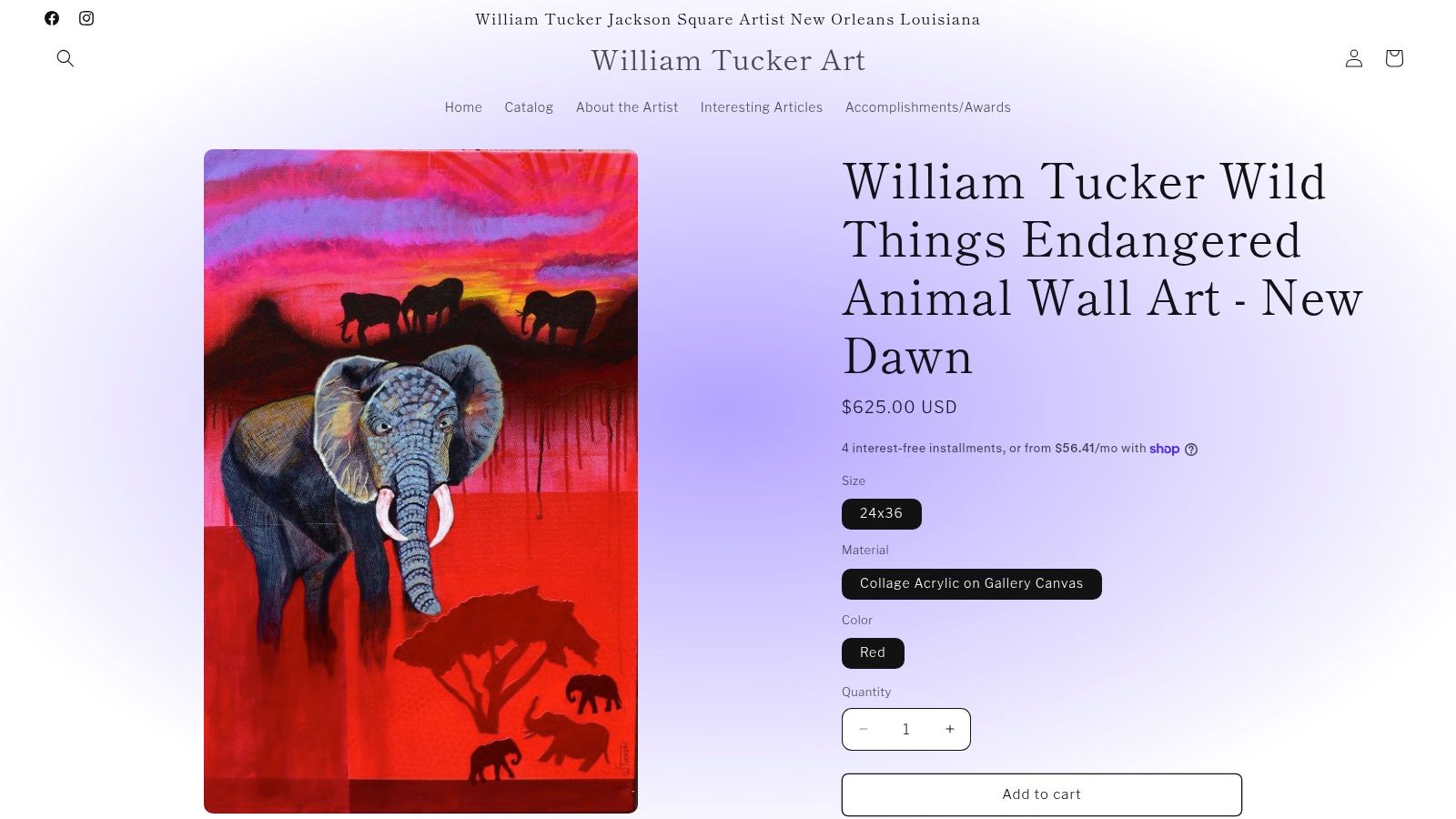
“New Dawn” begins with a color problem that becomes a composition opportunity. The original scene places an elephant against vivid reds and deep purples, with additional elephant silhouettes moving through a painted sunrise. Those colors establish heat, distance, and drama at once. In black and white, the artist has to rebuild that hierarchy without allowing the elephant, background, and silhouettes to merge.
The central elephant should become the primary value anchor. Its face, ears, trunk, and body need enough tonal distinction to remain recognizable, while the distant silhouettes can be simplified into darker or softer shapes. This creates depth through value rather than through color temperature. A lighter foreground subject against a dark atmospheric field produces one mood, while a dark elephant against a pale horizon feels more monumental and graphic.
Letting the background carry emotion
The background shouldn't become an empty afterthought. In Tucker's mixed-media approach, layered marks and atmospheric color give the animal a setting that feels active. A monochrome version can preserve that energy with uneven charcoal, dry-brush texture, broken edges, or a gradual shift from dense darks to open gray.
Use the elephant's surface selectively. Large ears may need broad, quiet tonal shapes. Wrinkles around the eyes and trunk can receive more precise marks because they communicate age, sensitivity, and direction. The distant animals should have less detail, not because they matter less, but because reduced information places them farther away.
Black and white can make a conservation image feel authoritative, so the artist should be clear about whether the scene is documentary, converted from color, or intentionally interpretive.
That distinction matters in wildlife imagery. Infrared camera traps produce monochrome photographs for technical reasons and can be less conspicuous than white flash, but guidance and research summarized by WWF camera-trap guidelines challenge the assumption that infrared equipment is entirely invisible or harmless to animals. An artistic black-and-white elephant painting isn't the same as an infrared record, and it shouldn't imply untouched wilderness when the reference comes from a captive, baited, or sensor-triggered scene.
The Wild Things Collection serves as a useful conceptual springboard. An endangered animal portrait can combine expressive design with responsible context. Tucker's New Dawn artwork presents the elephant as both a powerful subject and a vulnerable presence. The related guide to choosing endangered animal wall art can help viewers think about how a conservation-focused image functions in a room. For placement ideas, compare it with this feature wall artwork guide.
4. William Tucker Original Mountain Abstract from the Abstract Collection
A mountain composition shows how grayscale can organize attention across distance, then transfer that structure to an animal face. In William Tucker's original mountain wall art featuring an abstract mountain scene, indigo ridges, a warm sunset, and lively flowers create depth through color as well as shape. Remove the hues, and the image still needs a clear visual journey, from the nearest marks through the middle range to the open space beyond.
Separate the scene into three planes before adding detail. Convert the indigo ridges into three gray values: foreground at roughly 80% black, middle ground at 50%, and background at 20%. Apply the same plane logic to an animal portrait. Assign the eye and muzzle to the foreground value, let nearby fur move toward the middle value, and keep the background lighter and quieter. The result gives the face priority without outlining every hair.
Texture reinforces the distance. Flowers and greenery can carry the darkest, most varied marks because they sit closest to the viewer. Middle ridges benefit from broken edges and moderate gray. The farthest ridge should have softer transitions and less contrast, much like a voice becoming quieter across a room.
Turning color relationships into structure
Color can separate warm from cool, near from far, and calm from active. Grayscale replaces those signals with deliberate choices:
- Use value for distance: Make remote forms lighter or less contrasty than nearby forms.
- Use texture for material: Keep sky passages smooth, then vary marks for plants, fur, bark, or rock.
- Use framing for emphasis: Let branches, ridge lines, or dark foreground shapes direct attention toward the subject.
- Use negative space for calm: Leave open areas where the eye needs visual rest.
This translation also helps an artist design an interpretive animal portrait. A bear may remain anatomically convincing while loose marks suggest forest shadow around it. A bird may sit against an atmospheric field instead of a literal habitat. The setting becomes a supporting rhythm, not a competing subject.
A monochrome mountain study may feel more restrained than the original pink, gold, green, and blue arrangement. That change can support a reflective mood. For greater drama, place a bright ridge beside a dense dark foreground. For intimacy, reduce most forms to soft middle values and reserve concentrated contrast for the animal's eye or muzzle.
William Tucker's Abstract Collection shows that recognizable nature can survive abstraction. In an animal portrait black and white composition, preserve accurate landmarks such as the eye, muzzle, beak, or ear. Then let value, texture, framing, and negative space reshape the emotional atmosphere around them.
5. William Tucker Wild Things Collection Endangered Animal Wall Art Red Ivory
“Red Ivory” offers a direct test of what happens when a symbolic color disappears. The elephant's red tusks are a central visual and conceptual feature in the original work. They create an immediate contrast with the animal's face and connect the portrait to ideas of rarity, danger, and conservation. In black and white, that red can't perform the work by itself. The artist must decide whether the tusks should become the brightest shapes, the darkest shapes, or the sharpest-edged shapes in the composition.
That decision changes the message. Bright tusks against a dark elephant would make them feel exposed and vulnerable. Dark tusks against a pale face could make them feel weighty and severe. A narrow band of high contrast around the tusks would pull the viewer there without requiring exaggerated detail elsewhere. This is a useful reminder that color's emotional function can be recreated through placement and contrast.
Preserving identity when color carries meaning
The elephant's eyes should remain distinct from the surrounding facial planes. Large ears, tusks, trunk, and forehead establish the silhouette, but small changes around the eyes often determine whether the animal feels alert, tired, gentle, or guarded. Work from the broad shape inward. If the head doesn't read as an elephant at thumbnail size, fine texture won't solve the problem.
Color can also carry species-specific identity. Research on camera-trap imagery found that white-flash photographs were generally easier to use for identification than infrared photographs because coat colors and markings remained visible, with partially obscured stoats especially benefiting from cues such as a dark tail tip and contrasting belly small-mammal camera-trap research. The lesson for portrait artists is not that monochrome fails. It's that grayscale should be chosen with care when a particular marking or hue is essential to recognition.
Ask before converting: Is the color decorative, or does it identify the animal?
For an elephant, the emotional effect of vivid tusks may be replaceable through value. For an animal with a highly distinctive colored patch, seasonal coat, or warning pattern, removing hue may weaken documentary accuracy. The strongest monochrome portraits compensate by clarifying facial geometry, silhouette, texture, and tonal separation.
Tucker's Red Ivory endangered animal wall art offers a powerful reference for this translation. Its mixed-media surface can inspire layered grayscale marks, while the expressive elephant face gives the study a clear focal point. The original's bold color makes the conversion especially revealing. It shows that black and white isn't automatically more timeless or faithful. Sometimes it strengthens the subject. Sometimes it removes information the viewer needs.
Black & White Animal Portraits, 5-Item Comparison
| Item | Implementation Complexity 🔄 | Resource Requirements ⚡ | Expected Outcomes ⭐📊 | Ideal Use Cases 💡 | Key Advantages ⭐ |
|---|---|---|---|---|---|
| New Orleans Artist Animal Painting by William Tucker - Pelican Portrait | Medium, detailed acrylic close-up requiring precise brushwork | Moderate, professional acrylics, canvas/paper/wood options, optional framing | High visual vibrancy; strong coastal focal point | Home, office, gallery; coastal or modern interiors | Original by established artist; vivid colors; ready to display |
| White Howlite Bracelet | Low, simple beading and toggle closure | Low, 8–10mm howlite beads, metal spacers, basic packaging | Subtle wearable accent; calming aesthetic and symbolic meaning | Fashion accessory, gift, retail or casual wear | Affordable, wearable, easy to ship; symbolic "patience" stone |
| William Tucker Wild Things Endangered Animal Wall Art - New Dawn | High, mixed media layering and textured techniques | High, acrylic/oil/mixed media on canvas, larger scale, framing/prints | Strong emotional impact; conservation message; dramatic statement | Collector focal point, gallery, feature wall | Narrative-driven piece; limited-edition prints; advocacy focus |
| William Tucker Original Landscape Wall Art Abstract Collection - Mountain Abstract | Medium, layered acrylic techniques with textured brushstrokes | Moderate, professional acrylics on canvas, prints available | Uplifting color-driven impact; versatile visual interest | Living room, bedroom, office; modern or classic interiors | Bold palette; versatile décor piece; one-of-a-kind original |
| William Tucker Wild Things Collection Endangered Animal Wall Art - Red Ivory | High, detailed mixed media with intricate patterning | High, mixed media materials, ready-to-hang canvas, prints | Bold statement piece that provokes conversation; conservation theme | Gallery walls, statement installations, offices | Distinctive subject (red tusks); strong storytelling; high-quality materials |
Turn the Study Into Your Own Grayscale Method
Begin with the subject's strongest expression. For an elephant, it may be the eyes and the weight of the head. For a pelican, it may be the alert gaze and long bill. For a striped animal, it may be the relationship between the facial landmarks and the repeated pattern. Identify that feature before you adjust the rest of the image.
Next, reduce the scene to a clear value structure. Squint at the reference or view it as a small thumbnail, then locate the largest light, middle, and dark areas. You don't need to preserve every tonal shift. You do need to keep the focal point separate from the background.
Preserve texture where it supports recognition. Fur direction can describe the shape of a cheek. Wrinkles can clarify an elephant's trunk. Feather marks can explain the curve of a pelican's head. Texture becomes distracting when it has the same sharpness everywhere, so reserve the most precise marks for the areas that carry identity.
Simplify the background information. William Tucker's wildlife compositions are useful because detailed subjects often sit within expressive, active surroundings. In a grayscale study, those surroundings can remain energetic, but they shouldn't compete with the animal. Use softer edges, quieter values, and negative space to control the viewer's route through the image.
Finally, use contrast deliberately around the focal point. Compare the color reference with the grayscale study before choosing the final mood. A compressed range of soft grays can feel calm and intimate. Strong black-and-white separation can feel dramatic. A restrained, observational treatment can feel documentary. The most transferable lesson is the relationship between a carefully observed animal subject and an expressive surrounding design. Monochrome works best when it isn't treated as a filter, but as a new set of decisions.
William Tucker Art offers wildlife, pet portrait, coastal, abstract, and conservation-focused work that connects detailed subjects with expressive surrounding designs. Explore the collections at William Tucker Art to compare colorful originals and nature-led compositions, then use those relationships as references for your own black-and-white animal portrait studies.